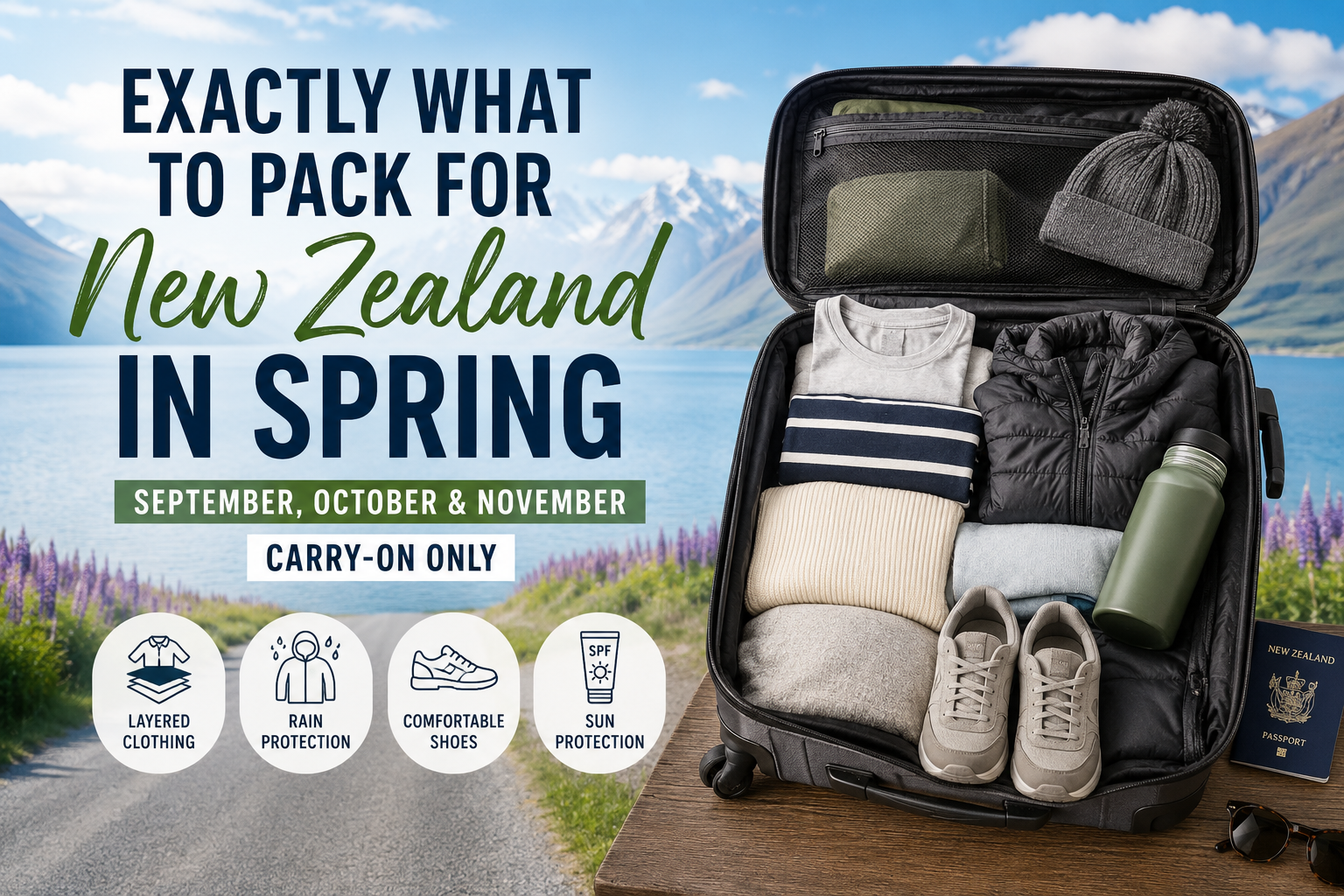
Spring is an incredible time to visit New Zealand. Snow can still linger on mountain peaks, countryside turns intensely green, waterfalls are full, and the days become longer as summer approaches.
September is generally the coolest spring month, October is highly transitional, and November begins moving toward warmer summer conditions.
For most trips, the easiest strategy is simple: pack lightweight clothing you can layer, one dependable waterproof jacket and enough warmth for the coldest part of your itinerary.
What New Zealand Is Like in Spring
Spring in New Zealand runs from September through November and brings a mix of cool mornings, mild afternoons, rain, wind and increasingly warmer days as summer approaches.
The North Island is generally a little milder, while the South Island and mountain areas can be cooler, particularly in September.
For a typical trip around New Zealand, you do not need separate wardrobes for different regions.
A practical spring wardrobe of short and long sleeves, one warm layer, a waterproof jacket and comfortable walking shoes will cover most sightseeing itineraries.
If you are visiting alpine areas during colder weather, add a light hat and gloves and check the local forecast before you go. includes the South Island, mountain areas or colder September travel.

Who This New Zealand Spring Packing List Is For
This guide is designed for travelers visiting New Zealand in September, October or November for a typical sightseeing trip.
It works especially well for:
- Spring travel during September, October, or November
- Carry-on + personal item only
- First-time visitors traveling around several parts of New Zealand
- North Island and South Island itineraries
- Road trips
- City and countryside combinations
- Queenstown, Rotorua, Auckland, Wellington, Christchurch, Milford Sound and similar sightseeing routes
- Travelers using a carry-on and personal item only
- Trips of around two weeks with laundry
- Longer trips if you are willing to wash and rewear clothing
This packing list is designed for approximately two weeks with light laundry and can work for trips of up to about a month if you wash clothing regularly.
This is a general travel packing list rather than a technical outdoor gear guide.
Travelers planning multi-day backcountry hikes, mountaineering, skiing, camping or serious alpine activities will need specialized equipment beyond what is included here.
Universal Essentials
Travel Documents & Money

Pack:
- Passport
- Visa, NZeTA or other entry permission required for your nationality
- New Zealand Traveller Declaration information as required
- Digital copies of important travel documents
- Printed backup copies of important reservations
- Wallet
- Credit and debit cards
- Small amount of New Zealand dollars
- Driver’s license if renting a car
- International driver’s permit if required
- Travel insurance information
- Flight confirmations
- Hotel confirmations
- Rental car reservations
- Ferry or transfer confirmations
- Tour reservations
- Prescription medication information
- Emergency contact information
- Writing pen for travel forms or other paperwork
New Zealand uses the New Zealand dollar (NZD).
Cards are widely useful, but carrying a small amount of cash is still convenient for small purchases, rural stops or unexpected situations.
If you are road-tripping, save accommodation addresses, ferry information, rental car details and important navigation information offline.
Keep your passport, medication, valuables and one complete change of clothing in your personal item during long-haul flights.
New Zealand Biosecurity
New Zealand has strict biosecurity rules.
Food, plant and animal products and some used outdoor equipment may need to be declared when entering the country.
If you are bringing hiking shoes, walking boots, camping equipment or other previously used outdoor gear, clean them thoroughly before packing.
Remove:
- Mud
- Dirt
- Seeds
- Plant material
When you are unsure whether something needs to be declared, declare it.
Luggage & Organization

Pack:
- Carry-on suitcase
- Personal item that fits beneath the airplane seat
- Compression packing cubes
- Small jewelry or accessory organizer
- Reusable shopping bag
- Luggage tag
- Wet bag for damp or messy items
- Lightweight shoe bags
- Small zippered pouch for tickets, receipts, and loose travel documents
A carry-on is particularly convenient for New Zealand trips involving several hotels, domestic flights, ferries or a rental car.
Check the carry-on rules for every airline on your itinerary. Domestic New Zealand flights may have different size or weight limits from your international flight.
Leave a little extra room for anything you buy during the trip.
Tech & Power
New Zealand uses Type I outlets with 230V electricity and 50Hz frequency.

Pack:
- Universal power adapter
- Multi-port USB charger
- Camera
- Portable power bank
- Travel Power Strip
- Extra charger cables
- Earbuds or headphones for planes, trains, and long transit days
- Tech Organizer Case
- Cell Phone (set up an international plan with your provider before you go, or buy a SIM/eSIM for New Zealand)
- If you’re packing single-voltage electronics like heating pads, hair styling tools, or an electric kettle you’ll need a step-down voltage converter if you’re traveling from a lower voltage country
- Optional: Laptop or Chromebook or Tablet (for work if you must and/or easy entertainment in your own language)
- Optional: Kindle or other e-reader (not sure if Kindle is good for you? Check out my full article about how it’s a perfect travel companion)
Most modern phones, laptops, tablets, cameras and chargers are dual voltage, but always check the voltage printed directly on your device.
Travelers from 110–120V countries need to be especially careful with single-voltage hair tools and other heating appliances.
A plug adapter changes the plug shape.
It does not change the voltage.
For the full electrical compatibility breakdown, see my New Zealand plug, outlet and voltage guide.
Toiletries & Health
Toiletries

Pack:
- Shampoo + Conditioner + Hair masks and /or Olaplex (these are easiest transported in cadence capsules or as solids)
- Toothbrush + toothpaste + mouthwash + floss (travel solids are easiest for these I still pack them in cadence capsules) It’s also a good idea to bring a couple of on the go toothbrushes for long travel days/flights and/or day trips to stay feeling fresh
- Body wash and face wash as well as any other regularly used shower/bath accessories like salt scrubs, bath soaks, and mud in cadence capsules
- Skincare basics for body, hands, face, and feet as well as any daily facial routines like anti-aging serums in cadence capsules
- Deodorant (body deodorant is also recommended for long flights)
- Disposable shavers are easiest to use and leave behind instead of repacking, but be sure to bring at least 1 shaver
- Personal medications with labels
- Pain relievers and any other common OTC medications you use like ant-acids, anti-diarrhea and/or constipation relief, allergy pills, and common cold medicine
- Deep blue, salon-pas, and lidocaine patches are always helpful for unexpected pain from excessive walking, sitting or other activities done while traveling and especially helpful if you’re traveling with older ones
- Blister prevention (bandages or blister pads) and a simple first aid kit
- Sunscreen
- Lip balm
- After-sun lotion
- Hand sanitizer
- Compact wet wipes
- Toiletry Case
- Feminine products, even if you only might need them
- Electrolyte packets
- Insect repellent
Laundry Kit

Pack:
- Travel-size laundry detergent sheets or liquid in a cadence capsule
- Sink stopper (optional, but helpful in older hotels) or mini travel washer
- A few clothespins or a lightweight travel clothesline
- Clothes refresher spray can be used daily to refresh your clothing between washes
- Small stain-removal pen or wipes
- Separate wet bag for damp clothing or swimsuits
What Makes This Easier
- Quick-dry fabrics
- Lightweight layers
- Clothing that works in several temperatures
- Pieces that can be reworn comfortably
- A coordinated color palette
- Darker clothing for transportation days
- Wrinkle-friendly fabrics
- Washing small loads before everything becomes dirty
- Booking accommodation with laundry access during longer trips
Laundry conditions can vary dramatically across Chile.
Clothing may dry quickly in the dry air of northern Chile but take considerably longer during cool or rainy weather in the Lake District or Patagonia.
Heavy jeans, thick cotton sweatshirts, and bulky sweaters are harder to wash and dry than lightweight clothing.
Do not wait until your final night in an accommodation to wash everything you brought.
Wash smaller loads while you still have enough time for clothing to dry completely.
Day Bag Essentials

Pack:
- Lightweight backpack or secure crossbody bag
- Reusable water bottle
- Compact umbrella
- Packable tote
- Small snack
- Power bank
- Tissues or handkerchief
- Wet wipes
- Hand sanitizer
- Hand cream
- Lip balm
- Light sweater or cardigan
- Packable scarf
- Sunglasses
- Sunscreen
- Compact rain layer
- Optional lightweight hat and light gloves for colder South Island or alpine days
A hooded waterproof jacket is generally more useful than relying only on an umbrella, especially in windy weather or during outdoor sightseeing.
Keep enough room in your day bag for layers you remove during warmer parts of the day.
Jump to the Packing List You Need
Women’s New Zealand Spring Packing List
Clothing

Pack:
- 3 short-sleeve or lightweight tops
- 2 long-sleeve tops
- 2 pairs of comfortable pants, trousers, or jeans
- 1-2 lightweight skirt or additional pair of pants
- 1–2 versatile dresses
- 1 cardigan or lightweight sweater
- 1 warmer fleece or compact warm layer
- 1 packable waterproof rain jacket
- 1 pair of lightweight shorts if you normally wear them
- 1–2 sleep sets or nightgowns
- 6–7 pairs of underwear
- 2 bras
- 4–5 pairs of socks
- 1 swimsuit
- 1 swimsuit cover-up
This gives you enough lighter clothing for mild spring afternoons while still covering cool mornings, evenings and colder South Island weather.
If your trip includes alpine areas in September or particularly cold weather, add a lightweight warm hat and gloves.
Shoes
Pack:
- 1 pair of comfortable walking sneakers or supportive slip-on walking shoes
- 1 pair of comfortable closed-toe shoes, water-resistant ankle boots, or other supportive walking shoes
- Optional lightweight sandals
Water-resistant shoes are useful for rainy sightseeing days, wet grass, muddy viewpoints, Fiordland and the West Coast without requiring bulky technical hiking boots.
Wear your bulkiest pair on the plane.
Accessories

Pack:
- Compact crossbody bag
- Travel make-up stack, eyeliner and mascara
- Makeup remover
- Regular facial skincare
- Small hair brush
- Hair ties or clips
- Simple jewelry
- Sun hat
- Sunglasses
- Lightweight scarf
- Optional compact gloves and warm hat for Patagonia, high elevations, or colder September itineraries
Men’s New Zealand Spring Packing List
Clothing

Pack:
- 3 breathable shirts
- 2 long-sleeve shirts
- 1 casual button-down shirt or overshirt
- 2 pairs of comfortable pants, jeans, or travel trousers
- 1 pair of lightweight shorts
- 1 lightweight sweater, hoodie, or pullover
- 1 warmer sweater or fleece
- 1 packable rain jacket
- 1–2 sleep sets
- 6–7 pairs of underwear
- 5–6 pairs of socks
- 1 pair of swim trunks
One clean button-down or slightly nicer shirt is generally enough for dinners or evenings out.
If your trip includes alpine areas in colder weather, add a lightweight warm hat and gloves.
Shoes
Pack:
- 1 pair of comfortable walking sneakers
- 1 pair of clean casual walking shoes or water-resistant boots
- Optional lightweight sandals
Wear your bulkiest pair on travel days.
Accessories
Pack:

- Small sling bag
- Belt
- Shaving kit or beard-grooming kit
- Sun hat
- Sunglasses
- Optional lightweight scarf
- Optional hat and gloves
Girls’ New Zealand Spring Packing List
Clothing

Pack:
- 2–3 short-sleeve tops
- 2–3 long-sleeve tops
- 2–3 pairs of pants, leggings, or comfortable bottoms
- 1 skirt or dress, optional
- 1 pair of shorts
- 1 cardigan, sweater, or hoodie
- 1 warmer layer
- 1 packable rain jacket
- 1–2 sleep sets
- 6–7 pairs of underwear
- 5–6 pairs of socks
- 1 swimsuit
Choose pieces that can be mixed, washed easily and worn for sightseeing, road trips and outdoor stops.
For colder alpine areas, add a warm hat and gloves.
Shoes
Pack:
- 1 pair of comfortable walking sneakers
- 1 pair of lightweight backup shoes or water-resistant walking shoes
- Optional sandals
Extras
Pack:
Keep one complete change of clothing in the child’s personal item during long-haul flights.
Boys’ New Zealand Spring Packing List
Clothing

Pack:
- 2–3 short-sleeve tops
- 2–3 long-sleeve tops
- 2–3 pairs of pants or joggers
- 1 pair of shorts
- 1 light sweater or hoodie
- 1 warmer layer
- 1 packable rain jacket
- 1–2 sleep sets
- 6–7 pairs of underwear
- 5–6 pairs of socks
- 1 pair of swim trunks
Choose clothing that can handle sightseeing, grass, rain, outdoor stops and repeated washing.
For colder alpine areas, add a warm hat and gloves.
Shoes
Pack:
- 1 pair of comfortable walking sneakers
- 1 pair of lightweight backup shoes or water-resistant walking shoes
- Optional sandals
Extras
Pack:
Keep one complete change of clothing in the child’s personal item during long-haul flights.
Things Nobody Tells You About Visiting New Zealand in Spring

September Can Still Feel Cold Around the Mountains
Spring begins in September, but mountain areas can still be cold and snowy.
If you are visiting Queenstown, Wānaka, Aoraki/Mount Cook or other alpine destinations early in spring, check the local forecast shortly before leaving and bring a little extra warmth if needed.
A Rain Jacket Is More Useful Than an Umbrella
An umbrella can be useful in cities, but New Zealand wind, boat trips, scenic viewpoints and walking trails make a hooded waterproof jacket much more practical.
Make your rain jacket part of your normal day-bag setup instead of treating it as emergency gear.
The Sun Can Be Strong Even When It Feels Cool
Spring temperatures may feel comfortable enough that sun protection does not seem urgent.
Do not rely on temperature alone.
Pack sunscreen, sunglasses and a sun hat for long sightseeing days, beaches, lakes, scenic drives, boat trips and outdoor attractions.
Sandflies Can Be a Real Problem in Some Areas
Fiordland, Milford Sound and parts of the West Coast are known for sandflies.
Bring insect repellent if these areas are on your itinerary.
It takes very little suitcase space and is much nicer to have before you need it.
Clean Your Outdoor Shoes Before You Fly
New Zealand takes biosecurity seriously.
Used hiking shoes, boots and outdoor equipment can carry soil, seeds and other organic material.
Clean them thoroughly before packing and declare items on arrival when required.
Keep Your Jacket and Walking Shoes Easy to Reach on Road Trips
New Zealand road trips involve a lot of spontaneous stops.
You may pull over for a waterfall, lake, beach, short walking trail or viewpoint with very little warning.
Keep your jacket, walking shoes, sunglasses and day bag accessible instead of burying everything underneath the luggage.
Pack a Swimsuit Even If the Weather Looks Cool
A swimsuit is worth the tiny amount of space it takes.
You may use it for:
- Hot pools
- Geothermal spas
- Hotel pools
- Beaches
- Warmer November days
Water-Resistant Shoes Are Useful Even If You Are Not Hiking
You do not need technical hiking boots for an ordinary sightseeing trip.
But wet grass, muddy viewpoints, short nature walks, rainy sightseeing days and lakefront paths can easily leave regular shoes soaked.
A lightweight water-resistant pair is a much more practical second shoe than another pair of fashion shoes.
Final Thoughts
New Zealand spring packing does not need to be complicated.
For most travelers, the essentials are:
- Lightweight clothing
- Long sleeves
- One warm layer
- Waterproof outerwear
- Comfortable walking shoes
- Water-resistant backup shoes
- Sun protection
- A swimsuit
- Laundry supplies
That combination works well for a typical trip covering several parts of New Zealand without requiring separate wardrobes for every destination.
Pack clothes that mix easily, wash well and can be layered when the temperature drops.
Then stop worrying about the suitcase and enjoy New Zealand.
If you are still planning your route, start with our Best Places to Visit in New Zealand guide for ideas across both islands.