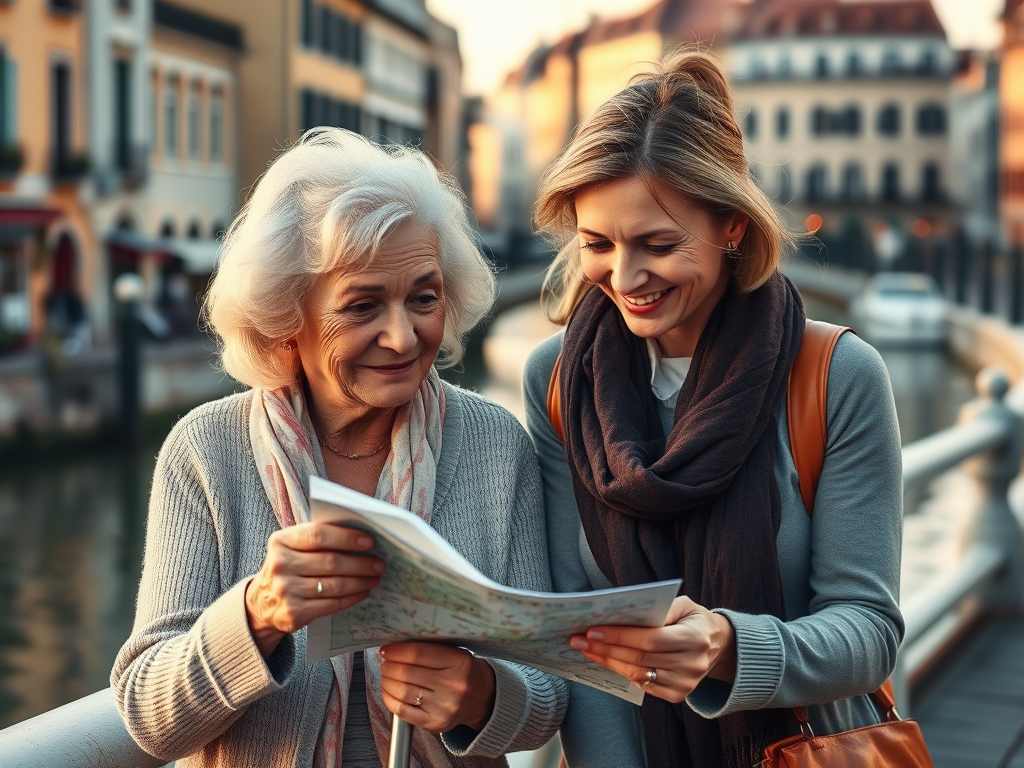
Traveling with elderly parents or grandparents is not about doing less.
It’s about traveling with care.
I’ve traveled internationally with my mother, and those trips taught me something I wish more people talked about: when you plan for comfort, dignity, and rest, traveling with elderly loved ones can be deeply meaningful—and unexpectedly beautiful.
This isn’t a checklist born from theory. It’s what I’ve learned by doing it.

As an Amazon Associate I earn from qualifying purchases. This is at no extra cost to you and helps support my blog.
Airports Don’t Have to Be Intimidating: Wheelchair Services Are There to Help
Airports can be overwhelming, even for seasoned travelers. They’re loud, fast-paced, and physically demanding — long corridors, sudden gate changes, security lines, and standing for extended periods.
What many people don’t realize is that most elderly travelers qualify for airport wheelchair assistance, even if they can walk short distances.
Limited mobility doesn’t mean someone can’t walk at all. It often means:
- difficulty with long distances
- fatigue from standing
- balance concerns
- joint pain
- slower reaction time in crowded spaces
Wheelchair services exist specifically for this.
When requested in advance (or even at the airport), these services:
- safely escort your parent or grandparent from check-in to the gate
- assist through security and passport control
- ensure early or supported boarding
- and help them from the arrival gate to baggage claim or the exit
This isn’t about taking shortcuts or special treatment.
It’s about safety, energy conservation, and reducing stress.
Using wheelchair assistance can be the difference between:
- arriving already exhausted
- or arriving calm and comfortable, ready to enjoy the trip
- stumbling, falling or being pushed down in a busy airport which is a real hazard for elderly travelers
It also allows you to focus on being present instead of constantly worrying about pace, crowds, or whether you’re pushing too hard.
Accepting this help doesn’t diminish independence.
It preserves it.
And for many elderly travelers, this makes the difference between being able to travel—or not.
But how do you actually arrange wheelchair assistance at the airport?
First, request wheelchair assistance when you book your flight or anytime before departure. This flags the reservation so the airline knows assistance will be needed. This should make sure a wheelchair and assistant is waiting at the gate when you deplane from the flight.
Second—and this is the part most people don’t realize—request it again when you arrive at the departure airport. This is where wheelchair assistance matters most, because it covers check-in, long walks, TSA screening, and navigating the terminal.
When you arrive, go directly to the airline counter and ask clearly for wheelchair assistance. You do not need to stand in line first. If the counter is busy, calling out to the staff is often the fastest way to get help dispatched.
This isn’t rude or improper. Airlines don’t keep wheelchair staff waiting indefinitely. They respond when a request is made. Speaking up activates the system so someone can be sent when they’re actually needed.
I’ve done this many times while traveling with my mother. I’ve never been told to get in line first, and I’ve never been denied assistance.

Plan for the Needs They Might Have — Not Just the Ones They Admit To
Travel changes people. Even those who are perfectly capable at home may struggle with:
- longer days
- unfamiliar bathrooms
- jet lag
- uneven streets
- heat, cold, or humidity
- emotional fatigue
- back pain, joint pain, and swollen feet
One of the most loving things you can do is pack quietly and thoughtfully for possibilities—not just preferences.
That means bringing:
- adult diapers or protective underwear, even if they “never use them at home”
- compression socks
- clearly labeled medications (with extras)
- a walking cane, even if they don’t usually need one
- safety walking shoes and/or adjustable sandals for swollen feet
- Deep Blue or Salon Pas or in my case I usually pack both (and use both)
- Lidocaine patches
- Disability placards if they have one administered to them by your government
- Small first aid kit with common OTC pain relievers
- Blood pressure and heart rate monitors or a fitbit watch or Oura Ring
(Travel can surface issues even in people without known heart conditions — this happened to my mom during a high-altitude trip to Lake Tahoe when I was a teenager.) - Electrolyte packets to support hydration
- A compact umbrella or rain poncho
- Non-slip socks or slippers for hotel rooms
- Optional circulation aids, like an inflatable leg-elevation pillow for evenings or leg swings for flights
There are excellent modern canes available now, including ones that fold and convert into a small stool. These can be lifesavers when there’s nowhere to sit and someone suddenly needs to rest.
Preparation doesn’t mean something will go wrong.
It means no one has to feel embarrassed, unsafe, or rushed if it does.
Case in point: even though my mom packed adult diapers for Italy—and doesn’t usually need them—she ended up with a case of traveler’s diarrhea when we arrived in Venice. She needed more diapers than she’d brought.
My instinct was immediate and practical: I wanted to head out right away to find more diapers and some comfort items for her stomach—ginger ale, crackers, anything that might help. The sun was setting, but it wasn’t dark yet. We were staying just a couple of doors down from St. Mark’s Square, in a very safe area, in a city widely considered one of the safest in the world.
None of that mattered.
Even though I’m a fully grown woman, my mother emphatically put her foot down and refused to let me go out alone in a foreign city as evening approached. She was far more concerned about my safety than her own comfort.
I was upset at the time—I knew the shop was close, and the next morning proved I was right—but that moment taught me something important: when you travel with an elderly parent, logic sometimes gives way to love.
I managed to get her a Sprite from the hotel café that evening, and we waited until morning to restock what she needed. Everything worked out. But it was a reminder that even “simple” solutions don’t always play out the way you expect.
When you travel with a parent who still sees themselves as your protector, preparation isn’t just about supplies—it’s about patience, flexibility, and understanding that care flows in both directions.
Always Know Where the Next Place to Sit Is
This became one of my most important travel rules.
When you’re planning a day—whether it’s sightseeing, shopping, or even meals—ask yourself:
“If we needed to sit down right now, where would we go?”
Standing is often more exhausting than walking, especially for older bodies.
That means:
- choosing restaurants with comfortable seating
- prioritizing cafés and quiet spots
- avoiding long lines with no benches
- building in pauses, even if you don’t end up needing them
If there’s nowhere to sit, it’s not the right plan.

Rethink Transportation & Sightseeing: Private Drivers and Local Day Guides Can Change Everything
One of the best decisions my mom and I ever made while traveling—especially in Italy—was rethinking both transportation and sightseeing by using private drivers and local day guides.
This single choice changed everything.
Instead of rushing to keep up with public transportation schedules or navigating crowded tour groups, we experienced travel in a calmer, more humane way.
No dragging luggage.
No anxiety about stairs or long walks.
No arriving exhausted before we’d even begun.
We moved comfortably, at our own pace, with someone who knew the area and understood how to adapt the day as needed. This flexibility mattered far more than seeing “everything.”
In many cases, these drivers and guides became part of the experience—sharing local knowledge, adjusting routes on the fly, and quietly making sure my mom was comfortable without making her feel singled out or fragile.
It felt, quite honestly, like traveling the way celebrities do.
One of our drivers in Milan even shared stories about chauffeuring an A-list celebrity during a movie shoot. He couldn’t say who (he wasn’t allowed to), but he mentioned very specific restrictions—like not being permitted to drive through tunnels (or possibly over bridges; the rules were strict and memorable).
That conversation stuck with me because it highlighted something important:
Private drivers and local guides aren’t indulgences. They’re accessibility tools.
They allow elderly travelers to:
- conserve energy
- avoid unnecessary strain
- feel safe and cared for
- enjoy destinations instead of enduring them
They also open doors to experiences you might otherwise miss—scenic routes, quieter entrances, flexible timing, and stories you won’t find in guidebooks.
And while this kind of service may sound expensive, it’s often far more affordable than people expect—especially when shared between two people or a family group and compared to the physical cost of exhaustion.
When traveling with elderly parents or grandparents, this shift isn’t about luxury for luxury’s sake. It’s about making travel possible, pleasant, and memorable for everyone involved.

Shorter Days, Fewer Moves, Better Memories
Traveling with elderly loved ones means letting go of packed itineraries.
Instead:
- stay longer in fewer places
- avoid changing hotels frequently
- choose proximity over ambition
- accept that “good enough” is often perfect
One beautiful day is better than three exhausting ones.
The goal isn’t to see everything.
It’s to experience something—together.
Comfort Is Not Vanity — It’s Dignity
Comfort is sometimes dismissed as indulgence, but when traveling with elderly parents or grandparents, it’s essential.
Comfort includes:
- supportive shoes
- soft, breathable clothing
- skincare that prevents dryness or irritation
- temperature control (make sure the hotel has A/C and heating, especially important in older buildings in Europe)
- familiar routines
- self care down time
- bringing little snacks or stopping for that gelato
- elevator access (make sure your hotel has a lift system, again especially important in older buildings in Europe)
When someone is uncomfortable, the entire trip suffers.
When they feel cared for, they relax—and that’s when the best moments happen.

An Unexpected Gift: How the World Treats Elderly Travelers
One of the most surprising and moving parts of traveling with my mother was how deeply respected she was, especially in Japan and Italy.
In both countries, elderly travelers are treated with genuine curiosity, warmth, and honor.
In Japan, I couldn’t leave my mom alone for even five minutes without people gathering around her—shopkeepers, strangers, other travelers—smiling, bowing, and trying their best to speak English with her. People were fascinated by her. They wanted to talk. They wanted to hear her story. Many even asked to take photos with her.
Italy brought the same kindness—from drivers to hotel staff to small shop owners who went out of their way to make her comfortable and welcome.
Traveling with her didn’t make us invisible.
It made us more human to people.

Respect, Care, and a Softer Way Through the World
There was a noticeable shift in how we were treated.
We were met with:
- patience
- gentleness
- extra care
- quiet admiration
Many people stopped me just to say how wonderful they thought it was that I was traveling with my “grandmother.” (My mom was 42 when she had me, so people often assume she’s my grandmother.)
Those moments stayed with me.
There is something profoundly moving about seeing an elderly person still curious about the world. It reminds people of their own parents, grandparents, and futures.
That kindness wasn’t transactional.
It was human.
Giving Way Doesn’t Mean Giving Up
Traveling with my mom meant that many days weren’t about what I wanted to do.
We:
- moved at her pace
- stopped when she needed to rest
- chose comfort over ambition
- prioritized what she wanted to see and do – I can make it back someday, she probably won’t
But what I gained in return was something far greater.
I gained deeper conversations.
Longer meals.
Quieter moments.
Memories that feel almost sacred now.
Caring for her while traveling didn’t take away from the experience—it defined it.

A Different Kind of Luxury
Luxury travel isn’t always five-star hotels or perfect itineraries.
Sometimes it’s:
- being treated with kindness wherever you go
- watching someone you love feel seen and valued
- moving through the world more gently
- falling in love with how respectful other cultures are of elderly visitors
Traveling with my mom gave me that kind of luxury.
And I wouldn’t trade those trips for anything.
Final Thoughts
Traveling with elderly parents or grandparents isn’t a compromise.
It’s an invitation into a slower, richer, more meaningful way of seeing the world.
If you let it be, it won’t just change how you travel.
It will change how you understand care, presence, and love.