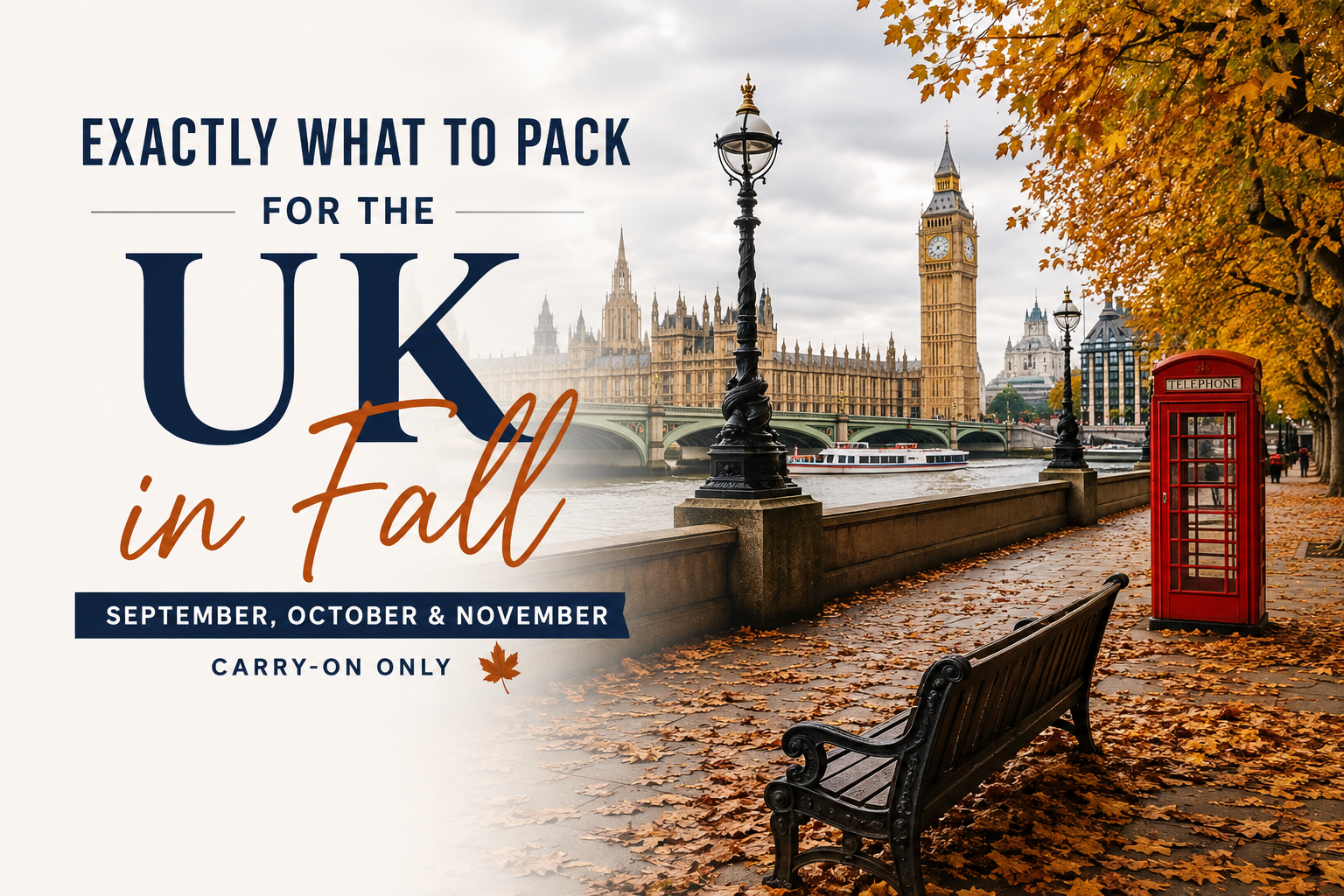
Golden leaves fill London’s parks, Edinburgh becomes even moodier beneath autumn skies, the Cotswolds glow in warm fall colors, historic cities feel made for cozy pub stops, and countryside walks become quieter as summer crowds disappear.
Fall can be a wonderful time to visit the UK.
It can also be one of the easiest seasons to pack badly.
September may still bring pleasantly mild afternoons. October is classic layering weather. By November, colder temperatures, rain, wind, shorter days and chilly evenings make warmer layers much more important — especially in Scotland, northern England, Wales, coastal areas and higher elevations.
You do not need three completely different wardrobes.
You need clothing that layers easily, dependable rain protection, comfortable walking shoes, pieces that can handle changing temperatures and enough flexibility for everything from museums and afternoon tea to castles, countryside walks, pubs and long train days.
This UK fall packing list is designed for travelers visiting during September, October or November while packing carry-on only.
What the UK Is Like in Fall
The first thing to understand is that there is no single version of UK fall weather.
A September afternoon in London can feel very different from the same day in the Scottish Highlands.
Edinburgh, Glasgow and northern England generally become cooler sooner than southern England. Wales can be wet and windy, particularly in exposed areas. Coastal destinations can feel much colder when the wind picks up, and higher-elevation destinations can move toward winter conditions surprisingly early.
For most travelers, UK fall packing means preparing for:
- Mild September afternoons
- Cool mornings and evenings
- Increasingly chilly October weather
- Cold and damp November days
- Rain and sudden showers
- Wind
- Rapid weather changes
- Wet pavement, stone streets and fallen leaves
- Extensive walking
- Trains, buses, the Underground and other public transportation
- Museums, castles, historic houses, cafés, pubs, markets and theaters
- Countryside and coastal day trips
- Much shorter daylight later in fall
September travelers generally need more lightweight clothing and fewer truly warm pieces.
October requires the most balanced suitcase.
November travelers should pack noticeably warmer and treat reliable outerwear as essential rather than optional.
The goal is a flexible wardrobe that works in changing conditions without filling an entire suitcase.

Who This UK Fall Packing List Is For
This list works especially well for:
- Fall trips during September, October, or November
- Carry-on + personal item only
- Approximately two weeks with light laundry
- Trips of up to about one month with regular laundry
- England, Scotland, Wales and Northern Ireland
- London, Bath, Oxford, Cambridge, York and other historic English cities
- The Cotswolds, Lake District and English countryside
- Edinburgh, Glasgow and general Scotland trips
- Cardiff and general Wales trips
- Belfast and Northern Ireland sightseeing
- City breaks
- Multi-city train trips
- Road trips
- Castles and historic attractions
- Museums and galleries
- Theater and evening entertainment
- Markets and shopping
- Countryside and coastal day trips
- Casual walks and easy outdoor sightseeing
- Travelers who expect to walk considerably more than they normally do at home
Travelers planning serious hiking, climbing, camping, long-distance walking or other specialized outdoor adventures will need additional activity-specific equipment.
Universal Essentials
Travel Documents & Money

- Passport
- Visa, electronic travel authorization or other entry documents required for your nationality and travel dates
- Digital and printed copies of your passport
- Digital and printed copies of required entry documents
- Wallet
- Credit and debit cards
- Pound sterling
- International driver’s permit if required
- Travel insurance information
- Flight confirmations
- Hotel confirmations
- Train, rental car, transfer or tour confirmations
- Attraction, theater and event reservations
- Reservation screenshots saved offline
- Hotel names, addresses and phone numbers saved on your phone
- Prescription medication list
- Emergency contact information
- Writing pen for travel forms or other paperwork
The United Kingdom uses the pound sterling (£), abbreviated GBP.
Keep important transportation information, reservations and addresses available offline.
During flights and longer transportation days, keep your passport, medication, valuables and at least one complete change of clothing in your personal item.
Luggage & Organization

- Carry-on suitcase
- Personal item that fits beneath the airplane seat
- Compression packing cubes
- Small jewelry or accessory organizer
- Reusable shopping bag
- Luggage tag
- Wet bag for damp or messy items
- Lightweight shoe bags
- Small zippered pouch for tickets, receipts, and loose travel documents
Choose luggage you can comfortably lift yourself.
A UK trip can involve considerably more suitcase movement than travelers expect.
You may be moving through airports, train stations, Underground stations, hotel staircases, historic streets and platforms while changing cities several times.
A manageable carry-on makes all of that much easier.
Leave some empty space for souvenirs.
Tech & Power
The UK uses 230V electricity at 50Hz with Type G outlets.
Type G is the large three-rectangular-pin plug commonly associated with the UK.
Most modern phones, tablets, laptops, cameras and USB chargers accept 100–240V, but always check the label on your individual device.
A plug adapter changes the plug shape.
It does not change the voltage.

Pack:
- Universal power adapter
- Multi-port USB charger
- Camera
- Portable power bank
- Travel Power Strip
- Extra charger cables
- Earbuds or headphones for planes, trains, and long transit days
- Tech Organizer Case
- Cell Phone (set up an international plan with your provider before you go, or buy a SIM/eSIM for The UK)
- If you’re packing single-voltage electronics like heating pads, hair styling tools, or an electric kettle you’ll need a step-down voltage converter if you’re traveling from a lower voltage country
- Optional: Laptop or Chromebook or Tablet (for work if you must and/or easy entertainment in your own language)
- Optional: Kindle or other e-reader (not sure if Kindle is good for you? Check out my full article about how it’s a perfect travel companion)
Travelers coming from countries that use 100–127V electricity need to check single-voltage appliances carefully.
A North American-style plug adapter alone does not make a single-voltage 120V appliance safe to use with the UK’s 230V electricity.
If the device says 100–240V, you normally need the correct plug adapter rather than a voltage converter.
For a full country-by-country explanation, see my UK Outlet, Plug & Voltage Guide for Travelers.
Keep your power bank in your day bag. Navigation, train information, digital tickets, attraction tickets, photographs and searches can use a surprising amount of battery during a long sightseeing day.
Toiletries & Health
Bring the products you already know you use instead of planning to replace everything after arrival.

Pack:
- Shampoo + Conditioner + Hair masks and /or Olaplex (these are easiest transported in cadence capsules or as solids)
- Toothbrush + toothpaste + mouthwash + floss (travel solids are easiest for these I still pack them in cadence capsules) It’s also a good idea to bring a couple of on the go toothbrushes for long travel days/flights and/or day trips to stay feeling fresh
- Body wash and face wash as well as any other regularly used shower/bath accessories like salt scrubs, bath soaks, and mud in cadence capsules
- Skincare basics for body, hands, face, and feet as well as any daily facial routines like anti-aging serums in cadence capsules
- Deodorant (body deodorant is also recommended for long flights)
- Disposable shavers are easiest to use and leave behind instead of repacking, but be sure to bring at least 1 shaver
- Personal medications with labels
- Pain relievers and any other common OTC medications you use like ant-acids, anti-diarrhea and/or constipation relief, allergy pills, and common cold medicine
- Deep blue, salon-pas, and lidocaine patches are always helpful for unexpected pain from excessive walking, sitting or other activities done while traveling and especially helpful if you’re traveling with older ones
- Blister prevention (bandages or blister pads) and a simple first aid kit
- Sunscreen
- Lip balm
- After-sun lotion
- Hand sanitizer
- Compact wet wipes
- Toiletry Case
- Feminine products, even if you only might need them
- Electrolyte packets
Fall wind, damp weather, indoor heating and long walking days can make lip balm, hand cream, tissues and blister care much more useful than they initially sound.
Do not assume cloudy fall weather means sunscreen is unnecessary, particularly if you will spend most of the day outdoors.
Laundry Kit
A small laundry setup is what allows a carry-on wardrobe to work for two weeks or longer.

Pack:
- Travel-size laundry detergent sheets or liquid in a cadence capsule
- Sink stopper (optional, but helpful in older hotels) or mini travel washer
- A few clothespins or a lightweight travel clothesline
- Clothes refresher spray can be used daily to refresh your clothing between washes
- Small stain-removal pen or wipes
- Separate wet bag for damp clothing or swimsuits
What Makes Laundry Easier
- Quick-dry fabrics
- Lightweight layers
- Pieces that can be reworn
- A coordinated color palette
- Wrinkle-friendly fabrics
- Washing small loads regularly
- Booking accommodation with laundry access during longer trips
Laundry may take considerably longer to air-dry during cool, damp October and November weather.
Do not wash your entire wardrobe the evening before changing hotels.
Wash smaller loads earlier and give everything enough time to dry.
Day Bag Essentials

- Lightweight backpack or secure crossbody bag
- Reusable water bottle
- Compact umbrella
- Packable tote
- Small snack
- Power bank
- Tissues or handkerchief
- Wet wipes
- Hand sanitizer
- Hand cream
- Lip balm
- Light sweater or cardigan
- Packable scarf
- Sunglasses
- Sunscreen
- Compact rain layer
- Warm hat and light gloves for November, colder forecasts or higher elevations
A compact umbrella is useful.
Your hooded rain jacket is more dependable when it is windy.
Leave enough room inside your day bag to store a sweater, scarf or other layer when you enter a warm museum, pub, restaurant, shop or train.
Clothing Packing Lists
Best Fabrics for the UK in Fall
Look for:
- Lightweight cotton
- Cotton blends
- Bamboo
- Modal
- Lightweight merino wool
- Quick-dry travel fabrics
- Wrinkle-friendly fabrics
- Lightweight knits
- Thin fleece
- Water-resistant outerwear
- Wind-resistant outerwear
- Fabrics that layer easily without becoming bulky
Choose carefully:
- Heavy denim that takes a long time to dry
- Several bulky sweaters
- Thick cotton sweatshirts
- Large winter coats for mild September trips
- Suede during wet forecasts
- Slippery-soled shoes
- High heels for long sightseeing days
- Clothing that only works with one outfit
- Brand-new shoes
September travelers will generally need more lightweight pieces.
October travelers need the most balanced mix of lighter clothing, sweaters and weather protection.
November travelers should lean noticeably warmer, especially for Scotland, northern England, Wales, Northern Ireland and countryside trips.
Jump to the Packing List You Need
Women

Clothing
- 3 short-sleeve or lightweight tops
- 2 long-sleeve tops
- 2 pairs of comfortable pants, trousers, or jeans
- 1-2 skirts or additional pair of pants
- 1-2 versatile dresses
- 1 cardigan or lightweight sweater
- 1 warmer sweater or fleece
- 1 packable rain jacket
- 1 packable warm jacket for November, colder forecasts, or Alpine destinations
- 1 optional pair of shorts for unusually warm September travel
- 1–2 sleep sets or nightgowns
- 6–7 pairs of underwear
- 2 bras
- 4–5 pairs of socks
- 1 swimsuit
- 1 swimsuit cover-up
- Optional tights or lightweight leggings for October or November
September travelers can swap one warmer piece for another lightweight top.
November travelers may prefer an additional pair of pants rather than a skirt or dress unless they plan to wear tights.
For Scotland, countryside trips or northern destinations later in fall, choose a rain jacket roomy enough to fit comfortably over your sweater.
One general color palette makes it much easier to combine tops, bottoms, sweaters, jackets, scarves and shoes.
Shoes
- 1 pair of comfortable walking sneakers or supportive slip-on walking shoes
- 1 pair of comfortable closed-toe shoes, water-resistant ankle boots, or other supportive walking shoes
Both pairs should already be broken in.
At least one pair should handle wet pavement reasonably well.
Traction becomes particularly useful on damp stone, fallen leaves, historic streets and countryside paths.
Accessories
- Compact crossbody bag
- Travel make-up stack, eyeliner and mascara
- Makeup remover
- Regular facial skincare
- Small hair brush
- Hair ties or clips
- Simple jewelry
Men
Clothing

- 3 breathable shirts
- 2 long-sleeve shirts
- 1 casual button-down shirt or overshirt
- 2 pairs of comfortable pants, jeans, or travel trousers
- 1 optional pair of shorts for warm September weather
- 1 light sweater, hoodie, or pullover
- 1 warmer sweater or fleece for October or November
- 1 packable rain jacket
- 1 packable warm jacket for November or colder destinations
- 1–2 sleep sets
- 6–7 pairs of underwear
- 5–6 pairs of socks
- 1 pair of swim trunks
A button-down shirt or overshirt can work as both an additional layer and a slightly more polished option for dinner, afternoon tea, theater or evening plans.
Shoes
- 1 pair of comfortable walking sneakers
- 1 pair of clean casual walking shoes or water-resistant boots
Avoid filling your carry-on with several bulky pairs.
Look for dependable traction as well as comfort.
Accessories
Girls

Clothing
- 2–3 short-sleeve tops
- 2–3 long-sleeve tops
- 2–3 pairs of pants, leggings, or comfortable bottoms
- 1 skirt or dress, optional
- 1 cardigan, sweater, or hoodie
- 1 warmer layer for October or November
- 1 packable rain jacket
- 1–2 sleep sets
- 6–7 pairs of underwear
- 5–6 pairs of socks
- 1 swimsuit
- Optional tights or thermal leggings for November
- Optional shorts for warm September trips
Children riding in strollers may feel colder than adults who are actively walking.
During colder weather, bring an appropriate extra layer or compact stroller blanket.
Shoes
- 1 pair of comfortable walking sneakers
- 1 pair of lightweight backup shoes or water-resistant walking shoes
Extras
Keep one complete change of clothing in the child’s personal item during flights and long transportation days.
Boys

Clothing
- 2–3 short-sleeve tops
- 2–3 long-sleeve tops
- 2–3 pairs of pants or joggers
- 1 light sweater or hoodie
- 1 warmer layer for October or November
- 1 packable rain jacket
- 1–2 sleep sets
- 6–7 pairs of underwear
- 5–6 pairs of socks
- 1 pair of swim trunks
- Optional shorts for warm September trips
Shoes
- 1 pair of comfortable walking sneakers
- 1 pair of lightweight backup shoes or water-resistant walking shoes
Extras
Keep one complete change of clothing in the child’s personal item during transportation days.
Things Nobody Tells You About Packing for the UK in Fall

September Is Not Automatically Cold
September is fall in the UK, but that doesn’t mean you should pack as though you’re arriving in November.
Early fall can still bring mild afternoons, particularly in southern England.
You may spend part of the day perfectly comfortable in a lightweight top before wanting a sweater and jacket in the evening.
Build your September suitcase around lightweight clothing with removable layers rather than filling it with heavy sweaters.
London Weather Is Not UK Weather
Checking London’s forecast is useful if you are staying in London.
It does not tell you what Edinburgh, the Scottish Highlands, Snowdonia, the Lake District, Belfast or the coast will feel like.
The UK covers enough distance and enough different landscapes for conditions to vary considerably during the same trip.
Check the forecast for the actual destinations on your itinerary shortly before departure.
A Rain Jacket With a Hood Earns Its Space
Bring the umbrella.
Just do not make it your entire rain strategy.
Wind can make an umbrella awkward, especially along exposed streets, coastal areas, hilltops and countryside routes.
A lightweight waterproof jacket with a hood lets you keep moving without holding anything.
For a normal sightseeing trip, you do not need an enormous expedition raincoat.
You need something packable that blocks rain and wind and comfortably fits over your layers.
“It Might Rain” Does Not Mean Every Day Is Ruined
A gray forecast does not automatically mean continuous rain from breakfast until bedtime.
You may encounter showers, mist, drizzle, dry periods and changing conditions within the same day.
Being prepared matters more than trying to find a completely rain-free week.
Keep your rain layer accessible instead of buried beneath everything else in your suitcase.
Wet Stone Is Slipperier Than It Looks

Edinburgh.
York.
Bath.
Oxford.
Castle grounds.
Old town centers.
Historic stairs.
Wet leaves.
The UK contains plenty of beautiful surfaces that become considerably less charming when your shoes have almost no grip.
Comfort matters.
So does traction.
This is particularly important later in fall when streets, paths and stone steps may stay damp for longer periods.
Scotland May Need a Warmer Version of the Same Suitcase
You do not necessarily need a completely separate Scotland wardrobe.
You may need a warmer version of your existing layers.
A London-and-Edinburgh itinerary in October or November is a perfect example.
The same basic tops, pants and sweaters can work in both places.
Add stronger wind protection, a warmer outer layer, hat, gloves and scarf for colder portions of the trip.
The Highlands Are Different Again
A city trip to Edinburgh is not the same packing problem as spending days driving or walking through the Scottish Highlands.
Exposed landscapes, elevation, rain and wind can make conditions feel substantially colder.
If your trip includes outdoor Highlands sightseeing in late October or November, prioritize waterproof outerwear, warmth and dependable footwear.
Serious hiking requires appropriate hiking equipment beyond this general sightseeing packing list.
Countryside Paths Can Get Muddy
A charming autumn walk through the Cotswolds, Lake District, Welsh countryside or Scottish landscape can become muddy quickly after rain.
You do not automatically need hiking boots for every UK vacation.
You do need footwear you are comfortable getting damp or dirty if countryside walks are part of your plans.
A small plastic or washable shoe bag is useful when it is time to repack.
Castles and Historic Buildings Can Feel Chilly

Do not assume going indoors always means becoming warm.
Modern museums, shops and restaurants may feel cozy.
Old castles, churches, stone buildings and partially outdoor historic attractions can be surprisingly chilly.
A removable sweater or cardigan still earns its place on sightseeing days even when much of the itinerary is technically indoors.
Modern Indoor Spaces Can Be the Opposite
Then you step onto a heated train or into a crowded museum and suddenly every layer feels unnecessary.
This is why removable layers work better than one enormous sweater beneath one enormous coat.
Make sure your day bag has enough room to hold something you take off.
Daylight Shrinks Faster Than Many Visitors Expect
September still offers relatively comfortable sightseeing days.
By late October and November, daylight becomes much more limited — particularly farther north.
That does not mean you cannot travel then.
It means you may spend more time outside during colder mornings and evenings.
A power bank also becomes especially useful when you are relying on your phone for navigation, tickets and transportation after dark.
November Can Feel Much Closer to Winter
November is still part of fall.
Your November suitcase should not look exactly like your September suitcase.
A scarf, warm layer, packable jacket, hat, gloves and reliable waterproof outer layer become much more valuable.
Travelers headed to Scotland or exposed countryside destinations should take this difference particularly seriously.
Bonfire Night Can Mean a Long Cold Evening Outside
If your November trip includes a Bonfire Night event, fireworks display or other outdoor evening celebration, plan for standing outside longer than you would during ordinary sightseeing.
That is exactly when the hat, gloves, warm socks and extra layer that seemed unnecessary while packing suddenly become very useful.
You Do Not Need a Formal Wardrobe

London theater.
Afternoon tea.
Nice restaurants.
Historic hotels.
City evenings.
These can sound as though they require a suitcase full of dress clothes.
Usually they do not.
One polished, versatile outfit is enough for most travelers unless you have a specific formal reservation or event with its own dress requirements.
Choose pieces that still work elsewhere in your trip.
A Swimsuit Is Still Worth Considering
Fall does not automatically make your swimsuit useless.
Your hotel may have a pool.
You may book a spa.
You may visit a wellness center.
You might stay somewhere with a hot tub.
A swimsuit takes very little room.
If there is a realistic chance you will use one, bring it.
Laundry Takes Longer in Cool, Damp Weather
Do not wait until the night before checkout to wash half your suitcase.
Clothing can take longer to air-dry during October and November.
Wash small loads earlier and prioritize lighter, quicker-drying fabrics where possible.
If you are traveling for several weeks, accommodation with laundry facilities can make carry-on travel dramatically easier.
Leave Room for Things You Buy
Books.
Tea.
Chocolate.
Shortbread.
Scarves.
Museum-shop purchases.
Harry Potter merchandise.
Christmas ornaments appearing surprisingly early.
Something tartan.
Something from a castle gift shop.
Something adorable from a tiny village shop that absolutely did not appear in your packing plan.
Do not leave home with every inch of your suitcase occupied.
Compression cubes organize space.
They do not magically create more of it.
Final Thoughts
Packing for the UK in fall is less about preparing for one specific temperature and more about preparing for change.
September travelers should keep plenty of lightweight clothing while adding sweaters and dependable rain protection.
October travelers need the most balanced suitcase, with lighter pieces, warm layers, waterproof outerwear and comfortable closed-toe shoes.
November travelers should pack noticeably warmer and make wind protection, rain protection, scarves, hats and gloves much higher priorities.
Travelers visiting Scotland, northern England, Wales, Northern Ireland, coastal destinations or higher elevations may need warmer layers earlier than travelers spending the entire trip in southern England.
Regardless of the month, prioritize:
- Comfortable walking shoes
- Dependable traction
- Reliable rain protection
- Removable layers
- Wind protection
- Clothing that can be washed and reworn
- A manageable suitcase
- A day bag with enough room for a removed layer
Keep your rain jacket easy to reach.
Keep your power bank charged.
Leave some empty suitcase space.
And check the forecast for the actual UK destinations you will visit shortly before departure.
The UK will provide the castles, cozy pubs, historic cities, misty countryside, dramatic coastlines, museums, theaters, train journeys, golden leaves and wonderfully atmospheric fall days.
You just need to arrive ready for the weather to change its mind.