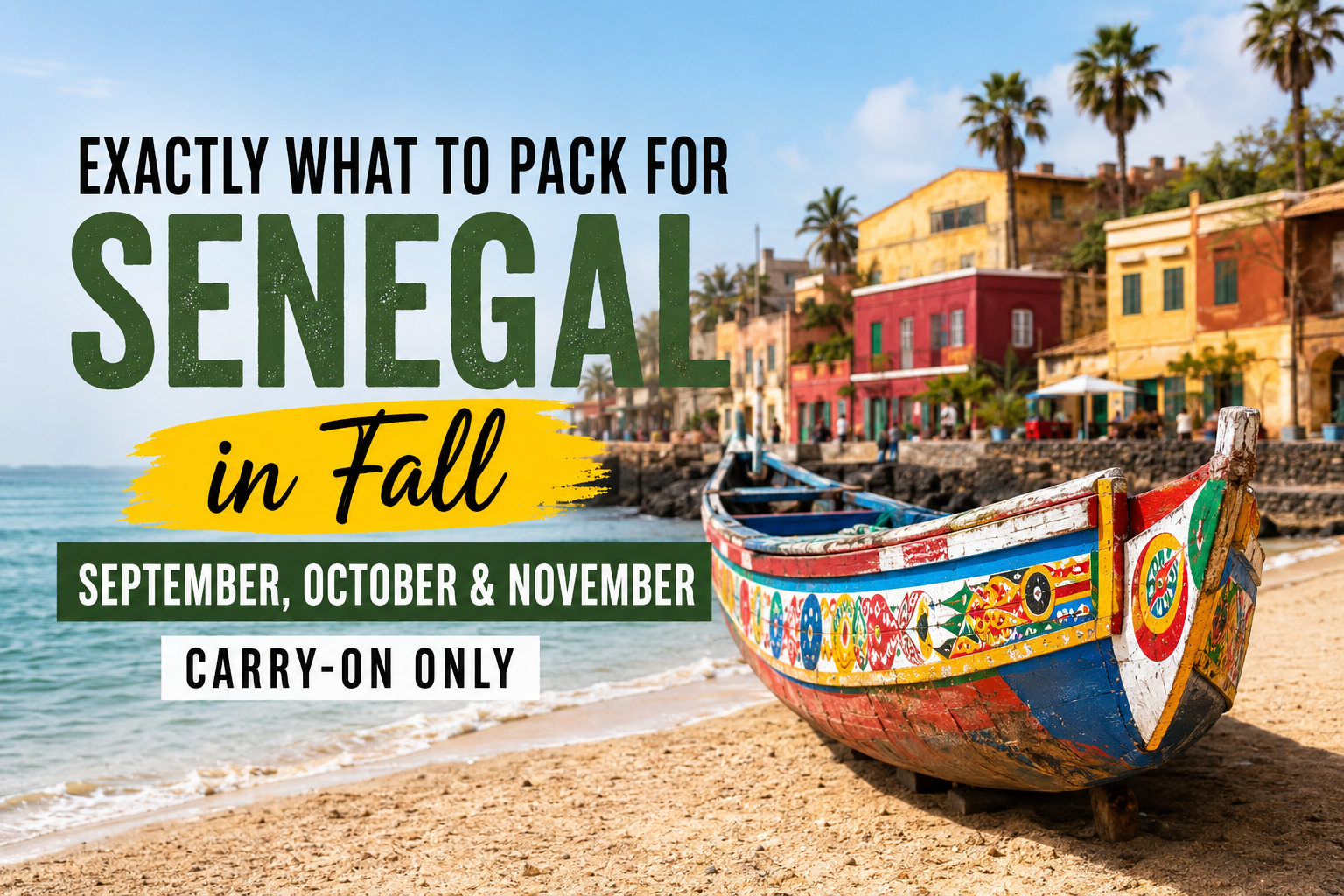
Colorful streets and markets fill Dakar, fishing boats line the Atlantic coast, historic Saint-Louis sits along the Senegal River, and beaches stretch south toward Saly and Casamance.
But if you are visiting Senegal in September, October, or November, forget the traditional idea of a fall wardrobe.
This is tropical packing.
September and October are still part of Senegal’s rainy season, while November marks the beginning of the drier part of the year. Rain also tends to linger longer in southern Senegal than it does farther north.
That means your core suitcase can stay almost exactly the same for all three months.
You need breathable clothing, serious sun protection, insect protection, two swimsuits, comfortable walking shoes, lightweight coverage, and pieces that can be washed and reworn.
The biggest seasonal adjustment is simple:
- September: prioritize rain protection and quick-dry clothing
- October: keep the rain gear — the rainy season is not necessarily finished yet
- November: expect generally drier conditions, but continue packing for heat, sun, and regional differences
This Senegal fall packing list is designed for a carry-on + personal item and enough clothing for approximately two weeks with light laundry.
What Senegal Is Like in Fall
Senegal does not have a traditional four-season fall.
Instead, September, October, and November sit around the transition between the rainy and dry seasons.
For packing purposes, prepare for:
- Tropical heat
- Strong sunshine
- Humidity, particularly earlier in fall
- Rain during September and October
- Wetter conditions lasting longer in southern Senegal
- Beaches and Atlantic coastal days
- Sand and dust
- Mosquitoes and other biting insects
- City sightseeing
- Boat excursions
- Long outdoor days
- Clothing that may take longer to dry during humid weather
- A mix of casual environments and places where a little more coverage is appropriate
You do not need three separate wardrobes.
A lightweight tropical wardrobe works across Dakar, Gorée Island, Saint-Louis, the Petite Côte, Sine-Saloum, Casamance, beach resorts, cities, nature excursions, restaurants, and transportation days.

Who This Senegal Fall Packing List Is For
This guide works especially well for:
- Fall travel during September, October, or November
- Carry-on + personal item only
- Trips of approximately two weeks
- Longer trips with regular laundry
- Dakar and other city stays
- Beach and coastal trips
- Cultural, historical, wildlife, and nature sightseeing
- Travelers comfortable repeating outfits
If you are planning technical trekking, camping, serious fishing, scuba diving, long wildlife expeditions, or another specialized activity, add whatever activity-specific equipment your plans require.
Universal Essentials
Travel Documents & Money

Pack:
- Passport
- Any visa or entry documents required for your nationality and travel dates
- Digital copy of your passport
- Printed copy of your passport
- Copies of important travel documents
- Wallet
- Credit cards & Debit cards
- West African CFA francs (XOF) — Senegal’s local currency
- Travel insurance information
- Flight confirmations
- Hotel confirmations
- Tour and activity confirmations
- Transfer or transportation information
- Emergency contact information
- Writing pen for travel forms or other paperwork
Keep your passport, medications, documents, valuables, chargers, and one complete change of clothing inside your personal item rather than your overhead carry-on.
Luggage & Organization

- Carry-on suitcase
- Personal item that fits beneath the airplane seat
- Compression packing cubes
- Small jewelry or accessory organizer
- Reusable shopping bag
- Luggage tag
- Wet bag for damp or messy items
- Lightweight shoe bags
- Small zippered pouch for tickets, receipts, and loose travel documents
September and October travelers will get especially good use from waterproof organization.
Rain, damp clothing, wet swimsuits, sunscreen, sand, boat spray, and toiletries have a remarkable ability to migrate into the rest of your suitcase.
Keep wet and clean items separate.
Tech & Power
Senegal uses 230V electricity at 50Hz, with Type C and Type E outlets.
Travelers coming from the United States, Canada, Japan, and other countries using Type A/B plugs will need a plug adapter.
Because Senegal uses higher voltage than 110–127V countries, always check the voltage label on every device.
Most modern phones, tablets, laptops, cameras, and USB chargers are labeled 100–240V and only need the correct plug adapter.
Single-voltage 120V appliances require a suitable voltage converter.

Pack:
- Universal power adapter
- Multi-port USB charger
- Camera
- Portable power bank
- Travel Power Strip
- Extra charger cables
- Earbuds or headphones for planes, trains, and long transit days
- Tech Organizer Case
- Cell Phone (set up an international plan with your provider before you go, or buy a SIM/eSIM for Senegal)
- If you’re packing single-voltage electronics like heating pads, hair styling tools, or an electric kettle you’ll need a step-up voltage converter if you’re traveling from a lower voltage country
- Optional: Laptop or Chromebook or Tablet (for work if you must and/or easy entertainment in your own language)
- Optional: Kindle or other e-reader (not sure if Kindle is good for you? Check out my full article about how it’s a perfect travel companion)
A power bank deserves a permanent place in your day bag.
Toiletries & Health
Bring products you already know work for you instead of assuming you will easily find the exact medication, skincare product, hair product, shade, formula, or brand you prefer.

Pack:
- Shampoo + Conditioner + Hair masks and /or Olaplex (these are easiest transported in cadence capsules or as solids)
- Toothbrush + toothpaste + mouthwash + floss (travel solids are easiest for these I still pack them in cadence capsules) It’s also a good idea to bring a couple of on the go toothbrushes for long travel days/flights and/or day trips to stay feeling fresh
- Body wash and face wash as well as any other regularly used shower/bath accessories like salt scrubs, bath soaks, and mud in cadence capsules
- Skincare basics for body, hands, face, and feet as well as any daily facial routines like anti-aging serums in cadence capsules
- Deodorant (body deodorant is also recommended for long flights)
- Disposable shavers are easiest to use and leave behind instead of repacking, but be sure to bring at least 1 shaver
- Personal medications with labels
- Pain relievers and any other common OTC medications you use like ant-acids, anti-diarrhea and/or constipation relief, allergy pills, and common cold medicine
- Deep blue, salon-pas, and lidocaine patches are always helpful for unexpected pain from excessive walking, sitting or other activities done while traveling and especially helpful if you’re traveling with older ones
- Blister prevention (bandages or blister pads) and a simple first aid kit
- Sunscreen
- Lip balm
- After-sun lotion
- Hand sanitizer
- Compact wet wipes
- Toiletry Case
- Feminine products, even if you only might need them
- Electrolyte packets
- Insect repellent
- Bug bite relief
- Motion-sickness medication
- Any prescription glasses, contact lenses, and lens supplies
Do not bury your sunscreen and insect repellent at the bottom of your suitcase.
Those belong somewhere you can actually reach them.
Small Laundry Kit
Carry-on travel becomes dramatically easier when you plan to wash a few things.

Pack:
- Travel-size laundry detergent sheets or liquid in a cadence capsule
- Sink stopper (optional, but helpful in older hotels) or mini travel washer
- A few clothespins or a lightweight travel clothesline
- Clothes refresher spray can be used daily to refresh your clothing between washes
- Small stain-removal pen or wipes
- Separate wet bag for damp clothing or swimsuits
What Makes Laundry Easier
Choose:
- Quick-dry fabrics
- Lightweight clothing
- Pieces you can wear more than once
- Clothing that coordinates easily
- Fabrics that do not require perfect ironing
- Darker or forgiving pieces for travel days
Do smaller loads instead of waiting until everything you own is dirty.
During humid weather, clothing may take longer to dry than you expect.
Two swimsuits are particularly useful because one can dry while you wear the other.
Day Bag Essentials

For most sightseeing days:
- Lightweight backpack or secure crossbody bag
- Reusable water bottle
- Sunglasses
- Sun hat with real coverage
- Sunscreen
- Lip balm
- Insect repellent
- Bug-bite relief
- Power bank
- Waterproof phone pouch
- Tissues or handkerchief
- Wet wipes
- Hand sanitizer
- Small snack
- Any medication you may need during the day in a small case
- Small packable tote
- Lightweight scarf or wrap
- Compact umbrella
- Packable rain jacket or poncho
- Small wet bag
- Quick-dry towel if your plans involve boats or beaches
Clothing Packing Lists
Best Fabrics
Look for:
- Lightweight cotton
- Cotton blends
- Linen blends
- Gauze
- Rayon
- Bamboo
- Modal
- Breathable performance fabrics
- Quick-dry fabrics
- Wrinkle-friendly fabrics
You want clothing that survives heat + sweat + sunscreen + sand + laundry + repeat wear without becoming a whole project.
A Note About Coverage
Senegal is hot, but that does not mean every situation calls for beachwear.
A lightweight long-sleeve shirt, airy trousers, midi or maxi skirt, longer dress, or scarf can be useful for religious sites, cultural visits, villages, sun protection, insects, and generally more conservative settings.
Coverage does not need to mean heavy fabric.
Think lightweight and breathable, not bundled up.
Jump to the Packing List You Need
Women
Clothing

For approximately two weeks with laundry:
- 4–5 breathable tops
- 1–2 lightweight long-sleeve tops
- 2–3 pairs of shorts or lightweight skirts
- 1 pair of lightweight pants
- 1–2 airy dresses
- 1 cardigan or lightweight sweater
- 1 packable rain jacket
- 2 swimsuits
- 1 swimsuit cover-up
- 1 rash guard
- 1–2 sleep sets or nightgowns
- 6–7 pairs of underwear
- 2 bras
- 3-4 pairs of socks
You do not need everything to provide full coverage.
You do want at least one outfit that comfortably covers shoulders and knees without making you overheat.
Shoes
- 1 pair of comfortable walking sneakers
- 1 pair of supportive walking sandals
- 1 pair of flip-flops or slides
- Optional water shoes for specific beach or boat activities
Break shoes in before the trip.
September and October may involve wet pavement, puddles, mud, sand, and slippery surfaces, so traction matters.
Accessories
- Compact crossbody bag
- Travel make-up stack, eyeliner and mascara
- Makeup remover
- Regular facial skincare
- Small hair brush
- Hair ties or clips
- Simple jewelry
- Sun hat
A lightweight scarf is unusually useful here.
It can provide sun coverage, shoulder coverage, warmth in aggressive air conditioning, hair protection, or a little extra privacy when needed without occupying much suitcase space.
Men

Clothing
- 4–5 breathable shirts
- 1 long-sleeve shirts
- 1 linen or lightweight button-down shirt
- 2–3 pairs of shorts
- 1 pair of lightweight pants or travel trousers
- 1 light sweater, hoodie, or overshirt
- 1 packable rain jacket or poncho
- 2 pairs of swim trunks
- 1 rash guard
- 1–2 sleep sets
- 6–7 pairs of underwear
- 4–5 pairs of socks
A lightweight button-down and trousers give you an easy option for restaurants, cultural visits, religious sites, or anywhere shorts and a T-shirt feel too casual.
Shoes
- 1 pair of comfortable walking sneakers
- 1 pair of secure supportive sandals
- 1 pair of flip-flops or slides
- Optional water shoes
Accessories
Girls

Clothing
- 4–5 lightweight short-sleeve tops
- 1–2 breathable long-sleeve tops
- 3–4 pairs of shorts, or skirts
- 1 pair of pants
- 1–2 breathable dresses
- 1 light cardigan, hoodie, or overshirt
- 1 packable rain jacket or poncho
- 2 swimsuits
- 1 swimsuit cover-up
- 1 rash guard
- 1–2 sleep sets
- 6–7 pairs of underwear
- 3–4 pairs of socks
Choose clothing that can survive sunscreen, sand, sweat, food spills, rain, and repeated laundry without drama.
Shoes
- 1 pair of comfortable walking sneakers
- 1 pair of secure sandals
- 1 pair of flip-flops or slides
- Optional water shoes
Extras
Keep one full replacement outfit in the child’s personal item.
Boys

Clothing
- 4–5 lightweight short-sleeve tops
- 1–2 breathable long-sleeve tops
- 3–4 pairs of shorts
- 1–2 pairs of lightweight pants or joggers
- 1 light hoodie or overshirt
- 1 packable rain jacket or poncho
- 2 pairs of swim trunks
- 1 rash guard
- 1–2 sleep sets
- 6–7 pairs of underwear
- 3–4 pairs of socks
Shoes
- 1 pair of comfortable walking sneakers
- 1 pair of secure sandals
- 1 pair of flip-flops or slides
- Optional water shoes
Extras
Again, keep one full replacement outfit inside the child’s personal item rather than putting everything overhead.
Things Nobody Tells You About Senegal in Fall

“Fall” Is Mostly a Calendar Label
If you are coming from North America or Europe, September may make you think of changing leaves and October may make you think of sweaters.
Senegal has other plans.
Your suitcase should still look like a hot-weather tropical suitcase.
September and October Need a Rain Plan
Rain protection should not consist of one umbrella trapped inside your hotel room.
Keep something lightweight in your day bag.
A packable poncho, compact umbrella, waterproof phone pouch, and wet bag take very little space and can save a surprisingly inconvenient afternoon.
November Does Not Require a New Wardrobe
November begins the dry season, but that does not mean you should replace your tropical clothing with fall clothes.
Keep the breathable wardrobe.
Keep the sun protection.
Keep the swimsuit.
You can simply make rain gear less central.
Southern Senegal May Stay Wetter Longer
If your itinerary reaches Casamance or other southern areas, do not assume that conditions will match Dakar exactly.
Rain tends to continue longer in southern Senegal.
Check the weather for the actual places on your itinerary shortly before you leave.
Lightweight Coverage Is More Useful Than Heavy Clothing
Long sleeves and trousers have several jobs.
They can help with:
- Sun
- Insects
- Cultural visits
- Religious sites
- Cooler indoor spaces
- Evening coverage
The trick is choosing breathable fabric.
A heavy sweatshirt accomplishes the coverage part while making the tropical-weather part significantly less enjoyable.
Two Swimsuits Are Worth the Space

Between beach days, pools, boat excursions, and humid weather, having a second swimsuit is extremely convenient.
Wear one.
Let the other one dry.
Rotate.
Problem solved.
Wet Laundry Can Become a Transportation-Day Problem
Do not wash half your suitcase the night before changing hotels.
Humidity can make drying unpredictable.
Wash earlier, hang items with plenty of airflow, and keep a wet bag ready for anything that stubbornly refuses to dry.
A Waterproof Phone Pouch Is Not Just for Swimming
It can protect your phone from:
- Tropical rain
- Boat spray
- Wet beach bags
- Damp towels
- Sand
- Accidental splashes
It is one of the smallest things in the suitcase and one of the easiest things to be grateful you packed.
Sun Protection Belongs in Your Day Bag
Do not treat sunscreen like a morning-only hotel-room activity.
Long sightseeing days can mean hours outdoors.
Keep sunscreen, sunglasses, your hat, water, and lip balm accessible.
Insect Repellent Is Not Just for Wildlife Trips
Do not leave it behind simply because you are spending the day in a city or near the beach.
Keep a small bottle in your day bag, particularly during wetter months and for evenings outdoors.
Your Nicer Outfit Can Still Be Lightweight
You may want something a little more polished for restaurants, evenings out, cultural visits, or a nicer hotel.
That does not require formalwear.
A breathable dress, button-down shirt, lightweight trousers, midi skirt, or polished sandals can handle the job without creating an entirely separate vacation wardrobe.
Your Personal Item Should Be Able to Save Your First Night
Keep these with you:
- One complete outfit
- Underwear
- Medication
- Basic toiletries
- Phone charger
- Documents
- Valuables
If your overhead carry-on gets unexpectedly gate-checked, you still have everything necessary to survive comfortably until it reappears.
Final Thoughts
Packing for Senegal in September, October, or November becomes much easier once you stop thinking of the trip as traditional fall travel.
September and October: pack for tropical heat, humidity, sunshine, and rain.
November: keep the same lightweight tropical wardrobe, but transition toward drier conditions.
Across all three months, prioritize breathable clothing, sun protection, insect repellent, comfortable walking shoes, two swimsuits, lightweight coverage, a small laundry kit, and a day bag that can handle long hours outdoors.
You do not need a different outfit for Dakar, Saint-Louis, Saly, Gorée Island, Sine-Saloum, and every other stop.
You do not need a different wardrobe for every week of fall.
And you definitely do not need a giant suitcase.
Pack light. Wash and repeat. Protect yourself from the sun and rain. Leave enough room for whatever comes home with you.
Then go enjoy Senegal.