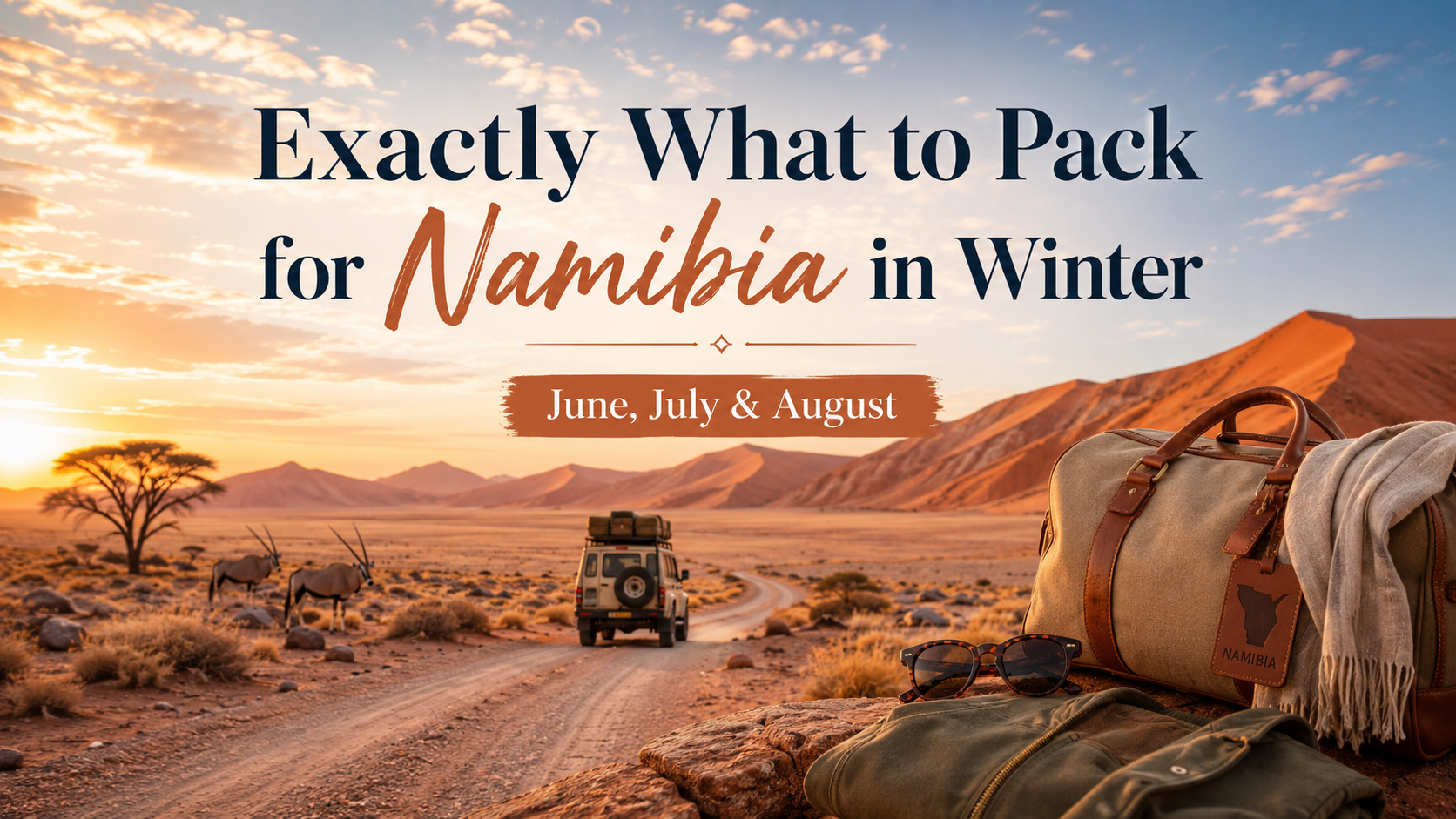
Namibia is the kind of place that feels almost unreal the first time you start imagining it — endless desert roads, apricot-colored dunes, white salt pans, wildlife gathering at dry-season waterholes, fog drifting in from the Atlantic, and lodges tucked into landscapes so wide and quiet they almost feel otherworldly.
This is a trip for sunrise dune climbs, golden safari drives, stargazing under huge desert skies, quiet evenings at remote lodges, and road trips where the scenery keeps changing from red sand to rocky mountains to wild coastline. Namibia feels adventurous, cinematic, and deeply peaceful all at once.
But that same drama is exactly why packing for Namibia in winter takes a little strategy.
June, July, and August fall during Namibia’s Southern Hemisphere winter, and the weather can swing more than travelers expect. Mornings can be cold enough for gloves and a warm layer, afternoons can turn bright and sunny, desert nights can feel genuinely chilly, and coastal towns like Swakopmund and Walvis Bay can bring fog, wind, and cool Atlantic air.
This is not a trip where you want a giant suitcase full of “just in case” outfits. It is a trip where you want smart layers, sun protection, dust-friendly basics, and road-trip comfort items that work across safari drives, desert lodges, coastal stops, and long travel days.
The goal is simple: pack light, stay comfortable, and be ready for Namibia’s winter magic without overthinking your bag.
What Namibia Is Like in Winter
Namibia’s winter runs through June, July, and August, which are Southern Hemisphere winter months.
This is usually one of the best times to visit Namibia because the weather is dry, skies are often clear, and wildlife viewing can be excellent around waterholes. But “dry season” does not mean “hot all the time.”
In places like Etosha National Park, Sossusvlei, the Namib Desert, and inland lodge areas, mornings and nights can be genuinely cold. If you are heading out before sunrise for dunes, safari drives, or photography, you will want real layers.
By midday, the sun can feel strong again, especially in open desert landscapes where shade can be limited.
On the coast, Swakopmund and Walvis Bay can feel cooler, foggier, and windier than travelers expect. The Atlantic coast has its own climate mood, so it is smart to pack for both desert sun and coastal chill.
The basic Namibia winter packing rule is simple:
Pack for cold mornings, sunny afternoons, dusty road trips, chilly desert nights, and cooler coastal weather.

Who This Namibia Winter Packing List Is For
This Namibia winter packing list is for travelers visiting in June, July, or August who want to pack carry-on only without feeling underprepared.
It is especially useful if your trip includes:
- Season: Namibia winter — June, July, August
- Luggage style: Carry-on + personal item only
- Typical trip type: Etosha safari drives, Sossusvlei dunes, Swakopmund, Walvis Bay, Skeleton Coast, Windhoek, desert lodges, road trips, and mixed-region Namibia itineraries
Universal Essentials for Namibia in Winter
Start with the essentials that make the whole trip easier. Namibia is a destination where you may spend long hours between towns, lodges, parks, and scenic stops, so having your basics organized matters.
Bring:
- passport + digital/printed copies
- wallet
- credit cards
- local currency (Namibian Dollar)
- International driver’s permit if needed
- travel insurance information
- flight confirmations
- hotel confirmations
- train, ferry, or car rental confirmations if needed
- reservation screenshots or printouts
- medications prescription list
- emergency contact information
- writing pen (for customs forms and other random exchanges)
Tech & Power
Namibia is a big-scenery destination, which means your phone, camera, power bank, and chargers are going to work hard. Between long road days, safari drives, desert sunrises, and remote lodge stays, it is worth having your tech organized before you arrive.

Bring:
- Adapter
- Multi-port USB charger
- Phone, and/or camera
- Portable power bank (essential for long sightseeing days)
- Travel Power Strip
- Earbuds or headphones for planes, trains, and long transit days
- Tech Organizer Case
- Cell Phone (set up an international plan with your provider before you go, or buy a SIM/eSIM for Namibia)
- Optional: Laptop or Chromebook or Tablet (for work if you must and/or easy entertainment in your own language)
- Optional: Kindle or other e-reader (not sure if Kindle is good for you? Check out my full article about how it’s a perfect travel companion)
Namibia uses different plug shapes than many travelers may have at home, so do not assume your regular plug will fit. Check your devices before you leave, especially anything that heats up.
Most modern phone, laptop, camera, and USB chargers are dual voltage, but hair tools and heated appliances are where travelers can run into trouble.
Look for 100–240V printed on the device or charger. If your device is not dual voltage, you may need a voltage converter, not just a plug adapter.
Toiletries & Health
Namibia winter travel can be dry, dusty, sunny, windy, and cold in the same trip. You do not need a giant toiletry bag, but you do want comfort items that help with desert air, dust, sun, and long days out.
Bring:
- Shampoo + Conditioner + Hair masks and /or Olaplex (these are easiest transported in cadence capsules or as solids)
- Toothbrush + toothpaste + mouthwash + floss (travel solids are easiest for these I still pack them in cadence capsules) It’s also a good idea to bring a couple of on the go toothbrushes for long travel days/flights and/or day trips to stay feeling fresh
- Body wash and face wash as well as any other regularly used shower/bath accessories like salt scrubs, bath soaks, and mud in cadence capsules
- Skincare basics for body, hands, face, and feet as well as any daily facial routines like anti-aging serums in cadence capsules
- Deodorant (body deodorant is also recommended for long flights)
- Disposable shavers are easiest to use and leave behind instead of repacking, but be sure to bring at least 1 shaver
- Personal medications with labels
- Pain relievers and any other common OTC medications you use like ant-acids, anti-diarrhea and/or constipation relief, allergy pills, and common cold medicine
- Deep blue, salon-pas, and lidocaine patches are always helpful for unexpected pain from excessive walking, sitting or other activities done while traveling and especially helpful if you’re traveling with older ones
- Blister prevention (bandages or blister pads) and a simple first aid kit
- Hand sanitizer
- Compact wet wipes
- Toiletry Case
- High-SPF sunscreen
- Electrolyte packets for hydration on the go
Namibia’s dry winter air can sneak up on you. Lip balm, moisturizer, eye drops, and saline spray can make a real difference, especially if you are doing desert drives, safari days, or windy coastal stops.
Wipes are also extremely useful. Dust is part of Namibia travel, and wipes help with hands, shoes, bags, car days, and quick freshening up between stops.
Laundry Kit
A small laundry kit helps you pack lighter and re-wear pieces more comfortably, especially on longer Namibia routes where you may move between lodges, parks, and coastal towns.

A tiny laundry kit helps a lot:
- Travel-size laundry detergent sheets or liquid
- Sink stopper (optional, but helpful in older hotels) or mini travel washer
- A few clothespins or a lightweight travel clothesline
- Clothes refresher spray can be used daily to refresh your clothing between washes
What to know:
- Quick-dry fabrics make this much easier
- Wash small items as needed
- Let socks, underwear, and damp layers dry fully before repacking
- Do not assume clothing will dry overnight if your room is cool or humid
- If you hate sink laundry, add 1 extra top and 1 extra underwear set and keep the rest the same
- If possible, choose accommodation with laundry access once during a longer trip
Namibia’s dry air can help lightweight pieces dry faster, but lodge setups can vary. Keep the kit small and practical. The goal is not to do a full laundry production every night — just to make carry-on packing easier.
Day Bag Essentials
Your day bag matters in Namibia because days can be long, distances can be wide, and you may not be near your room, car, or shops for hours.
Bring:
- Day bag or anti-theft crossbody
- Refillable filtered water bottle
- Sunglasses
- Sun hat
- Sunscreen
- Lip balm with SPF
- Portable power bank
- Packable quick dry towel and/or sarong
- Tissues
- Minimal wallet
- Individually wrapped wet wipes
- Optional handheld fan or cooling towel
- insect repellent
- hand sanitizer
- minimal wallet
- light scarf or wrap
- camera or phone grip
- binoculars
- hair ties or clips
- small wet bag or zip pouch for dusty, damp, or messy items
- any daily medication you may need before returning to your room I like to bring mine in a cadence capsule
A scarf or neck gaiter is especially useful in Namibia because it can help with cold mornings, wind, dust, sun, and long road days without taking up much space.
Clothing Packing Lists Jump Menu
Packing List for Women
For women visiting Namibia in winter, the best strategy is light, practical layers that can handle chilly mornings, sunny afternoons, and dusty travel days.
Clothing
- 2 pairs of pants or jeans
- 1 lightweight pants
- 4 short-sleeve or breathable rayon tops or long-sleeve tops
- 1 sweaters or knit tops
- 1 warm coat or insulated jacket
- 1 lightweight waterproof rain jacket or shell
- 1-2 casual dresses
- 1-2 sleep set or nightgown
- 6–8 pairs of underwear
- 2 bras
- 4–6 pairs of socks
- 1 swimsuit if your hotel has a heated pool, spa, or hot tub
Shoes
- Comfortable waterproof walking shoes or boots
- Dressier flats, loafers, or ankle boots for city dinners
- Lightweight sandals or flip-flops for hotel rooms, spas, or pools
Accessories
- Compact crossbody bag
- Travel make-up stack, eyeliner and mascara
- Facial skincare routine
- Make-up remover wipes
- Minimal jewelry
Packing List for Men
For men visiting Namibia in winter, pack simple layers that work for safari drives, road trips, lodge stays, and casual dinners.
Clothing
- 2 pairs of jeans or travel pants
- 1 lightweight pants
- 4 breathable shirts
- 2 long sleeve shirts
- 1 sweaters or quarter-zips
- 1 warm coat or insulated jacket
- 1 lightweight waterproof rain jacket or shell
- 1-2 sleep set
- 6–8 pairs of underwear
- 4–6 pairs of socks
- 1 swim trunks
Shoes
Accessories
- Shaving kit or beard grooming kit
- Travel sling or backpack (easy on trains and in crowded areas)
Packing List for Girls
For girls visiting Namibia in winter, focus on comfortable layers, warm morning pieces, and easy outfits for long car days.
Clothing
- 4–5 lightweight wool or breathable tops
- 2 bottoms (leggings, pants, or skirts suitable for lots of walking)
- 1 warmer layer (sweater or hoodie)
- 1 light jacket (rain-friendly is ideal)
- 1 fleece or warm jacket
- 1 sleep set
- 1 Swimwear
- Underwear + socks for 6–7 days
- Comfortable walking shoes (already broken in)
Accessories
- Small backpack (easy for day trips and trains)
- Handheld game console and/or Kindle
- Snacks
Packing List for Boys
For boys visiting Namibia in winter, pack pieces that can handle chilly starts, dusty days, and active travel without making the bag complicated.
Clothing
- 4–5 wool tops
- 2 bottoms (pants or joggers suitable for lots of walking)
- 1 warmer layer (sweater or hoodie)
- 1 light jacket (rain-friendly if possible)
- 1 warm jacket
- 1 sleep set
- Underwear + socks for 6–7 days
- Comfortable sneakers (already broken in)
Accessories
- Handheld game console and/or Kindle (great for trains and downtime)
- Backpack (small and easy to manage on transit)
- Snacks
Things Nobody Tells You About Packing for Namibia in Winter

Safari Mornings Can Be Freezing
Early game drives can feel much colder than travelers expect, especially in open vehicles. Bring the beanie, gloves, scarf, and warm layer. You can always take them off later once the sun comes up.
Desert Nights Get Cold Fast
The desert can feel warm and golden during the day, then suddenly chilly after sunset. Warm sleepwear and a real evening layer are worth the space.
The Coast Feels Different From Inland Namibia
Swakopmund and Walvis Bay can be foggy, windy, and cool even when inland areas are dry and sunny. Do not pack only for desert heat.
Dust Is Part of the Experience
Dust can get on shoes, bags, cameras, clothes, hair, and skin. Wipes, sunglasses, a scarf, lip balm, and a simple laundry kit all help.
Long Drives Are Normal
Namibia is beautiful, but distances can be big. Keep water, snacks, chargers, tissues, wipes, and layers within reach instead of buried in your suitcase.
Sun Protection Still Matters in Winter
Winter does not cancel the desert sun. Sunscreen, sunglasses, lip balm, and a hat are still important, especially in open landscapes with limited shade.
Lodges Are Usually Practical and Relaxed
You do not need a dressy wardrobe for most Namibia trips. One nicer casual outfit is usually enough for lodge dinners or city meals.
A Neck Gaiter or Scarf Does a Lot
A small scarf or neck gaiter can help with dust, wind, cold mornings, sun exposure, and road-trip comfort. It is one of the most useful small items to pack.
Final Thoughts
Packing for Namibia in winter is really about respecting the contrasts.
This is a country of cold safari mornings, bright desert afternoons, dusty gravel roads, chilly lodge nights, foggy Atlantic coastlines, and huge open landscapes that make every day feel a little different.
You do not need to overpack. You just need the right layers, the right sun protection, a practical day bag, and a few comfort items that make long drives and early mornings easier.
Pack light, pack thoughtfully, and leave room to actually enjoy the magic — the dunes, the wildlife, the coast, the stars, and those wide Namibia horizons that make the whole trip feel unforgettable.