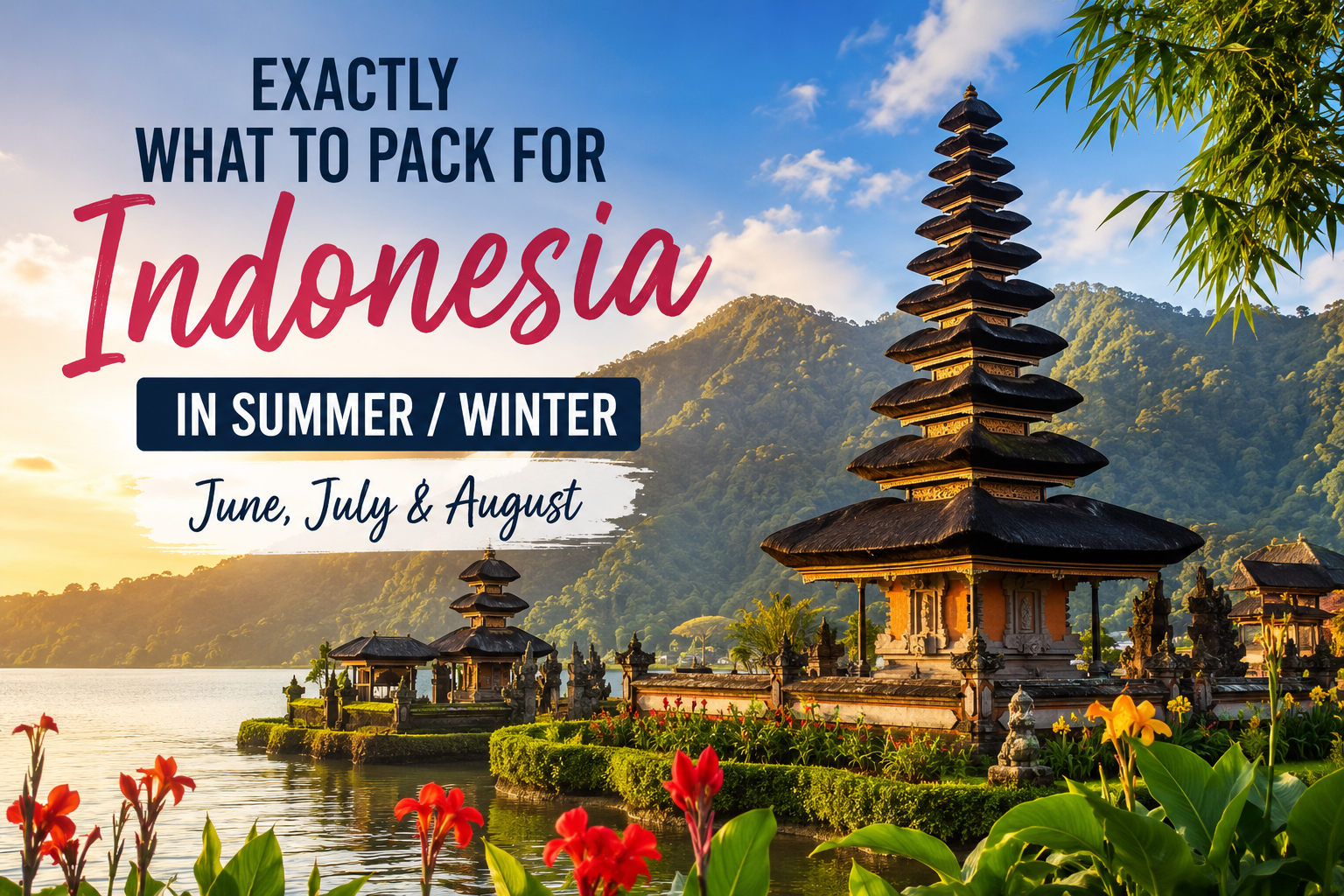
Indonesia is the kind of place that makes travel feel enormous again.
It is sunrise over misty volcanoes, temple gates glowing in the morning light, scooters humming past rice terraces, incense drifting through courtyards, and beaches that shift from soft gold to turquoise depending on the hour. It is jungle humidity, island boats, reef water, waterfalls, markets, coffee, fruit, flowers, and that unmistakable feeling of being somewhere layered — ancient, tropical, spiritual, chaotic, gentle, and wild all at once.
A trip to Indonesia can be as relaxed or as adventurous as you want it to be. You might spend your mornings walking through temple grounds in Bali, your afternoons swimming in warm ocean water, and your evenings watching the sky turn pink over the beach. Or you might be hopping between islands, sailing around Komodo, exploring Java’s cultural cities, chasing waterfalls in Lombok, snorkeling over coral reefs, or waking before dawn for a volcano viewpoint you will remember forever.
That is what makes Indonesia magical — and also why packing for it can feel confusing.
If you are traveling from North America, Europe, or another Northern Hemisphere country, June, July, and August probably feel like summer vacation months. But Indonesia sits around the equator, and many of the country’s most popular travel areas — including Bali, Java, Lombok, Komodo, and Flores — are south of the equator. That means June through August technically falls during Southern Hemisphere winter in many of the places travelers visit most.
The good news? “Winter” in Indonesia does not mean cold weather.
For most travelers, packing for Indonesia in June, July, and August means packing for tropical warmth, humidity, strong sun, temple visits, beach days, boat transfers, reef trips, sudden rain, and possibly cooler mornings if you are heading to higher elevations or volcano viewpoints.
This Indonesia packing list is designed to keep things simple: carry-on only, no guesswork, and no overpacking for imaginary weather you are unlikely to need.
Destination Context / Notes
Indonesia does not fit neatly into one simple “summer” or “winter” travel box.
The country stretches across the equator, so the season depends partly on where you are going. Many popular destinations, including Bali, Java, Lombok, Komodo, and Flores, are south of the equator. In those areas, June, July, and August fall during the local winter season.
But this is tropical winter, not cold winter.
For packing purposes, think:
- Warm tropical days
- Strong sun
- Humidity
- Beach and pool weather
- Temple and cultural sightseeing
- Boat rides and island transfers
- Reef, snorkeling, or diving days
- Possible rain showers
- Cooler mornings in higher elevations
- Lightweight layers, not heavy clothing
If your trip includes places like Bali, Java, Lombok, Komodo, Flores, or the Gili Islands, your suitcase should be built around breathable clothing, practical shoes, sun protection, modest coverage for temples, and items that make heat, humidity, and island travel easier.

Who This Packing List Is For
This packing list is for travelers visiting Indonesia during June, July, and August, especially if your trip includes Bali, Java, Lombok, Komodo, Flores, the Gili Islands, or similar popular travel areas.
It is designed for:
- Season: June, July, and August — summer vacation months for Northern Hemisphere travelers, but winter/dry-season months for many popular Indonesian island destinations
- Luggage style: Carry-on + personal item only
- Typical trip type: Temples, beaches, island hopping, boat trips, cultural sightseeing, reef days, volcano viewpoints, rice terraces, markets, cafés, and relaxed tropical travel
Universal Essentials
These are the basic non-clothing items I would not leave home without:
- passport
- wallet
- credit cards / debit card
- some Kndonesian Rupiah cash
- travel insurance info
- flight, hotel, safari lodge, and transfer confirmations
- printed or saved copies of important reservations
- phone + charging cables
- medications, prescription + OTC home basics
- writing pen for immigration forms, luggage tags, and random travel moments
Keep these easy to access, especially if your Indonesia trip includes multiple islands, smaller airports, ferry transfers, drivers, or hotel changes.
Tech & Power

Indonesia is a very phone-heavy destination for most travelers. You may be using maps, translation, ride apps, ferry confirmations, hotel messages, photos, videos, and tour details throughout the day.
Pack:
- universal power adapter
- Cell phone (with international plan / eSIM / SIM set up before departure)
- Multi-port USB charging block
- Travel Power Strip
- Phone charging cable (bring a backup cable if you’re rough on cords)
- Portable power bank (essential for long sightseeing days)
- Earbuds or headphones
- Translation headphones
- Electronics travel organizer
- Optional: Laptop or Chromebook or Tablet (for work if you must and/or easy entertainment in your own language)
- Dual-voltage small appliances like hair dryer, curling iron, hair straightener or heating pad OR a step down voltage converter if your device is not compatible with 230V
- Optional: Kindle or other e-reader (not sure if Kindle is good for you? Check out my full article about how it’s a perfect travel companion)
Indonesia commonly uses Type C and Type F plugs and 230V electricity.
Most modern phone chargers, laptop chargers, camera chargers, and USB chargers are dual voltage, but always check the label. If it says 100–240V, you usually only need a plug adapter.
Be more careful with heat tools. If you are bringing a curling iron, flat iron, blow dryer, steamer, or similar appliance from a 100–120V country, make sure it is dual voltage before using it in Indonesia.
Toiletries & Health
Indonesia packing should account for heat, sun, humidity, mosquitoes, unfamiliar food, and long travel days.
Pack:
- Shampoo + Conditioner + Hair masks and /or Olaplex (these are easiest transported in cadence capsules or as solids)
- Toothbrush + toothpaste + mouthwash + floss (travel solids are easiest for these I still pack them in cadence capsules) It’s also a good idea to bring a couple of on the go toothbrushes for long travel days/flights and/or day trips to stay feeling fresh
- Body wash and face wash as well as any other regularly used shower/bath accessories like salt scrubs, bath soaks, and mud in cadence capsules
- Skincare basics for body, hands, face, and feet as well as any daily facial routines like anti-aging serums in cadence capsules
- Deodorant (body deodorant is also recommended for long flights)
- Disposable shavers are easiest to use and leave behind instead of repacking, but be sure to bring at least 1 shaver
- Personal medications with labels
- Pain relievers and any other common OTC medications you use like ant-acids, anti-diarrhea and/or constipation relief, allergy pills, and common cold medicine
- Deep blue, salon-pas, and lidocaine patches are always helpful for unexpected pain from excessive walking, sitting or other activities done while traveling and especially helpful if you’re traveling with older ones
- Blister prevention (bandages or blister pads) and a simple first aid kit
- Sunscreen
- Lip balm
- Hand sanitizer
- Compact wet wipes
- Toiletry Case
- Feminine products, even if you only might need them
Motion sickness medicine is especially useful if your itinerary includes ferries, boats, winding roads, island transfers, or Komodo-area trips.
Electrolytes are also helpful because heat and humidity can sneak up on you, especially on long sightseeing days, beach days, or outdoor tours.
Laundry Kit

A small laundry kit is useful in Indonesia because clothes can get sweaty quickly, even during the drier months.
A tiny laundry kit helps a lot.
- Travel-size laundry detergent sheets or liquid
- Sink stopper (optional, but helpful in older hotels) or mini travel washer
- A few clothespins or a lightweight travel clothesline
- Clothes refresher spray can be used daily to refresh your clothing between washes
What to Know
- Quick-dry fabrics make this much easier
- Wash small items as needed
- If you hate sink laundry, add 1 extra top and 1 extra underwear set and keep the rest the same
- If possible, aim for accommodation with laundry access at least once during a longer trip
Humidity can slow drying time, so try not to wash something at the last minute if you need it the next morning.
Day Bag Essentials
Your Indonesia day bag should be light, practical, and ready for long days out.
Pack a day bag that can hold your daily essentials without becoming bulky. This is especially useful for temple days, beach days, boat trips, rice terrace visits, long drives, markets, and full sightseeing days away from your hotel.
Good options include:
- Day bag or anti-theft crossbody
- Refillable filtered water bottle
- Sunglasses
- Sun hat
- Sunscreen
- Lip balm with SPF
- Portable power bank
- Packable quick dry towel and/or sarong
- Tissues
- Minimal wallet
- Individually wrapped wet wipes
- Optional handheld fan or cooling towel
- Insect repellent
- Hand sanitizer
- Light scarf or wrap
- camera or phone grip
- Hair ties or clips
- Small wet bag or zip pouch for dusty, damp, or messy items
- Any daily medication you may need before returning to your room I like to bring mine in a cadence capsule
For Indonesia, choose something comfortable in heat and easy to keep close in busy areas.
Clothing Packing Lists Jump Menu
Use the list that fits your traveler type:
Women’s Packing List for Indonesia in Summer / Winter
For women, the goal is breathable, comfortable clothing that works for tropical heat while still giving you modest options for temples and cultural sites.
Clothing
- 4–6 breathable tops (rayon, linen, cotton)
- 2–3 skirts or shorts
- 1–2 airy dresses
- 1 lightweight pant
- Swimwear (1–2)
- Cover-up or light wrap
- 2-3 bras 7 pairs of underwear + 2 sleepwears
- Light scarf
Shoes
Extras
- Minimal jewelry
- Dry Bag or Beach Tote
- Sun hat with real coverage
- Sunglasses
- Hair clips or ties
- Small wet bag
Choose fabrics that feel good in humidity, such as linen, cotton, gauze, rayon, lightweight viscose, or quick-dry travel fabrics.
For temple days, make sure you have something that can cover shoulders and knees. A sarong or lightweight wrap is one of the most useful pieces you can bring because it works for temples, beach days, boat rides, and breezy evenings.
Do not overpack shoes. Indonesia is casual, warm, and often humid, so practical shoes matter more than a large shoe wardrobe.
Men’s Packing List for Indonesia in Summer / Winter
For men, Indonesia packing should be simple: breathable shirts, lightweight bottoms, swimwear, and a few pieces that work for temples, dinners, and travel days.
Clothing
- 4–6 breathable shirts
- 2–3 shorts
- 1–2 lightweight pants
- Swim trunks
- Sleepwear
- Underwear + socks
Shoes
- Walking sneakers
- Sandals or slides
- Optional water shoes
- Optional dressier shoe
Extras
Lightweight pants are useful for temples, dinners, mosquitoes, travel days, and places where shorts feel too casual.
If you are doing volcano hikes or more serious trekking, bring shoes with better grip.
Girls’ Packing List for Indonesia in Summer / Winter
For girls, pack easy outfits that work for heat, humidity, beach days, temples, and messy travel days.
Pack:
- Lightweight tops
- Shorts, skirts, or dresses
- Comfortable walking shoes
- Sandals or water shoes
- Swimwear + cover-up
- Sun hat
- Light evening layer
- Small backpack
- Sunscreen
- Handheld game console and/or Kindle
- Snacks
Choose soft, breathable fabrics that will not feel scratchy or clingy in humidity.
Water shoes can be helpful for rocky beaches, boat days, waterfalls, and reef areas.
Boys’ Packing List for Indonesia in Summer / Winter
For boys, focus on breathable, durable clothes that can handle sweat, sand, boats, beaches, and active days.
Pack:
- Breathable tees
- Shorts
- Lightweight pants
- Sneakers
- Sandals or water shoes
- Swimwear
- Sun Hat
- Light hoodie
- Small backpack
- Sunscreen
- Handheld game console and/or Kindle
- Snacks
Quick-dry clothing is especially helpful for kids because things can get wet, sandy, sweaty, or spilled on quickly.
If your itinerary includes hiking or volcano viewpoints, make sure sneakers have decent grip.
Things Nobody Tells You About Packing for Indonesia in Summer / Winter

Indonesia is not hard to pack for, but it is easy to pack for the wrong version of the trip. These are the things that can make your suitcase much smarter.
“Winter” Does Not Mean Cold
In many popular Indonesian destinations south of the equator, June, July, and August fall during winter months. But this is tropical winter, not coat-and-boots winter.
You are still packing for warmth, sun, humidity, beach weather, and active sightseeing.
The only time you may want a real layer is for early mornings, higher elevations, volcano viewpoints, air-conditioned transfers, or breezy boat rides.
Indonesia Is Not Just Bali
Bali may be the place many travelers picture first, but Indonesia is huge.
A Bali-only trip may feel very different from an itinerary that includes Java, Komodo, Lombok, Flores, Raja Ampat, or Sumatra. If you are moving between islands, pack more practically than you would for a single resort stay.
Think beyond beach outfits. You may need temple coverage, walking shoes, boat-day gear, rain protection, and transfer-friendly luggage.
Temple Clothing Matters
Even in relaxed beach destinations, temple visits and cultural sites call for more respectful clothing.
Pack at least one or two outfits that cover shoulders and knees, or bring a lightweight scarf, sarong, kimono, or cover layer that can adapt your outfit quickly.
This is especially helpful if your plans include temples, villages, ceremonies, or cultural tours.
Boat Transfers Can Be Wet and Awkward
If your itinerary includes islands, beaches, snorkeling, diving, Komodo, the Gilis, or smaller boat transfers, expect some splash and awkward luggage moments.
This is one reason carry-on packing helps. Smaller luggage is easier to move, lift, and protect.
Humidity Changes Re-Wearing Clothes
In a dry climate, you may be able to re-wear clothing more easily. In Indonesia, sweat and humidity can make that harder.
Pack clothes that dry quickly and choose breathable fabrics. You do not need more clothes — you need smarter clothes.
Volcano Mornings Can Feel Cooler
If you are doing sunrise viewpoints, volcano hikes, or higher-elevation areas, bring one light layer.
You do not need winter gear, but you may be grateful for a hoodie, light jacket, or long-sleeve layer before the sun fully comes up.
Rain Can Still Happen
Even when June, July, and August are drier months in many popular areas, tropical weather can still surprise you.
You do not need heavy rain gear for most trips, but a light rain layer can be useful, especially if your itinerary includes outdoor sightseeing, rice terraces, waterfalls, boats, or long travel days.
Sun Protection Is Not Optional
Indonesia sun can be intense, especially around beaches, boats, rice terraces, open-air temples, scooters, and island day trips.
Lightweight coverage can be just as helpful as sunscreen, especially if you burn easily or spend full days outside.
Motion Sickness Gear Is Worth It
Even if you are not usually very motion sick, Indonesia itineraries can involve boats, winding roads, ferries, long drives, and early starts.
Pack a small motion sickness option before you need it. It takes up almost no space and can save an entire day.
Regional Safety Matters
Indonesia is a rewarding destination, but it is not one uniform travel zone.
Most travelers focus on places like Bali, Java, Lombok, Komodo, Flores, and other established travel areas. Some remote or higher-risk regions require much more caution and are not appropriate for casual vacation planning.
For a normal trip, keep your itinerary realistic, pay attention to current conditions, avoid demonstrations, watch weather and natural disaster alerts, and do not assume every remote area is as easy to visit as Bali.
Final Thoughts: Packing for Indonesia in June, July, and August
Packing for Indonesia in June, July, and August is all about understanding the season without overcomplicating it.
Yes, these months are “summer” for many travelers coming from the Northern Hemisphere. And yes, many of Indonesia’s most popular travel areas are technically in their winter season because they sit south of the equator.
But for your suitcase, the takeaway is simple: pack for tropical warmth, sun, humidity, temples, beaches, boats, island transfers, possible rain, and the occasional cooler morning if you are heading into the mountains or volcano areas.
You do not need a giant suitcase. You do not need heavy winter clothes. You do not need a different outfit for every single day.
With breathable fabrics, comfortable shoes, sun protection, modest coverage options, and a smart carry-on setup, you can pack light and still feel ready for the kind of Indonesia trip people dream about — beaches, temples, rice terraces, islands, reefs, volcanoes, and all.