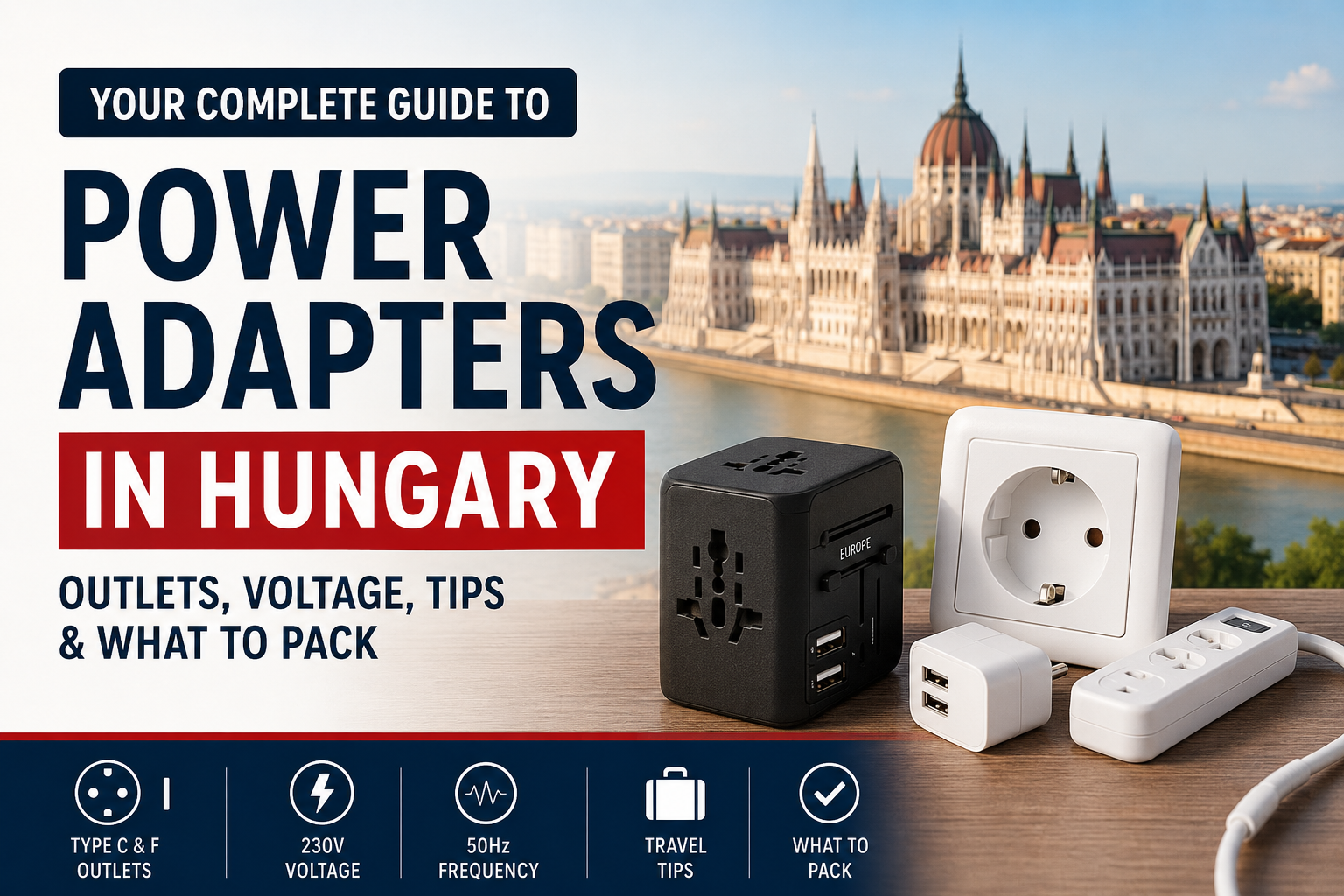
Planning a trip to Hungary? You are headed for one of Central Europe’s most beautiful and atmospheric destinations.
Hungary is the kind of place where travel can feel elegant, old-world, romantic, and surprisingly easy to love. You might be soaking in Budapest’s famous thermal baths, watching the Danube glow at sunset, walking across the Chain Bridge, exploring castle districts and grand cafés, tasting paprika-rich comfort food, visiting wine regions, cruising the river, relaxing in historic spa towns, or building a trip around architecture, music, food, markets, museums, and beautiful European train connections.
It is graceful, historic, affordable compared with many Western European destinations, full of texture, and especially appealing if you love cities with a strong sense of place. This is also the kind of trip where your phone may be working all day — for maps, tickets, train times, bath reservations, restaurant searches, translation, walking directions, photos, videos, hotel confirmations, ride apps, and keeping your plans organized.
And because Hungary does not use the same outlet setup as many travelers have at home, your charging setup matters.
Hungary uses Type C and Type F outlets, with 230V electricity and 50Hz frequency. Type C is the two-round-pin plug common across much of Europe. Type F also has two round pins, with grounding clips on the side. For many travelers, especially those coming from North America, the UK, Australia, or countries that use different plug shapes, a universal travel adapter with Type C/F Europe coverage is the easiest choice.
For travelers bringing single-voltage appliances, voltage matters too. A plug adapter fixes the shape.
It does not make the power safe for the wrong device.
That’s why this guide exists.
This is a complete, no-nonsense Hungary outlet, plug, and voltage guide with clear explanations and practical packing advice for travelers from around the world. Scroll to your country below for exactly what you need — no guessing, no surprises.

⚡ Quick Overview: What You Need for Hungary
✔ Plug Adapter
Hungary uses Type C and Type F outlets. If your home country uses a different plug shape, you will need an adapter. For most travelers, a universal travel adapter with Type C/F Europe coverage is the simplest choice.
✔ Dual-Voltage Electronics
Phones, laptops, tablets, cameras, power banks, e-readers, Kindles, and most modern chargers labeled 100–240V are usually fine in Hungary with the correct plug adapter. In most cases, those do not need a voltage converter. The label on the charger is what matters.
✔ Single-Voltage Small Appliances (Converter needed)
Hungary uses 230V electricity. If your device is labeled for only 110V, 120V, or 125V, it is not safe to use in Hungary with just a plug adapter.
Hair dryers, curling irons, straighteners, steamers, heating pads, and other heat tools are the usual troublemakers.
For these, you may need a step-down voltage converter, but the better travel solution is usually to bring a dual-voltage version or leave the appliance at home.
✔ Multi-Port USB Charger
This is one of those trips where a good charging setup can make travel feel much smoother. If you are charging a phone, watch, earbuds, power bank, camera batteries, and maybe a tablet or Kindle too, a multi-port USB charger is worth packing.
✔ Travel Power Strip
A compact travel power strip can be very useful in Hungary, especially if you are staying in older hotels, apartments, guesthouses, historic buildings, boutique properties, or rooms where outlets are not always placed exactly where you want them. Just make sure it is rated for 100–240V use.
✔ Power Bank
A must for Budapest sightseeing, thermal bath days, Danube cruises, castle district walks, ruin bar nights, museum visits, train travel, wine country day trips, Lake Balaton excursions, and any time you are relying on your phone for photos, maps, tickets, bookings, translations, or communication.
✔ Electronics Organizer
Keeps your adapters, charging bricks, cords, camera batteries, memory cards, and small tech pieces from becoming a tangled mess in your bag.
Travel Hack:
A universal adapter + travel power strip + multi-port USB charger = an instant charging hub almost anywhere in Hungary.
Hungary’s Electrical Basics
Plug Types Used:
Type C – Two round pins
Type F – Two round pins with grounding clips on the side
Hungary uses 230V electricity with 50Hz frequency.
✔ Safe With Only an Adapter
These are usually fine if the charger or device is labeled 100–240V:
Phones
Laptops
Tablets
Cameras
Power banks
E-readers / Kindles
Bluetooth headphones / earbuds
Most modern USB chargers
Not Always Safe
Be careful with:
Hair dryers
Curling irons
Straighteners
Steamers
Heating pads
Electric kettles
Cheap or older chargers
Any device labeled for only one voltage
Because Hungary uses 230V power, single-voltage 110–120V appliances are the items most likely to cause problems. A plug adapter only changes the plug shape. It does not convert electricity.
Check the Voltage Label Before You Pack
Look at the small print on each charger or device:
“110V” or “120V only” → Not safe in Hungary with only a plug adapter. You need a proper step-down voltage converter or a dual-voltage travel version of the appliance.
“220V,” “230V,” or “240V only” → Usually compatible with Hungary’s voltage, but you still need the correct plug adapter if the plug shape does not match.
“100–240V” → Usually safe in Hungary. You only need the correct plug adapter.
Frequency Note:
The 50Hz frequency is usually not a big deal for phones, laptops, tablets, cameras, and similar electronics. It can matter more for motor-based, clock-based, or heat-based appliances.
Consistency:
Hungary is fairly straightforward because the voltage is consistently listed as 230V and the frequency is 50Hz. The bigger issue for most travelers is plug shape. Type C and Type F outlets are both common European-style plugs, but travelers coming from countries that use flat-pin plugs, angled plugs, or different grounded plug shapes will still need the right adapter.
This makes Hungary easy enough for most travelers with modern dual-voltage electronics, but it is still a destination where you should pack a good adapter and check every appliance label before using heat tools or single-voltage devices.
If you are traveling beyond Budapest to Lake Balaton, Eger, Pécs, Szeged, Debrecen, Tokaj wine country, thermal spa towns, countryside guesthouses, or older historic properties, do not assume every outlet setup will be equally convenient. A universal adapter and dual-voltage charging setup will give you the most flexibility.
If you are traveling around the region too, Hungary’s setup is similar to many nearby European and Mediterranean destinations, but it is still smart to check every country on your itinerary before you leave.
⚡ Quick Jump to Your Region
🌎 North America
🌎 Central America & Caribbean
🌎 South America
🌏 Oceania
🌍 Europe
🌏 Asia
🌍 Africa
✅ Universal Packing Checklist
🎒 Final Tips for Hungary
🌎 North America

🇺🇸 United States
Home: 120V, 60 Hz, Type A/B.
Vs. Hungary: Hungary uses Type C and Type F outlets, with 230V electricity and 50Hz frequency. U.S. travelers should plan on needing a plug adapter. Standard U.S. Type A/B plugs will not fit Hungary’s round-pin Type C/F outlets.
Voltage is the bigger issue for U.S. travelers. Hungary’s 230V power is much higher than standard U.S. household voltage, so single-voltage 120V appliances are not safe to use with only a plug adapter.
Phones, laptops, cameras, tablets, Kindles, power banks, and USB chargers are usually fine if they say 100–240V. Heat tools and older appliances need a careful label check.
What to pack:
- Plug adapter
- Travel power strip
- Power bank for Budapest sightseeing, thermal bath days, Danube cruises, castle district walks, ruin bar nights, museum visits, train travel, Lake Balaton excursions, wine country day trips, and full days out exploring
- Step-down voltage converter for blow dryers, curling irons, straighteners, steamers, or other single-voltage 120V appliances
- Multi-port USB charger
- Electronics organizer
🇨🇦 Canada
Home: 120V, 60 Hz, Type A/B.
Vs. Hungary: Hungary uses Type C and Type F outlets, so Canadian travelers will need a plug adapter. Standard Canadian Type A/B plugs will not fit Hungary’s Type C/F outlets.
Hungary also uses 230V electricity, while Canada uses 120V. That means single-voltage 120V appliances from Canada are not safe to use in Hungary with only a plug adapter.
Phones, laptops, cameras, tablets, Kindles, power banks, and USB chargers are usually fine if they say 100–240V, but anything that heats up needs a careful voltage check before you pack it.
What to pack:
- Plug adapter
- Travel power strip
- Power bank for Budapest sightseeing, thermal bath days, Danube cruises, castle district walks, ruin bar nights, museum visits, train travel, Lake Balaton excursions, wine country day trips, and full days out exploring
- Step-down voltage converter for blow dryers, curling irons, straighteners, steamers, or other single-voltage 120V appliances
- Multi-port USB charger
- Electronics organizer
🇲🇽 Mexico
Home: 127V, 60 Hz, Type A/B; Type C may appear in limited cases.
Vs. Hungary: Hungary uses Type C and Type F outlets. Mexican travelers may already be familiar with Type C in limited situations, but Type F is still important to cover. Standard Mexican Type A/B plugs will not fit Hungary’s Type C/F outlets without an adapter.
Voltage also needs attention. Mexico commonly uses 127V electricity, while Hungary uses 230V. Single-voltage appliances from Mexico are not automatically safe in Hungary with only a plug adapter.
Phones, laptops, cameras, tablets, Kindles, power banks, and USB chargers are usually fine if they say 100–240V. Heat tools, travel steamers, and older appliances need a careful label check.
What to pack:
- Plug adapter
- Travel power strip
- Power bank for Budapest sightseeing, thermal bath days, Danube cruises, castle district walks, ruin bar nights, museum visits, train travel, Lake Balaton excursions, wine country day trips, and full days out exploring
- Step-down voltage converter for blow dryers, curling irons, straighteners, steamers, or other single-voltage 120V appliances
- Multi-port USB charger
- Electronics organizer
🇬🇱 Greenland
Home: 220–230V, 50 Hz, Type C/E/F/K.
Vs. Hungary: Greenland’s voltage and frequency are already close to Hungary’s 230V / 50Hz electrical system, so voltage is usually less of a concern for travelers bringing modern electronics and appliances from Greenland.
The plug shape is also partly compatible. Greenland travelers may already use Type C and Type F plugs, which can work with Hungary’s Type C/F outlets. However, Type E and Type K plugs may still need an adapter depending on the exact plug and outlet shape.
Because Hungary uses Type C and Type F, travelers from Greenland should still bring a universal adapter for flexibility, especially when staying in older hotels, apartments, or guesthouses where outlet access may be limited.
What to pack:
- Plug adapter
- Travel power strip
- Power bank for Budapest sightseeing, thermal bath days, Danube cruises, castle district walks, ruin bar nights, museum visits, train travel, Lake Balaton excursions, wine country day trips, and full days out exploring
- Multi-port USB charger
- Electronics organizer
🌎 Central America & Caribbean

🔌 110–127V / 50–60 Hz Countries
⚠️ Voltage Check Required for Single-Voltage 110–120V Appliances
Travelers from these countries are used to lower voltage than Hungary.
Hungary uses 230V electricity and 50Hz frequency, with Type C and Type F outlets.
➡️ Dual-voltage electronics are fine with an adapter only
➡️ Single-voltage hair tools may require a step-down voltage converter
➡️ Because Hungary uses Type C and Type F outlets, a universal adapter with Europe Type C/F coverage is the safest choice
🇧🇿 Belize
Home: 110V / 220V mix, 60 Hz, Type A/B/G.
Vs. Hungary: Hungary uses Type C and Type F outlets, with 230V electricity and 50Hz frequency. If you are coming from a 110V area of Belize, Hungary’s 230V power is not safe for single-voltage appliances with only a plug adapter.
If your device says 100–240V, you usually only need the correct adapter. If it says 110V only or 120V only, you need a step-down voltage converter or a dual-voltage travel version of the appliance.
What to pack:
- Plug adapter
- Travel power strip
- Power bank for Budapest sightseeing, thermal bath days, Danube cruises, castle district walks, ruin bar nights, museum visits, train travel, Lake Balaton excursions, wine country day trips, and full days out exploring
- Step-down voltage converter for blow dryers, curling irons, straighteners, steamers, or other single-voltage 120V appliances
- Multi-port USB charger
- Electronics organizer
💡 Dual-voltage devices 100–240V need an adapter only — no converter.
🇨🇷 Costa Rica
Home: 120V, 60 Hz, Type A/B.
Vs. Hungary: Hungary uses Type C and Type F outlets, so Costa Rican travelers will need a plug adapter. Standard Type A/B plugs will not fit Hungary’s round-pin outlets.
Voltage is the bigger issue. Costa Rica uses 120V power, while Hungary uses 230V. Single-voltage 120V appliances are not safe in Hungary with only a plug adapter.
Phones, laptops, tablets, cameras, and USB chargers are usually fine if they say 100–240V.
What to pack:
- Plug adapter
- Travel power strip
- Power bank for Budapest sightseeing, thermal bath days, Danube cruises, castle district walks, ruin bar nights, museum visits, train travel, Lake Balaton excursions, wine country day trips, and full days out exploring
- Step-down voltage converter for blow dryers, curling irons, straighteners, steamers, or other single-voltage 120V appliances
- Multi-port USB charger
- Electronics organizer
💡 Dual-voltage devices 100–240V need an adapter only — no converter.
🇸🇻 El Salvador
Home: 115V, 60 Hz, Type A/B.
Vs. Hungary: Hungary uses Type C and Type F outlets. Travelers from El Salvador will need a plug adapter because standard Type A/B plugs will not fit Hungary’s outlets.
Because Hungary uses 230V electricity, single-voltage 115V appliances are not safe to use with only a plug adapter. Modern electronics are usually easy if the charger label says 100–240V.
What to pack:
- Plug adapter
- Travel power strip
- Power bank for Budapest sightseeing, thermal bath days, Danube cruises, castle district walks, ruin bar nights, museum visits, train travel, Lake Balaton excursions, wine country day trips, and full days out exploring
- Step-down voltage converter for blow dryers, curling irons, straighteners, steamers, or other single-voltage 120V appliances
- Multi-port USB charger
- Electronics organizer
💡 Dual-voltage devices 100–240V need an adapter only — no converter.
🇬🇹 Guatemala
Home: 120V, 60 Hz, Type A/B.
Vs. Hungary: Hungary uses Type C and Type F outlets, so Guatemalan travelers will need a plug adapter. Standard Type A/B plugs will not fit Hungary’s round-pin outlets.
Voltage needs extra attention because Guatemala uses 120V power and Hungary uses 230V. Single-voltage 120V appliances are not safe in Hungary with only an adapter. Be especially careful with anything that heats up.
What to pack:
- Plug adapter
- Travel power strip
- Power bank for Budapest sightseeing, thermal bath days, Danube cruises, castle district walks, ruin bar nights, museum visits, train travel, Lake Balaton excursions, wine country day trips, and full days out exploring
- Step-down voltage converter for blow dryers, curling irons, straighteners, steamers, or other single-voltage 120V appliances
- Multi-port USB charger
- Electronics organizer
💡 Dual-voltage devices 100–240V need an adapter only — no converter.
🇭🇳 Honduras
Home: 120V, 60 Hz, Type A/B.
Vs. Hungary: Hungary uses Type C and Type F outlets, so Honduran travelers will need a plug adapter. Standard Type A/B plugs will not fit Hungary’s Type C/F outlets.
Because Hungary uses 230V power, single-voltage 120V appliances from Honduras are not safe with only a plug adapter. Most phone, laptop, camera, and USB chargers are fine if they say 100–240V.
What to pack:
- Plug adapter
- Travel power strip
- Power bank for Budapest sightseeing, thermal bath days, Danube cruises, castle district walks, ruin bar nights, museum visits, train travel, Lake Balaton excursions, wine country day trips, and full days out exploring
- Step-down voltage converter for blow dryers, curling irons, straighteners, steamers, or other single-voltage 120V appliances
- Multi-port USB charger
- Electronics organizer
💡 Dual-voltage devices 100–240V need an adapter only — no converter.
🇳🇮 Nicaragua
Home: 120V, 60 Hz, Type A/B.
Vs. Hungary: Hungary uses Type C and Type F outlets. Travelers from Nicaragua should pack a plug adapter because standard Type A/B plugs will not fit Hungary’s round-pin outlets.
Voltage is the bigger thing to check. Nicaragua uses 120V power, while Hungary uses 230V. Single-voltage 120V appliances require a step-down voltage converter or a dual-voltage travel version.
The frequency difference usually does not matter for modern electronics, but it can matter more for motorized or heat-based items.
What to pack:
- Plug adapter
- Travel power strip
- Power bank for Budapest sightseeing, thermal bath days, Danube cruises, castle district walks, ruin bar nights, museum visits, train travel, Lake Balaton excursions, wine country day trips, and full days out exploring
- Step-down voltage converter for blow dryers, curling irons, straighteners, steamers, or other single-voltage 120V appliances
- Multi-port USB charger
- Electronics organizer
💡 Dual-voltage devices 100–240V need an adapter only — no converter.
🇵🇦 Panama
Home: 120V, 60 Hz, Type A/B.
Vs. Hungary: Hungary uses Type C and Type F outlets, so Panamanian travelers will need a plug adapter. Standard Type A/B plugs will not fit Hungary’s Type C/F outlets.
Because Hungary uses 230V power, single-voltage 120V appliances are not safe with only an adapter. If your charger says 100–240V, it should be fine with the correct adapter.
What to pack:
- Plug adapter
- Travel power strip
- Power bank for Budapest sightseeing, thermal bath days, Danube cruises, castle district walks, ruin bar nights, museum visits, train travel, Lake Balaton excursions, wine country day trips, and full days out exploring
- Step-down voltage converter for blow dryers, curling irons, straighteners, steamers, or other single-voltage 120V appliances
- Multi-port USB charger
- Electronics organizer
💡 Dual-voltage devices 100–240V need an adapter only — no converter.
🇧🇸 Bahamas
Home: 120V, 60 Hz, Type A/B.
Vs. Hungary: Hungary uses Type C and Type F outlets. Travelers from the Bahamas should bring a plug adapter because standard Type A/B plugs will not fit Hungary’s round-pin outlets.
Voltage needs attention because the Bahamas uses 120V power and Hungary uses 230V. Single-voltage 120V appliances need a step-down voltage converter or a dual-voltage replacement.
Modern dual-voltage electronics are usually fine with an adapter only.
What to pack:
- Plug adapter
- Travel power strip
- Power bank for Budapest sightseeing, thermal bath days, Danube cruises, castle district walks, ruin bar nights, museum visits, train travel, Lake Balaton excursions, wine country day trips, and full days out exploring
- Step-down voltage converter for blow dryers, curling irons, straighteners, steamers, or other single-voltage 120V appliances
- Multi-port USB charger
- Electronics organizer
💡 Dual-voltage devices 100–240V need an adapter only — no converter.
🇧🇧 Barbados
Home: 115V, 50 Hz, Type A/B.
Vs. Hungary: Hungary uses Type C and Type F outlets, so travelers from Barbados will need a plug adapter.
Hungary uses 230V electricity, so single-voltage 115V appliances are not safe with only a plug adapter. Check hair tools carefully before packing them.
What to pack:
- Plug adapter
- Travel power strip
- Power bank for Budapest sightseeing, thermal bath days, Danube cruises, castle district walks, ruin bar nights, museum visits, train travel, Lake Balaton excursions, wine country day trips, and full days out exploring
- Step-down voltage converter for blow dryers, curling irons, straighteners, steamers, or other single-voltage 120V appliances
- Multi-port USB charger
- Electronics organizer
💡 Dual-voltage devices 100–240V need an adapter only — no converter.
🇨🇺 Cuba
Home: 110V / 220V mix, 60 Hz, Type A/B/C/L.
Vs. Hungary: Cuba can have mixed voltage, but Hungary is simpler: 230V electricity, 50Hz frequency, and Type C and Type F outlets.
Travelers from Cuba should pack a plug adapter. If you are used to 110V areas, single-voltage appliances are not safe in Hungary with only a plug adapter.
What to pack:
- Plug adapter
- Travel power strip
- Power bank for Budapest sightseeing, thermal bath days, Danube cruises, castle district walks, ruin bar nights, museum visits, train travel, Lake Balaton excursions, wine country day trips, and full days out exploring
- Step-down voltage converter for blow dryers, curling irons, straighteners, steamers, or other single-voltage 120V appliances
- Multi-port USB charger
- Electronics organizer
💡 Dual-voltage devices 100–240V need an adapter only — no converter.
🇩🇴 Dominican Republic
Home: 120V, 60 Hz, Type A/B/C.
Vs. Hungary: Hungary uses Type C and Type F outlets. Travelers from the Dominican Republic will need an adapter for Hungary’s Type F outlets, even if some Type C plugs may physically fit some Type C outlets.
Voltage is the bigger issue. The Dominican Republic uses 120V power, while Hungary uses 230V. Single-voltage 120V appliances are not safe in Hungary with only a plug adapter.
Some Dominican plugs may physically resemble Type C, but that does not solve the voltage issue for single-voltage appliances.
What to pack:
- Plug adapter
- Travel power strip
- Power bank for Budapest sightseeing, thermal bath days, Danube cruises, castle district walks, ruin bar nights, museum visits, train travel, Lake Balaton excursions, wine country day trips, and full days out exploring
- Step-down voltage converter for blow dryers, curling irons, straighteners, steamers, or other single-voltage 120V appliances
- Multi-port USB charger
- Electronics organizer
💡 Dual-voltage devices 100–240V need an adapter only — no converter.
🇭🇹 Haiti
Home: 110V, 60 Hz, Type A/B.
Vs. Hungary: Hungary uses Type C and Type F outlets, so travelers from Haiti will need a plug adapter. Standard Type A/B plugs will not fit Hungary’s round-pin outlets.
Because Hungary uses 230V electricity, single-voltage 110V appliances are not safe to use with only a plug adapter. Dual-voltage electronics are usually fine with the correct adapter.
What to pack:
- Plug adapter
- Travel power strip
- Power bank for Budapest sightseeing, thermal bath days, Danube cruises, castle district walks, ruin bar nights, museum visits, train travel, Lake Balaton excursions, wine country day trips, and full days out exploring
- Step-down voltage converter for blow dryers, curling irons, straighteners, steamers, or other single-voltage 120V appliances
- Multi-port USB charger
- Electronics organizer
💡 Dual-voltage devices 100–240V need an adapter only — no converter.
🇯🇲 Jamaica
Home: 110V, 50 Hz, Type A/B.
Vs. Hungary: Hungary uses Type C and Type F outlets. Travelers from Jamaica should bring a plug adapter because standard Type A/B plugs will not fit Hungary’s outlets.
Hungary uses 230V electricity, so single-voltage 110V appliances are not safe with only a plug adapter. Check before using anything that heats up.
What to pack:
- Plug adapter
- Travel power strip
- Power bank for Budapest sightseeing, thermal bath days, Danube cruises, castle district walks, ruin bar nights, museum visits, train travel, Lake Balaton excursions, wine country day trips, and full days out exploring
- Step-down voltage converter for blow dryers, curling irons, straighteners, steamers, or other single-voltage 120V appliances
- Multi-port USB charger
- Electronics organizer
💡 Dual-voltage devices 100–240V need an adapter only — no converter.
🇹🇹 Trinidad and Tobago
Home: 115V, 60 Hz, Type A/B.
Vs. Hungary: Hungary uses Type C and Type F outlets. Travelers from Trinidad and Tobago will need a plug adapter for Hungary because standard Type A/B plugs will not fit Hungary’s round-pin outlets.
Because Hungary uses 230V power, single-voltage 115V appliances are not safe with only a plug adapter. Most modern electronics are fine if the label says 100–240V.
What to pack:
- Plug adapter
- Travel power strip
- Power bank for Budapest sightseeing, thermal bath days, Danube cruises, castle district walks, ruin bar nights, museum visits, train travel, Lake Balaton excursions, wine country day trips, and full days out exploring
- Step-down voltage converter for blow dryers, curling irons, straighteners, steamers, or other single-voltage 120V appliances
- Multi-port USB charger
- Electronics organizer
💡 Dual-voltage devices 100–240V need an adapter only — no converter.
🔌 220–240V / 50–60 Hz Countries
✅ Adapter Usually Needed — Voltage Is Usually Less of a Problem
If you’re coming from one of these countries, you are already used to higher-voltage power.
Hungary uses 230V / 50Hz, so voltage is usually simpler for travelers from 220–240V countries than it is for travelers from 110–127V countries.
➡️ You’ll usually need the right plug adapter
➡️ Hungary uses Type C and Type F outlets
➡️ A converter is usually not needed for modern electronics rated 100–240V
➡️ Appliances rated only for 230V or 240V are generally close to Hungary’s voltage, but plug shape still matters
🇦🇬 Antigua and Barbuda
Home: 230V, 60 Hz, Type A/B.
Vs. Hungary: Antigua and Barbuda uses higher-voltage power, so voltage is usually less of a concern in Hungary than it is for travelers from 120V countries.
The plug shape is the bigger issue. Hungary uses Type C and Type F outlets, while Antigua and Barbuda commonly uses Type A/B plugs. You’ll need a plug adapter.
What to pack:
- Plug adapter
- Travel power strip
- Power bank for Budapest sightseeing, thermal bath days, Danube cruises, castle district walks, ruin bar nights, museum visits, train travel, Lake Balaton excursions, wine country day trips, and full days out exploring
- Multi-port USB charger
- Electronics organizer
🇩🇲 Dominica
Home: 230V, 50 Hz, Type G.
Vs. Hungary: Dominica’s voltage and frequency are close to Hungary’s 230V / 50Hz setup, so voltage is usually not the main problem.
The plug shape is the bigger issue. Dominica’s Type G plugs will not fit Hungary’s Type C or Type F outlets without an adapter.
What to pack:
- Plug adapter
- Travel power strip
- Power bank for Budapest sightseeing, thermal bath days, Danube cruises, castle district walks, ruin bar nights, museum visits, train travel, Lake Balaton excursions, wine country day trips, and full days out exploring
- Multi-port USB charger
- Electronics organizer
🇬🇩 Grenada
Home: 230V, 50 Hz, Type G.
Vs. Hungary: Grenada’s voltage and frequency are close to Hungary’s 230V / 50Hz electrical system, so voltage is usually less of a concern.
Grenada uses Type G plugs, while Hungary uses Type C and Type F outlets. You’ll need a plug adapter.
What to pack:
- Plug adapter
- Travel power strip
- Power bank for Budapest sightseeing, thermal bath days, Danube cruises, castle district walks, ruin bar nights, museum visits, train travel, Lake Balaton excursions, wine country day trips, and full days out exploring
- Multi-port USB charger
- Electronics organizer
🇰🇳 Saint Kitts and Nevis
Home: 230V, 60 Hz, Type A/B/G/D.
Vs. Hungary: Saint Kitts and Nevis uses higher-voltage power, so voltage is usually less of an issue in Hungary than it is for travelers from 120V countries.
The plug shape still needs attention. Hungary uses Type C and Type F outlets, so bring a plug adapter.
What to pack:
- Plug adapter
- Travel power strip
- Power bank for Budapest sightseeing, thermal bath days, Danube cruises, castle district walks, ruin bar nights, museum visits, train travel, Lake Balaton excursions, wine country day trips, and full days out exploring
- Multi-port USB charger
- Electronics organizer
🇱🇨 Saint Lucia
Home: 240V, 50 Hz, Type A/B/G.
Vs. Hungary: Saint Lucia uses 240V / 50Hz power, so voltage and frequency are close to Hungary’s 230V / 50Hz setup.
The plug shape is the bigger issue. Hungary uses Type C and Type F outlets, so travelers from Saint Lucia should pack a plug adapter.
What to pack:
- Plug adapter
- Travel power strip
- Power bank for Budapest sightseeing, thermal bath days, Danube cruises, castle district walks, ruin bar nights, museum visits, train travel, Lake Balaton excursions, wine country day trips, and full days out exploring
- Multi-port USB charger
- Electronics organizer
🇻🇨 Saint Vincent and the Grenadines
Home: 230V, 50 Hz, Type A/B/G.
Vs. Hungary: Saint Vincent and the Grenadines uses higher-voltage power, so voltage is usually not the main concern for Hungary.
The outlet shape still matters. Hungary uses Type C and Type F outlets, so a plug adapter is the safest choice.
What to pack:
- Plug adapter
- Travel power strip
- Power bank for Budapest sightseeing, thermal bath days, Danube cruises, castle district walks, ruin bar nights, museum visits, train travel, Lake Balaton excursions, wine country day trips, and full days out exploring
- Multi-port USB charger
- Electronics organizer
🌎 South America

🔌 220–240V / 50–60 Hz Countries
✅ Adapter Usually Needed — Voltage Is Usually Less of a Problem
Hungary uses 230V electricity and 50Hz frequency, so travelers from many higher-voltage South American countries are already close to Hungary’s electrical setup.
The main issue is usually plug shape.
➡️ You’ll usually need the right plug adapter
➡️ Hungary uses Type C and Type F outlets
➡️ A voltage converter is usually not needed for modern electronics labeled 100–240V
➡️ Appliances rated for 220–240V are usually compatible with Hungary’s voltage, but the plug still has to fit
🇦🇷 Argentina
Home: 220V, 50 Hz, Type C/I.
Vs. Hungary: Argentina’s voltage and frequency are close to Hungary’s 230V / 50Hz setup, so voltage is usually not the main issue for Argentine travelers.
The plug shape needs attention. Argentina uses Type C and Type I outlets, while Hungary uses Type C and Type F outlets. Argentine Type C plugs may work in compatible Type C outlets, but Type I plugs will need an adapter for Hungary’s Type C/F outlets.
What to pack:
- Plug adapter
- Travel power strip
- Power bank for Budapest sightseeing, thermal bath days, Danube cruises, castle district walks, ruin bar nights, museum visits, train travel, Lake Balaton excursions, wine country day trips, and full days out exploring
- Multi-port USB charger
- Electronics organizer
🇧🇴 Bolivia
Home: 230V, 50 Hz, Type A/C.
Vs. Hungary: Bolivia’s voltage and frequency are close to Hungary’s 230V / 50Hz setup, so voltage is usually not the main issue for Bolivian travelers.
The plug shape may be the bigger problem. Hungary uses Type C and Type F outlets. Some Type C plugs may work in compatible Type C outlets, but Type A plugs will need an adapter, and Type F outlets require the correct plug shape.
What to pack:
- Plug adapter
- Travel power strip
- Power bank for Budapest sightseeing, thermal bath days, Danube cruises, castle district walks, ruin bar nights, museum visits, train travel, Lake Balaton excursions, wine country day trips, and full days out exploring
- Multi-port USB charger
- Electronics organizer
🇨🇱 Chile
Home: 220–230V, 50 Hz, Type C/L.
Vs. Hungary: Chile’s voltage and frequency are close to Hungary’s 230V / 50Hz system, so voltage is usually less of a concern.
The plug shape needs attention. Hungary uses Type C and Type F outlets, while Chile uses Type C and Type L. Some Type C plugs may work in compatible Type C outlets, but Type L plugs will need an adapter, and Type F outlets may require the correct adapter.
What to pack:
- Plug adapter
- Travel power strip
- Power bank for Budapest sightseeing, thermal bath days, Danube cruises, castle district walks, ruin bar nights, museum visits, train travel, Lake Balaton excursions, wine country day trips, and full days out exploring
- Multi-port USB charger
- Electronics organizer
🇵🇾 Paraguay
Home: 220V, 50 Hz, Type C.
Vs. Hungary: Paraguay’s voltage and frequency are close to Hungary’s 230V / 50Hz setup, so voltage is usually straightforward.
Hungary uses Type C and Type F outlets. Paraguayan Type C plugs may work in compatible Type C outlets, but a plug adapter still gives you more flexibility between hotels, apartments, guesthouses, and regional stays.
What to pack:
- Travel power strip
- Power bank for Budapest sightseeing, thermal bath days, Danube cruises, castle district walks, ruin bar nights, museum visits, train travel, Lake Balaton excursions, wine country day trips, and full days out exploring
- Multi-port USB charger
- Electronics organizer
🇵🇪 Peru
Home: 220V, 60 Hz, Type A/B/C.
Vs. Hungary: Peru’s voltage is close to Hungary’s 230V power, so voltage is usually less of a concern for many devices.
Plug shape still matters. Hungary uses Type C and Type F outlets. Some Peruvian Type C plugs may work in compatible Type C outlets, but Type A/B plugs will need an adapter, and Type F outlets may require the correct plug shape.
The frequency difference usually does not matter for phones, laptops, tablets, cameras, and modern chargers, but it can matter more for motor-based, clock-based, or heat-based appliances.
What to pack:
- Plug adapter
- Travel power strip
- Power bank for Budapest sightseeing, thermal bath days, Danube cruises, castle district walks, ruin bar nights, museum visits, train travel, Lake Balaton excursions, wine country day trips, and full days out exploring
- Multi-port USB charger
- Electronics organizer
🇺🇾 Uruguay
Home: 220–230V, 50 Hz, Type C/F/I/L.
Vs. Hungary: Uruguay’s voltage and frequency are close to Hungary’s 230V / 50Hz system, so voltage is usually not the main issue.
The plug shape may vary. Hungary uses Type C and Type F outlets. Uruguayan Type C and Type F plugs may fit compatible outlets, but Type I and Type L plugs will need an adapter.
Because Hungary uses Type C and Type F outlets, a flexible adapter setup is still useful if you do not want to depend on every outlet matching your plug.
What to pack:
- Plug adapter
- Travel power strip
- Power bank for Budapest sightseeing, thermal bath days, Danube cruises, castle district walks, ruin bar nights, museum visits, train travel, Lake Balaton excursions, wine country day trips, and full days out exploring
- Multi-port USB charger
- Electronics organizer
🔌 110–127V / 60 Hz or Mixed-Voltage Countries
⚠️ Voltage Check Required for Single-Voltage Appliances
Hungary uses 230V electricity, so travelers from lower-voltage South American countries need to be extra careful with single-voltage appliances.
Dual-voltage electronics labeled 100–240V only need an adapter.
Hair tools and other single-voltage appliances may require a converter if they are not compatible with Hungary’s 230V power.
➡️ Plug adapter usually required
➡️ Step-down converter may be required for single-voltage 110–127V appliances
➡️ Check every charger and heat tool label before packing
🇧🇷 Brazil
Home: 127V / 220V mix, varies by region, 60 Hz, Type C/N.
Vs. Hungary: Brazil has mixed voltage, while Hungary uses 230V. If you are coming from a 127V area of Brazil, single-voltage appliances are not safe in Hungary with only a plug adapter.
Plug shape matters too. Hungary uses Type C and Type F outlets. Brazilian Type C plugs may work in compatible Type C outlets, but Type N plugs will need an adapter, and Type F outlets may require the correct adapter.
What to pack:
- Plug adapter
- Travel power strip
- Power bank for Budapest sightseeing, thermal bath days, Danube cruises, castle district walks, ruin bar nights, museum visits, train travel, Lake Balaton excursions, wine country day trips, and full days out exploring
- Step-down voltage converter for blow dryers, curling irons, straighteners, steamers, or other single-voltage 120V appliances
- Multi-port USB charger
- Electronics organizer
🇨🇴 Colombia
Home: 110V, 60 Hz, Type A/B.
Vs. Hungary: Colombia uses lower-voltage power than Hungary. Hungary uses 230V electricity, so single-voltage 110V appliances are not safe with only a plug adapter.
Colombian Type A/B plugs also will not fit Hungary’s Type C or Type F outlets without an adapter.
Phones, laptops, tablets, cameras, and USB chargers are usually fine if they say 100–240V.
What to pack:
- Plug adapter
- Travel power strip
- Power bank for Budapest sightseeing, thermal bath days, Danube cruises, castle district walks, ruin bar nights, museum visits, train travel, Lake Balaton excursions, wine country day trips, and full days out exploring
- Step-down voltage converter for blow dryers, curling irons, straighteners, steamers, or other single-voltage 120V appliances
- Multi-port USB charger
- Electronics organizer
🇪🇨 Ecuador
Home: 120–127V, 60 Hz, Type A/B.
Vs. Hungary: Ecuador uses lower-voltage power than Hungary. Hungary uses 230V electricity, so single-voltage 120–127V appliances are not safe with only a plug adapter.
Ecuadorian Type A/B plugs will also need an adapter for Hungary’s Type C and Type F outlets.
What to pack:
- Plug adapter
- Travel power strip
- Power bank for Budapest sightseeing, thermal bath days, Danube cruises, castle district walks, ruin bar nights, museum visits, train travel, Lake Balaton excursions, wine country day trips, and full days out exploring
- Step-down voltage converter for blow dryers, curling irons, straighteners, steamers, or other single-voltage 120V appliances
- Multi-port USB charger
- Electronics organizer
🇬🇾 Guyana
Home: 120V / 240V mix, 60 Hz, Type A/B/D/G.
Vs. Hungary: Guyana has mixed voltage, while Hungary uses 230V. If your appliance is designed only for 120V, it is not safe in Hungary with just a plug adapter.
The plug shape also needs attention. Guyana uses Type A, Type B, Type D, and Type G plugs, while Hungary uses Type C and Type F outlets. A universal adapter is the easiest option.
What to pack:
- Plug adapter
- Travel power strip
- Power bank for Budapest sightseeing, thermal bath days, Danube cruises, castle district walks, ruin bar nights, museum visits, train travel, Lake Balaton excursions, wine country day trips, and full days out exploring
- Step-down voltage converter for blow dryers, curling irons, straighteners, steamers, or other single-voltage 120V appliances
- Multi-port USB charger
- Electronics organizer
🇸🇷 Suriname
Home: 127V, 60 Hz, Type A/B/C.
Vs. Hungary: Suriname uses 127V power, while Hungary uses 230V. Single-voltage 127V appliances are not safe in Hungary with only a plug adapter.
Plug shape also matters. Hungary uses Type C and Type F outlets. Some Surinamese Type C plugs may work in compatible Type C outlets, but Type A/B plugs will need an adapter, and Type F outlets may require the correct plug shape.
What to pack:
- Plug adapter
- Travel power strip
- Power bank for Budapest sightseeing, thermal bath days, Danube cruises, castle district walks, ruin bar nights, museum visits, train travel, Lake Balaton excursions, wine country day trips, and full days out exploring
- Step-down voltage converter for blow dryers, curling irons, straighteners, steamers, or other single-voltage 120V appliances
- Multi-port USB charger
- Electronics organizer
🇻🇪 Venezuela
Home: 120V, 60 Hz, Type A/B.
Vs. Hungary: Venezuela uses lower-voltage power than Hungary. Hungary uses 230V electricity, so single-voltage 120V appliances are not safe with only a plug adapter.
Venezuelan Type A/B plugs will also need an adapter for Hungary’s Type C and Type F outlets. Dual-voltage electronics labeled 100–240V should be fine with the correct adapter.
What to pack:
- Plug adapter
- Travel power strip
- Power bank for Budapest sightseeing, thermal bath days, Danube cruises, castle district walks, ruin bar nights, museum visits, train travel, Lake Balaton excursions, wine country day trips, and full days out exploring
- Step-down voltage converter for blow dryers, curling irons, straighteners, steamers, or other single-voltage 120V appliances
- Multi-port USB charger
- Electronics organizer
🌏 Oceania

🔌 220–240V / 50 Hz Countries
✅ Adapter Usually Needed — Voltage Is Usually Less of a Problem
Hungary uses 230V electricity and 50Hz frequency, so travelers from many Oceania countries are already close to Hungary’s electrical setup.
The main issue is usually plug shape.
➡️ You’ll usually need the correct plug adapter
➡️ Hungary uses Type C and Type F outlets
➡️ A voltage converter is usually not needed for modern electronics labeled 100–240V
➡️ Appliances rated for 220–240V are usually compatible with Hungary’s voltage, but the plug still has to fit
🇦🇺 Australia
Home: 230V, often 240V in practice, 50 Hz, Type I.
Vs. Hungary: Australia’s voltage and frequency are close to Hungary’s 230V / 50Hz electrical system, so voltage is usually not the main issue.
The plug shape is the bigger issue. Australia uses Type I plugs, while Hungary uses Type C and Type F outlets. Australian Type I plugs will not fit Hungary’s round-pin outlets without an adapter.
What to pack:
- Plug adapter
- Travel power strip
- Power bank for Budapest sightseeing, thermal bath days, Danube cruises, castle district walks, ruin bar nights, museum visits, train travel, Lake Balaton excursions, wine country day trips, and full days out exploring
- Multi-port USB charger
- Electronics organizer
🇳🇿 New Zealand
Home: 230V, 50 Hz, Type I.
Vs. Hungary: New Zealand’s voltage and frequency are close to Hungary’s 230V / 50Hz setup, so voltage is usually straightforward.
The plug shape needs attention. New Zealand uses Type I plugs, while Hungary uses Type C and Type F outlets. New Zealand Type I plugs will need an adapter for Hungary.
What to pack:
- Plug adapter
- Travel power strip
- Power bank for Budapest sightseeing, thermal bath days, Danube cruises, castle district walks, ruin bar nights, museum visits, train travel, Lake Balaton excursions, wine country day trips, and full days out exploring
- Multi-port USB charger
- Electronics organizer
🇫🇯 Fiji
Home: 240V, 50 Hz, Type I.
Vs. Hungary: Fiji’s voltage and frequency are close to Hungary’s 230V / 50Hz setup, so a voltage converter usually is not needed for modern dual-voltage electronics.
The plug shape is different. Fiji uses Type I plugs, while Hungary uses Type C and Type F outlets. Travelers from Fiji should bring a plug adapter for Hungary.
What to pack:
- Plug adapter
- Travel power strip
- Power bank for Budapest sightseeing, thermal bath days, Danube cruises, castle district walks, ruin bar nights, museum visits, train travel, Lake Balaton excursions, wine country day trips, and full days out exploring
- Multi-port USB charger
- Electronics organizer
🇵🇬 Papua New Guinea
Home: 240V, 50 Hz, Type I.
Vs. Hungary: Papua New Guinea’s voltage and frequency are close to Hungary’s 230V / 50Hz system, so voltage is usually not the problem.
Papua New Guinea uses Type I plugs, while Hungary uses Type C and Type F outlets. A plug adapter is needed for Hungary’s round-pin outlet setup.
What to pack:
- Plug adapter
- Travel power strip
- Power bank for Budapest sightseeing, thermal bath days, Danube cruises, castle district walks, ruin bar nights, museum visits, train travel, Lake Balaton excursions, wine country day trips, and full days out exploring
- Multi-port USB charger
- Electronics organizer
🇸🇧 Solomon Islands
Home: 220–230V, 50 Hz, Type I; some Type G.
Vs. Hungary: Solomon Islands voltage and frequency are close to Hungary’s 230V / 50Hz setup, so voltage is usually less of a concern.
The plug shape is the bigger issue. Solomon Islands Type I and Type G plugs will need an adapter for Hungary’s Type C and Type F outlets.
What to pack:
- Plug adapter
- Travel power strip
- Power bank for Budapest sightseeing, thermal bath days, Danube cruises, castle district walks, ruin bar nights, museum visits, train travel, Lake Balaton excursions, wine country day trips, and full days out exploring
- Multi-port USB charger
- Electronics organizer
🇹🇴 Tonga
Home: 240V, 50 Hz, Type I.
Vs. Hungary: Tonga’s voltage and frequency are close to Hungary’s 230V / 50Hz electrical system, so a voltage converter usually is not needed for modern dual-voltage electronics.
Tonga uses Type I plugs, while Hungary uses Type C and Type F outlets. Travelers from Tonga should pack a plug adapter for Hungary.
What to pack:
- Plug adapter
- Travel power strip
- Power bank for Budapest sightseeing, thermal bath days, Danube cruises, castle district walks, ruin bar nights, museum visits, train travel, Lake Balaton excursions, wine country day trips, and full days out exploring
- Multi-port USB charger
- Electronics organizer
🇼🇸 Samoa
Home: 230V, 50 Hz, Type I.
Vs. Hungary: Samoa’s voltage and frequency are close to Hungary’s 230V / 50Hz setup, so voltage is usually not the main issue.
Samoa uses Type I plugs, while Hungary uses Type C and Type F outlets. A plug adapter gives you the correct fit for Hungary’s round-pin outlets.
What to pack:
- Plug adapter
- Travel power strip
- Power bank for Budapest sightseeing, thermal bath days, Danube cruises, castle district walks, ruin bar nights, museum visits, train travel, Lake Balaton excursions, wine country day trips, and full days out exploring
- Multi-port USB charger
- Electronics organizer
🇹🇻 Tuvalu
Home: 230V, 50 Hz, Type I.
Vs. Hungary: Tuvalu’s voltage and frequency are close to Hungary’s 230V / 50Hz electrical system, so voltage is usually straightforward.
Tuvalu uses Type I plugs, while Hungary uses Type C and Type F outlets. A plug adapter is still needed for Hungary.
What to pack:
- Plug adapter
- Travel power strip
- Power bank for Budapest sightseeing, thermal bath days, Danube cruises, castle district walks, ruin bar nights, museum visits, train travel, Lake Balaton excursions, wine country day trips, and full days out exploring
- Multi-port USB charger
- Electronics organizer
🇻🇺 Vanuatu
Home: 220V, 50 Hz, Type I.
Vs. Hungary: Vanuatu’s voltage and frequency are close to Hungary’s 230V / 50Hz setup, so voltage is usually not an issue for compatible appliances and modern electronics.
Vanuatu uses Type I plugs, while Hungary uses Type C and Type F outlets. Travelers from Vanuatu should bring a plug adapter.
What to pack:
- Plug adapter
- Travel power strip
- Power bank for Budapest sightseeing, thermal bath days, Danube cruises, castle district walks, ruin bar nights, museum visits, train travel, Lake Balaton excursions, wine country day trips, and full days out exploring
- Multi-port USB charger
- Electronics organizer
🇰🇮 Kiribati
Home: 240V, 50 Hz, Type I.
Vs. Hungary: Kiribati’s voltage and frequency are close to Hungary’s 230V / 50Hz setup, so a voltage converter usually is not needed for modern dual-voltage electronics.
Kiribati uses Type I plugs, while Hungary uses Type C and Type F outlets. A plug adapter is needed for Hungary’s outlet setup.
What to pack:
- Plug adapter
- Travel power strip
- Power bank for Budapest sightseeing, thermal bath days, Danube cruises, castle district walks, ruin bar nights, museum visits, train travel, Lake Balaton excursions, wine country day trips, and full days out exploring
- Multi-port USB charger
- Electronics organizer
🇳🇷 Nauru
Home: 240V, 50 Hz, Type I.
Vs. Hungary: Nauru’s voltage and frequency are close to Hungary’s 230V / 50Hz system, so voltage is usually not the main issue.
Nauru uses Type I plugs, while Hungary uses Type C and Type F outlets. A plug adapter gives you the correct fit for Hungary’s outlets.
What to pack:
- Plug adapter
- Travel power strip
- Power bank for Budapest sightseeing, thermal bath days, Danube cruises, castle district walks, ruin bar nights, museum visits, train travel, Lake Balaton excursions, wine country day trips, and full days out exploring
- Multi-port USB charger
- Electronics organizer
🇵🇫 French Polynesia
Home: 110V / 220V mix, 60 / 50 Hz, Type A/B/E.
Vs. Hungary: French Polynesia is more mixed than Hungary. Hungary is simpler: it uses 230V electricity, 50Hz frequency, and Type C and Type F outlets.
Travelers from French Polynesia should bring a plug adapter for Hungary because Type A, Type B, and Type E plugs will not reliably fit Hungary’s Type C and Type F outlets.
Voltage depends on what your device is designed for. If you are coming from a 110V setup, single-voltage 110V appliances are not safe in Hungary with only a plug adapter. If your device says 100–240V, you usually only need the correct adapter.
What to pack:
- Plug adapter
- Travel power strip
- Power bank for Budapest sightseeing, thermal bath days, Danube cruises, castle district walks, ruin bar nights, museum visits, train travel, Lake Balaton excursions, wine country day trips, and full days out exploring
- Multi-port USB charger
- Electronics organizer
🔌 120V / 60 Hz Countries
⚠️ Voltage Check Required for Single-Voltage Appliances
Hungary uses 230V electricity, so travelers from 120V Oceania destinations need to check single-voltage appliances carefully.
Dual-voltage devices labeled 100–240V need only an adapter.
Hair tools and other single-voltage appliances may require a converter if they are not compatible with Hungary’s 230V power.
➡️ Plug adapter usually required
➡️ Step-down converter may be required for single-voltage 120V appliances
➡️ Check every charger, hair tool, and heat appliance before packing
🇲🇭 Marshall Islands
Home: 120V, 60 Hz, Type A/B.
Vs. Hungary: Marshall Islands travelers are used to lower-voltage power than Hungary. Hungary uses 230V electricity, so single-voltage 120V appliances are not safe with only a plug adapter.
Type A/B plugs also will not fit Hungary’s Type C or Type F outlets without an adapter.
What to pack:
- Plug adapter
- Travel power strip
- Power bank for Budapest sightseeing, thermal bath days, Danube cruises, castle district walks, ruin bar nights, museum visits, train travel, Lake Balaton excursions, wine country day trips, and full days out exploring
- Step-down voltage converter for blow dryers, curling irons, straighteners, steamers, or other single-voltage 120V appliances
- Multi-port USB charger
- Electronics organizer
🇫🇲 Micronesia
Home: 120V, 60 Hz, Type A/B.
Vs. Hungary: Micronesian travelers are used to 120V power, while Hungary uses 230V. Single-voltage 120V appliances are not safe in Hungary with only a plug adapter.
Micronesia’s Type A/B plugs will also need an adapter for Hungary’s Type C and Type F outlets.
What to pack:
- Plug adapter
- Travel power strip
- Power bank for Budapest sightseeing, thermal bath days, Danube cruises, castle district walks, ruin bar nights, museum visits, train travel, Lake Balaton excursions, wine country day trips, and full days out exploring
- Step-down voltage converter for blow dryers, curling irons, straighteners, steamers, or other single-voltage 120V appliances
- Multi-port USB charger
- Electronics organizer
🇵🇼 Palau
Home: 120V, 60 Hz, Type A/B.
Vs. Hungary: Palauan travelers are used to lower-voltage power than Hungary. Hungary uses 230V electricity, so single-voltage 120V appliances need a step-down voltage converter or a dual-voltage replacement.
Palau’s Type A/B plugs will also need an adapter for Hungary’s Type C and Type F outlets.
What to pack:
- Plug adapter
- Travel power strip
- Power bank for Budapest sightseeing, thermal bath days, Danube cruises, castle district walks, ruin bar nights, museum visits, train travel, Lake Balaton excursions, wine country day trips, and full days out exploring
- Step-down voltage converter for blow dryers, curling irons, straighteners, steamers, or other single-voltage 120V appliances
- Multi-port USB charger
- Electronics organizer
🇦🇸 American Samoa
Home: 120V, 60 Hz, Type A/B/F/I.
Vs. Hungary: American Samoa uses lower-voltage power than Hungary, so single-voltage 120V appliances are not safe in Hungary with only a plug adapter.
The plug situation is mixed. American Samoa may use Type F plugs, which can work in compatible Type F outlets in Hungary, but Type A, Type B, and Type I plugs will need an adapter. Because Hungary also uses Type C outlets, a flexible adapter setup is still useful.
What to pack:
- Plug adapter
- Travel power strip
- Power bank for Budapest sightseeing, thermal bath days, Danube cruises, castle district walks, ruin bar nights, museum visits, train travel, Lake Balaton excursions, wine country day trips, and full days out exploring
- Step-down voltage converter for blow dryers, curling irons, straighteners, steamers, or other single-voltage 120V appliances
- Multi-port USB charger
- Electronics organizer
🌍 Europe

🔌 220–240V / 50 Hz Countries
✅ Adapter May Be Needed — Voltage Is Usually Less of a Problem
Hungary uses 230V electricity and 50Hz frequency, so travelers from most European countries are already used to a similar voltage and frequency.
For Europe, the bigger issue is usually plug shape, not voltage.
➡️ You usually will not need a voltage converter for modern electronics labeled 100–240V
➡️ You may still need a plug adapter because Hungary uses Type C and Type F outlets
➡️ Type C plugs may work in compatible Type C outlets
➡️ Type E, Type G, Type J, Type K, Type L, and other non-Type C/F plugs may need an adapter
➡️ A universal adapter is still useful if your plug shape does not match Hungary’s Type C/F outlets
🇦🇱 Albania
Home: 230V, 50 Hz, Type C/F.
Vs. Hungary: Albania’s voltage and frequency match Hungary’s 230V / 50Hz system, so voltage is usually not the issue.
The plug shape is also mostly compatible. Albanian Type C and Type F plugs are the same plug types used in Hungary, so many travelers from Albania may not need a separate adapter. A small universal adapter can still be useful if you are carrying mixed chargers or traveling through multiple countries.
What to pack:
- Travel power strip
- Power bank for Budapest sightseeing, thermal bath days, Danube cruises, castle district walks, ruin bar nights, museum visits, train travel, Lake Balaton excursions, wine country day trips, and full days out exploring
- Multi-port USB charger
- Electronics organizer
🇦🇩 Andorra
Home: 230V, 50 Hz, Type C/F.
Vs. Hungary: Andorra’s voltage and frequency match Hungary’s 230V / 50Hz setup, so voltage is usually straightforward.
Andorra also uses Type C and Type F plugs, which are the same plug types used in Hungary. Most travelers from Andorra should not need a voltage converter or a plug adapter for standard Type C/F devices.
What to pack:
- Travel power strip
- Power bank for Budapest sightseeing, thermal bath days, Danube cruises, castle district walks, ruin bar nights, museum visits, train travel, Lake Balaton excursions, wine country day trips, and full days out exploring
- Multi-port USB charger
- Electronics organizer
🇦🇹 Austria
Home: 230V, 50 Hz, Type C/F.
Vs. Hungary: Austria’s voltage, frequency, and plug types are already compatible with Hungary’s electrical system.
Austria uses 230V / 50Hz power and Type C/F plugs, which match Hungary’s setup. Austrian travelers usually should not need a voltage converter or a plug adapter for standard electronics and chargers.
What to pack:
- Travel power strip
- Power bank for Budapest sightseeing, thermal bath days, Danube cruises, castle district walks, ruin bar nights, museum visits, train travel, Lake Balaton excursions, wine country day trips, and full days out exploring
- Multi-port USB charger
- Electronics organizer
🇧🇪 Belgium
Home: 230V, 50 Hz, Type C/E.
Vs. Hungary: Belgium’s voltage and frequency match Hungary’s 230V / 50Hz setup, so voltage is usually simple.
Plug shape is the main thing to check. Belgian Type C plugs may work in Hungary’s Type C outlets, but Type E plugs may need an adapter for Hungary’s Type C/F outlet setup.
What to pack:
- Plug adapter
- Travel power strip
- Power bank for Budapest sightseeing, thermal bath days, Danube cruises, castle district walks, ruin bar nights, museum visits, train travel, Lake Balaton excursions, wine country day trips, and full days out exploring
- Multi-port USB charger
- Electronics organizer
🇧🇦 Bosnia and Herzegovina
Home: 230V, 50 Hz, Type C/F.
Vs. Hungary: Bosnia and Herzegovina’s voltage, frequency, and plug types are generally compatible with Hungary.
Both countries use 230V / 50Hz power and Type C/F plugs, so travelers from Bosnia and Herzegovina usually do not need a voltage converter or plug adapter for standard devices.
What to pack:
- Travel power strip
- Power bank for Budapest sightseeing, thermal bath days, Danube cruises, castle district walks, ruin bar nights, museum visits, train travel, Lake Balaton excursions, wine country day trips, and full days out exploring
- Multi-port USB charger
- Electronics organizer
🇧🇬 Bulgaria
Home: 230V, 50 Hz, Type C/F.
Vs. Hungary: Bulgaria’s voltage, frequency, and plug types are generally compatible with Hungary.
Because both countries use 230V / 50Hz power and Type C/F plugs, Bulgarian travelers usually do not need a voltage converter or plug adapter for standard electronics.
What to pack:
- Travel power strip
- Power bank for Budapest sightseeing, thermal bath days, Danube cruises, castle district walks, ruin bar nights, museum visits, train travel, Lake Balaton excursions, wine country day trips, and full days out exploring
- Multi-port USB charger
- Electronics organizer
🇭🇷 Croatia
Home: 230V, 50 Hz, Type C/F.
Vs. Hungary: Croatia’s voltage, frequency, and plug types are generally compatible with Hungary.
Croatian travelers usually do not need a converter or adapter for standard Type C/F electronics and chargers.
What to pack:
- Travel power strip
- Power bank for Budapest sightseeing, thermal bath days, Danube cruises, castle district walks, ruin bar nights, museum visits, train travel, Lake Balaton excursions, wine country day trips, and full days out exploring
- Multi-port USB charger
- Electronics organizer
🇨🇿 Czechia
Home: 230V, 50 Hz, Type C/E/F.
Vs. Hungary: Czechia’s voltage and frequency match Hungary’s 230V / 50Hz system, so voltage is usually easy.
Plug shape may vary. Czech Type C and Type F plugs are usually compatible with Hungary, but Type E plugs may need an adapter depending on the exact plug and outlet setup.
What to pack:
- Plug adapter
- Travel power strip
- Power bank for Budapest sightseeing, thermal bath days, Danube cruises, castle district walks, ruin bar nights, museum visits, train travel, Lake Balaton excursions, wine country day trips, and full days out exploring
- Multi-port USB charger
- Electronics organizer
🇩🇰 Denmark
Home: 230V, 50 Hz, Type C/E/F/K.
Vs. Hungary: Denmark’s voltage and frequency match Hungary’s 230V / 50Hz setup, so voltage is usually straightforward.
Danish Type C and Type F plugs may work in Hungary, but Type E and Type K plugs may need an adapter. A universal adapter is still useful if your chargers include multiple plug shapes.
What to pack:
- Plug adapter
- Travel power strip
- Power bank for Budapest sightseeing, thermal bath days, Danube cruises, castle district walks, ruin bar nights, museum visits, train travel, Lake Balaton excursions, wine country day trips, and full days out exploring
- Multi-port USB charger
- Electronics organizer
🇪🇪 Estonia
Home: 230V, 50 Hz, Type C/F.
Vs. Hungary: Estonia’s voltage, frequency, and plug types are generally compatible with Hungary.
Estonian travelers usually do not need a voltage converter or plug adapter for standard Type C/F electronics and chargers.
What to pack:
- Travel power strip
- Power bank for Budapest sightseeing, thermal bath days, Danube cruises, castle district walks, ruin bar nights, museum visits, train travel, Lake Balaton excursions, wine country day trips, and full days out exploring
- Multi-port USB charger
- Electronics organizer
🇫🇮 Finland
Home: 230V, 50 Hz, Type C/F.
Vs. Hungary: Finland’s voltage, frequency, and plug types are generally compatible with Hungary.
Finnish travelers usually do not need a converter or adapter for standard Type C/F devices.
What to pack:
- Travel power strip
- Power bank for Budapest sightseeing, thermal bath days, Danube cruises, castle district walks, ruin bar nights, museum visits, train travel, Lake Balaton excursions, wine country day trips, and full days out exploring
- Multi-port USB charger
- Electronics organizer
🇫🇷 France
Home: 230V, 50 Hz, Type C/E.
Vs. Hungary: France’s voltage and frequency match Hungary’s 230V / 50Hz setup, so voltage is usually not a major concern.
Plug shape is the thing to check. French Type C plugs may work in Hungary, but Type E plugs may need an adapter for Hungary’s Type C/F outlets.
What to pack:
- Plug adapter
- Travel power strip
- Power bank for Budapest sightseeing, thermal bath days, Danube cruises, castle district walks, ruin bar nights, museum visits, train travel, Lake Balaton excursions, wine country day trips, and full days out exploring
- Multi-port USB charger
- Electronics organizer
🇩🇪 Germany
Home: 230V, 50 Hz, Type C/F.
Vs. Hungary: Germany’s voltage, frequency, and plug types are generally compatible with Hungary.
German travelers usually do not need a voltage converter or plug adapter for standard Type C/F electronics.
What to pack:
- Travel power strip
- Power bank for Budapest sightseeing, thermal bath days, Danube cruises, castle district walks, ruin bar nights, museum visits, train travel, Lake Balaton excursions, wine country day trips, and full days out exploring
- Multi-port USB charger
- Electronics organizer
🇬🇷 Greece
Home: 230V, 50 Hz, Type C/F.
Vs. Hungary: Greece’s voltage, frequency, and plug types are generally compatible with Hungary.
Greek travelers usually do not need a voltage converter or plug adapter for standard Type C/F devices.
What to pack:
- Travel power strip
- Power bank for Budapest sightseeing, thermal bath days, Danube cruises, castle district walks, ruin bar nights, museum visits, train travel, Lake Balaton excursions, wine country day trips, and full days out exploring
- Multi-port USB charger
- Electronics organizer
🇮🇸 Iceland
Home: 230V, 50 Hz, Type C/F.
Vs. Hungary: Iceland’s voltage, frequency, and plug types are generally compatible with Hungary.
Icelandic travelers usually do not need a voltage converter or plug adapter for standard Type C/F electronics and chargers.
What to pack:
- Travel power strip
- Power bank for Budapest sightseeing, thermal bath days, Danube cruises, castle district walks, ruin bar nights, museum visits, train travel, Lake Balaton excursions, wine country day trips, and full days out exploring
- Multi-port USB charger
- Electronics organizer
🇮🇪 Ireland
Home: 230V, 50 Hz, Type G.
Vs. Hungary: Ireland’s voltage and frequency match Hungary’s 230V / 50Hz setup, so voltage is usually not the concern.
Ireland’s Type G plugs do not fit Hungary’s Type C or Type F outlets without an adapter. Irish travelers should bring a plug adapter for Hungary.
What to pack:
- Plug adapter
- Travel power strip
- Power bank for Budapest sightseeing, thermal bath days, Danube cruises, castle district walks, ruin bar nights, museum visits, train travel, Lake Balaton excursions, wine country day trips, and full days out exploring
- Multi-port USB charger
- Electronics organizer
🇮🇹 Italy
Home: 230V, 50 Hz, Type C/F/L.
Vs. Hungary: Italy’s voltage and frequency match Hungary’s 230V / 50Hz system, so voltage is usually simple.
Italian Type C and Type F plugs may work in Hungary, but Type L plugs may need an adapter. A small plug adapter is useful if your chargers include Type L.
What to pack:
- Plug adapter
- Travel power strip
- Power bank for Budapest sightseeing, thermal bath days, Danube cruises, castle district walks, ruin bar nights, museum visits, train travel, Lake Balaton excursions, wine country day trips, and full days out exploring
- Multi-port USB charger
- Electronics organizer
🇱🇻 Latvia
Home: 230V, 50 Hz, Type C/F.
Vs. Hungary: Latvia’s voltage, frequency, and plug types are generally compatible with Hungary.
Latvian travelers usually do not need a voltage converter or plug adapter for standard Type C/F electronics and chargers.
What to pack:
- Travel power strip
- Power bank for Budapest sightseeing, thermal bath days, Danube cruises, castle district walks, ruin bar nights, museum visits, train travel, Lake Balaton excursions, wine country day trips, and full days out exploring
- Multi-port USB charger
- Electronics organizer
🇱🇹 Lithuania
Home: 230V, 50 Hz, Type C/F.
Vs. Hungary: Lithuania’s voltage, frequency, and plug types are generally compatible with Hungary.
Lithuanian travelers usually do not need a voltage converter or plug adapter for standard Type C/F electronics and chargers.
What to pack:
- Travel power strip
- Power bank for Budapest sightseeing, thermal bath days, Danube cruises, castle district walks, ruin bar nights, museum visits, train travel, Lake Balaton excursions, wine country day trips, and full days out exploring
- Multi-port USB charger
- Electronics organizer
🇱🇺 Luxembourg
Home: 230V, 50 Hz, Type C/F.
Vs. Hungary: Luxembourg’s voltage, frequency, and plug types are generally compatible with Hungary.
Travelers from Luxembourg usually do not need a voltage converter or plug adapter for standard Type C/F devices.
What to pack:
- Travel power strip
- Power bank for Budapest sightseeing, thermal bath days, Danube cruises, castle district walks, ruin bar nights, museum visits, train travel, Lake Balaton excursions, wine country day trips, and full days out exploring
- Multi-port USB charger
- Electronics organizer
🇲🇹 Malta
Home: 230V, 50 Hz, Type G.
Vs. Hungary: Malta’s voltage and frequency match Hungary’s 230V / 50Hz system, so voltage is usually not the issue.
Malta’s Type G plugs do not fit Hungary’s Type C or Type F outlets without an adapter. Travelers from Malta should bring a plug adapter for Hungary.
What to pack:
- Plug adapter
- Travel power strip
- Power bank for Budapest sightseeing, thermal bath days, Danube cruises, castle district walks, ruin bar nights, museum visits, train travel, Lake Balaton excursions, wine country day trips, and full days out exploring
- Multi-port USB charger
- Electronics organizer
🇲🇩 Moldova
Home: 230V, 50 Hz, Type C/F.
Vs. Hungary: Moldova’s voltage, frequency, and plug types are generally compatible with Hungary.
Moldovan travelers usually do not need a voltage converter or plug adapter for standard Type C/F electronics.
What to pack:
- Travel power strip
- Power bank for Budapest sightseeing, thermal bath days, Danube cruises, castle district walks, ruin bar nights, museum visits, train travel, Lake Balaton excursions, wine country day trips, and full days out exploring
- Multi-port USB charger
- Electronics organizer
🇲🇨 Monaco
Home: 230V, 50 Hz, Type C/E/F.
Vs. Hungary: Monaco’s voltage and frequency match Hungary’s 230V / 50Hz setup, so voltage is usually not the problem.
Monaco’s Type C and Type F plugs may work in Hungary, but Type E plugs may need an adapter depending on the exact plug and outlet setup. A universal adapter gives you the most flexibility.
What to pack:
- Plug adapter
- Travel power strip
- Power bank for Budapest sightseeing, thermal bath days, Danube cruises, castle district walks, ruin bar nights, museum visits, train travel, Lake Balaton excursions, wine country day trips, and full days out exploring
- Multi-port USB charger
- Electronics organizer
🇲🇪 Montenegro
Home: 230V, 50 Hz, Type C/F.
Vs. Hungary: Montenegro’s voltage, frequency, and plug types are generally compatible with Hungary.
Montenegrin travelers usually do not need a voltage converter or plug adapter for standard Type C/F devices.
What to pack:
- Travel power strip
- Power bank for Budapest sightseeing, thermal bath days, Danube cruises, castle district walks, ruin bar nights, museum visits, train travel, Lake Balaton excursions, wine country day trips, and full days out exploring
- Multi-port USB charger
- Electronics organizer
🇳🇱 Netherlands
Home: 230V, 50 Hz, Type C/F.
Vs. Hungary: The Netherlands’ voltage, frequency, and plug types are generally compatible with Hungary.
Dutch travelers usually do not need a voltage converter or plug adapter for standard Type C/F electronics and chargers.
What to pack:
- Travel power strip
- Power bank for Budapest sightseeing, thermal bath days, Danube cruises, castle district walks, ruin bar nights, museum visits, train travel, Lake Balaton excursions, wine country day trips, and full days out exploring
- Multi-port USB charger
- Electronics organizer
🇲🇰 North Macedonia
Home: 230V, 50 Hz, Type C/F.
Vs. Hungary: North Macedonia’s voltage, frequency, and plug types are generally compatible with Hungary.
Travelers from North Macedonia usually do not need a voltage converter or plug adapter for standard Type C/F electronics.
What to pack:
- Travel power strip
- Power bank for Budapest sightseeing, thermal bath days, Danube cruises, castle district walks, ruin bar nights, museum visits, train travel, Lake Balaton excursions, wine country day trips, and full days out exploring
- Multi-port USB charger
- Electronics organizer
🇳🇴 Norway
Home: 230V, 50 Hz, Type C/F.
Vs. Hungary: Norway’s voltage, frequency, and plug types are generally compatible with Hungary.
Norwegian travelers usually do not need a voltage converter or plug adapter for standard Type C/F devices.
What to pack:
- Travel power strip
- Power bank for Budapest sightseeing, thermal bath days, Danube cruises, castle district walks, ruin bar nights, museum visits, train travel, Lake Balaton excursions, wine country day trips, and full days out exploring
- Multi-port USB charger
- Electronics organizer
🇵🇱 Poland
Home: 230V, 50 Hz, Type C/E.
Vs. Hungary: Poland’s voltage and frequency match Hungary’s 230V / 50Hz setup, so voltage is usually simple.
Polish Type C plugs may work in Hungary, but Type E plugs may need an adapter for Hungary’s Type C/F outlet setup.
What to pack:
- Plug adapter
- Travel power strip
- Power bank for Budapest sightseeing, thermal bath days, Danube cruises, castle district walks, ruin bar nights, museum visits, train travel, Lake Balaton excursions, wine country day trips, and full days out exploring
- Multi-port USB charger
- Electronics organizer
🇵🇹 Portugal
Home: 230V, 50 Hz, Type C/F.
Vs. Hungary: Portugal’s voltage, frequency, and plug types are generally compatible with Hungary.
Portuguese travelers usually do not need a voltage converter or plug adapter for standard Type C/F devices.
What to pack:
- Travel power strip
- Power bank for Budapest sightseeing, thermal bath days, Danube cruises, castle district walks, ruin bar nights, museum visits, train travel, Lake Balaton excursions, wine country day trips, and full days out exploring
- Multi-port USB charger
- Electronics organizer
🇷🇴 Romania
Home: 230V, 50 Hz, Type C/F.
Vs. Hungary: Romania’s voltage, frequency, and plug types are generally compatible with Hungary.
Romanian travelers usually do not need a voltage converter or plug adapter for standard Type C/F electronics and chargers.
What to pack:
- Travel power strip
- Power bank for Budapest sightseeing, thermal bath days, Danube cruises, castle district walks, ruin bar nights, museum visits, train travel, Lake Balaton excursions, wine country day trips, and full days out exploring
- Multi-port USB charger
- Electronics organizer
🇷🇺 Russia
Home: 220–230V, 50 Hz, Type C/F.
Vs. Hungary: Russia’s voltage, frequency, and plug types are generally compatible with Hungary.
Russian travelers usually do not need a voltage converter or plug adapter for standard Type C/F electronics and chargers.
What to pack:
- Travel power strip
- Power bank for Budapest sightseeing, thermal bath days, Danube cruises, castle district walks, ruin bar nights, museum visits, train travel, Lake Balaton excursions, wine country day trips, and full days out exploring
- Multi-port USB charger
- Electronics organizer
🇷🇸 Serbia
Home: 230V, 50 Hz, Type C/F.
Vs. Hungary: Serbia’s voltage, frequency, and plug types are generally compatible with Hungary.
Serbian travelers usually do not need a voltage converter or plug adapter for standard Type C/F electronics.
What to pack:
- Travel power strip
- Power bank for Budapest sightseeing, thermal bath days, Danube cruises, castle district walks, ruin bar nights, museum visits, train travel, Lake Balaton excursions, wine country day trips, and full days out exploring
- Multi-port USB charger
- Electronics organizer
🇸🇰 Slovakia
Home: 230V, 50 Hz, Type C/E.
Vs. Hungary: Slovakia’s voltage and frequency match Hungary’s 230V / 50Hz setup, so voltage is usually simple.
Slovak Type C plugs may fit Hungary’s Type C outlets, but Type E plugs may need an adapter for Hungary’s Type C/F outlet setup. A universal adapter gives you more flexibility.
What to pack:
- Plug adapter
- Travel power strip
- Power bank for Budapest sightseeing, thermal bath days, Danube cruises, castle district walks, ruin bar nights, museum visits, train travel, Lake Balaton excursions, wine country day trips, and full days out exploring
- Multi-port USB charger
- Electronics organizer
🇸🇮 Slovenia
Home: 230V, 50 Hz, Type C/F.
Vs. Hungary: Slovenia’s voltage, frequency, and plug types are generally compatible with Hungary.
Slovenian travelers usually do not need a voltage converter or plug adapter for standard Type C/F electronics.
What to pack:
- Travel power strip
- Power bank for Budapest sightseeing, thermal bath days, Danube cruises, castle district walks, ruin bar nights, museum visits, train travel, Lake Balaton excursions, wine country day trips, and full days out exploring
- Multi-port USB charger
- Electronics organizer
🇪🇸 Spain
Home: 230V, 50 Hz, Type C/F.
Vs. Hungary: Spain’s voltage, frequency, and plug types are generally compatible with Hungary.
Spanish travelers usually do not need a voltage converter or plug adapter for standard Type C/F electronics and chargers.
What to pack:
- Travel power strip
- Power bank for Budapest sightseeing, thermal bath days, Danube cruises, castle district walks, ruin bar nights, museum visits, train travel, Lake Balaton excursions, wine country day trips, and full days out exploring
- Multi-port USB charger
- Electronics organizer
🇸🇪 Sweden
Home: 230V, 50 Hz, Type C/F.
Vs. Hungary: Sweden’s voltage, frequency, and plug types are generally compatible with Hungary.
Swedish travelers usually do not need a voltage converter or plug adapter for standard Type C/F devices.
What to pack:
- Travel power strip
- Power bank for Budapest sightseeing, thermal bath days, Danube cruises, castle district walks, ruin bar nights, museum visits, train travel, Lake Balaton excursions, wine country day trips, and full days out exploring
- Multi-port USB charger
- Electronics organizer
🇨🇭 Switzerland
Home: 230V, 50 Hz, Type C/J.
Vs. Hungary: Switzerland’s voltage and frequency match Hungary’s 230V / 50Hz setup, so voltage is usually simple.
Swiss Type C plugs may work in Hungary, but Type J plugs will need an adapter for Hungary’s Type C/F outlets.
What to pack:
- Plug adapter
- Travel power strip
- Power bank for Budapest sightseeing, thermal bath days, Danube cruises, castle district walks, ruin bar nights, museum visits, train travel, Lake Balaton excursions, wine country day trips, and full days out exploring
- Multi-port USB charger
- Electronics organizer
🇺🇦 Ukraine
Home: 230V, 50 Hz, Type C/F.
Vs. Hungary: Ukraine’s voltage, frequency, and plug types are generally compatible with Hungary.
Ukrainian travelers usually do not need a voltage converter or plug adapter for standard Type C/F electronics and chargers.
What to pack:
- Travel power strip
- Power bank for Budapest sightseeing, thermal bath days, Danube cruises, castle district walks, ruin bar nights, museum visits, train travel, Lake Balaton excursions, wine country day trips, and full days out exploring
- Multi-port USB charger
- Electronics organizer
🇬🇧 United Kingdom
Home: 230V, 50 Hz, Type G.
Vs. Hungary: The UK’s voltage and frequency match Hungary’s 230V / 50Hz system, so voltage is usually not the issue.
UK Type G plugs do not fit Hungary’s Type C or Type F outlets without an adapter. UK travelers should bring a plug adapter for Hungary.
What to pack:
- Plug adapter
- Travel power strip
- Power bank for Budapest sightseeing, thermal bath days, Danube cruises, castle district walks, ruin bar nights, museum visits, train travel, Lake Balaton excursions, wine country day trips, and full days out exploring
- Multi-port USB charger
- Electronics organizer
🇻🇦 Vatican City
Home: 230V, 50 Hz, Type C/F/L.
Vs. Hungary: Vatican City’s voltage and frequency match Hungary’s 230V / 50Hz setup, so voltage is usually straightforward.
Vatican City Type C and Type F plugs may fit Hungary’s outlets, but Type L plugs may need an adapter.
What to pack:
- Plug adapter
- Travel power strip
- Power bank for Budapest sightseeing, thermal bath days, Danube cruises, castle district walks, ruin bar nights, museum visits, train travel, Lake Balaton excursions, wine country day trips, and full days out exploring
- Multi-port USB charger
- Electronics organizer
🌏 Asia

🔌 220–240V / 50–60 Hz Countries
✅ Adapter Usually Needed — Voltage Is Usually Less of a Problem
Hungary uses 230V electricity and 50Hz frequency, so travelers from many Asian countries are already used to similar voltage.
For most travelers in this group, the bigger issue is plug shape, not voltage.
➡️ You usually will not need a voltage converter for modern electronics labeled 100–240V
➡️ You may still need a plug adapter because Hungary uses Type C and Type F outlets
➡️ If your plug already matches one of Hungary’s outlet types, you may be fine in many places, but outlet access and placement can still vary between hotels, apartments, guesthouses, older buildings, spa towns, countryside stays, and regional accommodations
🇦🇫 Afghanistan
Home: 220V, 50 Hz, Type C/F.
Vs. Hungary: Afghanistan’s voltage, frequency, and plug types are generally compatible with Hungary.
Afghan travelers usually do not need a voltage converter or plug adapter for standard Type C/F electronics and chargers.
What to pack:
- Travel power strip
- Power bank for Budapest sightseeing, thermal bath days, Danube cruises, castle district walks, ruin bar nights, museum visits, train travel, Lake Balaton excursions, wine country day trips, and full days out exploring
- Multi-port USB charger
- Electronics organizer
🇦🇲 Armenia
Home: 220V, 50 Hz, Type C/F.
Vs. Hungary: Armenia’s voltage, frequency, and plug types are generally compatible with Hungary.
Armenian travelers usually do not need a voltage converter or plug adapter for standard Type C/F electronics and chargers.
What to pack:
- Travel power strip
- Power bank for Budapest sightseeing, thermal bath days, Danube cruises, castle district walks, ruin bar nights, museum visits, train travel, Lake Balaton excursions, wine country day trips, and full days out exploring
- Multi-port USB charger
- Electronics organizer
🇦🇿 Azerbaijan
Home: 220V, 50 Hz, Type C/F.
Vs. Hungary: Azerbaijan’s voltage, frequency, and plug types are generally compatible with Hungary.
Azerbaijani travelers usually do not need a voltage converter or plug adapter for standard Type C/F electronics and chargers.
What to pack:
- Travel power strip
- Power bank for Budapest sightseeing, thermal bath days, Danube cruises, castle district walks, ruin bar nights, museum visits, train travel, Lake Balaton excursions, wine country day trips, and full days out exploring
- Multi-port USB charger
- Electronics organizer
🇧🇭 Bahrain
Home: 230V, 50 Hz, Type G.
Vs. Hungary: Bahrain’s voltage and frequency match Hungary’s 230V / 50Hz setup, so voltage is usually not the concern.
Bahrain’s Type G plugs do not fit Hungary’s Type C or Type F outlets without an adapter. Travelers from Bahrain should bring a plug adapter for Hungary.
What to pack:
- Plug adapter
- Travel power strip
- Power bank for Budapest sightseeing, thermal bath days, Danube cruises, castle district walks, ruin bar nights, museum visits, train travel, Lake Balaton excursions, wine country day trips, and full days out exploring
- Multi-port USB charger
- Electronics organizer
🇧🇩 Bangladesh
Home: 220–230V, 50 Hz, Type C/D/G/K.
Vs. Hungary: Bangladesh’s voltage and frequency are close to Hungary’s 230V / 50Hz system, so voltage is usually not the main issue.
Bangladeshi Type C plugs may work in Hungary, but Type D, Type G, and Type K plugs will need an adapter for Hungary’s Type C/F outlets.
What to pack:
- Plug adapter
- Travel power strip
- Power bank for Budapest sightseeing, thermal bath days, Danube cruises, castle district walks, ruin bar nights, museum visits, train travel, Lake Balaton excursions, wine country day trips, and full days out exploring
- Multi-port USB charger
- Electronics organizer
🇧🇹 Bhutan
Home: 230V, 50 Hz, Type C/D/G/M.
Vs. Hungary: Bhutan’s voltage and frequency match Hungary’s 230V / 50Hz setup, so voltage is usually straightforward.
Bhutanese Type C plugs may work in Hungary, but Type D, Type G, and Type M plugs may need an adapter for Hungary’s Type C/F outlets.
Most modern electronics should be fine if they say 100–240V.
What to pack:
- Plug adapter
- Travel power strip
- Power bank for Budapest sightseeing, thermal bath days, Danube cruises, castle district walks, ruin bar nights, museum visits, train travel, Lake Balaton excursions, wine country day trips, and full days out exploring
- Multi-port USB charger
- Electronics organizer
🇧🇳 Brunei
Home: 240V, 50 Hz, Type G.
Vs. Hungary: Brunei’s voltage and frequency are close to Hungary’s 230V / 50Hz system, so voltage is usually not the issue.
Brunei’s Type G plugs do not fit Hungary’s Type C or Type F outlets without an adapter. Bring a plug adapter for Hungary.
What to pack:
- Plug adapter
- Travel power strip
- Power bank for Budapest sightseeing, thermal bath days, Danube cruises, castle district walks, ruin bar nights, museum visits, train travel, Lake Balaton excursions, wine country day trips, and full days out exploring
- Multi-port USB charger
- Electronics organizer
🇰🇭 Cambodia
Home: 230V, 50 Hz, Type A/C/G.
Vs. Hungary: Cambodia’s voltage and frequency are close to Hungary’s system, so voltage is usually less of a concern.
Plug shape still matters. Cambodian Type C plugs may work in Hungary, but Type A and Type G plugs will need an adapter for Hungary’s Type C/F outlets.
What to pack:
- Plug adapter
- Travel power strip
- Power bank for Budapest sightseeing, thermal bath days, Danube cruises, castle district walks, ruin bar nights, museum visits, train travel, Lake Balaton excursions, wine country day trips, and full days out exploring
- Multi-port USB charger
- Electronics organizer
🇨🇳 China
Home: 220V, 50 Hz, Type A/C/I.
Vs. Hungary: China’s voltage and frequency are close to Hungary’s 230V / 50Hz setup, so voltage is usually straightforward.
Chinese Type C plugs may work in Hungary, but Type A and Type I plugs will need an adapter for Hungary’s Type C/F outlets.
What to pack:
- Plug adapter
- Travel power strip
- Power bank for Budapest sightseeing, thermal bath days, Danube cruises, castle district walks, ruin bar nights, museum visits, train travel, Lake Balaton excursions, wine country day trips, and full days out exploring
- Multi-port USB charger
- Electronics organizer
🇨🇾 Cyprus
Home: 230V, 50 Hz, Type G.
Vs. Hungary: Cyprus’ voltage and frequency match Hungary’s 230V / 50Hz electrical system, so voltage is usually not the problem.
Cyprus uses Type G plugs. Type G plugs will need an adapter for Hungary’s Type C and Type F outlets.
What to pack:
- Plug adapter
- Travel power strip
- Power bank for Budapest sightseeing, thermal bath days, Danube cruises, castle district walks, ruin bar nights, museum visits, train travel, Lake Balaton excursions, wine country day trips, and full days out exploring
- Multi-port USB charger
- Electronics organizer
🇬🇪 Georgia
Home: 220V, 50 Hz, Type C/F.
Vs. Hungary: Georgia’s voltage, frequency, and plug types are generally compatible with Hungary.
Georgian travelers usually do not need a voltage converter or plug adapter for standard Type C/F electronics and chargers.
What to pack:
- Travel power strip
- Power bank for Budapest sightseeing, thermal bath days, Danube cruises, castle district walks, ruin bar nights, museum visits, train travel, Lake Balaton excursions, wine country day trips, and full days out exploring
- Multi-port USB charger
- Electronics organizer
🇮🇳 India
Home: 230V, 50 Hz, Type C/D/M.
Vs. Hungary: India’s voltage and frequency match Hungary’s 230V / 50Hz setup, so voltage is usually less of a concern.
Indian Type C plugs may work in Hungary, but Type D and Type M plugs need an adapter for Hungary’s Type C/F outlets.
What to pack:
- Plug adapter
- Travel power strip
- Power bank for Budapest sightseeing, thermal bath days, Danube cruises, castle district walks, ruin bar nights, museum visits, train travel, Lake Balaton excursions, wine country day trips, and full days out exploring
- Multi-port USB charger
- Electronics organizer
🇮🇩 Indonesia
Home: 220V, 50 Hz, Type C/F.
Vs. Hungary: Indonesia’s voltage, frequency, and plug types are generally compatible with Hungary.
Indonesian travelers usually do not need a voltage converter or plug adapter for standard Type C/F electronics and chargers.
What to pack:
- Travel power strip
- Power bank for Budapest sightseeing, thermal bath days, Danube cruises, castle district walks, ruin bar nights, museum visits, train travel, Lake Balaton excursions, wine country day trips, and full days out exploring
- Multi-port USB charger
- Electronics organizer
🇮🇷 Iran
Home: 220V, 50 Hz, Type C/F.
Vs. Hungary: Iran’s voltage, frequency, and plug types are generally compatible with Hungary.
Modern electronics labeled 100–240V should be easy with the right plug setup.
What to pack:
- Travel power strip
- Power bank for Budapest sightseeing, thermal bath days, Danube cruises, castle district walks, ruin bar nights, museum visits, train travel, Lake Balaton excursions, wine country day trips, and full days out exploring
- Multi-port USB charger
- Electronics organizer
🇮🇶 Iraq
Home: 230V, 50 Hz, Type C/D/G.
Vs. Hungary: Iraq’s voltage and frequency match Hungary’s 230V / 50Hz setup, so voltage is usually less of a concern.
Iraqi Type C plugs may work in Hungary, but Type D and Type G plugs will need an adapter for Hungary’s Type C/F outlets.
What to pack:
- Plug adapter
- Travel power strip
- Power bank for Budapest sightseeing, thermal bath days, Danube cruises, castle district walks, ruin bar nights, museum visits, train travel, Lake Balaton excursions, wine country day trips, and full days out exploring
- Multi-port USB charger
- Electronics organizer
🇮🇱 Israel
Home: 230V, 50 Hz, Type C/H.
Vs. Hungary: Israel’s voltage and frequency match Hungary’s 230V / 50Hz system, so voltage is usually not the issue.
Israeli Type C plugs may work in Hungary, but Type H plugs need an adapter for Hungary’s Type C/F outlets.
What to pack:
- Plug adapter
- Travel power strip
- Power bank for Budapest sightseeing, thermal bath days, Danube cruises, castle district walks, ruin bar nights, museum visits, train travel, Lake Balaton excursions, wine country day trips, and full days out exploring
- Multi-port USB charger
- Electronics organizer
🇯🇴 Jordan
Home: 230V, 50 Hz, Type C/F/G.
Vs. Hungary: Jordan’s voltage and frequency match Hungary’s system, so voltage is usually straightforward.
Jordanian Type C and Type F plugs may work in Hungary, but Type G plugs need an adapter for Hungary’s Type C/F outlets.
What to pack:
- Plug adapter
- Travel power strip
- Power bank for Budapest sightseeing, thermal bath days, Danube cruises, castle district walks, ruin bar nights, museum visits, train travel, Lake Balaton excursions, wine country day trips, and full days out exploring
- Multi-port USB charger
- Electronics organizer
🇰🇿 Kazakhstan
Home: 220V, 50 Hz, Type C/F.
Vs. Hungary: Kazakhstan’s voltage, frequency, and plug types are generally compatible with Hungary.
Kazakh travelers usually do not need a voltage converter or plug adapter for standard Type C/F electronics and chargers.
What to pack:
- Travel power strip
- Power bank for Budapest sightseeing, thermal bath days, Danube cruises, castle district walks, ruin bar nights, museum visits, train travel, Lake Balaton excursions, wine country day trips, and full days out exploring
- Multi-port USB charger
- Electronics organizer
🇰🇼 Kuwait
Home: 240V, 50 Hz, Type G.
Vs. Hungary: Kuwait’s voltage and frequency are close to Hungary’s 230V / 50Hz electrical system, so voltage is usually not the issue.
Kuwait’s Type G plugs do not fit Hungary’s Type C or Type F outlets without an adapter. Travelers from Kuwait should bring a plug adapter.
What to pack:
- Plug adapter
- Travel power strip
- Power bank for Budapest sightseeing, thermal bath days, Danube cruises, castle district walks, ruin bar nights, museum visits, train travel, Lake Balaton excursions, wine country day trips, and full days out exploring
- Multi-port USB charger
- Electronics organizer
🇰🇬 Kyrgyzstan
Home: 220V, 50 Hz, Type C/F.
Vs. Hungary: Kyrgyzstan’s voltage, frequency, and plug types are generally compatible with Hungary.
Most modern dual-voltage electronics should be fine with Hungary’s standard Type C/F setup.
What to pack:
- Travel power strip
- Power bank for Budapest sightseeing, thermal bath days, Danube cruises, castle district walks, ruin bar nights, museum visits, train travel, Lake Balaton excursions, wine country day trips, and full days out exploring
- Multi-port USB charger
- Electronics organizer
🇱🇦 Laos
Home: 230V, 50 Hz, Type A/B/C/E/F.
Vs. Hungary: Laos has several plug types, and some may be easier for Hungary than others. Laotian Type C and Type F plugs may work in Hungary.
Type A, Type B, and Type E plugs may need an adapter for Hungary’s Type C/F outlet setup.
What to pack:
- Plug adapter
- Travel power strip
- Power bank for Budapest sightseeing, thermal bath days, Danube cruises, castle district walks, ruin bar nights, museum visits, train travel, Lake Balaton excursions, wine country day trips, and full days out exploring
- Multi-port USB charger
- Electronics organizer
🇱🇧 Lebanon
Home: 230V, 50 Hz, Type C/F/G.
Vs. Hungary: Lebanon’s voltage and frequency match Hungary’s electrical setup, so voltage is usually simple.
Lebanese Type C and Type F plugs may work in Hungary, but Type G plugs need an adapter for Hungary’s Type C/F outlets.
What to pack:
- Plug adapter
- Travel power strip
- Power bank for Budapest sightseeing, thermal bath days, Danube cruises, castle district walks, ruin bar nights, museum visits, train travel, Lake Balaton excursions, wine country day trips, and full days out exploring
- Multi-port USB charger
- Electronics organizer
🇲🇾 Malaysia
Home: 240V, 50 Hz, Type G.
Vs. Hungary: Malaysia’s voltage and frequency are close to Hungary’s 230V / 50Hz system, so voltage is usually not a major concern.
Malaysia’s Type G plugs do not fit Hungary’s Type C or Type F outlets without an adapter. Bring a plug adapter for Hungary.
What to pack:
- Plug adapter
- Travel power strip
- Power bank for Budapest sightseeing, thermal bath days, Danube cruises, castle district walks, ruin bar nights, museum visits, train travel, Lake Balaton excursions, wine country day trips, and full days out exploring
- Multi-port USB charger
- Electronics organizer
🇲🇻 Maldives
Home: 230V, 50 Hz, Type G.
Vs. Hungary: Maldives’ voltage and frequency match Hungary’s 230V / 50Hz setup, so voltage is usually not the issue.
Maldives Type G plugs need an adapter for Hungary’s Type C and Type F outlets. A universal adapter is the easiest choice.
What to pack:
- Plug adapter
- Travel power strip
- Power bank for Budapest sightseeing, thermal bath days, Danube cruises, castle district walks, ruin bar nights, museum visits, train travel, Lake Balaton excursions, wine country day trips, and full days out exploring
- Multi-port USB charger
- Electronics organizer
🇲🇳 Mongolia
Home: 220V, 50 Hz, Type C/E.
Vs. Hungary: Mongolia’s voltage and frequency are close to Hungary’s electrical system, so voltage is usually simple.
Mongolian Type C plugs may work in Hungary, but Type E plugs need an adapter for Hungary’s Type C/F outlets.
What to pack:
- Plug adapter
- Travel power strip
- Power bank for Budapest sightseeing, thermal bath days, Danube cruises, castle district walks, ruin bar nights, museum visits, train travel, Lake Balaton excursions, wine country day trips, and full days out exploring
- Multi-port USB charger
- Electronics organizer
🇲🇲 Myanmar
Home: 230V, 50 Hz, Type A/B/C/D/G.
Vs. Hungary: Myanmar has several plug types, but Hungary uses Type C and Type F outlets.
Myanmar Type C plugs may work in Hungary, but Type A, Type B, Type D, and Type G plugs will need an adapter.
What to pack:
- Plug adapter
- Travel power strip
- Power bank for Budapest sightseeing, thermal bath days, Danube cruises, castle district walks, ruin bar nights, museum visits, train travel, Lake Balaton excursions, wine country day trips, and full days out exploring
- Multi-port USB charger
- Electronics organizer
🇳🇵 Nepal
Home: 230V, 50 Hz, Type C/D/M.
Vs. Hungary: Nepal’s voltage and frequency match Hungary’s electrical setup, so voltage is usually easy.
Nepali Type C plugs may work in Hungary, but Type D and Type M plugs need an adapter for Hungary’s Type C/F outlets.
Modern dual-voltage electronics should be simple with the right adapter.
What to pack:
- Plug adapter
- Travel power strip
- Power bank for Budapest sightseeing, thermal bath days, Danube cruises, castle district walks, ruin bar nights, museum visits, train travel, Lake Balaton excursions, wine country day trips, and full days out exploring
- Multi-port USB charger
- Electronics organizer
🇴🇲 Oman
Home: 240V, 50 Hz, Type G.
Vs. Hungary: Oman’s voltage and frequency are close to Hungary’s 230V / 50Hz system, so voltage is usually not the main issue.
Oman’s Type G plugs do not fit Hungary’s Type C or Type F outlets without an adapter. Bring a plug adapter for Hungary.
What to pack:
- Plug adapter
- Travel power strip
- Power bank for Budapest sightseeing, thermal bath days, Danube cruises, castle district walks, ruin bar nights, museum visits, train travel, Lake Balaton excursions, wine country day trips, and full days out exploring
- Multi-port USB charger
- Electronics organizer
🇵🇰 Pakistan
Home: 230V, 50 Hz, Type C/D/M.
Vs. Hungary: Pakistan’s voltage and frequency match Hungary’s 230V / 50Hz system, so voltage is usually straightforward.
Pakistani Type C plugs may work in Hungary, but Type D and Type M plugs may need an adapter for Hungary’s Type C/F outlets.
What to pack:
- Plug adapter
- Travel power strip
- Power bank for Budapest sightseeing, thermal bath days, Danube cruises, castle district walks, ruin bar nights, museum visits, train travel, Lake Balaton excursions, wine country day trips, and full days out exploring
- Multi-port USB charger
- Electronics organizer
🇵🇭 Philippines
Home: 220V, 60 Hz, Type A/B/C.
Vs. Hungary: The Philippines’ voltage is close to Hungary’s 230V power, so voltage is usually less of a concern for many devices.
Philippine Type C plugs may work in Hungary, but Type A and Type B plugs need an adapter for Hungary’s Type C/F outlets.
The frequency difference usually matters more for motorized, clock-based, or heat-based devices than for modern electronics.
What to pack:
- Plug adapter
- Travel power strip
- Power bank for Budapest sightseeing, thermal bath days, Danube cruises, castle district walks, ruin bar nights, museum visits, train travel, Lake Balaton excursions, wine country day trips, and full days out exploring
- Multi-port USB charger
- Electronics organizer
🇶🇦 Qatar
Home: 240V, 50 Hz, Type G.
Vs. Hungary: Qatar’s voltage and frequency are close to Hungary’s electrical setup, so voltage is usually not the concern.
Qatar’s Type G plugs do not fit Hungary’s Type C or Type F outlets without an adapter. Travelers from Qatar should bring a plug adapter.
What to pack:
- Plug adapter
- Travel power strip
- Power bank for Budapest sightseeing, thermal bath days, Danube cruises, castle district walks, ruin bar nights, museum visits, train travel, Lake Balaton excursions, wine country day trips, and full days out exploring
- Multi-port USB charger
- Electronics organizer
🇸🇦 Saudi Arabia
Home: 220–240V, 60 Hz, Type G.
Vs. Hungary: Saudi Arabia’s voltage is close to Hungary’s 230V power, so voltage is usually not the main issue.
Saudi Arabia’s Type G plugs will need an adapter for Hungary’s Type C and Type F outlets. The frequency difference usually does not matter for modern electronics, but it can matter more for motorized, clock-based, or heat-based devices.
What to pack:
- Plug adapter
- Travel power strip
- Power bank for Budapest sightseeing, thermal bath days, Danube cruises, castle district walks, ruin bar nights, museum visits, train travel, Lake Balaton excursions, wine country day trips, and full days out exploring
- Multi-port USB charger
- Electronics organizer
🇸🇬 Singapore
Home: 230V, 50 Hz, Type G.
Vs. Hungary: Singapore’s voltage and frequency match Hungary’s 230V / 50Hz system, so voltage is usually simple.
Singapore’s Type G plugs do not fit Hungary’s Type C or Type F outlets without an adapter. Bring a plug adapter for Hungary.
What to pack:
- Plug adapter
- Travel power strip
- Power bank for Budapest sightseeing, thermal bath days, Danube cruises, castle district walks, ruin bar nights, museum visits, train travel, Lake Balaton excursions, wine country day trips, and full days out exploring
- Multi-port USB charger
- Electronics organizer
🇰🇷 South Korea
Home: 220V, 60 Hz, Type C/F.
Vs. Hungary: South Korea’s voltage is close to Hungary’s 230V power, so voltage is usually less of an issue.
South Korean Type C and Type F plugs are usually compatible with Hungary’s outlets. The frequency difference is usually fine for modern electronics, but check motorized or clock-based devices carefully.
What to pack:
- Travel power strip
- Power bank for Budapest sightseeing, thermal bath days, Danube cruises, castle district walks, ruin bar nights, museum visits, train travel, Lake Balaton excursions, wine country day trips, and full days out exploring
- Multi-port USB charger
- Electronics organizer
🇱🇰 Sri Lanka
Home: 230V, 50 Hz, Type D/G/M.
Vs. Hungary: Sri Lanka’s voltage and frequency match Hungary’s system, so voltage is usually not the problem.
Sri Lanka’s Type D, Type G, and Type M plugs need an adapter for Hungary’s Type C and Type F outlets.
What to pack:
- Plug adapter
- Travel power strip
- Power bank for Budapest sightseeing, thermal bath days, Danube cruises, castle district walks, ruin bar nights, museum visits, train travel, Lake Balaton excursions, wine country day trips, and full days out exploring
- Multi-port USB charger
- Electronics organizer
🇸🇾 Syria
Home: 220V, 50 Hz, Type C/E/L.
Vs. Hungary: Syria’s voltage and frequency are close to Hungary’s 230V / 50Hz setup, so voltage is usually straightforward.
Syrian Type C plugs may work in Hungary, but Type E and Type L plugs may need an adapter for Hungary’s Type C/F outlets.
What to pack:
- Plug adapter
- Travel power strip
- Power bank for Budapest sightseeing, thermal bath days, Danube cruises, castle district walks, ruin bar nights, museum visits, train travel, Lake Balaton excursions, wine country day trips, and full days out exploring
- Multi-port USB charger
- Electronics organizer
🇹🇯 Tajikistan
Home: 220V, 50 Hz, Type C/F.
Vs. Hungary: Tajikistan’s voltage, frequency, and plug types are generally compatible with Hungary.
Tajik travelers usually do not need a voltage converter or plug adapter for standard Type C/F electronics.
What to pack:
- Travel power strip
- Power bank for Budapest sightseeing, thermal bath days, Danube cruises, castle district walks, ruin bar nights, museum visits, train travel, Lake Balaton excursions, wine country day trips, and full days out exploring
- Multi-port USB charger
- Electronics organizer
🇹🇭 Thailand
Home: 220–230V, 50 Hz, Type A/B/C/F/O.
Vs. Hungary: Thailand’s voltage and frequency are close to Hungary’s electrical setup, so voltage is usually not the issue.
Thai Type C and Type F plugs may work in Hungary, but Type A, Type B, and Type O plugs will need an adapter for Hungary’s Type C/F outlets.
What to pack:
- Plug adapter
- Travel power strip
- Power bank for Budapest sightseeing, thermal bath days, Danube cruises, castle district walks, ruin bar nights, museum visits, train travel, Lake Balaton excursions, wine country day trips, and full days out exploring
- Multi-port USB charger
- Electronics organizer
🇹🇱 Timor-Leste
Home: 220V, 50 Hz, Type C/F/I.
Vs. Hungary: Timor-Leste’s voltage and frequency are close to Hungary’s 230V / 50Hz setup, so voltage is usually simple.
Timor-Leste Type C and Type F plugs may work in Hungary, but Type I plugs will need an adapter. Most modern electronics should be fine if labeled 100–240V.
What to pack:
- Plug adapter
- Travel power strip
- Power bank for Budapest sightseeing, thermal bath days, Danube cruises, castle district walks, ruin bar nights, museum visits, train travel, Lake Balaton excursions, wine country day trips, and full days out exploring
- Multi-port USB charger
- Electronics organizer
🇹🇷 Turkey
Home: 230V, 50 Hz, Type C/F.
Vs. Hungary: Turkey’s voltage, frequency, and plug types are generally compatible with Hungary.
Turkish travelers usually should not need a voltage converter or plug adapter for standard Type C/F electronics labeled 100–240V, but a universal adapter can still be useful if you are moving between Budapest, Lake Balaton, thermal spa towns, apartments, older buildings, and regional stays.
What to pack:
- Travel power strip
- Power bank for Budapest sightseeing, thermal bath days, Danube cruises, castle district walks, ruin bar nights, museum visits, train travel, Lake Balaton excursions, wine country day trips, and full days out exploring
- Multi-port USB charger
- Electronics organizer
🇹🇲 Turkmenistan
Home: 220V, 50 Hz, Type C/F.
Vs. Hungary: Turkmenistan’s voltage, frequency, and plug types are generally compatible with Hungary.
Turkmen travelers usually do not need a voltage converter or plug adapter for standard Type C/F devices.
What to pack:
- Travel power strip
- Power bank for Budapest sightseeing, thermal bath days, Danube cruises, castle district walks, ruin bar nights, museum visits, train travel, Lake Balaton excursions, wine country day trips, and full days out exploring
- Multi-port USB charger
- Electronics organizer
🇦🇪 United Arab Emirates
Home: 220–240V, 50 Hz, Type G.
Vs. Hungary: UAE voltage and frequency are close to Hungary’s 230V / 50Hz setup, so voltage is usually not the issue.
UAE Type G plugs do not fit Hungary’s Type C or Type F outlets without an adapter. Travelers from the UAE should bring a plug adapter.
What to pack:
- Plug adapter
- Travel power strip
- Power bank for Budapest sightseeing, thermal bath days, Danube cruises, castle district walks, ruin bar nights, museum visits, train travel, Lake Balaton excursions, wine country day trips, and full days out exploring
- Multi-port USB charger
- Electronics organizer
🇺🇿 Uzbekistan
Home: 220V, 50 Hz, Type C/F.
Vs. Hungary: Uzbekistan’s voltage, frequency, and plug types are generally compatible with Hungary.
Modern dual-voltage electronics are usually simple with Hungary’s Type C/F outlet setup.
What to pack:
- Travel power strip
- Power bank for Budapest sightseeing, thermal bath days, Danube cruises, castle district walks, ruin bar nights, museum visits, train travel, Lake Balaton excursions, wine country day trips, and full days out exploring
- Multi-port USB charger
- Electronics organizer
🇻🇳 Vietnam
Home: 220V, 50 Hz, Type A/C/F.
Vs. Hungary: Vietnam’s voltage and frequency are close to Hungary’s electrical system, so voltage is usually straightforward.
Vietnamese Type C and Type F plugs may work in Hungary, but Type A plugs need an adapter for Hungary’s Type C/F outlets.
What to pack:
- Plug adapter
- Travel power strip
- Power bank for Budapest sightseeing, thermal bath days, Danube cruises, castle district walks, ruin bar nights, museum visits, train travel, Lake Balaton excursions, wine country day trips, and full days out exploring
- Multi-port USB charger
- Electronics organizer
🇾🇪 Yemen
Home: 230V, 50 Hz, Type A/C/D/G.
Vs. Hungary: Yemen’s voltage and frequency match Hungary’s 230V / 50Hz system, so voltage is usually not the main concern.
Yemeni Type C plugs may work in Hungary, but Type A, Type D, and Type G plugs need an adapter for Hungary’s Type C/F outlets.
What to pack:
- Plug adapter
- Travel power strip
- Power bank for Budapest sightseeing, thermal bath days, Danube cruises, castle district walks, ruin bar nights, museum visits, train travel, Lake Balaton excursions, wine country day trips, and full days out exploring
- Multi-port USB charger
- Electronics organizer
🔌 100–120V Countries
⚠️ Voltage Check Required for Single-Voltage Appliances
Hungary uses 230V electricity, so travelers from 100–120V countries need to be extra careful with single-voltage appliances.
Dual-voltage devices labeled 100–240V need only an adapter.
Hair tools and other single-voltage appliances may require a converter if they are not compatible with Hungary’s 230V power.
➡️ Plug adapter usually required
➡️ Step-down converter may be required for single-voltage 100–120V appliances
➡️ Check every charger, hair tool, and heat appliance before packing
🇯🇵 Japan
Home: 100V, 50/60 Hz, Type A/B.
Vs. Hungary: Japan uses much lower voltage than Hungary. Hungary uses 230V electricity, so single-voltage 100V appliances are not safe in Hungary with only a plug adapter.
Japanese Type A/B plugs will also need an adapter for Hungary’s Type C and Type F outlets. Dual-voltage electronics labeled 100–240V are usually fine with the correct adapter.
What to pack:
- Plug adapter
- Travel power strip
- Power bank for Budapest sightseeing, thermal bath days, Danube cruises, castle district walks, ruin bar nights, museum visits, train travel, Lake Balaton excursions, wine country day trips, and full days out exploring
- Step-down voltage converter for blow dryers, curling irons, straighteners, steamers, or other single-voltage 120V appliances
- Multi-port USB charger
- Electronics organizer
🇹🇼 Taiwan
Home: 110V, 60 Hz, Type A/B.
Vs. Hungary: Taiwan uses lower-voltage power than Hungary. Hungary uses 230V electricity, so single-voltage 110V appliances are not safe with only a plug adapter.
Taiwan’s Type A/B plugs will also need an adapter for Hungary’s Type C and Type F outlets. Phones, laptops, tablets, cameras, and USB chargers are usually fine if they say 100–240V.
What to pack:
- Plug adapter
- Travel power strip
- Power bank for Budapest sightseeing, thermal bath days, Danube cruises, castle district walks, ruin bar nights, museum visits, train travel, Lake Balaton excursions, wine country day trips, and full days out exploring
- Step-down voltage converter for blow dryers, curling irons, straighteners, steamers, or other single-voltage 120V appliances
- Multi-port USB charger
- Electronics organizer
🌍 Africa

🔌 220–240V / 50 Hz Countries
✅ Adapter Usually Needed — Voltage Is Usually Less of a Problem
Hungary uses 230V electricity and 50Hz frequency, so travelers from many African countries are already used to similar voltage.
For most travelers in this group, the bigger issue is plug shape, not voltage.
➡️ You usually will not need a voltage converter for modern electronics labeled 100–240V
➡️ You may still need a plug adapter because Hungary uses Type C and Type F outlets
➡️ If your plug already matches one of Hungary’s outlet types, it may work in some places, but outlet access and placement can still vary between hotels, apartments, guesthouses, older buildings, spa towns, countryside stays, and smaller-town accommodations
🇩🇿 Algeria
Home: 230V, 50 Hz, Type C/F.
Vs. Hungary: Algeria’s voltage, frequency, and plug types are generally compatible with Hungary.
Algerian travelers usually do not need a voltage converter or plug adapter for standard Type C/F electronics and chargers.
What to pack:
- Travel power strip
- Power bank for Budapest sightseeing, thermal bath days, Danube cruises, castle district walks, ruin bar nights, museum visits, train travel, Lake Balaton excursions, wine country day trips, and full days out exploring
- Multi-port USB charger
- Electronics organizer
🇦🇴 Angola
Home: 220V, 50 Hz, Type C.
Vs. Hungary: Angola’s voltage and frequency are close to Hungary’s electrical system, so voltage is usually straightforward.
Angola uses Type C, which may work in compatible Type C outlets in Hungary. Because Hungary also uses Type F outlets, a plug adapter can still be useful for broader coverage, especially if your travel setup includes mixed plug types.
What to pack:
- Travel power strip
- Power bank for Budapest sightseeing, thermal bath days, Danube cruises, castle district walks, ruin bar nights, museum visits, train travel, Lake Balaton excursions, wine country day trips, and full days out exploring
- Multi-port USB charger
- Electronics organizer
🇧🇯 Benin
Home: 220V, 50 Hz, Type C/E.
Vs. Hungary: Benin’s voltage and frequency are close to Hungary’s 230V / 50Hz setup, so voltage is usually less of a concern.
Beninese Type C plugs may work in Hungary, but Type E plugs may need an adapter for Hungary’s Type C/F outlet setup.
What to pack:
- Plug adapter
- Travel power strip
- Power bank for Budapest sightseeing, thermal bath days, Danube cruises, castle district walks, ruin bar nights, museum visits, train travel, Lake Balaton excursions, wine country day trips, and full days out exploring
- Multi-port USB charger
- Electronics organizer
🇧🇼 Botswana
Home: 230V, 50 Hz, Type D/G/M.
Vs. Hungary: Botswana’s voltage and frequency match Hungary’s electrical system, so voltage is usually not the main issue.
Botswana’s Type D, Type G, and Type M plugs will need an adapter for Hungary’s Type C and Type F outlets.
What to pack:
- Plug adapter
- Travel power strip
- Power bank for Budapest sightseeing, thermal bath days, Danube cruises, castle district walks, ruin bar nights, museum visits, train travel, Lake Balaton excursions, wine country day trips, and full days out exploring
- Multi-port USB charger
- Electronics organizer
🇧🇫 Burkina Faso
Home: 220V, 50 Hz, Type C/E.
Vs. Hungary: Burkina Faso’s voltage and frequency are close to Hungary’s 230V / 50Hz system, so voltage is usually simple.
Burkina Faso Type C plugs may work in Hungary, but Type E plugs may need an adapter for Hungary’s Type C/F outlets.
What to pack:
- Plug adapter
- Travel power strip
- Power bank for Budapest sightseeing, thermal bath days, Danube cruises, castle district walks, ruin bar nights, museum visits, train travel, Lake Balaton excursions, wine country day trips, and full days out exploring
- Multi-port USB charger
- Electronics organizer
🇧🇮 Burundi
Home: 220V, 50 Hz, Type C/E.
Vs. Hungary: Burundi’s voltage and frequency are close to Hungary’s electrical setup, so voltage is usually straightforward.
Burundian Type C plugs may work in Hungary, but Type E plugs need an adapter for Hungary’s Type C/F outlets.
What to pack:
- Plug adapter
- Travel power strip
- Power bank for Budapest sightseeing, thermal bath days, Danube cruises, castle district walks, ruin bar nights, museum visits, train travel, Lake Balaton excursions, wine country day trips, and full days out exploring
- Multi-port USB charger
- Electronics organizer
🇨🇲 Cameroon
Home: 220V, 50 Hz, Type C/E.
Vs. Hungary: Cameroon’s voltage and frequency are close to Hungary’s 230V / 50Hz setup, so voltage is usually not the problem.
Cameroonian Type C plugs may work in Hungary, but Type E plugs need an adapter for Hungary’s Type C/F outlet setup.
What to pack:
- Plug adapter
- Travel power strip
- Power bank for Budapest sightseeing, thermal bath days, Danube cruises, castle district walks, ruin bar nights, museum visits, train travel, Lake Balaton excursions, wine country day trips, and full days out exploring
- Multi-port USB charger
- Electronics organizer
🇨🇫 Central African Republic
Home: 220V, 50 Hz, Type C/E.
Vs. Hungary: Central African Republic’s voltage and frequency are close to Hungary’s electrical system, so voltage is usually simple.
Type C plugs may work in Hungary, but Type E plugs will need an adapter for Hungary’s Type C/F outlets.
What to pack:
- Plug adapter
- Travel power strip
- Power bank for Budapest sightseeing, thermal bath days, Danube cruises, castle district walks, ruin bar nights, museum visits, train travel, Lake Balaton excursions, wine country day trips, and full days out exploring
- Multi-port USB charger
- Electronics organizer
🇹🇩 Chad
Home: 220V, 50 Hz, Type C/E/F.
Vs. Hungary: Chad’s voltage and frequency are close to Hungary’s 230V / 50Hz system, so voltage is usually straightforward.
Chadian Type C and Type F plugs may work in Hungary, but Type E plugs may need an adapter for Hungary’s Type C/F outlet setup.
What to pack:
- Plug adapter
- Travel power strip
- Power bank for Budapest sightseeing, thermal bath days, Danube cruises, castle district walks, ruin bar nights, museum visits, train travel, Lake Balaton excursions, wine country day trips, and full days out exploring
- Multi-port USB charger
- Electronics organizer
🇰🇲 Comoros
Home: 220V, 50 Hz, Type C/E.
Vs. Hungary: Comoros’ voltage and frequency are close to Hungary’s electrical setup, so voltage is usually easy.
Comorian Type C plugs may work in Hungary, but Type E plugs need an adapter for Hungary’s Type C/F outlets.
What to pack:
- Plug adapter
- Travel power strip
- Power bank for Budapest sightseeing, thermal bath days, Danube cruises, castle district walks, ruin bar nights, museum visits, train travel, Lake Balaton excursions, wine country day trips, and full days out exploring
- Multi-port USB charger
- Electronics organizer
🇨🇬 Congo / Republic of the Congo
Home: 230V, 50 Hz, Type C/E.
Vs. Hungary: Congo’s voltage and frequency match Hungary’s 230V / 50Hz setup, so voltage is usually not the issue.
Congolese Type C plugs may work in Hungary, but Type E plugs need an adapter for Hungary’s Type C/F outlets.
What to pack:
- Plug adapter
- Travel power strip
- Power bank for Budapest sightseeing, thermal bath days, Danube cruises, castle district walks, ruin bar nights, museum visits, train travel, Lake Balaton excursions, wine country day trips, and full days out exploring
- Multi-port USB charger
- Electronics organizer
🇨🇩 Democratic Republic of the Congo
Home: 220V, 50 Hz, Type C.
Vs. Hungary: Democratic Republic of the Congo’s voltage and frequency are close to Hungary’s electrical system, so voltage is usually straightforward.
Type C plugs may work in compatible Type C outlets in Hungary. A plug adapter can still be useful if your setup includes mixed plug types or if you want more flexibility.
What to pack:
- Travel power strip
- Power bank for Budapest sightseeing, thermal bath days, Danube cruises, castle district walks, ruin bar nights, museum visits, train travel, Lake Balaton excursions, wine country day trips, and full days out exploring
- Multi-port USB charger
- Electronics organizer
🇩🇯 Djibouti
Home: 220V, 50 Hz, Type C/E.
Vs. Hungary: Djibouti’s voltage and frequency are close to Hungary’s 230V / 50Hz setup, so voltage is usually not the problem.
Djiboutian Type C plugs may work in Hungary, but Type E plugs need an adapter for Hungary’s Type C/F outlets.
What to pack:
- Plug adapter
- Travel power strip
- Power bank for Budapest sightseeing, thermal bath days, Danube cruises, castle district walks, ruin bar nights, museum visits, train travel, Lake Balaton excursions, wine country day trips, and full days out exploring
- Multi-port USB charger
- Electronics organizer
🇪🇬 Egypt
Home: 220V, 50 Hz, Type C/F.
Vs. Hungary: Egypt’s voltage, frequency, and plug types are generally compatible with Hungary.
Modern electronics labeled 100–240V should be easy with Hungary’s Type C/F outlet setup.
What to pack:
- Travel power strip
- Power bank for Budapest sightseeing, thermal bath days, Danube cruises, castle district walks, ruin bar nights, museum visits, train travel, Lake Balaton excursions, wine country day trips, and full days out exploring
- Multi-port USB charger
- Electronics organizer
🇬🇶 Equatorial Guinea
Home: 220V, 50 Hz, Type C/E.
Vs. Hungary: Equatorial Guinea’s voltage and frequency are close to Hungary’s 230V / 50Hz setup, so voltage is usually straightforward.
Equatorial Guinean Type C plugs may work in Hungary, but Type E plugs need an adapter for Hungary’s Type C/F outlets.
What to pack:
- Plug adapter
- Travel power strip
- Power bank for Budapest sightseeing, thermal bath days, Danube cruises, castle district walks, ruin bar nights, museum visits, train travel, Lake Balaton excursions, wine country day trips, and full days out exploring
- Multi-port USB charger
- Electronics organizer
🇪🇷 Eritrea
Home: 220V, 50 Hz, Type C.
Vs. Hungary: Eritrea’s voltage and frequency are close to Hungary’s electrical system, so voltage is usually not a concern.
Eritrean Type C plugs may work in compatible Type C outlets in Hungary. A universal adapter can still be useful if you are carrying mixed plugs or traveling through other countries.
What to pack:
- Travel power strip
- Power bank for Budapest sightseeing, thermal bath days, Danube cruises, castle district walks, ruin bar nights, museum visits, train travel, Lake Balaton excursions, wine country day trips, and full days out exploring
- Multi-port USB charger
- Electronics organizer
🇸🇿 Eswatini
Home: 230V, 50 Hz, Type M.
Vs. Hungary: Eswatini’s voltage and frequency match Hungary’s electrical setup, so voltage is usually not the issue.
Eswatini’s Type M plugs will need an adapter for Hungary’s Type C and Type F outlets.
What to pack:
- Plug adapter
- Travel power strip
- Power bank for Budapest sightseeing, thermal bath days, Danube cruises, castle district walks, ruin bar nights, museum visits, train travel, Lake Balaton excursions, wine country day trips, and full days out exploring
- Multi-port USB charger
- Electronics organizer
🇪🇹 Ethiopia
Home: 220V, 50 Hz, Type C/F/L.
Vs. Hungary: Ethiopia’s voltage and frequency are close to Hungary’s 230V / 50Hz system, so voltage is usually simple.
Ethiopian Type C and Type F plugs may work in Hungary, but Type L plugs need an adapter for Hungary’s Type C/F outlets.
What to pack:
- Plug adapter
- Travel power strip
- Power bank for Budapest sightseeing, thermal bath days, Danube cruises, castle district walks, ruin bar nights, museum visits, train travel, Lake Balaton excursions, wine country day trips, and full days out exploring
- Multi-port USB charger
- Electronics organizer
🇬🇦 Gabon
Home: 220V, 50 Hz, Type C.
Vs. Hungary: Gabon’s voltage and frequency are close to Hungary’s electrical system, so voltage is usually straightforward.
Gabonese Type C plugs may work in compatible Type C outlets in Hungary. Adapter coverage is still useful if your gear includes other plug types.
What to pack:
- Travel power strip
- Power bank for Budapest sightseeing, thermal bath days, Danube cruises, castle district walks, ruin bar nights, museum visits, train travel, Lake Balaton excursions, wine country day trips, and full days out exploring
- Multi-port USB charger
- Electronics organizer
🇬🇲 Gambia
Home: 230V, 50 Hz, Type G.
Vs. Hungary: Gambia’s voltage and frequency match Hungary’s 230V / 50Hz setup, so voltage is usually not the main problem.
Gambia’s Type G plugs do not fit Hungary’s Type C or Type F outlets without an adapter. Travelers from Gambia should bring a plug adapter.
What to pack:
- Plug adapter
- Travel power strip
- Power bank for Budapest sightseeing, thermal bath days, Danube cruises, castle district walks, ruin bar nights, museum visits, train travel, Lake Balaton excursions, wine country day trips, and full days out exploring
- Multi-port USB charger
- Electronics organizer
🇬🇭 Ghana
Home: 230V, 50 Hz, Type D/G.
Vs. Hungary: Ghana’s voltage and frequency match Hungary’s electrical setup, so voltage is usually not the issue.
Ghana’s Type D and Type G plugs need an adapter for Hungary’s Type C and Type F outlets.
What to pack:
- Plug adapter
- Travel power strip
- Power bank for Budapest sightseeing, thermal bath days, Danube cruises, castle district walks, ruin bar nights, museum visits, train travel, Lake Balaton excursions, wine country day trips, and full days out exploring
- Multi-port USB charger
- Electronics organizer
🇬🇳 Guinea
Home: 220V, 50 Hz, Type C/F.
Vs. Hungary: Guinea’s voltage, frequency, and plug types are generally compatible with Hungary.
Guinean travelers usually do not need a voltage converter or plug adapter for standard Type C/F electronics and chargers.
What to pack:
- Travel power strip
- Power bank for Budapest sightseeing, thermal bath days, Danube cruises, castle district walks, ruin bar nights, museum visits, train travel, Lake Balaton excursions, wine country day trips, and full days out exploring
- Multi-port USB charger
- Electronics organizer
🇬🇼 Guinea-Bissau
Home: 220V, 50 Hz, Type C.
Vs. Hungary: Guinea-Bissau’s voltage and frequency are close to Hungary’s electrical setup, so voltage is usually easy.
Type C plugs may work in compatible Type C outlets in Hungary. Adapter coverage is still a good idea if you have mixed plug types.
What to pack:
- Travel power strip
- Power bank for Budapest sightseeing, thermal bath days, Danube cruises, castle district walks, ruin bar nights, museum visits, train travel, Lake Balaton excursions, wine country day trips, and full days out exploring
- Multi-port USB charger
- Electronics organizer
🇰🇪 Kenya
Home: 240V, 50 Hz, Type G.
Vs. Hungary: Kenya’s voltage and frequency are close to Hungary’s 230V / 50Hz setup, so voltage is usually not the main concern.
Kenya’s Type G plugs do not fit Hungary’s Type C or Type F outlets without an adapter. Travelers from Kenya should bring a plug adapter.
What to pack:
- Plug adapter
- Travel power strip
- Power bank for Budapest sightseeing, thermal bath days, Danube cruises, castle district walks, ruin bar nights, museum visits, train travel, Lake Balaton excursions, wine country day trips, and full days out exploring
- Multi-port USB charger
- Electronics organizer
🇱🇸 Lesotho
Home: 220V, 50 Hz, Type M.
Vs. Hungary: Lesotho’s voltage and frequency are close to Hungary’s electrical system, so voltage is usually straightforward.
Lesotho’s Type M plugs need an adapter for Hungary’s Type C and Type F outlets.
What to pack:
- Plug adapter
- Travel power strip
- Power bank for Budapest sightseeing, thermal bath days, Danube cruises, castle district walks, ruin bar nights, museum visits, train travel, Lake Balaton excursions, wine country day trips, and full days out exploring
- Multi-port USB charger
- Electronics organizer
🇱🇾 Libya
Home: 230V, 50 Hz, Type C/F/L.
Vs. Hungary: Libya’s voltage and frequency match Hungary’s 230V / 50Hz setup, so voltage is usually not the issue.
Libyan Type C and Type F plugs may work in Hungary, but Type L plugs need an adapter for Hungary’s Type C/F outlets.
What to pack:
- Plug adapter
- Travel power strip
- Power bank for Budapest sightseeing, thermal bath days, Danube cruises, castle district walks, ruin bar nights, museum visits, train travel, Lake Balaton excursions, wine country day trips, and full days out exploring
- Multi-port USB charger
- Electronics organizer
🇲🇼 Malawi
Home: 230V, 50 Hz, Type G.
Vs. Hungary: Malawi’s voltage and frequency match Hungary’s electrical setup, so voltage is usually not a concern.
Malawi’s Type G plugs do not fit Hungary’s Type C or Type F outlets without an adapter. Bring a plug adapter for Hungary.
What to pack:
- Plug adapter
- Travel power strip
- Power bank for Budapest sightseeing, thermal bath days, Danube cruises, castle district walks, ruin bar nights, museum visits, train travel, Lake Balaton excursions, wine country day trips, and full days out exploring
- Multi-port USB charger
- Electronics organizer
🇲🇱 Mali
Home: 220V, 50 Hz, Type C/E.
Vs. Hungary: Mali’s voltage and frequency are close to Hungary’s 230V / 50Hz system, so voltage is usually easy.
Malian Type C plugs may work in Hungary, but Type E plugs need an adapter for Hungary’s Type C/F outlets.
What to pack:
- Plug adapter
- Travel power strip
- Power bank for Budapest sightseeing, thermal bath days, Danube cruises, castle district walks, ruin bar nights, museum visits, train travel, Lake Balaton excursions, wine country day trips, and full days out exploring
- Multi-port USB charger
- Electronics organizer
🇲🇷 Mauritania
Home: 220V, 50 Hz, Type C.
Vs. Hungary: Mauritania’s voltage and frequency are close to Hungary’s electrical system, so voltage is usually straightforward.
Mauritanian Type C plugs may work in compatible Type C outlets in Hungary. A plug adapter is still useful if you carry mixed plug types.
What to pack:
- Travel power strip
- Power bank for Budapest sightseeing, thermal bath days, Danube cruises, castle district walks, ruin bar nights, museum visits, train travel, Lake Balaton excursions, wine country day trips, and full days out exploring
- Multi-port USB charger
- Electronics organizer
🇲🇺 Mauritius
Home: 230V, 50 Hz, Type C/E/G.
Vs. Hungary: Mauritius’ voltage and frequency match Hungary’s 230V / 50Hz setup, so voltage is usually not the problem.
Mauritian Type C plugs may work in Hungary, but Type E and Type G plugs will need adapters for Hungary’s Type C/F outlets.
What to pack:
- Plug adapter
- Travel power strip
- Power bank for Budapest sightseeing, thermal bath days, Danube cruises, castle district walks, ruin bar nights, museum visits, train travel, Lake Balaton excursions, wine country day trips, and full days out exploring
- Multi-port USB charger
- Electronics organizer
🇲🇦 Morocco
Home: 220V, 50 Hz, Type C/E.
Vs. Hungary: Morocco’s voltage and frequency are close to Hungary’s electrical setup, so voltage is usually simple.
Moroccan Type C plugs may work in Hungary, but Type E plugs need an adapter for Hungary’s Type C/F outlets.
What to pack:
- Plug adapter
- Travel power strip
- Power bank for Budapest sightseeing, thermal bath days, Danube cruises, castle district walks, ruin bar nights, museum visits, train travel, Lake Balaton excursions, wine country day trips, and full days out exploring
- Multi-port USB charger
- Electronics organizer
🇲🇿 Mozambique
Home: 220V, 50 Hz, Type C/F/M.
Vs. Hungary: Mozambique’s voltage and frequency are close to Hungary’s 230V / 50Hz setup, so voltage is usually straightforward.
Mozambican Type C and Type F plugs may work in Hungary, but Type M plugs need an adapter for Hungary’s Type C/F outlets.
What to pack:
- Plug adapter
- Travel power strip
- Power bank for Budapest sightseeing, thermal bath days, Danube cruises, castle district walks, ruin bar nights, museum visits, train travel, Lake Balaton excursions, wine country day trips, and full days out exploring
- Multi-port USB charger
- Electronics organizer
🇳🇦 Namibia
Home: 220V, 50 Hz, Type M.
Vs. Hungary: Namibia’s voltage and frequency are close to Hungary’s electrical system, so voltage is usually not the concern.
Namibia’s Type M plugs need an adapter for Hungary’s Type C and Type F outlets.
What to pack:
- Plug adapter
- Travel power strip
- Power bank for Budapest sightseeing, thermal bath days, Danube cruises, castle district walks, ruin bar nights, museum visits, train travel, Lake Balaton excursions, wine country day trips, and full days out exploring
- Multi-port USB charger
- Electronics organizer
🇳🇪 Niger
Home: 220V, 50 Hz, Type C/E.
Vs. Hungary: Niger’s voltage and frequency are close to Hungary’s 230V / 50Hz setup, so voltage is usually easy.
Nigerien Type C plugs may work in Hungary, but Type E plugs need an adapter for Hungary’s Type C/F outlets.
What to pack:
- Plug adapter
- Travel power strip
- Power bank for Budapest sightseeing, thermal bath days, Danube cruises, castle district walks, ruin bar nights, museum visits, train travel, Lake Balaton excursions, wine country day trips, and full days out exploring
- Multi-port USB charger
- Electronics organizer
🇳🇬 Nigeria
Home: 230V, 50 Hz, Type D/G.
Vs. Hungary: Nigeria’s voltage and frequency match Hungary’s electrical system, so voltage is usually not the issue.
Nigeria’s Type D and Type G plugs need an adapter for Hungary’s Type C and Type F outlets.
What to pack:
- Plug adapter
- Travel power strip
- Power bank for Budapest sightseeing, thermal bath days, Danube cruises, castle district walks, ruin bar nights, museum visits, train travel, Lake Balaton excursions, wine country day trips, and full days out exploring
- Multi-port USB charger
- Electronics organizer
🇷🇼 Rwanda
Home: 230V, 50 Hz, Type C/J.
Vs. Hungary: Rwanda’s voltage and frequency match Hungary’s 230V / 50Hz system, so voltage is usually straightforward.
Rwandan Type C plugs may work in Hungary, but Type J plugs need an adapter for Hungary’s Type C/F outlets.
Modern dual-voltage electronics should be simple with the right adapter.
What to pack:
- Plug adapter
- Travel power strip
- Power bank for Budapest sightseeing, thermal bath days, Danube cruises, castle district walks, ruin bar nights, museum visits, train travel, Lake Balaton excursions, wine country day trips, and full days out exploring
- Multi-port USB charger
- Electronics organizer
🇸🇹 São Tomé and Príncipe
Home: 220V, 50 Hz, Type C/F.
Vs. Hungary: São Tomé and Príncipe’s voltage, frequency, and plug types are generally compatible with Hungary.
Travelers from São Tomé and Príncipe usually do not need a voltage converter or plug adapter for standard Type C/F electronics.
What to pack:
- Travel power strip
- Power bank for Budapest sightseeing, thermal bath days, Danube cruises, castle district walks, ruin bar nights, museum visits, train travel, Lake Balaton excursions, wine country day trips, and full days out exploring
- Multi-port USB charger
- Electronics organizer
🇸🇳 Senegal
Home: 230V, 50 Hz, Type C/D/E.
Vs. Hungary: Senegal’s voltage and frequency match Hungary’s 230V / 50Hz setup, so voltage is usually not the problem.
Senegalese Type C plugs may work in Hungary, but Type D and Type E plugs need an adapter for Hungary’s Type C/F outlets.
What to pack:
- Plug adapter
- Travel power strip
- Power bank for Budapest sightseeing, thermal bath days, Danube cruises, castle district walks, ruin bar nights, museum visits, train travel, Lake Balaton excursions, wine country day trips, and full days out exploring
- Multi-port USB charger
- Electronics organizer
🇸🇨 Seychelles
Home: 240V, 50 Hz, Type G.
Vs. Hungary: Seychelles’ voltage and frequency are close to Hungary’s 230V / 50Hz setup, so voltage is usually not the issue.
Seychelles Type G plugs need an adapter for Hungary’s Type C and Type F outlets. A universal adapter is the easiest setup.
What to pack:
- Plug adapter
- Travel power strip
- Power bank for Budapest sightseeing, thermal bath days, Danube cruises, castle district walks, ruin bar nights, museum visits, train travel, Lake Balaton excursions, wine country day trips, and full days out exploring
- Multi-port USB charger
- Electronics organizer
🇸🇱 Sierra Leone
Home: 230V, 50 Hz, Type D/G.
Vs. Hungary: Sierra Leone’s voltage and frequency match Hungary’s electrical setup, so voltage is usually straightforward.
Sierra Leone’s Type D and Type G plugs need an adapter for Hungary’s Type C and Type F outlets.
What to pack:
- Plug adapter
- Travel power strip
- Power bank for Budapest sightseeing, thermal bath days, Danube cruises, castle district walks, ruin bar nights, museum visits, train travel, Lake Balaton excursions, wine country day trips, and full days out exploring
- Multi-port USB charger
- Electronics organizer
🇸🇴 Somalia
Home: 220V, 50 Hz, Type C/G.
Vs. Hungary: Somalia’s voltage and frequency are close to Hungary’s 230V / 50Hz system, so voltage is usually less of a concern.
Somali Type C plugs may work in Hungary, but Type G plugs will need an adapter for Hungary’s Type C/F outlets.
What to pack:
- Plug adapter
- Travel power strip
- Power bank for Budapest sightseeing, thermal bath days, Danube cruises, castle district walks, ruin bar nights, museum visits, train travel, Lake Balaton excursions, wine country day trips, and full days out exploring
- Multi-port USB charger
- Electronics organizer
🇿🇦 South Africa
Home: 220–230V, 50 Hz, Type C/D/M/N.
Vs. Hungary: South Africa’s voltage and frequency are close to Hungary’s electrical setup, so voltage is usually not the problem.
South African Type C plugs may work in Hungary, but Type D, Type M, and Type N plugs need an adapter for Hungary’s Type C/F outlets.
What to pack:
- Plug adapter
- Travel power strip
- Power bank for Budapest sightseeing, thermal bath days, Danube cruises, castle district walks, ruin bar nights, museum visits, train travel, Lake Balaton excursions, wine country day trips, and full days out exploring
- Multi-port USB charger
- Electronics organizer
🇸🇸 South Sudan
Home: 230V, 50 Hz, Type C.
Vs. Hungary: South Sudan’s voltage and frequency match Hungary’s 230V / 50Hz setup, so voltage is usually straightforward.
South Sudanese Type C plugs may work in Hungary. Adapter coverage is still useful if your electronics setup includes mixed plug types.
What to pack:
- Travel power strip
- Power bank for Budapest sightseeing, thermal bath days, Danube cruises, castle district walks, ruin bar nights, museum visits, train travel, Lake Balaton excursions, wine country day trips, and full days out exploring
- Multi-port USB charger
- Electronics organizer
🇸🇩 Sudan
Home: 230V, 50 Hz, Type C/D.
Vs. Hungary: Sudan’s voltage and frequency match Hungary’s electrical system, so voltage is usually not the issue.
Sudanese Type C plugs may work in Hungary, but Type D plugs need an adapter for Hungary’s Type C/F outlets.
What to pack:
- Plug adapter
- Travel power strip
- Power bank for Budapest sightseeing, thermal bath days, Danube cruises, castle district walks, ruin bar nights, museum visits, train travel, Lake Balaton excursions, wine country day trips, and full days out exploring
- Multi-port USB charger
- Electronics organizer
🇹🇿 Tanzania
Home: 230V, 50 Hz, Type D/G.
Vs. Hungary: Tanzania’s voltage and frequency match Hungary’s 230V / 50Hz setup, so voltage is usually straightforward.
Tanzania’s Type D and Type G plugs need an adapter for Hungary’s Type C and Type F outlets.
What to pack:
- Plug adapter
- Travel power strip
- Power bank for Budapest sightseeing, thermal bath days, Danube cruises, castle district walks, ruin bar nights, museum visits, train travel, Lake Balaton excursions, wine country day trips, and full days out exploring
- Multi-port USB charger
- Electronics organizer
🇹🇬 Togo
Home: 220V, 50 Hz, Type C.
Vs. Hungary: Togo’s voltage and frequency are close to Hungary’s electrical system, so voltage is usually easy.
Togolese Type C plugs may work in compatible Type C outlets in Hungary. Adapter coverage is still useful if you carry mixed plug types.
What to pack:
- Travel power strip
- Power bank for Budapest sightseeing, thermal bath days, Danube cruises, castle district walks, ruin bar nights, museum visits, train travel, Lake Balaton excursions, wine country day trips, and full days out exploring
- Multi-port USB charger
- Electronics organizer
🇹🇳 Tunisia
Home: 230V, 50 Hz, Type C/E.
Vs. Hungary: Tunisia’s voltage and frequency match Hungary’s 230V / 50Hz setup, so voltage is usually less of a concern.
Tunisian Type C plugs may work in Hungary, but Type E plugs need an adapter for Hungary’s Type C/F outlets.
What to pack:
- Plug adapter
- Travel power strip
- Power bank for Budapest sightseeing, thermal bath days, Danube cruises, castle district walks, ruin bar nights, museum visits, train travel, Lake Balaton excursions, wine country day trips, and full days out exploring
- Multi-port USB charger
- Electronics organizer
🇺🇬 Uganda
Home: 240V, 50 Hz, Type G.
Vs. Hungary: Uganda’s voltage and frequency are close to Hungary’s electrical setup, so voltage is usually not the main issue.
Uganda’s Type G plugs need an adapter for Hungary’s Type C and Type F outlets. A universal adapter is the easiest choice.
What to pack:
- Plug adapter
- Travel power strip
- Power bank for Budapest sightseeing, thermal bath days, Danube cruises, castle district walks, ruin bar nights, museum visits, train travel, Lake Balaton excursions, wine country day trips, and full days out exploring
- Multi-port USB charger
- Electronics organizer
🇿🇲 Zambia
Home: 230V, 50 Hz, Type C/D/G.
Vs. Hungary: Zambia’s voltage and frequency match Hungary’s electrical system, so voltage is usually straightforward.
Zambian Type C plugs may work in Hungary, but Type D and Type G plugs need an adapter for Hungary’s Type C/F outlets.
What to pack:
- Plug adapter
- Travel power strip
- Power bank for Budapest sightseeing, thermal bath days, Danube cruises, castle district walks, ruin bar nights, museum visits, train travel, Lake Balaton excursions, wine country day trips, and full days out exploring
- Multi-port USB charger
- Electronics organizer
🇿🇼 Zimbabwe
Home: 220V, 50 Hz, Type D/G.
Vs. Hungary: Zimbabwe’s voltage and frequency are close to Hungary’s 230V / 50Hz setup, so voltage is usually easy.
Zimbabwe’s Type D and Type G plugs need an adapter for Hungary’s Type C and Type F outlets.
What to pack:
- Plug adapter
- Travel power strip
- Power bank for Budapest sightseeing, thermal bath days, Danube cruises, castle district walks, ruin bar nights, museum visits, train travel, Lake Balaton excursions, wine country day trips, and full days out exploring
- Multi-port USB charger
- Electronics organizer
🔌 120V or Mixed-Voltage Countries
⚠️ Voltage Check Required for Single-Voltage Appliances
Hungary uses 230V electricity, so travelers from 120V or mixed-voltage countries need to check single-voltage appliances carefully.
Dual-voltage devices labeled 100–240V only need an adapter.
Hair tools and other single-voltage appliances may require a converter if they are not compatible with Hungary’s 230V power.
🇱🇷 Liberia
Home: 120V, 60 Hz, Type A/B/C.
Vs. Hungary: Liberia uses lower-voltage power than Hungary. Hungary uses 230V electricity, so single-voltage 120V appliances are not safe with only a plug adapter.
Liberia uses Type A, Type B, and Type C plugs. Type C plugs may work in compatible Type C outlets in Hungary, but Type A/B plugs will need an adapter.
What to pack:
- Plug adapter
- Travel power strip
- Power bank for Budapest sightseeing, thermal bath days, Danube cruises, castle district walks, ruin bar nights, museum visits, train travel, Lake Balaton excursions, wine country day trips, and full days out exploring
- Step-down voltage converter for blow dryers, curling irons, straighteners, steamers, or other single-voltage 120V appliances
- Multi-port USB charger
- Electronics organizer
💡 Dual-voltage devices 100–240V need an adapter only — no converter.
🇲🇬 Madagascar
Home: 127V / 220V mix, 50 Hz, Type C/E.
Vs. Hungary: Madagascar has mixed voltage, while Hungary uses 230V electricity. If you are using a device from a 127V area or a single-voltage 127V appliance, it is not safe in Hungary with only a plug adapter.
Madagascar uses Type C and Type E plugs. Type C plugs may work in compatible Type C outlets in Hungary, but Type E plugs need an adapter for Hungary’s Type C/F outlets.
What to pack:
- Plug adapter
- Travel power strip
- Power bank for Budapest sightseeing, thermal bath days, Danube cruises, castle district walks, ruin bar nights, museum visits, train travel, Lake Balaton excursions, wine country day trips, and full days out exploring
- Step-down voltage converter for blow dryers, curling irons, straighteners, steamers, or other single-voltage 120V appliances
- Multi-port USB charger
- Electronics organizer
💡 Dual-voltage devices 100–240V need an adapter only — no converter.
✅ Universal Packing Checklist
Use this checklist no matter where you’re traveling from. Adjust only converter vs. adapter based on your home country.
Essential Power Gear
- Plug adapter
- Travel power strip
- Multi-port USB charger
- Power bank for Budapest sightseeing, thermal bath days, Danube cruises, castle district walks, ruin bar nights, museum visits, train travel, Lake Balaton excursions, wine country day trips, spa towns, and full days out exploring
Conditional — Only If Needed
Required only if you bring single-voltage 100–120V appliances like hair dryers, curling irons, straighteners, steamers, or other heat tools and they are not compatible with Hungary’s 230V electricity.
Organization & Protection
- Electronics organizer for cords, adapters, chargers, camera batteries, memory cards, and small tech pieces
Quick Safety Check
Look for “100–240V” printed on chargers and devices.
✔ Adapter only
✖ No converter needed
If the label says 100–240V, your device is usually safe in Hungary with the correct plug adapter.
If the label says 100V only, 110V only, 120V only, or 127V only, do not use it in Hungary with only a plug adapter. You may need a step-down voltage converter or a dual-voltage replacement.
If the label says 220V only, 230V only, or 240V only, it is usually compatible with Hungary’s voltage, but you still need the correct plug adapter if the plug shape does not match.
🎒 Final Tips for Hungary
Most travelers only need a plug adapter for phones, laptops, cameras, tablets, Kindles, power banks, and USB chargers because these are usually dual-voltage.
Adapters change plug shape, not voltage. If a device is single-voltage, plugging it into the wrong voltage without the correct converter can permanently damage it.
Hungary uses Type C and Type F outlets, with 230V electricity and 50Hz frequency. Travelers from countries that already use Type C/F plugs may have easy compatibility, but travelers from North America, the UK, Australia, much of Oceania, parts of Asia, parts of Africa, and other regions should plan on needing an adapter.
Outlets can be limited. In older hotels, apartments, guesthouses, spa hotels, countryside stays, historic buildings, and smaller-town accommodations, convenient outlets may be in short supply. A travel power strip solves this instantly.
USB ports are not guaranteed. Do not assume your hotel room, apartment, rental car, train, airport lounge, café, guesthouse, or bedside lamp will have built-in USB charging.
Hair tools are the biggest risk. If yours is not dual-voltage, do not use it in Hungary with only a plug adapter. You may need a step-down voltage converter, hotel-provided tools, skip the tool, or switch to a dual-voltage travel version.
Power banks are incredibly useful. Long flights, train days, Budapest sightseeing, Danube cruises, thermal bath days, museum days, Lake Balaton excursions, wine country day trips, spa-town visits, photo-heavy sightseeing, and full days away from your room can drain your phone fast.
Hungary’s electrical setup is simpler than some destinations because the voltage is consistently 230V and the frequency is 50Hz. The main thing is making sure your plug fits and your device can handle the voltage.
Once your adapter and voltage situation are handled, you are prepared for Budapest, Lake Balaton, Eger, Pécs, Szeged, Debrecen, Tokaj wine country, thermal spa towns, countryside guesthouses, city hotels, apartments, and longer Hungary routes.
Power outages are not something to panic over, but they can happen anywhere, especially during storms, local disruptions, heavy demand, remote stays, or older-property issues. Devices with batteries like phones, laptops, cameras, tablets, and Kindles will usually be fine, but smaller plug-in appliances may be temporarily unusable until power returns.