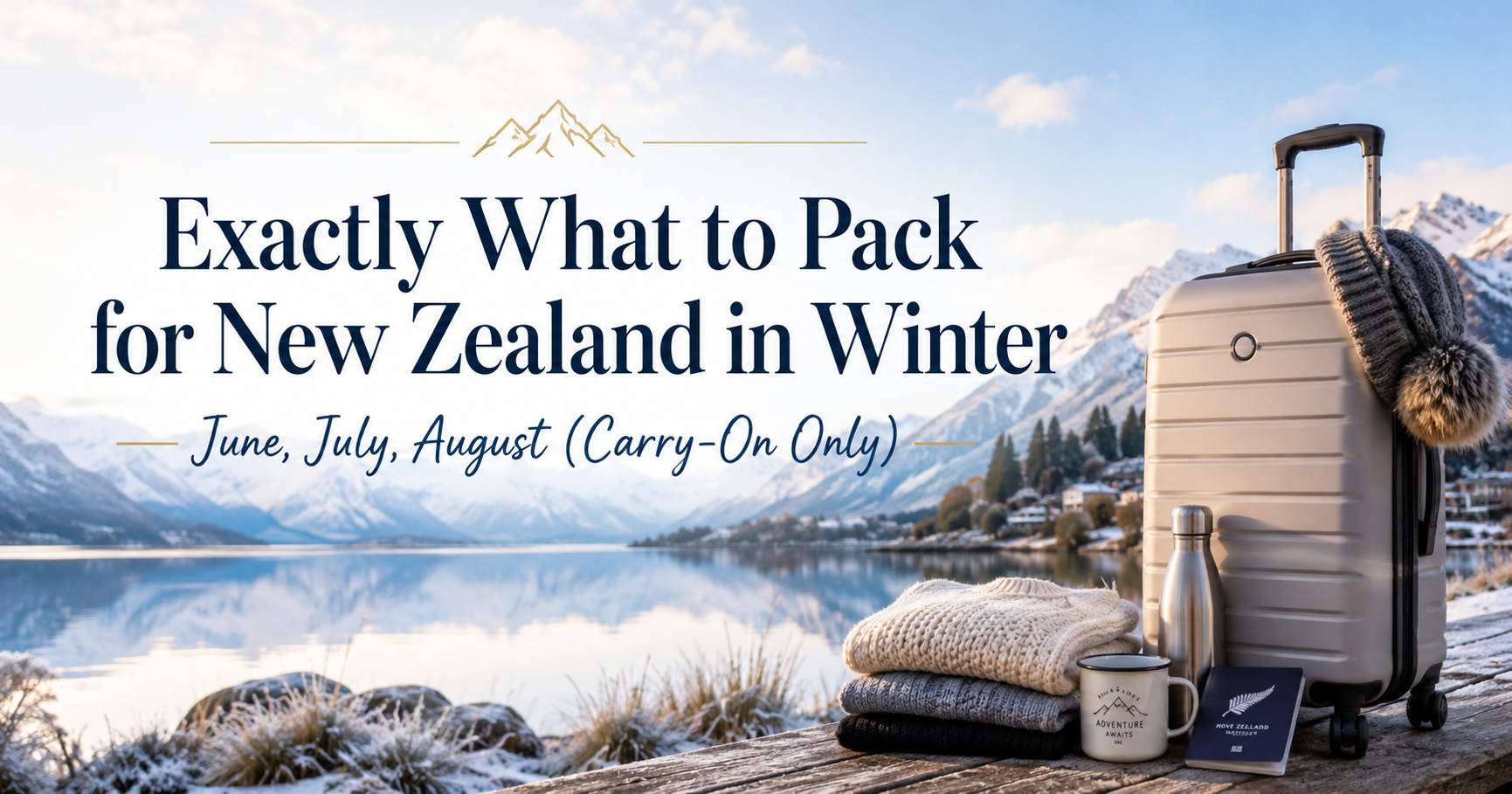
New Zealand in winter feels like snow-dusted mountains, misty fjords, steaming geothermal pools, dramatic coastlines, cozy cafés, quiet trails, vineyard lunches, scenic road trips, and lakes that look almost unreal under moody winter skies.
This is not a destination where you need to pack your entire closet, but it is a place where the wrong packing choices can make your trip much harder than it needs to be. New Zealand winter can be mild and rainy in one region, cold and icy in another, and windy almost anywhere. You may be walking through Auckland in drizzle, soaking in a geothermal pool near Rotorua, bundling up for a Milford Sound cruise, or watching the mountains turn pink at sunset in Queenstown.
A smart New Zealand winter packing list needs to cover several different travel moods at once: city exploring, scenic drives, boat tours, light hikes, hot springs, wine-country stops, alpine viewpoints, rainy days, and cold mornings.
This guide is built for travelers who want to pack light, stay comfortable, and still feel pulled together without dragging a giant suitcase across New Zealand.
New Zealand in Winter: What to Expect
New Zealand’s winter runs from June through August. Because the country stretches across different climates and landscapes, winter can feel very different depending on where you go.
The North Island is usually milder, but it can be rainy, damp, and windy. Auckland, Wellington, Rotorua, and the Bay of Islands may not feel deeply frozen, but wet weather and wind can make light clothing feel uncomfortable quickly.
The South Island is colder and more dramatic in winter. Queenstown, Wanaka, Lake Tekapo, Mount Cook, Christchurch, and alpine road-trip routes can bring frosty mornings, snow nearby, icy conditions, and colder evenings.
You should pack for:
- Cold mornings and evenings
- Rainy city sightseeing days
- Windy waterfronts, ferries, and viewpoints
- Scenic road trips
- Light hikes and outdoor walks
- Hot springs and spa pools
- Boat tours and fjord cruises
- Casual but warm dinners out
- Shorter daylight hours
- Big temperature swings between regions
New Zealand in winter is not impossible to pack for, but it does reward travelers who think in layers. You need clothes that can handle rain, wind, chill, and movement without turning your carry-on into a stuffed disaster.

Who This New Zealand Winter Packing List Is For
This packing list is for travelers visiting New Zealand in June, July, or August who want to pack in a practical, carry-on-friendly way.
It is designed for:
- Season: Winter in New Zealand — June, July, August
- Luggage style: carry-on + personal item only
- Typical trip type: Auckland city stay, Queenstown trip, South Island road trip, North Island itinerary, Rotorua hot springs visit, Milford Sound cruise, wine-country stop, national park visit, or New Zealand cruise extension
This is not a full ski-trip packing list. If your New Zealand trip is built around skiing or snowboarding, you will need slope-specific gear or rentals. This list is for regular winter travelers who want to be warm, dry, comfortable, and ready for New Zealand’s changing weather.
Universal Essentials
These are the things I would pack for New Zealand in winter no matter where I was staying or how long the trip was.
- Passport
- Travel insurance information
- Documented itinerary with hotels, apartments, train bookings, ferry bookings, and key confirmations
- Credit/debit cards
- A small amount of cash in New Zealand Dollars
- Copies or photos of important documents saved on your phone and backed up
- Driver’s license / International Driving Permit if you plan to rent a car
- Optional printed confirmations for important bookings
- phone + charging cables
- Medications (prescription + OTC home basics)
- Writing pen (for customs forms and other random exchanges)

Tech & Power
New Zealand uses Type I plugs, with 230V and 50Hz electricity. Most modern phones, tablets, laptops, camera chargers, and USB chargers are dual voltage, but you should always check the label before plugging anything in.
Look for:
Input: 100–240V
If your device says 100–240V, you usually only need the correct plug adapter. If it only says 110V or 120V, you may need a voltage converter, especially for heat-producing appliances like hair dryers, curling irons, straighteners, steamers, heating pads, and some electric shavers.
Pack:
- New Zealand-compatible adapter
- multi-port USB charger
- power bank
- phone cable plus a backup
- Electronics travel organizer
- Optional: Laptop or Chromebook or Tablet (for work if you must and/or easy entertainment in your own language)
- Optional: Translation headphones
- Optional: Dual-voltage small appliances like hair dryer, curling iron, hair straightener or heating pad OR a step down voltage converter if your device is not compatible with 230V
- Optional: Kindle or other e-reader (not sure if Kindle is good for you? Check out my full article about how it’s a perfect travel companion)
Quick Safety Check
A plug adapter only changes the shape of the plug. It does not convert voltage.
Before using any hair tool, steamer, heating pad, travel kettle, or electric grooming tool, check the voltage label carefully. If it does not say 100–240V, do not assume it is safe to use with only an adapter.
Toiletries & Health
New Zealand in winter can be cold, wet, windy, and drying, especially when you combine long flights, heated rooms, chilly outdoor days, and lots of walking. Pack toiletries that keep you comfortable without filling half your suitcase.
- Shampoo + Conditioner + Hair masks and /or Olaplex (these are easiest transported in cadence capsules or as solids)
- Toothbrush + toothpaste + mouthwash + floss (travel solids are easiest for these I still pack them in cadence capsules) It’s also a good idea to bring a couple of on the go toothbrushes for long travel days/flights and/or day trips to stay feeling fresh
- Body wash and face wash as well as any other regularly used shower/bath accessories like salt scrubs, bath soaks, and mud in cadence capsules
- Skincare basics for body, hands, face, and feet as well as any daily facial routines like anti-aging serums in cadence capsules
- Deodorant (body deodorant is also recommended for long flights)
- Disposable shavers are easiest to use and leave behind instead of repacking, but be sure to bring at least 1 shaver
- Personal medications with labels
- Pain relievers and any other common OTC medications you use like ant-acids, anti-diarrhea and/or constipation relief, allergy pills, and common cold medicine
- Deep blue, salon-pas, and lidocaine patches are always helpful for unexpected pain from excessive walking, sitting or other activities done while traveling and especially helpful if you’re traveling with older ones
- Blister prevention (bandages or blister pads) and a simple first aid kit
- Hand sanitizer
- Compact wet wipes
- Toiletry Case
- Saline nasal spray if flights or heated rooms dry you out

Laundry Kit
A small laundry kit is one of the easiest ways to keep a New Zealand winter packing list carry-on only. Winter clothes are bulkier, so you do not want to pack too many “just in case” extras.
A tiny laundry kit helps a lot:
- Travel-size laundry detergent sheets or liquid
- Sink stopper (optional, but helpful in older hotels) or mini travel washer
- A few clothespins or a lightweight travel clothesline
- Clothes refresher spray can be used daily to refresh your clothing between washes
What to know:
- Quick-dry fabrics make this much easier
- Wash small items as needed
- Let socks, underwear, and damp layers dry fully before repacking
- Do not assume clothing will dry overnight if your room is cool or humid
- If you hate sink laundry, add 1 extra top and 1 extra underwear set and keep the rest the same
- If possible, choose accommodation with laundry access once during a longer trip
Day Bag Essentials
Your New Zealand day bag should be light but useful. You may leave your hotel in dry weather and end up dealing with wind, rain, cold, sun, and a spontaneous scenic stop before you get back.
Pack these in your day bag:
- lightweight crossbody or backpack
- reusable water bottle
- compact umbrella
- sunglasses
- sunscreen
- lip balm
- wet wipes
- tissues or handkerchiefs
- hand cream
- cardigan or scarf
- packable tote
- insect repellent
- lightweight packable rain jacket
- portable power bank
- small first aid/blister kit
- beanie
- gloves
- motion sickness remedy
- waterproof phone pouch
- optional wet bag if your day may include thermal baths

Hot Springs & Wet Weather Kit
New Zealand’s winter packing list needs a little extra flexibility because you may be moving between rain, steam, pools, boat tours, and cold outdoor walks in the same trip.
Pack:
- Quick-dry towel
- Flip-flops
- Wet bag
- Hair tie or clip
- Waterproof phone pouch
- Comb
- Lightweight cover-up
- Swim cap if you plan to use swimming pools that require one
- small dry bag for boat tours, rainy walks, or geothermal stops
Do not assume winter means you can skip swimwear. Hot springs, spa pools, hotel pools, thermal areas, and wellness stops are a very real part of a New Zealand winter trip.
Clothing Packing Lists Jump Menu
Packing List for Women
For women, New Zealand in winter is easiest with warm, practical layers that can handle rain, road trips, casual dinners, outdoor viewpoints, boat tours, and city walking without needing a full wardrobe change every day.
Pack:
- 1 warm coat or insulated jacket
- 1 lightweight waterproof rain jacket or shell
- 2 sweaters or knit tops
- 2 short-sleeve or breathable rayon tops
- 2 long-sleeve tops
- 1-2 thermal
- 2 pairs of pants or jeans
- 1 simple dress or skirt with tights if you like dressing up for dinner
- 1 pair of warm tights
- 7–10 pairs of underwear
- 2–3 bras
- 4–6 pairs of socks
- 2 sleep set or nightgown
- Swimsuit if your hotel has a spa, pool, hot tub, or thermal bath access
Shoes
- Comfortable waterproof walking shoes or boots
- Dressier flats, loafers, or ankle boots for city dinners
- Lightweight sandals or flip-flops for hotel rooms, spas, or pools
Accessories
- Compact crossbody bag
- Travel make-up stack, eyeliner and mascara
- Facial skincare routine
- Make-up remover wipes
- Minimal jewelry
Packing List for Men
For men, New Zealand in winter works best with casual but practical pieces. You want clothes that feel comfortable for road trips, cold mornings, boat tours, wineries, casual restaurants, and outdoor stops without looking sloppy.
Clothing
- 1 warm coat or insulated jacket
- 1 lightweight waterproof rain jacket or shell
- 2 sweaters or quarter-zips
- 4-5 wool tops (mix of short and long sleeve)
- 1-2 thermal base-layer tops
- 2 pairs of jeans or travel pants
- 7–10 pairs of underwear
- 4–6 pairs of socks
- 1-2 sleep set
- swim trunks if your hotel has a pool, spa, hot tub, or thermal bath access
Shoes
Accessories
Packing List for Girls
For girls, pack warm, comfortable pieces that can handle cold mornings, rainy walks, car rides, snacks, spills, hot springs, and outdoor stops. New Zealand winter travel can include a lot of movement, so comfort matters more than fussy outfits.
Clothing
- 4–5 lightweight wool or breathable tops
- 2 bottoms (leggings, pants, or skirts suitable for lots of walking)
- 1 warmer layer (sweater or hoodie)
- 1 light jacket (rain-friendly is ideal)
- 1 fleece or warm jacket
- 1 sleep set
- 1 Swimwear
- Underwear + socks for 6–7 days
- Comfortable walking shoes (already broken in)
Accessories
- Small backpack (easy for day trips and trains)
- Handheld game console and/or Kindle
- Snacks
Packing List for Boys
For boys, New Zealand in winter calls for easy warm layers that can handle road trips, outdoor viewpoints, casual dinners, wet weather, and plenty of moving around.
Clothing
- 4–5 wool tops
- 2 bottoms (pants or joggers suitable for lots of walking)
- 1 warmer layer (sweater or hoodie)
- 1 light jacket (rain-friendly if possible)
- 1 warm jacket
- 1 sleep set
- Underwear + socks for 6–7 days
- Comfortable sneakers (already broken in)
Accessories
- Handheld game console and/or Kindle (great for trains and downtime)
- Backpack (small and easy to manage on transit)
- Snacks
Things Nobody Tells You About Packing for New Zealand in Winter

The Weather Can Change Fast
New Zealand is famous for dramatic scenery, and dramatic scenery usually comes with dramatic weather.
You can start the morning with blue sky, hit rain by lunch, deal with sharp wind at a viewpoint, and end the evening cold beside a lake. This is why one huge coat is less useful than flexible layers.
The North Island and South Island Feel Different
Do not pack for Auckland and assume you are ready for Queenstown.
The North Island can be damp, rainy, and mild. The South Island can feel much colder, especially around Queenstown, Wanaka, Lake Tekapo, Mount Cook, and mountain passes. If your trip includes both islands, pack for the colder part of the trip.
Rain Gear Matters More Than Fancy Clothes
New Zealand is relaxed, outdoorsy, and practical. You do not need a glamorous suitcase to enjoy it.
You do need a real rain jacket, comfortable shoes, and layers that still feel good after a long day outside.
Wind Can Make It Feel Colder Than the Forecast
The forecast may not look terrifying, but wind can change everything. Waterfronts, ferries, fjords, lookouts, lakes, and open landscapes can feel much colder than expected.
A scarf, beanie, and gloves take up very little room and can make a huge difference.
Waterproof Shoes Are Worth Packing
This is not the trip for flimsy shoes that soak through the first time it rains.
Between wet paths, muddy viewpoints, lakeside walks, drizzle, boat tours, and outdoor attractions, waterproof walking shoes or boots are one of the smartest things to pack for New Zealand in winter.
You Still Need Swimwear
It feels odd to pack a swimsuit for winter until you are standing near a steaming hot spring, spa pool, or hotel pool.
Rotorua, Hanmer Springs, Queenstown-area stays, wellness hotels, and thermal pools make swimwear useful even when the air is cold.
Winter Road Trips Need Extra Supplies
New Zealand road trips are beautiful, but winter adds shorter daylight hours, colder stops, winding roads, icy patches in some regions, and long stretches where you may not want to rely on finding supplies later.
Keep snacks, water, a power bank, warm layers, and offline maps with you instead of buried deep in your suitcase.
Laundry May Not Dry Quickly
Carry-on packing still works in New Zealand winter, but damp weather can make laundry slower.
Quick-dry base layers, thinner socks, and smart fabrics help. Thick cotton pieces and heavy layers are more annoying if they get wet or need washing.
Sunscreen Still Belongs in Your Bag
Cold weather does not mean skipping sunscreen.
If you are outside on scenic drives, lake walks, snow areas, boat tours, hikes, or bright winter days, sun protection still matters.
Cute Shoes Will Probably Betray You
New Zealand rewards practical shoes. Even easy sightseeing days can involve hills, wet pavement, gravel pull-offs, ferry terminals, gardens, waterfront paths, and spontaneous scenic stops.
Bring shoes you can actually walk in.
Final Thoughts
Packing for New Zealand in winter is all about staying warm, dry, and flexible without overpacking.
You do not need a giant suitcase, but you do need smart layers, waterproof shoes, a reliable rain jacket, warm accessories, and a day bag that can handle changing weather.
The best New Zealand winter packing strategy is simple: prepare for rain, wind, cold mornings, cozy evenings, and outdoor days you will not want to miss. When you pack for the real version of New Zealand winter, the trip becomes much easier to enjoy.