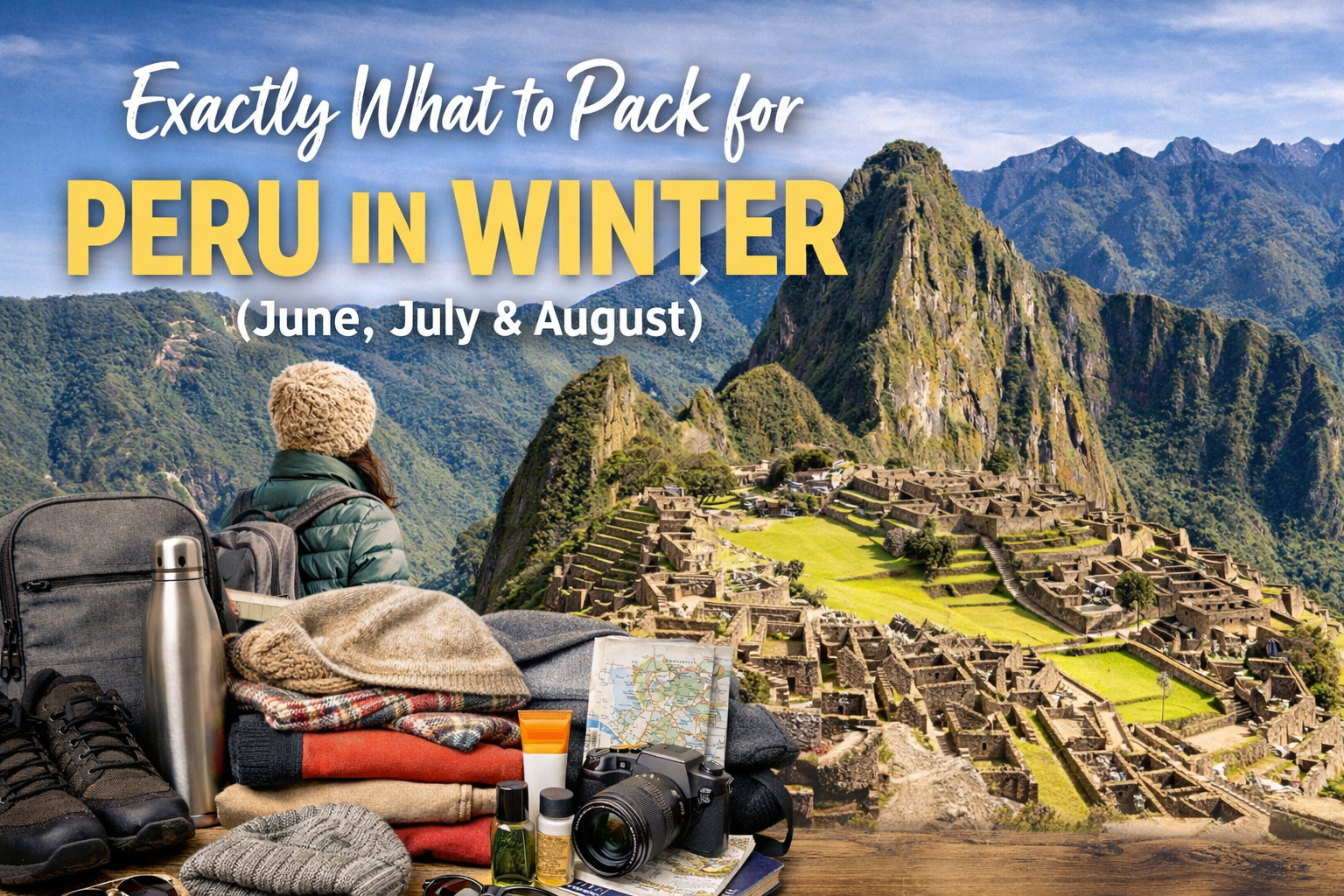
Peru in winter is the kind of trip that gets under your skin in the best way. Crisp mountain mornings. Sun hitting old stone in Cusco. Long scenic train rides. Layers coming on and off all day. One minute you are wrapped in a cardigan with a coffee in hand, and the next you are standing in bright high-altitude sun staring at views that do not even look real. Peru feels ancient, dramatic, textured, and unforgettable. It is the kind of place where every day feels a little bigger than expected.
It is also not the trip to pack lazily for.
Peru in winter can mean cool coastal weather in Lima, genuinely cold mornings and nights in the Andes, strong midday sun at altitude, dry air, uneven walking surfaces, and long travel days between airports, trains, towns, and ruins. This is not a suitcase-for-the-photos kind of destination. This is a pack-smart-and-thank-yourself-later destination. Winter in Peru also overlaps with the dry season in the Andes, which is exactly why so many travelers go then.
Destination context for Peru in winter
Peru in winter is not one temperature, one landscape, or one type of trip.
A lot of travelers combine Lima with Cusco, the Sacred Valley, and Machu Picchu, which means packing for very different conditions in one carry-on. Lima tends to feel cooler, grayer, and more layered in winter, while the Andes bring cold mornings, chilly nights, and very strong daytime sun because of the altitude. Cusco’s July averages are cooler than January, and the day-to-night swing can be dramatic. That is why Peru rewards people who pack for temperature swings instead of packing for one fixed forecast.
Peru also rewards practical travelers. That means:
- shoes you can actually walk in on uneven stone, stairs, and hilly streets
- layers you can peel off midday and put back on fast
- sun protection you will really use
- a day bag setup that helps on long sightseeing days
- clothing that feels neat and put together without making you freeze in the morning or overheat by lunch

Who this packing list is for
This list is for travelers doing all or most of the following:
- Season: Winter travel — June, July, and August
- Carry-on + personal item only
- Lima + Cusco + Sacred Valley + Machu Picchu style trip
- lots of walking, stairs, old streets, train travel, and full sightseeing days
- rewearing outfits smartly instead of overpacking
- sink laundry or one small laundry stop if needed
- travelers who want to look neat and pulled together without dragging a huge suitcase through Peru
Universal Essentials
These are the non-clothing basics I would not skip for Peru in winter.
- passport + digital/printed copies
- wallet
- credit cards
- local currency (Peruvian sol)
- International driver’s permit if needed
- travel insurance information
- flight confirmations
- hotel confirmations
- train, ferry, or car rental confirmations if needed
- reservation screenshots or printouts
- medications prescription list
- emergency contact information
- writing pen (for customs forms and other random exchanges)
- filtered water bottle
Peru winter trips tend to be hard on lips, skin, energy, and phone battery. Dry air, altitude, long days, and moving between regions make the practical basics matter more than people expect. Water safety also deserves more thought here than in some destinations, so this is not the trip where I would want to wing it on drinking water.
Tech & Power

Peru uses 220V / 60Hz electricity, and travelers from lower voltage countries need to think about both plug fit and voltage for single-voltage devices. Peru commonly uses Type A and Type C outlets, which means a universal adapter is the easiest path. Phones, tablets, laptops, and most modern chargers are usually fine if they are dual-voltage, but single-voltage heat tools are where people get into trouble.
- Universal power adapter (Peru compatible)
- Cell phone (with international plan / eSIM / SIM set up before departure)
- Multi-port USB charging block
- Travel Power Strip
- Phone charging cable (bring a backup cable if you’re rough on cords)
- Portable power bank (essential for long sightseeing days)
- Earbuds or headphones
- Translation headphones
- Electronics travel organizer
- Optional: Laptop or Chromebook or Tablet (for work if you must and/or easy entertainment in your own language)
- Dual-voltage small appliances like hair dryer, curling iron, hair straightener or heating pad OR a step down voltage converter if your device is not compatible with 230V
- Optional: Kindle or other e-reader (not sure if Kindle is good for you? Check out my full article about how it’s a perfect travel companion)
For this kind of trip, a power bank matters more than people think. Peru days can run long: maps, translation help, photos, train tickets, boarding passes, messaging, and long stretches away from your room drain your phone fast.
Toiletries & Health
- Shampoo + Conditioner + Hair masks and /or Olaplex (these are easiest transported in cadence capsules or as solids)
- Toothbrush + toothpaste + mouthwash + floss (travel solids are easiest for these I still pack them in cadence capsules) It’s also a good idea to bring a couple of on the go toothbrushes for long travel days/flights and/or day trips to stay feeling fresh
- Body wash and face wash as well as any other regularly used shower/bath accessories like salt scrubs, bath soaks, and mud in cadence capsules
- Skincare basics for body, hands, face, and feet as well as any daily facial routines like anti-aging serums in cadence capsules
- Deodorant (body deodorant is also recommended for long flights)
- Disposable shavers are easiest to use and leave behind instead of repacking, but be sure to bring at least 1 shaver
- Personal medications with labels
- Pain relievers and any other common OTC medications you use like ant-acids, anti-diarrhea and/or constipation relief, allergy pills, and common cold medicine
- Deep blue, salon-pas, and lidocaine patches are always helpful for unexpected pain from excessive walking, sitting or other activities done while traveling and especially helpful if you’re traveling with older ones
- Blister prevention (bandages or blister pads) and a simple first aid kit
- Sunscreen
- Lip balm
- Hand sanitizer
- Compact wet wipes
- Toiletry Case
Peru winter travel can be deceptively drying. Between altitude, cold mornings, strong sun, long flights, and possible stomach disruption from travel, this is a country where your health kit earns its space fast. Untreated water is also something travelers are advised to avoid, including tap water, so stomach backup items are not overkill here.
Laundry Kit

This is one of the easiest ways to keep a Peru winter trip carry-on friendly.
- Travel-size laundry detergent sheets or liquid
- Sink stopper (optional, but helpful in older hotels) or mini travel washer
- A few clothespins or a lightweight travel clothesline
- Clothes refresher spray can be used daily to refresh your clothing between washes
What to Know
- Quick-dry fabrics make this much easier
- Wash small items as needed
- If you hate sink laundry, add 1 extra top and 1 extra underwear set and keep the rest the same
- If possible, aim for accommodation with laundry access at least once during a longer trip
Peru is one of those trips where layering helps so much that people can accidentally overpack. Laundry is how you keep the flexibility without turning your bag into a brick.
Day Bag Essentials
This is the part people mess up.
Your Peru day bag needs to work for long hours out, changing temperatures, high-altitude sun, and the possibility that you may be away from your room all day.
Pack:
- Lightweight crossbody or backpack (easy to wear all day and on trains)
- Sun hat
- SPF lip product
- Insect repellent
- Small wallet
- Hand cream
- Tissues
- Printed reservation details if you like backups
The goal is not to carry everything you own. The goal is to stay functional when the day starts cold, turns bright and warm, and ends chilly again.
Clothing Packing Lists (Jump to Your Section)
All clothing lists below are designed around capsule outfits — everything mixes and matches.
Peru in winter rewards layers, breathable fabrics, and pieces that can handle both movement and temperature swings. Lightweight cotton, performance fabrics, soft knits, and practical layering pieces all do well here. Heavy, bulky items eat suitcase space fast, and stiff pieces are annoying when your trip includes stairs, trains, walking tours, and long travel days.
Women’s Packing List
Clothing
- 2 lightweight wool long-sleeve tops
- 2 short-sleeve or breathable rayon tops
- 1 light sweater or cardigan (100% cashmere is ideal for warmth without bulk)
- 1 packable raincoat or lightweight rain-friendly jacket
- 1 warm coat or packable puffer
- 2 pairs of pants (one lighter, one slightly warmer)
- 1 wool skirt or dress
- 1 sleep set or nightgown
- 6–7 underwear
- 2 bras
- 4–5 pairs of socks
Shoes
- 1 comfortable walking sneaker
- 1 dressier but still walkable shoe (loafers, flats, low-profile sneakers, or another supportive option)
- Optional 1 pair of good walking sandals
Accessories
- Scarf (excellent for layering, warmth, flights, and random temperature shifts)
- Compact crossbody bag
- Travel make-up stack, eyeliner and mascara
- Facial skincare routine
- Make-up remover wipes
The goal here is not fashion suffering. It is neat, flattering, rewearable clothing that works when the morning is cold, the afternoon is bright, and dinner still deserves a little effort.
Men’s Packing List
Clothing
- 3–4 wool tops (mix of short and long sleeve)
- 1 light sweater or hoodie
- 1 packable rain coat
- 1 warm jacket or packable puffer
- 2 pairs of pants (one lighter, one slightly warmer)
- 1 optional casual button-down (useful for nicer dinners or evenings out)
- 1 sleep set
- 6–7 underwear
- 4–5 pairs of socks
- Optional: swim trunks
Shoes
- 1 comfortable walking sneaker (you’ll easily log 15–25k steps a day)
- 1 cleaner casual shoe for evenings (minimal sneakers or loafers work well)
Accessories
- Shaving kit or beard grooming kit
- Travel sling or backpack (easy on trains and in crowded areas)
For men, this is one of those trips where layering matters more than packing a lot. A few smart pieces you can rotate will serve you better than stuffing the bag with backup clothes you never wear.
Girls’ Packing List
- 4–5 lightweight wool or breathable tops
- 2 bottoms (leggings, pants, or skirts suitable for lots of walking)
- 1 warmer layer (sweater or hoodie)
- 1 light jacket (rain-friendly is ideal)
- 1 fleece or warm jacket
- 1 sleep set
- Underwear + socks for 6–7 days
- Comfortable walking shoes (already broken in)
Accessories
- Small backpack (easy for day trips and trains)
- Handheld game console and/or Kindle
- Snacks
Keep it simple, washable, and easy to layer. Peru in winter is not the place for kids’ outfits that only work in one exact temperature.
Boys’ Packing List
- 4–5 wool tops
- 2 bottoms (pants or joggers suitable for lots of walking)
- 1 warmer layer (sweater or hoodie)
- 1 light jacket (rain-friendly if possible)
- 1 warm jacket
- 1 sleep set
- Underwear + socks for 6–7 days
- Comfortable sneakers (already broken in)
Accessories
- Handheld game console and/or Kindle (great for trains and downtime)
- Backpack (small and easy to manage on transit)
- Snacks
For boys, the real win is comfort, warmth flexibility, and shoes that can handle a lot of walking without complaints.
Things Nobody Tells You About Peru in Winter

1. The sun can feel stronger than the temperature suggests
People see cool mornings and assume they do not need serious sun protection. Then altitude proves them wrong. Peru can feel chilly and bright at the same time, which is exactly why sunglasses, lip protection, and sunscreen matter so much.
2. Your mornings and nights may feel completely different from midday
This is especially true if your trip includes Cusco and other Andean stops. A day can begin cold, warm up fast in the sun, and turn chilly again once the light drops. Layering is what saves this trip, not overpacking.
3. Your shoes matter more than your outfits
Peru is full of places where you will be glad you packed real walking shoes: old streets, uneven stone, stairs, archaeological sites, train stations, hill towns, and long days on your feet.
4. Water deserves actual thought here
This is not a place where I would casually assume the tap water is fine just because I am at a hotel. Safe water habits matter more in Peru than in a lot of easier destinations, so bring the bottle situation you trust and stick to it.
5. Peru is easy to underpack for emotionally and overpack for physically
People imagine the big views, the ruins, the train rides, the markets, the photographs. Then they forget the things that actually make the trip easier:
- blister care
- tissues
- a power bank
- a filtered or refillable bottle setup
- a real layer for cold mornings
- a bag you can comfortably wear for hours
Final Thoughts
Peru in winter is one of those trips where the right packing changes everything.
Pack too heavy, and you will hate hauling it through airports, cobbled streets, hotel stairs, and train connections. Pack too fantasy-driven, and you will be cold in the morning, overheated by lunch, and annoyed by dinner. But pack smart — real layers, real shoes, good sun protection, practical health basics, and a day bag that can keep up — and Peru becomes exactly what you want it to be: dramatic, moving, beautiful, and absolutely worth the effort.
This is the kind of trip where you want to feel free enough to say yes to one more viewpoint, one more market, one more train ride, one more old street, one more unforgettable day.
And that starts with the suitcase.