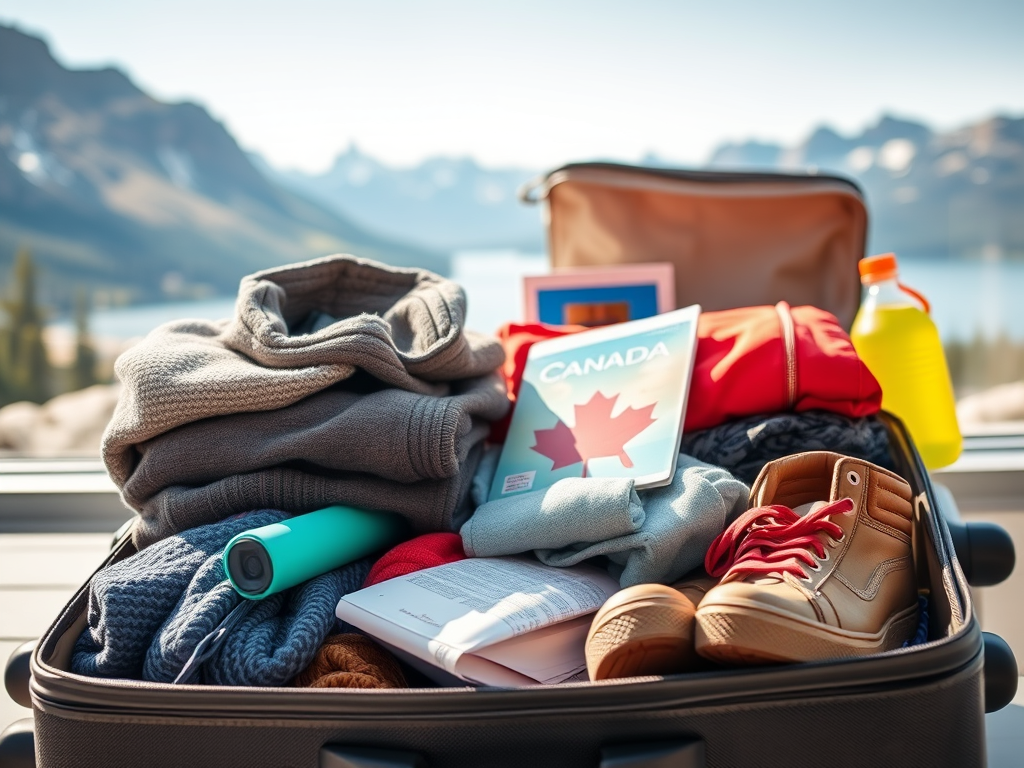
2 Weeks, Carry-On Only, No Guesswork
Canada is one of those destinations that feels effortlessly worth the trip. It has the kind of scenery that makes you want to keep pulling over for photos, the kind of cities that feel clean, charming, and easy to enjoy, and the kind of wide-open beauty that can make even an ordinary day feel special. Whether you are going for mountain views, city time, coastal scenery, lakes, wildlife, or a little bit of everything, Canada has a way of feeling both peaceful and dramatic at the same time.
Spring can be a wonderful time to go. In many places, it is a chance to enjoy Canada before peak summer crowds fully arrive. It can mean fresh air, beautiful scenery, shoulder-season value, and a trip that feels a little calmer and more spacious.
It is also a season that can surprise people.
Because here is the part travelers need to understand: spring in Canada does not always look the way spring looks in other places. Depending on where you are going and when, early spring can still bring snowstorms, freezing mornings, slush, cold wind, muddy ground, and weather that changes quickly. A city trip and a mountain trip are not the same packing problem, and if your itinerary includes higher elevations, you need to pack warmer than you think.
This guide will help you pack for the real version of Canada in spring so you can stay comfortable, avoid overpacking, and still keep it carry-on friendly.
Who This Packing List Is For
This packing list is for travelers spending about 2 weeks in Canada in spring and trying to do it with just a carry-on + personal item.
It is especially useful if you are:
- visiting Canada in Spring: March, April, or May
- planning a mix of cities, scenic areas, and day trips
- walking a lot
- trying to avoid overpacking
- open to doing light laundry once or twice during the trip
- packing for comfort, practicality, and changing weather
This list is built for real spring travel in Canada, not the fantasy version where everything is sunny and warm just because the calendar says spring.
If your trip is in early spring, pack warmer than you think. In some parts of Canada, spring can still feel very winter-adjacent. If your trip includes the mountains or higher elevations, that matters even more.
My Core Canada-in-Spring Packing Philosophy

For Canada in spring, the goal is not to pack a giant suitcase full of bulky clothes. The goal is to pack smart.
That means:
- layers instead of one giant heavy outfit
- shoes that can handle wet ground
- pieces that mix and match easily
- a day bag that can hold weather backups
- enough warmth for surprise cold
- not assuming every part of Canada feels the same
A spring trip to Vancouver is not the same packing problem as a spring trip to Banff. A city-focused trip in late May is not the same as an early-April nature-heavy trip. The trick is building a capsule that can flex.
The Universal Carry-On Packing List
These are the basics I would bring for almost any Canada spring trip, no matter your age or style.
Travel Essentials
- passport
- wallet
- credit cards / debit card
- some Canadian dollars
- travel insurance info
- flight and hotel confirmations
- phone + charging cables
- Medications (prescription + OTC home basics)
- Writing pen (for customs forms and other random exchanges)
The Big Spring-in-Canada Essentials
These are the things I would not skip:
- water-resistant or waterproof walking shoes
- a packable jacket or coat
- a rain layer
- a cardigan, sweater, or other warm middle layer
- a warm scarf for unexpected cold snaps
- gloves
That is the baseline.
What to Wear on the Plane
For a Canada spring trip, I would wear the bulkiest practical items on the plane so the suitcase stays light and manageable.
A good plane outfit would be:
- comfortable pants or travel leggings
- a breathable top
- a cardigan or light sweater
- your raincoat or main outer layer
- walking shoes
- a compact scarf if you tend to get cold
This also helps if you land and the weather is colder than expected.
Toiletries I Would Bring

- Shampoo + Conditioner + Hair masks and /or Olaplex (these are easiest transported in cadence capsules or as solids)
- Toothbrush + toothpaste + mouthwash + floss (travel solids are easiest for these I still pack them in cadence capsules) It’s also a good idea to bring a couple of on the go toothbrushes for long travel days/flights and/or day trips to stay feeling fresh
- Body wash and face wash as well as any other regularly used shower/bath accessories like salt scrubs, bath soaks, and mud in cadence capsules
- Skincare basics for body, hands, face, and feet as well as any daily facial routines like anti-aging serums in cadence capsules
- Deodorant (body deodorant is also recommended for long flights)
- Disposable shavers are easiest to use and leave behind instead of repacking, but be sure to bring at least 1 shaver
- Personal medications with labels
- Pain relievers and any other common OTC medications you use like ant-acids, anti-diarrhea and/or constipation relief, allergy pills, and common cold medicine
- Deep blue, salon-pas, and lidocaine patches are always helpful for unexpected pain from excessive walking, sitting or other activities done while traveling and especially helpful if you’re traveling with older ones
- Blister prevention (bandages or blister pads) and a simple first aid kit
- Hand sanitizer
- Compact wet wipes
- Toiletry Case
Cold wind, indoor heat, long walking days, and changing weather can make your skin and lips feel rough fast, so this is not the trip where I would skip moisture and comfort items.
Tech + Travel Gear
- Universal power adapter (if you’re coming from country that doesn’t have A/B plugs)
- Multi-port USB charger
- Phone, Kindle, camera, or tablet
- Portable power bank (essential for long sightseeing days)
- Travel Power Strip
- Earbuds or headphones for planes, trains, and long transit days
- Tech Organizer Case
- Cell Phone (set up an international plan with your provider before you go, or buy a SIM/eSIM for Canada)
- Optional: Laptop or Chromebook or Tablet (for work if you must and/or easy entertainment in your own language if English isn’t your first language)
- If you’re packing single-voltage electronics like heating pads, hair styling tools, or an electric kettle you’ll need a step-down voltage converter if you’re traveling from a higher voltage country
A portable charger is one of those things that never feels important until the exact moment it becomes very important.
Laundry Strategy
If you are doing a 2-week trip with carry-on only, laundry is what makes the whole thing work.
You do not need a new outfit for every day.
A tiny laundry kit helps a lot:
- Travel-size laundry detergent sheets or liquid
- Sink stopper (optional, but helpful in older hotels) or mini travel washer
- A few clothespins or a lightweight travel clothesline
- Clothes refresher spray can be used daily to refresh your clothing between washes
What to Know:
- Quick-dry fabrics make this much easier
- Wash small items as needed
- If you hate sink laundry, just add 1 extra top and an extra underwear set and keep the rest the same
- If possible, aim for accommodation with laundry access at least once during a longer trip
This is how you keep the suitcase manageable without feeling unprepared.
Best Personal Item / Day Bag Setup
For Canada in spring, your personal item matters because weather changes can make your day bag pull a lot of weight.
I would want room for:
- Lightweight crossbody or backpack
- Reusable water bottle
- Compact umbrella
- Sunglasses
- lip balm
- wet wipes
- tissues or handkerchiefs
- hand cream
- cardigan or scarf
- gloves and a hat if early spring or colder regions
That extra space matters because you may start the day chilly, warm up a bit later, then get hit with wind or rain.
Clothing for Canada in Spring
When you are packing clothing for Canada in spring, the biggest thing to remember is that this is a layering trip, not a bulky suitcase trip. Depending on where you are going and when, spring can still bring cold mornings, wet weather, wind, slush, and even snow, especially in early spring or higher-elevation areas.
The goal is to pack clothing that works together, feels comfortable to walk in, and can handle shifting temperatures without making your suitcase miserable. Think practical layers, a warm middle layer, a real outer layer, and shoes that can deal with wet conditions. Wool, cashmere and silk are your best bets.
Women
- 2-3 lightweight wool long-sleeve tops
- 2-3 short-sleeve or breathable rayon tops
- 1 light sweater or cardigan 100% cashmere is best
- 2 pairs of pants (one lighter, one slightly warmer)
- 1 wool skirt or dress
- 1 packable jacket or coat
- 1 rain coat
- 1-2 sleepwear
- 6-7 underwear
- 2 bras
- 4–5 pairs of socks
- comfortable walking shoes that can handle wet conditions
- a pair of comfortable flat shoes
- scarf
- compact crossbody bag
- travel make-up stack, eyeliner and mascara
- facial skincare routine
- make-up remover wipes
- some simple fashion jewelry
The main thing here is not overpacking cute spring outfits that do not actually work if the weather turns on you.
Men
- 2 to 3 long sleeve tops
- 2 short-sleeve tops
- 1 casual button-down (useful for nicer dinners or evenings out)
- 2 light sweaters or pullovers
- 2 pairs of pants or jeans
- 1 nicer pair of trousers
- 1 comfortable pair of joggers or lounge pants for flights or downtime
- 1 packable jacket or coat
- 1 rain coat
- 1 sleep set
- 6–7 underwear
- 4–5 pairs of socks
- 1 comfortable walking sneaker (you’ll easily log 15–25k steps a day)
- 1 cleaner casual shoe for evenings (minimal sneakers or loafers work well)
- lightweight scarf if you use one
- sunglasses
- shaving kit or beard grooming kit
- travel sling or backpack (easy on trains and in crowded areas)
Again, this is all about practical layering, not bulk.
Girls
For girls, I would keep the same general philosophy: simple, layerable, comfortable, and easy to move around in.
- 4–5 lightweight wool or breathable tops
- 2 bottoms (leggings, pants, or skirts suitable for lots of walking)
- 1 warmer layer (sweater or hoodie)
- 1 light jacket (rain-friendly is ideal)
- 1 sleep set
- Underwear + socks for 6–7 days
- Comfortable walking shoes (already broken in)
- Small backpack (easy for day trips and trains)
- Handheld game console and/or Kindle
- Snacks
The biggest mistake here is underestimating how cold mornings or windy days can feel.
Boys
- 4–5 wool tops
- 2 bottoms (pants or joggers suitable for lots of walking)
- 1 warmer layer (sweater or hoodie)
- 1 light jacket (rain-friendly if possible)
- 1 sleep set
- Underwear + socks for 6–7 days
- Comfortable sneakers (already broken in)
- Handheld game console and/or Kindle (great for trains and downtime)
- Backpack (small and easy to manage on transit)
- Snacks
This is another case where layering beats bulk.
What Not to Pack

A good Canada spring packing list is also about what not to bring.
I would skip:
- too many shoes
- heavy outfits that only work one way
- overly delicate spring clothes that make no sense in wind, rain, or cold
- a bunch of bulky just-in-case items
- giant toiletry bottles
- clothes that wrinkle badly and are annoying to re-wear
- packing like every day will be warm
The goal is to be prepared, not burdened.
Things Nobody Tells You About Packing for Canada in Spring
This is the part that really matters.
1. Spring in Canada can still mean snow
Do not assume that because it is spring, winter is fully gone. Especially in March and early April, some parts of Canada can still get snowstorms, freezing temperatures, icy mornings, and slushy conditions.
2. “Spring” means very different things depending on where you go
A spring city trip and a spring mountain trip are completely different packing situations. Coastal and urban areas can feel much softer than inland or higher-elevation areas.
3. Waterproof shoes matter more than you think
Wet sidewalks, muddy paths, slush, and surprise weather are much more annoying if your shoes cannot handle them.
4. Mornings and evenings can feel much colder than the middle of the day
Even when the afternoon feels fine, early and late parts of the day can still feel cold enough to make you wish you had packed another layer.
5. Layers are what save a Canada spring trip
Not giant overpacking. Not stuffing your suitcase with random extras. Just smart layers.
6. Early spring travelers should pack warmer than late spring travelers
If your trip is in March or April, lean more cautious and more layered. If your trip is in late May, you may be able to lighten up depending on the region, but I still would not pack as if it is reliably warm everywhere.
If Your Trip Includes the Mountains

If your Canada trip includes places like Banff, Jasper, the Rockies, or other higher-elevation areas, spring can still behave much more like winter than many travelers expect.
For those trips, I would lean harder into:
That does not mean you need to haul a giant suitcase full of winter gear for every trip. It just means you need to respect the fact that mountain spring is its own category.
Final Thoughts
Canada in spring is absolutely worth packing for. It is beautiful, refreshing, and full of the kind of scenery and atmosphere that can make a trip feel really special. But it is also a destination where smart packing matters.
This is not the time to assume spring means mild, easy, and predictable. In Canada, especially in early spring, it can still mean snow, slush, cold wind, muddy ground, and temperatures that swing more than you expected.
The good news is that you do not need to overpack to handle it well. You just need a smart carry-on capsule, solid walking shoes, layers that work together, and enough flexibility to handle whatever version of spring Canada decides to give you.
If you pack for the real Canada instead of the fantasy version, you will be much happier on the trip.