Nepal easy travel tips and planning guides, with love
Easy One-Stop Planning Guides for Nepal
Nepal is famous for the Himalayas, but treating it only as a trekking destination misses an enormous part of what makes the country so fascinating.
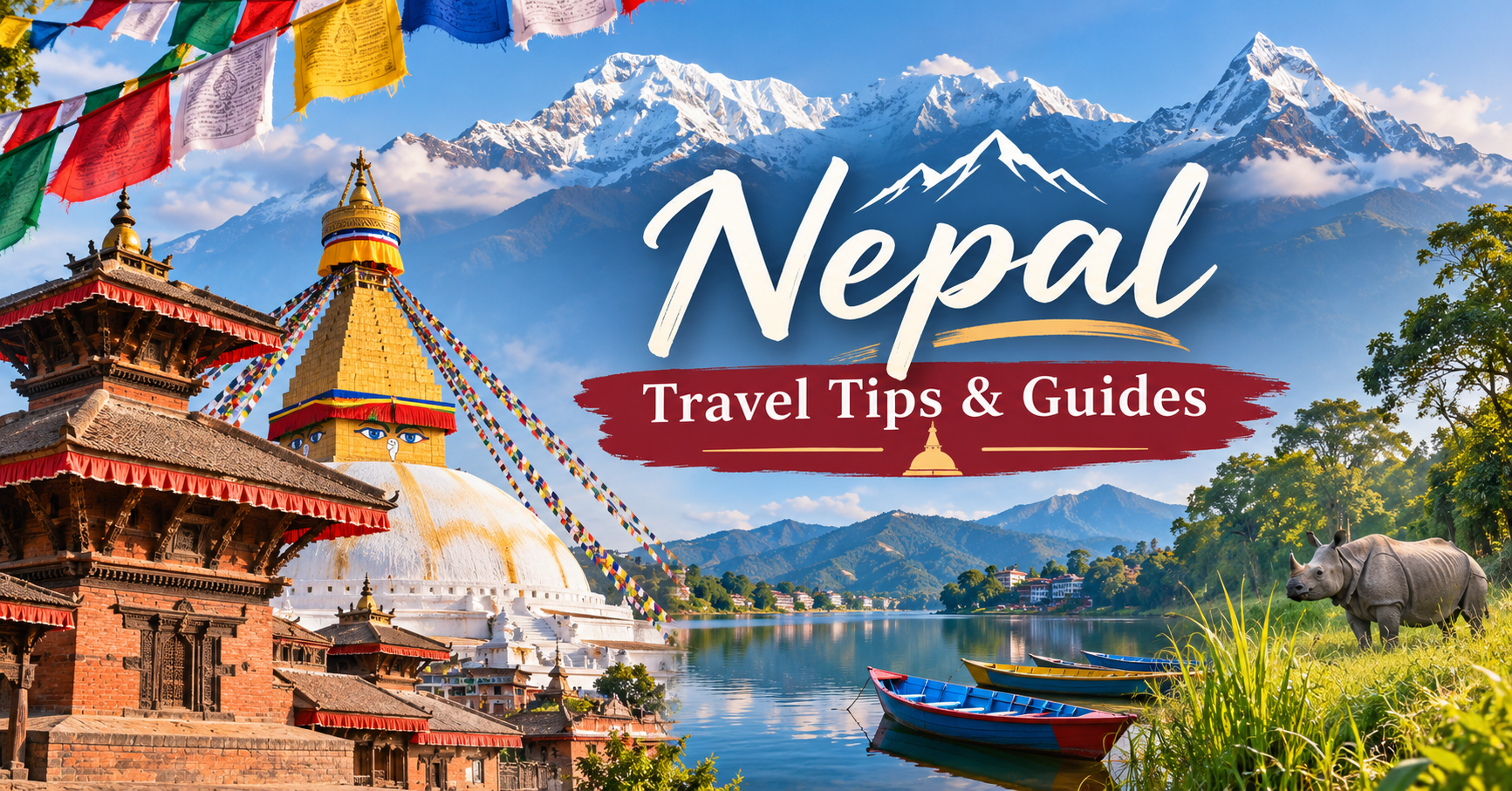
You can wander through ancient royal squares and Buddhist stupas in Kathmandu, watch the Annapurna mountains rise behind a peaceful lake in Pokhara, search for one-horned rhinoceroses in Chitwan, stay in beautifully preserved hill towns, visit sacred pilgrimage sites, explore tea-covered countryside and travel into high-altitude valleys shaped by completely different landscapes and cultures.
Nepal also rewards travelers who slow down.
A journey between destinations can take far longer than the distance on a map suggests, and weather, mountain terrain and road conditions are very real parts of travel here.
That makes choosing the right bases especially important.
Our Nepal guides focus on places where travelers can genuinely stay and build part of a trip around them — not attractions padded into separate destinations.
This page brings all of our Nepal travel planning resources together in one place so you can find what you need without digging through the entire site.
Last updated: November 24, 2026
🇳🇵 Nepal at a Glance
⚠️ Current Travel Considerations
🌦️ Weather & Best Time to Visit
🗺️ Nepal Travel Map
📍 Where to Go in Nepal
✈️ Nepal Airport Guides
🚢 Cruises Around Nepal
🏨 Where to Stay
🧳 What to Pack
🔌 Plugs & Voltage
🎟️ Things to Do
🇳🇵 Nepal at a Glance
| Basics | Details |
|---|---|
| Capital | Kathmandu |
| Official Language | Nepali |
| Currency | Nepalese Rupee (NPR) |
| Time Zone | Nepal Time (NPT), UTC+5:45 |
| Daylight Saving Time | Not observed |
| Driving Side | Left |
| Police Emergency | 100 |
| Tourist Police | 1144 |
| Plug Types | Type C, D and M |
| Electricity | 230V, 50Hz |
| Main International Gateway | Tribhuvan International Airport (KTM), Kathmandu |
| Best General Sightseeing Seasons | Spring and autumn |
| Main Monsoon Period | June through September |
| Entry Requirements | Depend on nationality. Many travelers are eligible for a tourist visa on arrival, but always confirm the rules that apply to your passport before departure. |
Nepal stretches from the hot Terai plains along the Indian border to some of the highest mountains on Earth.
That enormous change in elevation creates dramatically different climates within one relatively small country.
Kathmandu may feel pleasant while Chitwan is hot and humid and a Himalayan trekking route is below freezing.
Nepal is therefore a destination where the specific places on your itinerary matter enormously when planning weather, transportation and packing.
⚠️ Current Travel Considerations
Last reviewed: November 24, 2026
Nepal currently requires increased caution because of natural-disaster risks, but most of the country’s major tourism destinations remain open to ordinary leisure travel.
There is, however, one current area travelers should specifically avoid.
Rasuwa District Flood-Damaged Area
Do not travel to the Rasuwagadhi–Timure–Syafrubesi area of Rasuwa District, including the Nepal–China border crossing.
A major flash flood and landslide on August 26, 2026 caused serious damage to transportation and communications in this area.
Recovery operations continue, and additional flooding or landslides remain possible.
This restriction does not mean that Kathmandu, Pokhara, Chitwan, Lumbini or Nepal’s other major visitor destinations are closed.
It is a specific regional issue.
Monsoon Flooding & Landslides
Nepal’s monsoon generally runs from June through September.
Heavy rainfall can trigger landslides, flash floods and road closures, particularly in mountain and hill regions.
Road journeys may take substantially longer than expected, and remote routes can occasionally become temporarily inaccessible.
If your itinerary includes mountain roads or remote regions during monsoon season, build flexibility into the schedule.
Mountain Travel & Altitude
High-altitude travel in Nepal is not ordinary sightseeing.
Destinations such as Namche Bazaar, the Everest region and parts of Mustang require appropriate acclimatization, fitness and planning.
Altitude sickness can affect travelers regardless of age or experience.
Trekking permits, conservation-area permits and guide requirements vary depending on the route, so check the exact requirements for your planned trek rather than assuming one rule applies everywhere.
Domestic Mountain Flights
Domestic flights can save enormous amounts of travel time, but mountain weather can cause delays and cancellations.
Flights serving places such as Lukla and Jomsom are particularly weather-dependent.
If a domestic mountain flight connects with your international departure, leave substantial extra time rather than building a tight same-day connection.
🌦️ Nepal Weather by Month
Nepal’s climate changes dramatically with elevation.
The Terai plains are much warmer than Kathmandu and the central hills, while high Himalayan areas can remain extremely cold even when the rest of the country feels warm.
| Month | What to Generally Expect |
|---|---|
| January | Winter. Cool to cold in Kathmandu, mild days in parts of the Terai and severe winter conditions at high altitude. Clear mountain views are common. |
| February | Still wintery in the mountains, but temperatures begin rising in lower areas. Late February can mark the beginning of the spring trekking season. |
| March | Spring arrives, bringing warmer days, flowering landscapes and increasingly popular trekking conditions. |
| April | One of the strongest months for trekking and mountain travel. Kathmandu and Pokhara become warmer while the Terai can already feel hot. |
| May | Warm to hot in lower elevations. The southern plains can become extremely hot, while mountain regions remain cooler. |
| June | Monsoon conditions begin across much of Nepal. Rain, humidity and cloud cover increase, with greater landslide risk on mountain roads. |
| July | Peak monsoon. Heavy rain affects many regions, while rain-shadow areas such as parts of Mustang remain much drier. |
| August | Monsoon continues with lush green landscapes but substantial rainfall, road disruption and reduced mountain visibility in many areas. |
| September | Early September may still be wet, but conditions generally improve as the monsoon retreats. Autumn trekking season begins. |
| October | One of Nepal’s most popular travel months, with clearer skies, comfortable temperatures and excellent mountain visibility. |
| November | Dry, increasingly cool and excellent for sightseeing and trekking. Mountain views are often particularly clear. |
| December | Winter begins. Kathmandu remains suitable for sightseeing, the Terai is generally comfortable and high-altitude trekking becomes much colder. |
⭐ Best Time to Visit Nepal
For a first trip combining Kathmandu, Pokhara, cultural sightseeing and Himalayan scenery, October and November are particularly strong months.
Spring — especially March through May — is another excellent period.
🌸 Spring
March through May brings warmer weather, flowering rhododendrons and popular trekking conditions.
Higher areas remain cooler, while destinations such as Chitwan and Lumbini become increasingly hot as summer approaches.
🌧️ Monsoon
June through September brings most of Nepal’s annual rainfall.
The countryside becomes beautifully green, but landslides, flooding, muddy trails, road delays and cloud-covered mountain views can complicate travel.
Some rain-shadow regions, including parts of Mustang, receive much less monsoon rainfall than other parts of the country.
🍂 Autumn
Late September through November is one of Nepal’s most celebrated travel periods.
The monsoon clears dust from the air, skies often become much clearer and mountain visibility improves.
October and November are especially popular for trekking.
❄️ Winter
December through February can be excellent for cultural sightseeing in Kathmandu and lower-elevation destinations.
The Terai is far more comfortable than during its hottest months.
High Himalayan regions, however, experience serious winter conditions, with snow, freezing temperatures and some difficult or inaccessible routes.
🗺️ Get Oriented: Nepal’s Main Travel Bases

Nepal offers far more than a simple Kathmandu–Pokhara–Chitwan circuit.
These are the genuine destinations covered in our complete Best Places guide:
Kathmandu & Kathmandu Valley
Nepal’s capital and the best base for ancient temples, Buddhist stupas, royal squares, Newari architecture, museums, markets and excursions to Patan, Bhaktapur and surrounding viewpoints.
Pokhara
A beautiful lakeside city beneath the Annapurna range, with Phewa Lake, mountain viewpoints, outdoor activities and access to the Annapurna trekking region.
Sauraha & Chitwan
The practical base for Chitwan National Park, wildlife safaris, one-horned rhinoceroses, river excursions, birdwatching and Tharu cultural experiences.
Bandipur
A beautifully preserved Newari hill town with traditional architecture, quiet streets, mountain views and a slower atmosphere.
Lumbini
The birthplace of the Buddha, with the Maya Devi Temple, Sacred Garden and an extraordinary collection of international monasteries.
Tansen
A historic hillside town known for traditional architecture, Palpali Dhaka textiles, local culture and beautiful views.
Janakpur
A major center of Hindu religious heritage and Mithila culture, with the magnificent Janaki Mandir, sacred ponds, traditional art and important festivals.
Thakurdwara & Bardiya
A remote wildlife base beside Bardiya National Park, offering jungle safaris, rhinoceroses, tiger habitat, elephants, rivers and a quieter alternative to Chitwan.
Ilam
Eastern Nepal’s tea-growing region, with rolling green hills, peaceful countryside, tea estates and scenic viewpoints.
Jomsom & Lower Mustang
A dramatic high-altitude landscape of rugged valleys, traditional villages, Tibetan-influenced culture and access to places such as Marpha, Kagbeni and Muktinath.
Namche Bazaar
A high-altitude Sherpa settlement in the Everest region and a genuine trekking destination in its own right.
Reaching Namche requires a properly planned mountain journey rather than an ordinary road transfer.
📍 Start Here: Where Should You Go in Nepal?
If you haven’t decided what belongs on your itinerary yet, start with our complete Nepal destination guide.
Best Places to Visit in Nepal: Himalayan Views, Ancient Cities, Wildlife Safaris & Hidden Gems
Nepal is much more than Mount Everest.
Our guide covers 11 genuine destinations where travelers can reasonably stay and build part of a trip, from Kathmandu and Pokhara to wildlife regions, historic hill towns, pilgrimage destinations, tea country and remote Himalayan communities.
You’ll find Kathmandu, Pokhara, Sauraha and Chitwan, Bandipur, Lumbini, Tansen, Janakpur, Thakurdwara and Bardiya, Ilam, Jomsom and Lower Mustang, and Namche Bazaar.
→ Read: Best Places to Visit in Nepal
✈️ Nepal Airport Guides
Nepal has three airports classified as international airports, along with numerous smaller domestic airports connecting remote regions.
Tribhuvan International Airport
Tribhuvan International Airport (KTM) in Kathmandu is Nepal’s primary international gateway.
Most international visitors begin and end their trip here.
It is also the main starting point for many domestic connections around the country.
Pokhara International Airport
Pokhara International Airport (PKR) serves Pokhara and the wider Annapurna region.
Pokhara is one of Nepal’s most important visitor destinations, and the airport also supports domestic travel between Pokhara and other parts of the country.
Gautam Buddha International Airport
Gautam Buddha International Airport (BWA) is located near Bhairahawa and provides air access to the Lumbini region.
Domestic Mountain Airports
Nepal also relies heavily on smaller domestic airports.
These include Tenzing-Hillary Airport at Lukla, which serves the Everest trekking region, and Jomsom Airport, used for Lower Mustang.
Flights to mountain airports are especially vulnerable to weather delays and cancellations.
Dedicated Nepal airport guides will be added here as we build our coverage.
→ Explore All Flights & Airport Guides
🚢 Cruises Around Nepal
Nepal is landlocked and has no ocean or sea cruise ports.
River trips and rafting experiences are available within Nepal, but these are adventure activities rather than conventional cruise vacations.
There is therefore no dedicated Nepal cruise guide planned at this stage.
🏨 Where to Stay in Nepal
Dedicated Nepal hotel guides will be added here as we build our coverage.
Each hotel guide will focus on a specific destination and compare properties for the traveler types and price categories that genuinely make sense there.
Our standard hotel categories include couples, solo travelers, friend trips, families, older travelers / lower mobility, luxury, mid-range and budget stays, with relevant specialty categories added where appropriate.
Nepal has an enormous range of accommodation, from international hotels in Kathmandu and comfortable lakeside properties in Pokhara to jungle lodges, traditional guesthouses and mountain teahouses.
The right accommodation style therefore depends heavily on the destination.
🧳 What to Pack for Nepal
Nepal requires more thoughtful packing than destinations with one predictable climate.
A single trip can combine warm southern plains, mild city sightseeing, cool hill towns and genuinely cold Himalayan environments.
Kathmandu, Pokhara, Chitwan and Namche Bazaar can all require completely different clothing on the same travel dates.
Altitude, trekking plans and the monsoon season also make a major difference.
Our seasonal Nepal packing guides will use one unified carry-on-only packing list while accounting for the different temperatures and activities travelers may encounter across the country.
Dedicated Nepal packing guides will be added here as we build our coverage.
🔌 Nepal Plugs, Outlets & Voltage
Nepal uses Type C, Type D and Type M outlets, with 230V electricity at 50Hz.
Type C has two round pins.
Types D and M both use three round pins, with Type M using larger pins.
Because several socket types are used, a good universal travel adapter can be particularly useful.
Travelers coming from countries using 100–120V electricity should also check voltage compatibility before plugging in single-voltage appliances.
Phones, cameras, tablets, laptops and chargers labeled 100–240V, 50/60Hz are generally designed for international voltage and normally only need the correct plug adapter.
Hair dryers, straighteners, curling irons and other heat-producing appliances deserve extra attention because many are not dual voltage.
A dedicated Nepal plug and voltage guide will be added here as we build our coverage.
🎟️ Things to Do in Nepal
Nepal is one of those destinations where the activity list changes completely depending on where you go.
In Kathmandu, explore Durbar Square, Swayambhunath, Boudhanath, Pashupatinath and the extraordinary historic cities of Patan and Bhaktapur.
In Pokhara, take a boat onto Phewa Lake, watch the Himalayas from Sarangkot, visit the World Peace Pagoda or use the city as a base for mountain excursions.
Around Chitwan, professionally guided wildlife experiences offer opportunities to see one-horned rhinoceroses, crocodiles, birdlife and other wildlife.
Bandipur and Tansen are excellent for travelers who enjoy traditional architecture, historic streets and slower cultural travel.
Lumbini and Janakpur reveal completely different sides of Nepal’s religious and cultural history.
In the west, Bardiya National Park offers a more remote wildlife experience.
In the east, Ilam trades Himalayan trekking for green tea plantations and peaceful hill scenery.
And in the mountains, Lower Mustang and Namche Bazaar take travelers into environments that require far more preparation, time and respect for altitude.
Dedicated Nepal Things to Do guides will be added here as we build them.
❤️ Helpful Travel Guides for Any Trip
Some travel questions aren’t specific to Nepal. These Travel Tips With Love guides can help wherever you’re going.
🧳 Choosing & Packing Your Luggage
✈️ Surviving a Long Flight
🎒 Check Your Airline’s Carry-On Limits
This becomes especially important if your Nepal itinerary includes smaller domestic aircraft, where baggage allowances can differ substantially from an international flight.
→ Global Carry-On & Personal Item Size Limits by Airline A–Z
🤒 What If You Get Sick While Traveling?
Medical resources become much more limited once you leave Kathmandu and other major cities, particularly in remote mountain areas.
→ What to Do If You Get Sick While Traveling
🎟️ Should You Book Activities Ahead?
Some experiences sell out weeks ahead. Others are perfectly fine to arrange once you arrive.
For Nepal, advance planning is particularly important for multi-day treks, permits, mountain flights, wildlife safaris, specialist guides and itineraries involving remote regions.
→ Should I Book Tours & Activities Ahead of Time?
💆♀️ Make Any Vacation Feel More Relaxing
Even an adventure-heavy Nepal trip can benefit from a slower hotel day, massage or peaceful afternoon beside the lake in Pokhara.
→ How to Make Any Vacation a Spa Vacation
🌍 Explore More Countries
Not sure Nepal is the trip this time?
Explore our All Countries Travel Tips & Guides to find destination planning hubs around the world.
Each country hub brings together practical planning information, current travel considerations, weather basics and all of our available destination guides in one easy place.
→ Explore All Countries & Destinations
This Nepal hub is a living travel-planning resource. I update it as new Travel Tips With Love Nepal guides are published and as important planning or safety information changes.
From Tracy, With Love ♥