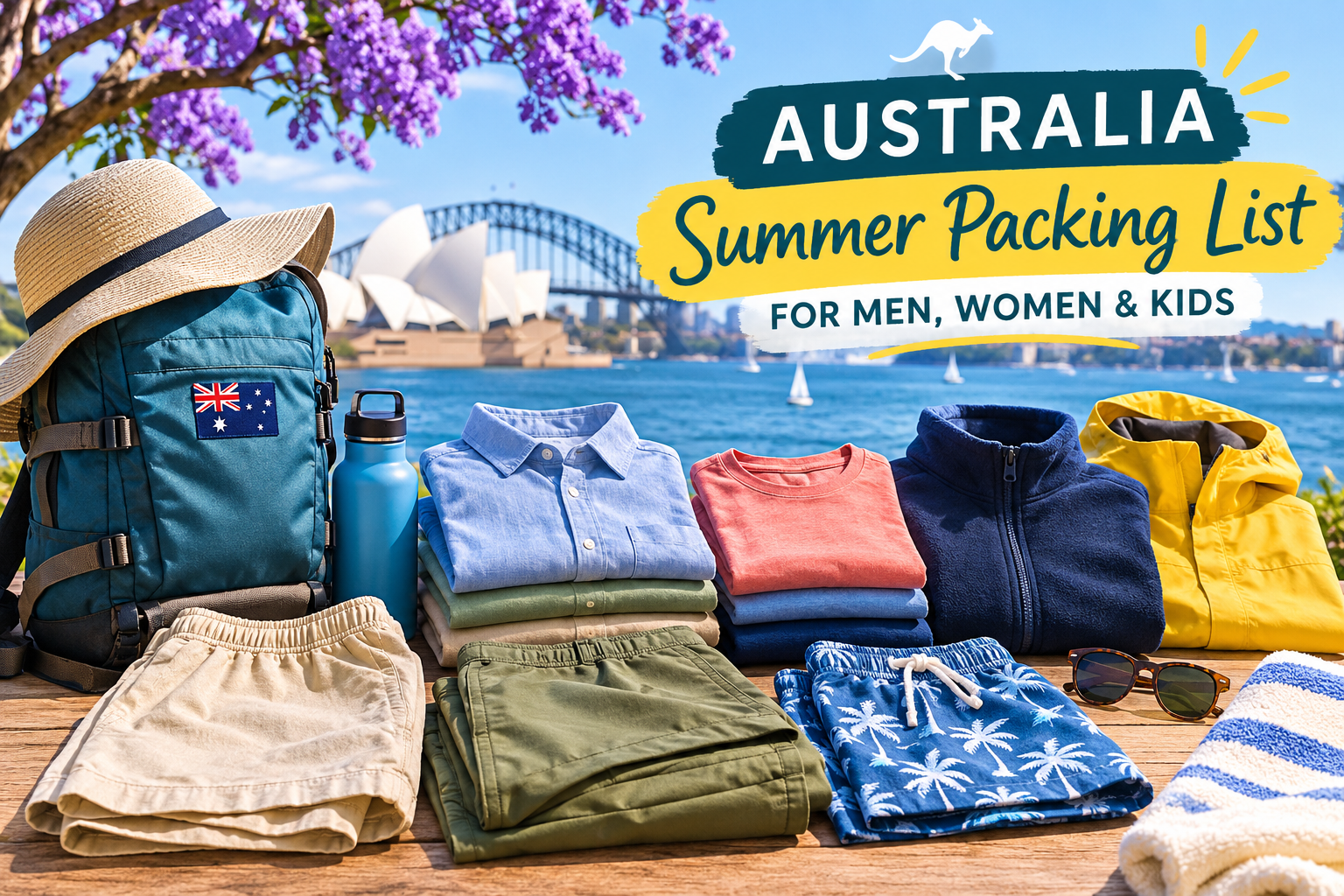
Imagine spending Christmas beside the ocean, snorkeling along the Great Barrier Reef, driving the Great Ocean Road, exploring Sydney Harbour, or discovering Tasmania’s beautiful wilderness.
Summer in Australia brings incredible opportunities for outdoor adventures, beach holidays, city breaks, and unforgettable road trips.
However, Australia’s enormous size means summer conditions vary considerably. You’ll need to prepare for strong sunshine, extreme heat, tropical rainfall, and occasionally surprisingly cool weather.
Fortunately, you don’t need a separate wardrobe for every destination.
This Australia summer packing list is designed for travelers using a carry-on suitcase and personal item only, with enough clothing for approximately two weeks and simple laundry options for longer trips.
What Australia Is Like in Summer
Australia’s summer runs from December through February.
- December: Increasing temperatures, long daylight hours, beach weather, and the tropical wet season in northern Australia.
- January: Often one of the hottest months across southern and inland Australia, with heatwaves, tropical storms, and strong UV exposure.
- February: Continued summer heat, humidity in northern and eastern destinations, and warm conditions throughout much of the country.
Regional Differences Matter
- Sydney and the New South Wales coast: Warm to hot days, humidity, sunshine, and occasional thunderstorms.
- Melbourne, Victoria and the Great Ocean Road: Warm to extremely hot days, changing weather, coastal winds, and cooler evenings.
- Brisbane and the Gold Coast: Hot, humid conditions with occasional heavy rainfall and thunderstorms.
- Cairns, Darwin and tropical northern Australia: High humidity, monsoonal rainfall, tropical storms, and possible cyclones.
- Perth and southwestern Australia: Generally hot, sunny, and dry.
- Adelaide and South Australia: Hot, predominantly dry conditions, with occasional extreme heat.
- Uluru, Alice Springs and the Outback: Extreme daytime heat, intense sunshine, dust, and limited shade.
- Tasmania and higher elevations: Milder temperatures, cooler evenings, unpredictable weather, and occasionally very cold mountain conditions.
Lightweight, breathable clothing, reliable sun protection, a waterproof layer, and one warmer layer form the foundation of a practical Australian summer wardrobe.
For more information, see Tourism Australia’s weather guide.

Who This Australia Summer Packing List Is For
This guide is designed for travelers who are:
- Visiting Australia in December, January, or February
- Traveling with a Carry-on + personal item only
- Planning approximately two weeks of travel with light laundry
- Staying up to a month with occasional laundry
- Exploring cities, beaches, national parks, and coastal towns
- Enjoying road trips, reef excursions, cruises, and wildlife experiences
- Planning family vacations, romantic getaways, or solo adventures
Travelers undertaking technical hikes, remote camping, diving expeditions, or extended wilderness adventures will need additional activity-specific equipment.
Universal Essentials

Travel Documents & Money
Pack:
- Passport
- Visa, ETA, eVisitor, or other required entry permission
- Digital and printed backup copies of important documents
- Wallet
- Credit and debit cards
- Small amount of Australian dollars (AUD)
- Travel insurance information
- Flight and accommodation confirmations
- Tour and rental car reservations
- Driver’s license and international driving permit, if required
- Prescription medication documentation
- Emergency contact information
- Writing pen
Cards are widely accepted throughout Australia, but carrying a little cash is useful, particularly when traveling through smaller or remote communities.
Download important reservations and offline maps before embarking on rural road trips.
Luggage & Organization

Pack:
- Lightweight carry-on suitcase
- Personal item
- Compression packing cubes
- Small jewelry or accessory organizer
- Reusable shopping bag
- Luggage tag
- Wet bag for damp or messy items
- Lightweight shoe bags
- Optional portable luggage scale
Watch Your Carry-On Weight
Australian domestic airlines frequently have standard carry-on allowances of just 7 kg (approximately 15 lb), depending on the airline, aircraft, and fare.
Your personal item may count toward that allowance. Check every flight on your itinerary before packing, especially if you’re combining international and domestic flights.
Tech & Power
Australia uses Type I electrical outlets with 230V electricity and 50Hz frequency.

Pack:
- Universal power adapter with Type I compatibility
- Multi-port USB charger
- Power bank
- Charger cables
- Voltage-compatible Travel Power Strip
- Earbuds or headphones for planes, trains, and long transit days
- Electronics Organizer Case
- Cell Phone with international service or an Australian SIM/eSIM
- Optional: Camera
- Optional: Laptop or Chromebook or Tablet (for work if you must and/or easy entertainment in your own language)
- Step-down voltage converter, if required
Most modern electronics support 100–240V, but single-voltage appliances require additional attention.
Keep power banks in your cabin baggage and follow your airline’s battery restrictions.
For detailed compatibility information, see my Australia Outlet, Plug & Voltage Guide for Travelers.
Toiletries & Health

Pack:
- Toothbrush, toothpaste, mouthwash, and dental floss
- Shampoo and conditioner
- Body wash or soap
- Facial cleanser and moisturizer
- Deodorant
- Hair brush or comb
- Razor
- Feminine products, even if you only might need them
- Personal medications in original labeled packaging
- Pain relievers and any other common OTC medications you use like ant-acids, anti-diarrhea and/or constipation relief, allergy pills, and common cold medicine
- Small first aid kit
- Blister prevention and treatment
- Sunscreen — choose broad-spectrum, water-resistant SPF50+
- Lip balm with SPF protection
- After-sun lotion or aloe vera gel
- Insect repellent containing DEET or picaridin
- Bug bite relief
- Electrolyte packets
- Hand sanitizer
- Compact wet wipes
- Toiletry organizer
- Optional: Motion-sickness medication or preferred remedies for reef excursions and boat trips
Use travel-size containers or solid toiletries to conserve space. International carry-on liquids generally need to be in containers of 100 ml or less.
Bring enough sunscreen for your arrival and purchase larger quantities locally as needed.
Check Australia’s medication import requirements before traveling.
Laundry Kit

Pack:
- Travel-size laundry detergent sheets or liquid detergent
- Sink stopper (optional)
- Lightweight travel clothesline or a few clothespins
- Clothes refresher spray
- Small stain-removal pen or wipes
- Separate wet bag for damp clothing or swimsuits
What to Know
For a two-week trip, plan on one small mid-trip wash, with additional washing if clothing becomes particularly sweaty or dirty.
Laundromats and accommodations with washing machines are convenient for longer stays.
Quick-drying fabrics are especially helpful in tropical northern Australia, where high humidity can make air-drying surprisingly slow.
Day Bag Essentials
Pack a lightweight backpack or secure crossbody bag.
Before heading out each day, transfer the relevant essentials from your luggage into your day bag:

- Reusable water bottle
- UV-protective sunglasses
- Wide-brimmed Sun hat
- Pocket tissues
- Small snacks purchased locally
- Compact umbrella(optional)
- Waterproof phone pouch (optional)
- Compact quick-dry towel (optional)
For remote road trips, carry additional drinking water beyond what fits in your everyday water bottle.
Clothing Packing Lists
The key to packing for Australia in summer is choosing lightweight, breathable clothing that provides sun protection while accommodating changing temperatures and occasional heavy rainfall.
For most sightseeing vacations, you do not need heavy jeans, bulky sweaters, or multiple jackets.
A combination of breathable everyday clothing, lightweight long-sleeve layers, a sweater or fleece, and a packable waterproof jacket provides flexibility without taking up excessive luggage space.
If you’re visiting Tasmania, higher elevations, or cooler coastal destinations, choose a slightly warmer mid-layer. For tropical northern Australia, prioritize quick-drying fabrics that perform well in heat and humidity.
Best Fabrics for Australia in Summer
Look for:
- Lightweight cotton and cotton blends
- Linen and linen blends
- Breathable bamboo fabrics
- Lightweight merino wool
- Moisture-wicking fabrics
- Quick-drying synthetic fabrics
- UPF-rated sun-protective fabrics
- Lightweight fleece
- Breathable, waterproof materials
Cotton and linen are excellent for everyday sightseeing, while moisture-wicking and quick-drying fabrics are particularly useful for outdoor activities and humid tropical destinations.
UPF-rated clothing provides additional protection against Australia’s intense UV exposure without requiring heavy layers.
Avoid filling your suitcase with heavy denim, thick sweatshirts, bulky jackets, and clothing that takes a long time to dry.
Jump to the Packing List You Need
Women
Australia is a wonderful destination for putting together comfortable, versatile outfits that work for city sightseeing, beachside afternoons, coastal road trips, wildlife encounters, and evenings at waterfront restaurants.
Lightweight dresses, breathable tops, comfortable shorts and trousers, and removable layers provide flexibility without requiring an entirely separate wardrobe for cooler or more tropical destinations.

Clothing
Pack:
- 4 breathable short-sleeve tops or tank tops
- 1–2 lightweight long-sleeve tops
- 2 pairs of lightweight shorts or skirts
- 1 pair of breathable trousers
- 2 versatile summer dresses
- 1 lightweight cardigan or sweater
- 1 packable waterproof rain jacket
- 2 swimsuits
- 1 swimsuit cover-up
- 1 UPF-rated rash guard
- 2 sleep sets or nightgowns
- 7 pairs of underwear
- 2–3 bras
- 4–5 pairs of socks
If visiting Tasmania or higher elevations, substitute the lightweight cardigan with a warmer layer.
Choose versatile dresses and separates that work for sightseeing, casual restaurants, beach outings, and hotel stays.
Shoes
- 1 pair of comfortable walking sneakers
- 1 pair of lightweight, secure walking sandals
- 1 pair of flip-flops or slides
- Optional water-resistant walking shoes
Accessories
- Minimal jewelry
- Travel make-up stack, eyeliner and mascara
- Makeup remover
- Hair ties or clips
- Lightweight scarf
- Wide-brimmed hat
Men
Men can build a practical summer wardrobe for Australia around breathable shirts, comfortable shorts and trousers, sun-protective clothing, and a few lightweight layers.
Choose versatile pieces that work equally well for city sightseeing, beach outings, coastal road trips, wildlife excursions, and casual waterfront dining.

Clothing
Pack:
- 4–5 breathable short-sleeve shirts
- 1–2 lightweight long-sleeve shirts
- 2 pairs of shorts
- 1-2 pairs of lightweight travel trousers
- 1 casual button-down shirt
- 1 lightweight sweater or pullover
- 1 waterproof rain jacket
- 1 UPF-rated rash guard
- 2 pairs of swim trunks
- 1–2 sleep sets
- 7 pairs of underwear
- 4-5 pairs of socks
Choose comfortable clothing that works for outdoor activities and casual evenings without requiring separate wardrobes.
Shoes
- 1 pair of comfortable walking sneakers
- 1 pair of secure walking sandals
- 1 pair of flip-flops or slides
- Optional water-resistant walking shoes
Accessories
Girls
Children need lightweight, breathable, washable clothing that keeps them comfortable during beach days, wildlife encounters, city sightseeing, and outdoor adventures.
Sun-protective clothing, quick-drying fabrics, and removable layers are particularly useful for Australia’s summer heat, tropical humidity, and cooler coastal or mountain excursions.

Clothing
Pack:
- 4–5 breathable short-sleeve tops
- 1-2 lightweight long-sleeve tops
- 2–3 pairs of comfortable trousers, leggings, skirts, or practical bottoms
- 1 casual dress
- 1-2 shorts
- 1 lightweight sweater or hoodie
- 1 waterproof rain jacket
- 1 UPF-rated rash guard
- 1 swimsuit
- 1–2 sleep sets
- 7 pairs of underwear
- 4–5 pairs of socks
Shoes
- 1 pair of Comfortable walking sneakers
- 1 pair of secure sandals suitable for beach and pool use
Extras
- Small lightweight backpack
- Wide-brimmed children’s sun hat
- Child-friendly UV-protective sunglasses
- Age-appropriate sunscreen and insect repellent
- Hair ties or clips
- Optional handheld game console or Kindle for long travel days
Boys
Boys need lightweight, breathable clothing that works for city sightseeing, beach days, wildlife spotting, and outdoor adventures.
Quick-drying fabrics, sun-protective clothing, and interchangeable layers help keep them comfortable in Australia’s summer heat, tropical humidity, and cooler coastal or mountain destinations.

Clothing
Pack:
- 4–5 breathable short-sleeve shirts
- 1-2 lightweight long-sleeve shirts
- 1-2 pairs of comfortable trousers or joggers
- 2-3 pair of shorts
- 1 lightweight hoodie or sweater
- 1 UPF-rated rash guard
- 1 waterproof rain jacket
- 1 pair of swim trunks
- 1–2 sleep sets
- 7 pairs of underwear
- 4–5 pairs of socks
Shoes
- 1 pair of Comfortable walking sneakers
- 1 pair of secure sandals suitable for beach and pool use
Extras
- Small lightweight backpack
- Wide-brimmed children’s sun hat
- Child-friendly UV-protective sunglasses
- Age-appropriate sunscreen and insect repellent
- Optional handheld game console or Kindle for long travel days
Keep one complete change of clothing accessible for younger children during flights and long travel days.
Optional Extras for Specific Activities
You don’t need everything below. Choose only what suits your itinerary.
- Reef excursions and snorkeling: Waterproof camera instead of a regular camera, dry bag, and personal snorkeling equipment if preferred.
- Outback adventures: Fly head net, additional water storage, and flashlight.
- Hiking and national parks: Substitute regular walking sneakers with suitable hiking shoes and bring activity-appropriate navigation and safety equipment.
- Tasmania and mountain excursions: Substitute your lightweight sweater with a warmer fleece or insulated layer and some regular socks with warmer socks.
- Tropical wet-season adventures: Waterproof backpack cover.
- Long-haul flights: Compression socks if appropriate, travel pillow, and sleep mask.
Things Nobody Tells You About Australia in Summer

The Australian Sun Is Particularly Intense
Sunburn can occur even on cloudy or relatively cool days.
Use SPF50+ broad-spectrum, water-resistant sunscreen alongside protective clothing, sunglasses, shade, and a wide-brimmed hat.
Reapply sunscreen every two hours and after swimming, sweating, or towel-drying.
See Cancer Council Australia’s sun protection recommendations.
Summer Is Also Marine Stinger Season
November through May is generally the higher-risk period for dangerous marine stingers in tropical Queensland.
An ordinary rash guard is not a substitute for a full-body stinger suit. Check whether your reef tour provides protective suits before purchasing or packing your own.
Swim at patrolled beaches, follow local warnings, and use designated stinger-resistant swimming enclosures where available. Never swim in crocodile-risk waterways.
Australia Has Strict Biosecurity Rules
Before arriving, thoroughly clean previously used footwear and outdoor equipment to remove soil, seeds, and plant material.
Certain foods, animal products, plant materials, and used recreational equipment must be declared.
When in doubt, declare it.
Check the official Australian biosecurity requirements before departure.
Extreme Weather Can Affect Your Plans
Summer overlaps with tropical cyclone season in northern Australia and periods of heightened bushfire risk in southern Australia.
Heatwaves, flooding, storms, and bushfires can disrupt road trips, excursions, and national park access.
Check the Australian Bureau of Meteorology and local emergency warnings before heading out, particularly in remote areas.
Distances Are Much Greater Than They Look
Australia is enormous, and mobile coverage, fuel stations, shops, and drinking water are not always readily available outside populated areas.
Download offline maps, keep your phone charged, and carry sufficient water and emergency supplies for your planned route.
You Can Purchase Everyday Essentials Locally
Australian cities and larger towns have supermarkets, pharmacies, and stores selling toiletries, sunscreen, insect repellent, and clothing.
There’s no reason to fill your carry-on with a month’s supply of products you can easily replenish during your trip.
Final Thoughts
Packing for Australia in summer is all about preparing for intense sunshine, warm weather, tropical rainfall, and the extraordinary variety of experiences the country offers.
December travelers should prioritize breathable clothing, sun protection, and rain gear, particularly when visiting tropical northern Australia.
January travelers should prepare for some of the hottest temperatures of the year, especially in inland and southern Australia.
February travelers need much the same wardrobe, with continued attention to heat, humidity, tropical storms, and changing weather conditions.
Regardless of which month you visit, the essentials remain the same.
Choose comfortable walking shoes, lightweight clothing, reliable sun protection, practical rain gear, and a manageable wardrobe that can be mixed, matched, washed, and worn again.
You don’t need an entirely separate wardrobe for Australia’s beaches, cities, rainforests, and cooler southern destinations.
And you certainly don’t need to sacrifice comfort or personal style to travel carry-on only.
With a little thoughtful packing, you’ll be ready to enjoy Australia’s spectacular coastlines, remarkable wildlife, vibrant cities, ancient landscapes, and unforgettable outdoor adventures.
If Sydney is part of your itinerary, my Where to Stay in Sydney: Best Hotels for Every Kind of Trip guide can help you find the right accommodation.
If you’re planning to explore the Great Barrier Reef or tropical northern Queensland, take a look at my Where to Stay in Cairns: Best Hotels for Every Kind of Trip.
You can also explore my complete 🇦🇺 Australia Travel Tips & Guides hub for additional planning resources.
From the sparkling waters of Sydney Harbour to the colorful underwater world of the Great Barrier Reef, the magnificent landscapes of the Outback, and the natural beauty of Tasmania, Australia has so much waiting to be discovered.
Pack light, stay flexible, and enjoy every unforgettable moment.