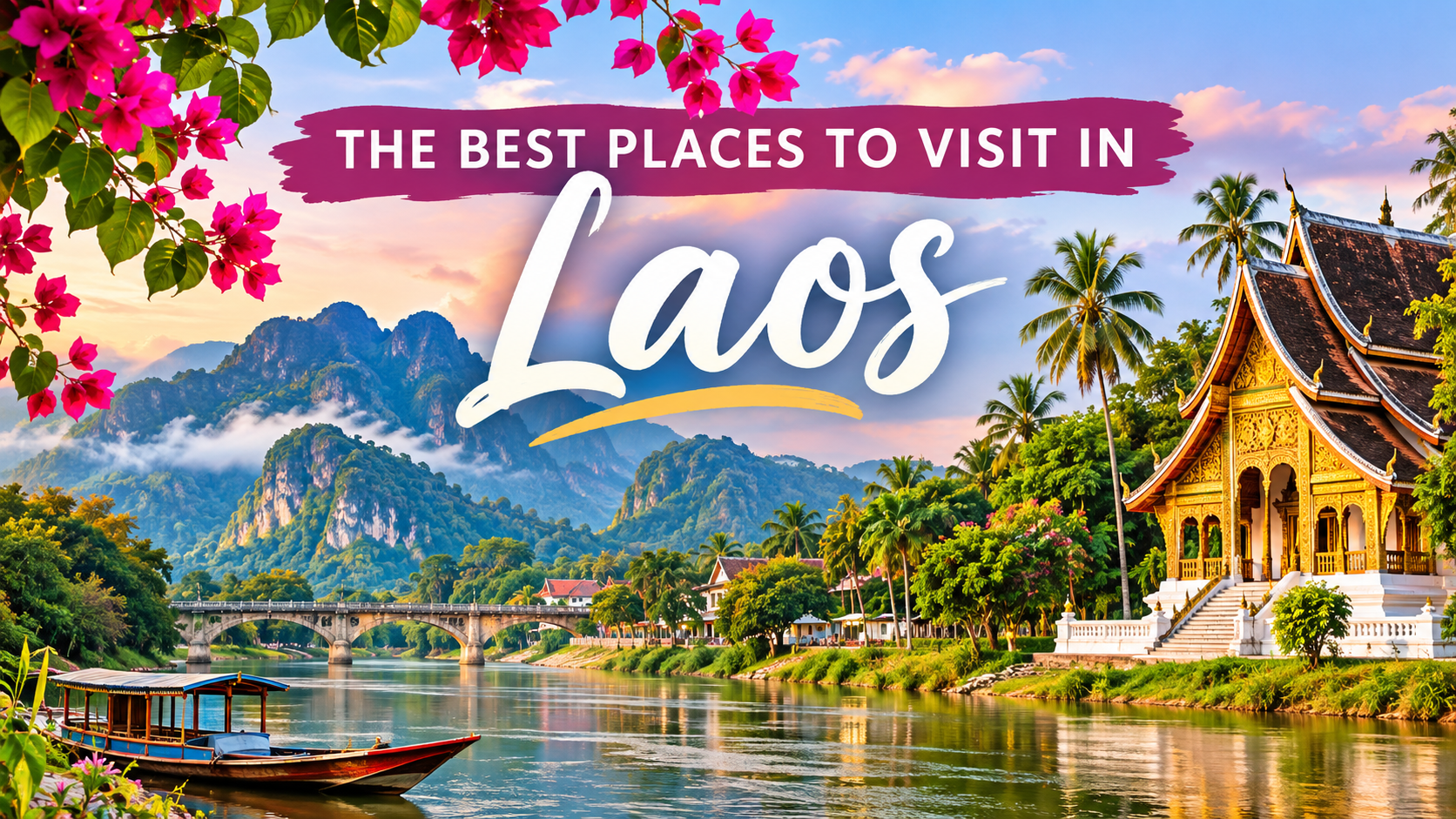
Laos is a country where morning mist drifts between towering limestone mountains, golden Buddhist temples overlook peaceful rivers, and turquoise waterfalls cascade through lush tropical forests. From the enchanting royal streets of Luang Prabang to the little islands scattered across the mighty Mekong River, Laos reveals a quieter, wonderfully captivating side of Southeast Asia.
Beyond its famous destinations, travelers will discover mysterious ancient stone jars, underground rivers flowing through enormous caves, remote mountain communities, centuries-old tea plantations, fragrant coffee-growing highlands, and protected forests where wildlife conservation and community-based tourism come together. Some of the country’s most memorable experiences can be found in places that remain surprisingly unfamiliar to international travelers.
Whether you’re dreaming of a romantic riverside retreat, an adventurous mountain escape, a culturally immersive journey, or a peaceful holiday surrounded by nature, Laos offers countless reasons to slow down and explore. This guide brings together its most rewarding destinations, including both established favorites and lesser-known places that genuinely deserve time on your itinerary.
⚠️ A Quick Note About Traveling Safely in Laos
While many of Laos’s established tourism destinations remain accessible to international travelers, certain regions have elevated security concerns. This guide intentionally excludes destinations affected by particularly serious regional travel warnings.
Unexploded wartime munitions remain a concern in parts of the country, making it essential to remain on established, cleared paths and use reputable local guides. Travelers should also take precautions against methanol poisoning, choose adventure operators carefully, and carry comprehensive travel insurance that includes emergency medical evacuation.
Always review your government’s current travel advice before finalizing your itinerary.

1. Luang Prabang — Golden Temples, Royal Heritage & Turquoise Waterfalls
Region: Luang Prabang Province, Northern Laos
What Kind of Place It Is: A historic UNESCO World Heritage city surrounded by rivers, mountains, waterfalls and tropical countryside.
Best For: Couples, families, solo travelers, cultural travelers, photographers, history lovers and first-time visitors.
Why Travelers Should Care
Luang Prabang is one of those destinations where the surroundings are just as memorable as the attractions themselves. Traditional Lao houses, French colonial architecture, intricately decorated Buddhist temples and leafy streets create an enchanting historic town between the Mekong and Nam Khan rivers.
Beyond the city, turquoise waterfalls, sacred riverside caves, traditional villages and beautiful countryside provide endless opportunities for exploration. It is also one of the country’s most comfortable destinations for travelers who appreciate boutique accommodation, excellent restaurants and a relaxed atmosphere.
Main Highlights
- Kuang Si Waterfalls — A spectacular series of turquoise pools and cascading waterfalls surrounded by tropical forest, with walking paths and designated swimming areas.
- Wat Xieng Thong — One of Laos’s most celebrated Buddhist temples, featuring sweeping roofs, intricate mosaics and beautifully preserved traditional architecture.
- Mount Phousi — A sacred hill overlooking the historic city, offering panoramic views across the rivers, rooftops and surrounding mountains.
- Luang Prabang Night Market — Discover traditional textiles, handmade crafts, souvenirs and local food in the atmospheric historic center.
- Pak Ou Caves — Sacred limestone caves overlooking the Mekong River, filled with thousands of Buddha images collected over generations.
- Traditional Arts and Ethnology Centre — An excellent introduction to the diverse traditions, clothing, craftsmanship and cultural identities of Laos’s ethnic communities.
- Tad Sae Waterfalls — A beautiful seasonal waterfall system with forested surroundings, particularly rewarding during periods of favorable water flow.
- Ock Pop Tok Living Crafts Centre — Learn about traditional Lao textile production, natural dyes and weaving techniques in a peaceful riverside setting.
Historical Points of Interest
- Royal Palace Museum — The former royal residence preserves furnishings, religious treasures and artifacts associated with Laos’s monarchy.
- Historic UNESCO Old Town — The city’s architectural heritage reflects centuries of Buddhist traditions, royal influence and French colonial history.
- Wat Mai Suwannaphumaham — A historic monastery known for its ornate gilded reliefs and traditional religious architecture.
- Kingdom of Lan Xang Heritage — Luang Prabang served as the capital of the historic kingdom before the capital was moved to Vientiane in the 16th century.
Don’t Miss
- Sunset Along the Mekong — Enjoy a leisurely riverside dinner as the changing light settles over the water and surrounding mountains.
- A Full Morning at Kuang Si Waterfalls — Allow enough time to discover the different waterfall tiers and forest paths rather than rushing through the experience.
- Traditional Morning Almsgiving — Observe the longstanding Buddhist tradition respectfully, without obstructing the monks or intruding on local worshippers.
- A Lao Cooking Class — Discover traditional ingredients, regional dishes and the importance of fresh herbs in Lao cuisine.
- An Evening Exploring the Old Town — The lantern-lit streets, historic buildings and intimate restaurants are particularly atmospheric after dark.
Why I Recommend It
If you’re visiting Laos for the first time, Luang Prabang is one of the most rewarding places to begin. It combines extraordinary natural beauty, fascinating history, living cultural traditions and a wonderfully romantic atmosphere without sacrificing the comforts that make a holiday enjoyable.
Side Notes / Good to Know
- Getting There — Luang Prabang has an international airport and a station on the Laos–China Railway.
- Getting Around — The historic center is relatively walkable, but waterfalls and countryside attractions require transportation.
- Mobility Considerations — Mount Phousi involves a substantial staircase, while some waterfall paths are uneven or slippery.
- Temple Etiquette — Cover your shoulders and knees when visiting religious sites and remove your shoes where required.
- Seasonal Considerations — Waterfall conditions, river excursions and air quality vary throughout the year.
2. Vang Vieng — Dramatic Limestone Mountains, Blue Lagoons & Outdoor Adventures

Region: Vientiane Province, Central Laos
What Kind of Place It Is: A scenic riverside town surrounded by towering limestone formations, caves, lagoons and agricultural valleys.
Best For: Couples, friends, adventure travelers, nature lovers, photographers and active families.
Why Travelers Should Care
Vang Vieng’s extraordinary landscape is its greatest attraction. Dramatic limestone mountains rise above rice fields and winding rivers, while hidden caves and brilliant blue lagoons provide opportunities to explore the countryside.
Although the town was once primarily associated with backpacker nightlife, it also offers beautiful riverside resorts, scenic cafés and peaceful countryside experiences for travelers seeking something entirely different.
Main Highlights
- Nam Song River — Enjoy riverside scenery, organized kayaking excursions and views of the surrounding limestone mountains.
- Blue Lagoons — Several natural swimming destinations scattered throughout the countryside, each offering different surroundings and facilities.
- Nam Xay Viewpoint — A challenging mountain climb rewarded with extraordinary panoramic views across the valley.
- Tham Chang Cave — An impressive limestone cave with elevated views over the surrounding landscape.
- Tham Phu Kham Cave — A large cave containing a reclining Buddha image near one of the area’s popular lagoons.
- Pha Ngern Viewpoint — Another rewarding hiking destination overlooking agricultural fields and limestone peaks.
- Hot-Air Balloon Experiences — An unforgettable perspective of the valley when weather conditions and appropriately qualified operators permit.
Historical Points of Interest
- Tham Chang Cave — Historically used as a place of refuge during periods of conflict.
- Sacred Cave Shrines — Buddhist images within the surrounding caves reflect longstanding religious traditions.
- Local Monasteries — Traditional temples throughout the valley offer insight into everyday Buddhist life.
Don’t Miss
- Sunrise Over the Limestone Mountains — Watch the valley gradually emerge from the morning mist.
- A Countryside Lagoon Day — Explore the rural landscape and enjoy one or more of the area’s natural swimming spots.
- A Riverside Sunset Dinner — Choose a restaurant overlooking the Nam Song River and its mountainous backdrop.
- A Guided Countryside Excursion — Discover rice fields, villages and caves beyond the immediate town center.
Why I Recommend It
Vang Vieng offers some of the most spectacular scenery in Southeast Asia. Whether you want an activity-filled holiday or simply a beautiful resort surrounded by mountains, the destination offers much more than its former party-town reputation suggests.
Side Notes / Good to Know
- Getting There — Vang Vieng is connected to Vientiane and Luang Prabang by railway and road.
- Alcohol Safety — Methanol poisoning is a serious concern. Avoid homemade spirits, free shots and drinks of uncertain origin.
- Adventure Safety — Carefully investigate the qualifications, equipment and safety practices of activity operators.
- Swimming Conditions — Check water depth, currents and local warnings before entering rivers or lagoons.
- Mobility Considerations — Many viewpoints involve steep, rocky climbs that are unsuitable for travelers with limited mobility.
3. Vientiane — Golden Monuments, Buddhist Heritage & Capital City Culture

Region: Vientiane Capital, Central Laos
What Kind of Place It Is: A relaxed national capital with religious monuments, museums, riverside promenades and colonial architecture.
Best For: Families, solo travelers, history lovers, cultural travelers, food lovers and travelers seeking urban conveniences.
Why Travelers Should Care
Vientiane offers a noticeably different experience from many of Southeast Asia’s bustling capitals. Broad avenues, golden Buddhist monuments, neighborhood cafés and the Mekong waterfront create a more relaxed urban atmosphere.
It is also one of the best places to gain an understanding of Laos’s national identity, religious traditions and complex modern history.
Main Highlights
- Pha That Luang — A magnificent golden stupa and one of the country’s most important national and religious symbols.
- Patuxai Victory Monument — An impressive monumental arch combining European architectural influences with traditional Lao decorative elements.
- Wat Si Saket — A historic Buddhist temple containing thousands of Buddha images.
- Haw Phra Kaew — A former royal temple housing significant religious artwork and artifacts.
- Buddha Park (Xieng Khuan) — An extraordinary collection of monumental Buddhist and Hindu sculptures outside the capital.
- COPE Visitor Centre — A moving educational experience exploring the humanitarian consequences of unexploded wartime munitions.
- Mekong Riverside Night Market — An enjoyable evening destination for shopping, food and riverside walks.
Historical Points of Interest
- Wat Si Saket — One of the capital’s most important surviving historic temples.
- Haw Phra Kaew — Historically associated with the revered Emerald Buddha, now housed in Bangkok.
- Lan Xang Royal Heritage — Vientiane became the capital of the kingdom during the 16th century.
- Colonial-Era Architecture — Historic buildings throughout the capital reflect the country’s period under French administration.
Don’t Miss
- Pha That Luang’s Golden Architecture — Visit when the sunlight beautifully illuminates the monument.
- The COPE Visitor Centre — Gain a deeper understanding of an issue that continues to affect communities throughout Laos.
- A Traditional Lao Dinner — Sample dishes such as laap, sticky rice and tam mak hoong.
- An Evening Beside the Mekong — Enjoy the waterfront as local families gather and the night market comes to life.
Why I Recommend It
Vientiane adds valuable historical and cultural context to a journey through Laos. It is also a practical beginning or finishing point for travelers who appreciate a wider selection of accommodation, restaurants and transportation services.
Side Notes / Good to Know
- Getting There — The capital has an international airport and railway connections.
- Getting Around — Attractions are spread throughout the city, making arranged transportation useful.
- Medical Facilities — Services are generally more accessible here than in rural Laos, although serious emergencies may still require international evacuation.
- Opening Hours — Some temples and museums close during the middle of the day.
- Riverfront Restrictions — Respect posted restrictions and local security rules around the Mekong waterfront.
4. Nong Khiaw — Misty Mountains, Riverside Retreats & Extraordinary Viewpoints

Region: Luang Prabang Province, Northern Laos
What Kind of Place It Is: A small mountain town along the Nam Ou River, surrounded by dramatic limestone peaks.
Best For: Couples, hikers, photographers, nature lovers and slow travelers.
Why Travelers Should Care
Nong Khiaw is surrounded by some of northern Laos’s most enchanting scenery. Towering mountains rise on either side of the Nam Ou River, while riverside accommodation overlooks passing boats, mist-covered peaks and constantly changing light.
The town strikes a wonderful balance between rural tranquility and convenient access to guesthouses, restaurants and guided countryside experiences.
Main Highlights
- Pha Daeng Viewpoint — A rewarding mountain hike with spectacular views over the river and surrounding peaks.
- Nong Khiaw Bridge — One of the easiest places to appreciate the town’s extraordinary setting.
- Nam Ou River Excursions — Discover dramatic mountain landscapes and riverside communities through locally arranged boat trips.
- Pha Tok Caves — Historic caves nestled among the surrounding limestone formations.
- 100 Waterfalls Trek — A guided adventure through rural landscapes, streams and cascading waterfalls, subject to seasonal conditions.
- Pha Kuang Cave — Another opportunity to explore the region’s distinctive limestone geology.
Historical Points of Interest
- Pha Tok Wartime Shelters — The caves provided refuge for local communities during periods of bombing and conflict.
- Traditional Nam Ou Settlements — Riverside villages reflect generations of dependence on fishing, agriculture and river transportation.
Don’t Miss
- A Riverside Morning — Watch the mist gradually lift from the mountains while enjoying breakfast overlooking the water.
- A Mountain Viewpoint Hike — The elevated perspective reveals the extraordinary scale of the surrounding landscape.
- A Guided Waterfall Adventure — Venture beyond town with an experienced local guide.
- A Slow Afternoon Beside the River — Leave enough time to appreciate the destination without filling every hour with activities.
Why I Recommend It
Nong Khiaw is the kind of destination where the view from your accommodation can become one of your favorite memories of the entire trip. It is especially appealing for couples and nature lovers seeking dramatic scenery without the atmosphere of a larger resort town.
Side Notes / Good to Know
- Getting There — Nong Khiaw is generally reached by road from Luang Prabang.
- Hiking Safety — Use established trails and reputable guides, particularly in areas affected by wartime bombing.
- Accommodation — Riverside guesthouses and small hotels provide a range of comfortable options.
- Medical Services — Facilities are limited, so carry essential medications and supplies.
- Boat Excursions — Availability and conditions depend on water levels and weather.
5. Muang Ngoi — Remote Riverside Living & Mountain Tranquility

Region: Luang Prabang Province, Northern Laos
What Kind of Place It Is: A small rural village nestled between the Nam Ou River and towering limestone mountains.
Best For: Couples, nature lovers, slow travelers and travelers seeking a peaceful rural escape.
Why Travelers Should Care
Muang Ngoi offers an even quieter experience than neighboring Nong Khiaw. Traditional houses, riverside guesthouses, agricultural fields and mountain paths create an intimate destination where daily life moves at a gentler pace.
Although the village can be visited during an excursion from Nong Khiaw, its peaceful mornings and evenings make it particularly rewarding as an overnight destination.
Main Highlights
- Nam Ou Riverfront — Beautiful riverside scenery with opportunities to relax overlooking the surrounding mountains.
- Tham Kang Cave — A historic cave reached through the agricultural countryside.
- Ban Na Village — A traditional rural community accessible through countryside walking routes.
- Pha Noi Viewpoint — Elevated views overlooking the village and surrounding valley.
- Traditional Rice Fields — Scenic agricultural landscapes offering insight into everyday rural life.
Historical Points of Interest
- Tham Kang Wartime Heritage — The cave provided shelter to residents during periods of bombing.
- Traditional Village Architecture — Wooden houses and agricultural settlements preserve elements of the region’s rural heritage.
Don’t Miss
- An Overnight Riverside Stay — Experience the village after day visitors have departed.
- A Guided Countryside Walk — Explore agricultural landscapes and neighboring communities respectfully.
- Sunset Over the Nam Ou — Enjoy the mountains and river as the evening light changes.
- An Unhurried Village Morning — Discover local cafés and the peaceful rhythm of everyday life.
Why I Recommend It
Muang Ngoi offers the opportunity to disconnect from busy schedules and experience the simple pleasures of riverside life. Its appeal lies less in individual attractions and more in the remarkable setting and peaceful atmosphere.
Side Notes / Good to Know
- Getting There — Passenger boats from Nong Khiaw are a common way to reach the village.
- Accommodation Standards — Expect smaller guesthouses and modest facilities rather than large resorts.
- Cash and Connectivity — Bring sufficient cash and prepare for inconsistent internet access.
- Walking Conditions — Rural paths can become muddy and uneven during the rainy season.
- Essential Supplies — Bring necessary medications and personal supplies from a larger town.
6. Luang Namtha — Protected Forests, Village Culture & Community-Based Trekking

Region: Luang Namtha Province, Northern Laos
What Kind of Place It Is: An ecotourism town surrounded by protected forests, agricultural valleys and culturally diverse communities.
Best For: Hikers, nature lovers, cultural travelers, wildlife enthusiasts and adventurous couples.
Why Travelers Should Care
Luang Namtha is one of the country’s leading destinations for community-based ecotourism. Its surrounding forests offer opportunities to experience Laos’s biodiversity while learning about the traditions of local ethnic communities.
The town provides a practical base for arranging guided multi-day excursions and discovering northern Laos beyond its better-known tourist destinations.
Main Highlights
- Nam Ha National Protected Area — Explore forest ecosystems through organized trekking and community-based tourism experiences.
- Traditional Village Excursions — Learn about regional agriculture, crafts and cultural traditions with knowledgeable local guides.
- Nam Tha River — Seasonal kayaking and scenic countryside excursions.
- Luang Namtha Night Market — Discover regional foods and everyday local life.
- That Luang Namtha Stupa — A hilltop religious monument overlooking the surrounding landscape.
- Nam Dee Waterfall — A nearby nature destination surrounded by forest and rural communities.
Historical Points of Interest
- Traditional Ethnic Communities — The region is home to communities with distinct languages, textile traditions and cultural histories.
- Local Buddhist Monuments — Religious sites reflect the longstanding spiritual traditions of northern Laos.
- Traditional Craftsmanship — Weaving, bamboo work and agricultural practices preserve generations of local knowledge.
Don’t Miss
- A Community-Led Forest Trek — Choose an operator whose activities directly benefit participating villages.
- A Traditional Village Homestay Experience — Gain a deeper understanding of rural life through a responsibly organized visit.
- Regional Market Food — Discover ingredients and dishes that differ from those found in central and southern Laos.
- A Guided River Adventure — Experience the countryside from the water when conditions permit.
Why I Recommend It
Luang Namtha offers a more immersive introduction to Laos than simply visiting its major cities. It is an excellent choice for travelers who value nature, cultural exchange and tourism that supports local communities.
Side Notes / Good to Know
- Getting There — Access is possible by road and through railway connections at nearby Nateuy.
- Regional Safety — Avoid the Boten Special Economic Zone and remote Myanmar border areas.
- Guide Requirements — Arrange forest and village excursions through established operators.
- Physical Demands — Multi-day treks can involve steep terrain, humidity and basic overnight facilities.
- Wildlife Expectations — Forest excursions offer wonderful biodiversity, but sightings of larger animals are never guaranteed.
7. Muang Sing — Historic Trade Routes, Traditional Markets & Rural Culture

Region: Luang Namtha Province, Northern Laos
What Kind of Place It Is: A small historic agricultural town near the Chinese border, surrounded by valleys and highland communities.
Best For: Cultural travelers, photographers, history enthusiasts and experienced independent travelers.
Why Travelers Should Care
Muang Sing offers a fascinating introduction to the cultural diversity of far northern Laos. The town has long been influenced by regional trade, migration and the traditions of neighboring communities.
Its rice fields, mountain scenery and traditional markets create a destination that feels distinctly different from the country’s larger tourism centers.
Main Highlights
- Muang Sing Morning Market — A lively gathering place featuring regional produce, traditional foods and textiles.
- That Xieng Tung Stupa — An important Buddhist pilgrimage site overlooking the surrounding landscape.
- Traditional Village Excursions — Guided opportunities to learn about the communities inhabiting the surrounding valley.
- Agricultural Countryside — Scenic rice fields and rural roads offering opportunities for photography and gentle exploration.
- Muang Sing Cultural Exhibition — A small introduction to regional heritage when open to visitors.
Historical Points of Interest
- Historic Caravan Routes — Muang Sing developed along trading routes connecting communities across present-day national borders.
- That Xieng Tung — The stupa reflects the region’s longstanding Buddhist heritage.
- Traditional Town Buildings — Surviving older structures provide glimpses into the town’s trading history.
Don’t Miss
- The Early Morning Market — Arrive while local vendors and residents are actively trading.
- A Guided Cultural Excursion — Learn about regional traditions through a knowledgeable guide rather than treating villages as sightseeing exhibits.
- A Countryside Walk — Appreciate the scenery surrounding the town at an unhurried pace.
- Traditional Textiles — Discover locally produced fabrics and support artisans directly where possible.
Why I Recommend It
Muang Sing deserves consideration as a destination for travelers who appreciate cultural experiences, traditional craftsmanship and rural landscapes rather than conventional tourist attractions.
Side Notes / Good to Know
- Getting There — Muang Sing is accessible by road from Luang Namtha.
- Border Safety — Remain within established tourism areas and avoid excursions toward the Myanmar border.
- Accommodation — Expect modest hotels and guesthouses.
- Photography Etiquette — Always request permission before photographing people, homes or religious activities.
- Medical and Transport Services — Both are limited compared with larger destinations.
8. Phongsaly — Ancient Tea Forests, Mountain Mist & Far Northern Laos

Region: Phongsaly Province, Northern Laos
What Kind of Place It Is: A remote mountain town surrounded by tea-growing landscapes and traditional highland communities.
Best For: Tea lovers, photographers, cultural travelers and experienced slow travelers.
Why Travelers Should Care
Phongsaly is one of the country’s most distinctive destinations. Its highland climate, mist-covered mountains, traditional buildings and historic tea-growing communities create a landscape noticeably different from the tropical lowlands.
Its remoteness is part of its appeal, particularly for travelers who enjoy discovering places that remain outside the usual international tourism circuit.
Main Highlights
- Ancient Tea Plantations at Ban Komaen — Explore tea-growing traditions associated with trees believed to be several centuries old.
- Phongsaly Old Town — Discover traditional architecture reflecting influences from neighboring Yunnan in China.
- Phou Fa Mountain — Elevated views across the surrounding highland landscape.
- Tea Production Experiences — Learn about cultivation, harvesting and traditional processing techniques.
- Guided Highland Village Visits — Discover local agricultural traditions and craftsmanship through organized cultural excursions.
Historical Points of Interest
- Ancient Tea Trees — A living connection to the area’s centuries-old agricultural heritage.
- Traditional Yunnanese Architecture — Historic buildings reflect longstanding cultural and commercial connections with southern China.
- Highland Trade Heritage — Regional communities have maintained traditions shaped by generations of cross-border trade.
Don’t Miss
- A Traditional Tea Tasting — Discover the distinctive flavors of locally grown tea.
- The Ancient Tea Plantations — Experience the landscape responsible for one of the region’s most celebrated products.
- A Morning Above the Clouds — Phongsaly’s mountain setting can produce beautifully atmospheric misty mornings.
- A Guided Cultural Excursion — Learn about highland life beyond the town itself.
Why I Recommend It
Phongsaly offers a side of Laos that relatively few international travelers experience. Its tea culture, mountain climate and traditional architecture make it particularly appealing for those who enjoy meaningful cultural exploration.
Side Notes / Good to Know
- Getting There — Allow considerable time for winding mountain roads and remote transportation connections.
- Highland Climate — Temperatures can be surprisingly cool, especially during winter mornings and evenings.
- Accommodation — Facilities are generally simple, with fewer choices than in larger destinations.
- Border Regions — Avoid unauthorized crossings and unverified excursions through remote border areas.
- Seasonal Road Conditions — Heavy rain can disrupt transportation and access to villages.
9. Oudomxay (Muang Xay) & Muang La — Forest Retreats, Limestone Caves & Hot Springs

Region: Oudomxay Province, Northern Laos
What Kind of Place It Is: A regional mountain center with surrounding countryside retreats, forests and traditional communities.
Best For: Nature lovers, couples, cultural travelers and travelers seeking relaxation.
Why Travelers Should Care
Oudomxay is frequently treated as little more than a transportation junction, but the surrounding mountains contain forests, caves, rivers and traditional communities worth exploring.
Muang Xay provides a practical accommodation base, while the surrounding countryside, including Muang La, offers a quieter alternative for travelers seeking a nature-focused retreat.
Main Highlights
- Nam Kat Yola Pa — A forested retreat area offering waterfalls, nature walks and organized outdoor experiences.
- Chom Ong Cave — An extensive limestone cave system accessible through locally arranged excursions.
- Phou That Stupa — A hilltop religious monument overlooking Muang Xay.
- Muang La Hot Springs — Natural thermal waters surrounded by rural scenery.
- Wat Pha Singkham — A locally significant Buddhist temple in Muang La.
- Traditional Mountain Communities — Opportunities to learn about regional textiles, agriculture and village traditions.
Historical Points of Interest
- Phou That Stupa — A longstanding religious landmark associated with the town’s Buddhist heritage.
- Wat Pha Singkham — An important regional pilgrimage site.
- Traditional Ethnic Heritage — The province’s diverse communities preserve distinct cultural and agricultural traditions.
Don’t Miss
- A Forest Retreat Stay — Spend time surrounded by the mountains rather than treating Oudomxay solely as a transit stop.
- A Guided Cave Excursion — Explore the impressive underground limestone formations.
- Muang La’s Hot Springs — Enjoy the peaceful countryside and natural thermal landscape.
- A Hilltop Sunset — Appreciate the surrounding mountain scenery from an elevated viewpoint.
Why I Recommend It
Oudomxay offers an appealing combination of nature, cultural experiences and relative accessibility. Travelers who venture beyond the transportation center will find beautiful landscapes that deserve more attention.
Side Notes / Good to Know
- Getting There — Muang Xay is served by the Laos–China Railway.
- Accommodation Choices — Stay in town for convenience or choose a verified countryside property for a nature-focused experience.
- Cave Access — Arrange qualified local guides and confirm seasonal accessibility.
- Adventure Activities — Check operator safety standards before participating.
- Countryside Transportation — Private or prearranged transfers are useful for reaching dispersed attractions.
10. Pakbeng — Mekong River Retreats & Peaceful Mountain Scenery

Region: Oudomxay Province, Northern Laos
What Kind of Place It Is: A small Mekong riverside town surrounded by forested mountains and traditional settlements.
Best For: Couples, photographers, slow travelers and travelers seeking peaceful riverside accommodation.
Why Travelers Should Care
Pakbeng is traditionally known as an overnight stop on Mekong River journeys, but its remarkable riverside setting and attractive lodges make it worth considering as a destination in its own right.
Travelers can enjoy beautiful mountain scenery, peaceful mornings above the river and a slower pace of life than in Laos’s more developed tourism centers.
Main Highlights
- Mekong Riverfront — Sweeping views of the river winding between forested mountains.
- Mekong Elephant Park — A conservation-focused opportunity to learn about elephants through responsible observation.
- Traditional Pakbeng Market — Discover regional produce and everyday local life.
- Riverside Lodges — Peaceful accommodation with panoramic river and mountain views.
- Surrounding Countryside — Guided excursions into rural communities and agricultural landscapes.
Historical Points of Interest
- Mekong Transportation Heritage — Pakbeng developed around the river’s longstanding importance to regional trade and transportation.
- Local Buddhist Temples — Neighborhood monasteries reflect the community’s religious traditions.
Don’t Miss
- A Mekong-Facing Accommodation Stay — The scenery is particularly beautiful at sunrise and sunset.
- An Ethical Elephant Experience — Choose observation-based activities without riding or forced performances.
- A Traditional Market Visit — Discover local ingredients and the rhythm of village life.
- An Unhurried Riverside Evening — Enjoy the surroundings without immediately continuing to another destination.
Why I Recommend It
Pakbeng deserves more than its reputation as a compulsory overnight stop. Its riverside accommodation and extraordinary setting make it particularly attractive for travelers seeking a peaceful retreat.
Side Notes / Good to Know
- Route Planning — Given current security concerns in Bokeo Province, arrange access through Oudomxay or another suitable domestic route rather than assuming the traditional Huay Xai journey is advisable.
- Transportation — Confirm onward connections in advance, particularly outside busy tourism periods.
- Accommodation — Options include both simple guesthouses and more comfortable riverside lodges.
- River Conditions — Water levels and development projects can affect boat services.
- Medical Facilities — Services are limited in this relatively remote destination.
11. Muang Khua — Quiet River Valleys & Remote Northern Adventures

Region: Phongsaly Province, Northern Laos
What Kind of Place It Is: A small riverside town at the confluence of the Nam Ou and Nam Phak rivers.
Best For: Adventurous couples, photographers, experienced independent travelers and nature lovers.
Why Travelers Should Care
Muang Khua offers an intimate glimpse into northern Laos’s river-based way of life. Surrounded by mountainous countryside, the town provides a peaceful setting for travelers exploring the remote north.
Its modest guesthouses, traditional market and surrounding river valleys make it a worthwhile overnight destination for those who enjoy traveling well beyond the usual highlights.
Main Highlights
- Nam Ou River — Scenic waterways surrounded by mountains and rural communities.
- Nam Phak River Confluence — A picturesque meeting point of the town’s two rivers.
- Muang Khua Market — An opportunity to discover regional food and everyday local commerce.
- Guided Countryside Excursions — Explore established village routes and surrounding agricultural landscapes.
Historical Points of Interest
- Historic River Trade — The town’s location reflects the importance of waterways in connecting remote northern communities.
- Traditional Highland Heritage — Surrounding settlements preserve distinct cultural and agricultural practices.
Don’t Miss
- A Riverside Guesthouse Stay — Enjoy the mountain and river scenery from your accommodation.
- An Early Market Visit — Experience the town as residents begin their daily activities.
- A Guided Village Excursion — Learn about local traditions through respectful community-based experiences.
Why I Recommend It
Muang Khua is best suited to travelers who appreciate remote destinations for their atmosphere and landscapes rather than extensive attraction lists. Its peaceful river valley offers a rewarding experience for those exploring northern Laos in greater depth.
Side Notes / Good to Know
- Getting There — Road connections provide access from other northern destinations.
- Boat Transportation — Hydroelectric dams have changed traditional Nam Ou River routes, so confirm current services rather than relying on older itineraries.
- Accommodation — Expect modest guesthouses and limited amenities.
- Regional Safety — Avoid remote border areas and remain on established travel routes.
12. Sayaboury (Xayabouly) — Elephant Conservation, Forests & Lakeside Retreats

Region: Sayaboury Province, Western Laos
What Kind of Place It Is: A rural conservation destination surrounded by mountains, protected forests and lakes.
Best For: Wildlife enthusiasts, couples, families with older children, nature lovers and responsible travelers.
Why Travelers Should Care
Sayaboury offers one of the country’s most meaningful wildlife experiences through conservation-focused elephant tourism. Rather than simply encountering elephants as a tourist attraction, travelers can learn about their welfare, natural behavior and the challenges surrounding their long-term survival.
The surrounding forest and lakeside scenery also create a wonderfully peaceful setting for an overnight nature retreat.
Main Highlights
- Elephant Conservation Center — Learn about elephant welfare, veterinary care, habitat protection and conservation through organized overnight programs.
- Nam Tien Lake — A scenic freshwater lake surrounded by mountains and forest.
- Protected Forest Landscapes — Opportunities to experience the natural habitat essential to elephant conservation.
- Traditional Sayaboury Town — Discover local markets, Buddhist temples and everyday provincial life.
Historical Points of Interest
- Laos’s Elephant Heritage — The historic Kingdom of Lan Xang was known as the Land of a Million Elephants.
- Traditional Elephant-Keeping History — Learn how elephants were historically involved in transportation, logging and rural livelihoods.
- Regional Buddhist Traditions — Local religious sites reflect the cultural importance of elephants in Lao society.
Don’t Miss
- An Overnight Conservation Experience — Spend enough time to understand the work involved in protecting elephants.
- Natural Elephant Observation — Appreciate elephants behaving naturally rather than participating in rides or performances.
- A Lakeside Sunset — Enjoy the peaceful landscape surrounding Nam Tien Lake.
- Conservation Education — Learn how responsible tourism can contribute to wildlife protection.
Why I Recommend It
Sayaboury deserves a place on this list because it offers a genuinely distinctive experience. Travelers interested in wildlife can enjoy a beautiful setting while supporting conservation rather than entertainment-focused animal tourism.
Side Notes / Good to Know
- Getting There — Organized transfers may be available from Luang Prabang through conservation programs.
- Advance Reservations — Overnight experiences should be booked before traveling.
- Animal Welfare — Avoid operators offering elephant rides, forced bathing interactions or performances.
- Physical Requirements — Confirm walking distances and terrain with your chosen program.
- Wildlife Experiences — Activities depend on animal welfare requirements and environmental conditions.
13. Phonsavan — The Mysterious Plain of Jars & Ancient Archaeological Heritage

Region: Xieng Khouang Province, Northeastern Laos
What Kind of Place It Is: A highland town serving as the gateway to one of Southeast Asia’s most mysterious archaeological landscapes.
Best For: History lovers, archaeology enthusiasts, cultural travelers and photographers.
Why Travelers Should Care
Scattered across the rolling highlands surrounding Phonsavan are enormous ancient stone jars that have fascinated archaeologists and travelers for generations.
The landscape also tells a more recent and deeply moving story. Xieng Khouang was heavily affected by wartime bombing, and the region continues to address the consequences of unexploded munitions.
Main Highlights
- Plain of Jars Site 1 — One of the largest and most accessible concentrations of ancient megalithic stone jars.
- Plain of Jars Site 2 — A hilltop archaeological site with beautiful views across the countryside.
- Plain of Jars Site 3 — A cleared archaeological area surrounded by agricultural landscapes.
- Muang Khoun — The former provincial capital, containing historic religious ruins.
- UXO Information Exhibitions — Learn about clearance efforts and the continuing humanitarian impact of wartime explosives.
- Xieng Khouang Provincial Museum — Discover archaeological artifacts and regional history.
Historical Points of Interest
- UNESCO Megalithic Jar Sites — The ancient stone jars are associated with prehistoric funerary practices.
- Wat Phia Wat — A damaged historic temple in Muang Khoun with a surviving Buddha image.
- That Foun Stupa — An important religious monument associated with the former provincial capital.
- Wartime Heritage — The region’s modern history is inseparable from the extensive bombing campaigns that affected Laos.
Don’t Miss
- A Guided Plain of Jars Excursion — Understand the archaeological significance of the sites rather than simply viewing the stone jars.
- The Former Capital of Muang Khoun — Discover another layer of the region’s complex history.
- An Educational UXO Exhibition — Learn why clearance efforts remain so important.
- Highland Countryside Views — Appreciate the rolling landscapes surrounding the archaeological sites.
Why I Recommend It
Phonsavan offers one of the most fascinating historical experiences in Laos. Its archaeological mysteries and poignant modern history make it especially rewarding for travelers interested in understanding the country beyond its natural attractions.
Side Notes / Good to Know
- Unexploded Munitions — Never leave designated cleared paths or enter unmarked archaeological areas.
- Guided Visits — Use reputable guides familiar with current site access and clearance markings.
- Getting There — Domestic flights and road connections serve Phonsavan; confirm current schedules.
- Climate — The highland location produces cooler temperatures than much of lowland Laos.
- Regional Road Safety — Check current travel advice before arranging longer road journeys through the province.
14. Sam Neua (Xam Neua) — Mountain Culture, Silk Weaving & Wartime Cave Cities

Region: Houaphanh Province, Northeastern Laos
What Kind of Place It Is: A remote provincial capital surrounded by mountainous countryside and significant historical sites.
Best For: History enthusiasts, cultural travelers, textile lovers and experienced independent travelers.
Why Travelers Should Care
Sam Neua provides access to one of the most historically important landscapes in modern Laos. The surrounding mountains contain a remarkable network of caves that once sheltered political leaders and thousands of residents during wartime.
Houaphanh is also celebrated for its intricate silk weaving, offering travelers another fascinating dimension of the region’s cultural heritage.
Main Highlights
- Vieng Xai Caves — An extensive historic cave network that accommodated government offices, living quarters, medical facilities and other essential services during wartime.
- Traditional Silk Weaving — Discover the intricate textile traditions for which Houaphanh is renowned.
- Sam Neua Market — Explore local produce, traditional goods and regional foods.
- Mountain Countryside — Dramatic valleys and limestone landscapes surrounding the provincial capital.
Historical Points of Interest
- Vieng Xai Revolutionary Caves — The underground complex played a significant role in the formation of modern Laos.
- Wartime Civilian Shelters — The caves reveal how communities adapted to prolonged conflict.
- Traditional Textile Heritage — Regional weaving techniques preserve patterns and skills passed down through generations.
Don’t Miss
- The Guided Vieng Xai Cave Tour — An essential experience for understanding the region’s modern history.
- Traditional Silk Workshops — Learn about the remarkable skill involved in producing regional textiles.
- A Local Market Morning — Discover the agricultural products and traditions of northeastern Laos.
- Mountain Scenery Around Vieng Xai — The beautiful landscape provides a striking contrast to the area’s wartime history.
Why I Recommend It
Sam Neua is one of the country’s most meaningful destinations for travelers with a genuine interest in history and culture. It offers perspectives on Laos that cannot be fully appreciated through the more familiar tourism destinations.
Side Notes / Good to Know
- Getting There — This is a remote region requiring carefully planned transportation.
- Vieng Xai Access — The caves can be visited from Sam Neua, with modest accommodation also available in Vieng Xai itself.
- UXO Safety — Stay on authorized routes and within established visitor areas.
- Regional Security — Review current road and provincial travel advisories before departure.
- Tourism Infrastructure — Expect simpler accommodation and fewer English-language services.
15. Muang Hiam — Protected Forests, Wildlife Safaris & Remote Ecotourism

Region: Houaphanh Province, Northeastern Laos
What Kind of Place It Is: A rural ecotourism gateway to Nam Et–Phou Louey National Park.
Best For: Wildlife enthusiasts, birdwatchers, adventurous couples and experienced nature travelers.
Why Travelers Should Care
Muang Hiam provides access to one of the most important protected landscapes in Laos. Nam Et–Phou Louey National Park contains extensive forest habitats and community-based wildlife tourism experiences.
Organized overnight excursions offer a rare opportunity to experience the forest after dark while learning about the conservation of Laos’s native wildlife.
Main Highlights
- Nam Et–Phou Louey National Park — Explore protected forest landscapes through authorized ecotourism programs.
- Nam Nern Night Safari — A guided nocturnal river experience offering opportunities to observe wildlife.
- Forest Trekking Programs — Multi-day excursions into protected landscapes with qualified local guides.
- Birdwatching — Discover the region’s diverse forest birdlife.
- Community-Based Tourism — Learn how local communities participate in conservation and benefit from responsible tourism.
Historical Points of Interest
- Traditional Forest Communities — Generations of residents have maintained livelihoods closely connected to the surrounding forests.
- Regional Conservation Heritage — The development of community-based wildlife tourism reflects changing approaches to habitat protection.
Don’t Miss
- An Overnight Wildlife Safari — Experience the forest after dark through an authorized program.
- Early Morning Birdwatching — Discover the sounds and activity of the forest at sunrise.
- A Conservation-Led Trek — Learn about habitat protection and wildlife monitoring.
- A Community-Based Overnight Experience — Support local participation in responsible tourism.
Why I Recommend It
This is one of the most distinctive destinations for wildlife lovers in Laos. It offers a genuine wilderness experience where conservation and local community involvement are central to the journey.
Side Notes / Good to Know
- Advance Reservations — Book directly with authorized national park tourism programs.
- Different Departure Locations — River safaris and trekking programs begin in different areas, so confirm meeting points carefully.
- Accommodation — Expect simple guesthouses and basic wilderness facilities.
- Wildlife Sightings — Encounters are unpredictable and larger animals are particularly elusive.
- Remote Travel Safety — Review current regional security and road conditions before committing to the journey.
16. Nam Ngum Lake — Island-Dotted Waters & Relaxing Lakeside Escapes

Region: Vientiane Province, Central Laos
What Kind of Place It Is: An expansive freshwater reservoir surrounded by forested hills and peaceful lakeside resorts.
Best For: Couples, families, photographers, older travelers and travelers seeking relaxation.
Why Travelers Should Care
Often called the Sea of Laos, Nam Ngum Lake offers a completely different experience from the country’s mountain towns and river cities.
Its broad waters, scattered islands and forested surroundings provide an inviting setting for swimming in designated areas, leisurely boat excursions and relaxing accommodation stays.
Main Highlights
- Nam Ngum Reservoir — Expansive freshwater scenery stretching between forested hills and islands.
- Lakeside Resorts Around Tha Heua — A selection of accommodation providing direct access to the peaceful lake environment.
- Lake Cruises — Organized boat excursions exploring different sections of the reservoir.
- Traditional Fishing Communities — Discover the importance of freshwater fishing to local livelihoods.
- Lakeside Dining — Enjoy regional fish dishes and views across the water.
Historical Points of Interest
- Nam Ngum Dam — An important development in the country’s modern hydroelectric history.
- Reservoir Communities — The creation of the reservoir significantly reshaped the surrounding landscape and local livelihoods.
Don’t Miss
- A Lakeside Overnight Stay — The peaceful mornings and evenings are central to the experience.
- A Sunset Boat Excursion — Appreciate the changing colors over the island-dotted waters.
- Freshwater Fish Cuisine — Sample regional dishes at a reputable lakeside restaurant.
- An Unscheduled Relaxation Day — Enjoy the surroundings without rushing between attractions.
Why I Recommend It
Nam Ngum Lake provides a wonderful alternative for travelers who want to balance cultural sightseeing and adventure activities with genuine relaxation. It is particularly appealing for couples and families seeking a peaceful resort-style stay.
Side Notes / Good to Know
- Choosing Your Base — Look for accommodation around the lake’s established resort areas, particularly Tha Heua.
- Transportation — Arrange transfers in advance, as different parts of the reservoir are widely separated.
- Water Safety — Use life jackets and swim only where conditions and local guidance permit.
- Accommodation Location — Some properties are isolated from restaurants and other services.
- Seasonal Conditions — Boat excursions and recreational activities depend on weather and water levels.
17. Thakhek — Limestone Landscapes, Sacred Caves & Mekong Heritage

Region: Khammouane Province, Central Laos
What Kind of Place It Is: A historic Mekong riverside town serving as a gateway to dramatic limestone countryside and extensive cave systems.
Best For: Adventure travelers, history lovers, photographers, friends and nature enthusiasts.
Why Travelers Should Care
Thakhek combines attractive riverside scenery and historic architecture with access to one of Laos’s most impressive limestone regions.
The surrounding countryside is famous for its caves, freshwater springs, towering karst formations and scenic road journeys. Travelers do not need to ride a motorbike to enjoy these experiences, as private transportation and guided excursions offer alternatives.
Main Highlights
- Thakhek Historic Center — Discover colonial-era buildings, local restaurants and traditional riverside streets.
- Tham Nang Aen Cave — An extensive cave attraction with impressive limestone formations.
- Tham Pha Fa (Buddha Cave) — A sacred cave containing numerous Buddha images.
- That Sikhottabong Stupa — An important religious monument overlooking the Mekong.
- Khammouane Karst Landscapes — Towering limestone formations scattered throughout the surrounding countryside.
- The Thakhek Loop — A multi-day scenic route connecting caves, rural communities and mountain landscapes.
Historical Points of Interest
- That Sikhottabong — A significant religious site associated with the region’s historic kingdom.
- French Colonial Buildings — Architectural remnants of the town’s period under French administration.
- Sacred Buddha Cave — Religious images preserve an important part of the area’s spiritual heritage.
Don’t Miss
- Sunset Along the Mekong — Enjoy views across the river toward Thailand.
- A Guided Cave Excursion — Discover the spectacular limestone geology surrounding the town.
- A Scenic Countryside Journey — Explore the region without feeling obliged to ride a motorbike.
- Traditional Riverside Dining — Experience regional Lao cuisine overlooking the Mekong.
Why I Recommend It
Thakhek deserves recognition as more than the starting point of a motorbike route. Its historic town, riverside atmosphere and remarkable surrounding geology make it a rewarding destination for a wide variety of travelers.
Side Notes / Good to Know
- Getting There — Thakhek is accessible by road from Vientiane and Savannakhet.
- Road Safety — Motorbike travel involves significant risks; organized transportation is a practical alternative.
- Cave Safety — Use appropriate footwear and follow guide instructions.
- Regional Security — Review current warnings before traveling along remote roads.
- Seasonal Conditions — Heavy rain may affect cave access and countryside transportation.
18. Kong Lor — Underground Rivers, Limestone Mountains & Rural Escapes

Region: Khammouane Province, Central Laos
What Kind of Place It Is: A peaceful rural village surrounded by towering limestone mountains and agricultural valleys.
Best For: Couples, adventure travelers, nature lovers, photographers and countryside travelers.
Why Travelers Should Care
Kong Lor is home to one of the most extraordinary natural attractions in Laos: an underground river flowing through several kilometers of enormous limestone caverns.
Although many travelers visit while completing the Thakhek Loop, the village and surrounding Hinboun Valley offer beautiful scenery and peaceful accommodation that make an overnight stay worthwhile.
Main Highlights
- Kong Lor Cave — Travel by guided boat through a remarkable underground river passage.
- Hinboun Valley — Dramatic limestone scenery surrounding traditional agricultural communities.
- Ban Natane — A rural village beyond the cave, accessible through organized excursions when conditions permit.
- Traditional Rice Fields — Beautiful agricultural landscapes beneath towering mountains.
- Riverside Accommodation — Small lodges and guesthouses offering peaceful countryside surroundings.
Historical Points of Interest
- Traditional Cave Transportation — The underground river historically provided an important connection between communities on opposite sides of the mountain.
- Hinboun Agricultural Heritage — Traditional farming practices continue to shape the surrounding valley.
Don’t Miss
- The Full Kong Lor Cave Journey — Experience the immense underground chambers and remarkable river passage.
- A Valley Sunrise — Watch the morning light illuminate the surrounding limestone mountains.
- An Overnight Countryside Stay — Enjoy the village after day visitors have departed.
- A Traditional Village Excursion — Discover the agricultural communities surrounding the cave.
Why I Recommend It
Kong Lor offers one of the most unusual natural experiences in Southeast Asia. Staying overnight also allows travelers to appreciate the extraordinary valley rather than treating the cave as a brief roadside attraction.
Side Notes / Good to Know
- Getting There — Kong Lor is accessible by road through the Hinboun Valley.
- Boat Safety — Wear a life jacket and follow the instructions of authorized cave guides.
- Cave Conditions — Water levels can affect access, particularly during heavy rainfall.
- Accommodation — Expect small countryside lodges and guesthouses.
- Essential Supplies — Bring sufficient cash and necessary medications.
19. Savannakhet — Colonial Architecture, Sacred Stupas & Dinosaur Discoveries

Region: Savannakhet Province, Central-Southern Laos
What Kind of Place It Is: A historic provincial city overlooking the Mekong River, with distinctive architecture and cultural attractions.
Best For: History lovers, families, cultural travelers, photographers and slow travelers.
Why Travelers Should Care
Savannakhet offers an intriguing combination of historic streets, sacred Buddhist monuments and archaeological discoveries. Its relaxed atmosphere makes it an appealing alternative to the more frequently visited cities of Laos.
The surrounding province also provides opportunities to explore traditional communities and natural landscapes.
Main Highlights
- Savannakhet Old Town — Historic streets lined with colonial-era buildings and traditional shops.
- Dinosaur Museum — Discover fossils and prehistoric finds unearthed in the surrounding province.
- That Ing Hang Stupa — One of the region’s most significant Buddhist pilgrimage sites.
- St. Teresa Catholic Church — A prominent architectural landmark reflecting the city’s colonial-era heritage.
- Mekong Riverfront — Peaceful riverside walks and sunset views.
- Dong Natad Protected Forest — Guided countryside and nature excursions when local conditions permit.
Historical Points of Interest
- That Ing Hang Stupa — An ancient religious monument rebuilt during the 16th century.
- Colonial Old Town — Historic buildings reflect Savannakhet’s development as a regional administrative and commercial center.
- Prehistoric Fossil Heritage — Dinosaur discoveries provide evidence of the region’s ancient natural history.
Don’t Miss
- An Old Town Architecture Walk — Explore the city’s distinctive historic streets at an unhurried pace.
- The Dinosaur Museum — Particularly rewarding for families and travelers interested in natural history.
- That Ing Hang Stupa — Appreciate the monument’s religious and cultural significance.
- A Riverside Evening — Enjoy the relaxed atmosphere overlooking the Mekong.
Why I Recommend It
Savannakhet is a worthwhile destination for travelers who enjoy discovering the quieter historic cities that often receive less attention than a country’s capital. Its architecture, prehistoric heritage and religious sites offer an interesting combination.
Side Notes / Good to Know
- Getting There — Savannakhet has road connections and an airport; verify current flight schedules.
- Getting Around — Arrange transportation for attractions outside the historic center.
- Regional Road Warnings — Check current advice before traveling east along Route 9.
- Museum Hours — Confirm opening times before visiting.
- Nature Excursions — Use established trails and knowledgeable local guides.
20. Pakse — Riverside Culture & the Gateway to Southern Laos

Region: Champasak Province, Southern Laos
What Kind of Place It Is: A regional city at the confluence of the Mekong and Xe Don rivers, offering access to southern Laos’s cultural and natural attractions.
Best For: Families, couples, food lovers, cultural travelers and travelers exploring southern Laos.
Why Travelers Should Care
Pakse is the principal tourism and transportation center of southern Laos, but its riverside setting, Buddhist temples and local markets also give the city its own appeal.
It provides a convenient base for travelers who prefer urban accommodation and organized excursions into the surrounding countryside.
Main Highlights
- Wat Phou Salao — A hilltop religious site featuring a large golden Buddha and panoramic views over Pakse.
- Wat Luang — One of the city’s important Buddhist temples, featuring traditional Lao religious architecture.
- Dao Heuang Market — A bustling regional market offering agricultural produce, food and everyday goods.
- Mekong and Xe Don Riverfronts — Scenic areas for relaxed walks and evening dining.
- Don Kho Silk-Weaving Community — A nearby island community associated with traditional textile production.
- Southern Lao Countryside — Access to nearby coffee-growing areas, waterfalls and rural landscapes.
Historical Points of Interest
- French Colonial Architecture — Surviving buildings reflect Pakse’s development during the colonial period.
- Wat Luang — An important religious and educational institution within the city.
- Champasak Regional Heritage — The city provides an introduction to the historical kingdoms and cultural traditions of southern Laos.
Don’t Miss
- The Golden Buddha at Wat Phou Salao — Enjoy one of the best elevated views over Pakse.
- A Traditional Southern Lao Meal — Explore regional flavors and fresh Mekong fish dishes.
- Dao Heuang Market — Discover produce from the surrounding agricultural regions.
- A Traditional Weaving Excursion — Learn about local craftsmanship beyond the city center.
Why I Recommend It
Pakse is a particularly practical destination for travelers who want to explore southern Laos while retaining easy access to accommodation, restaurants and transportation. Its riverside atmosphere also makes it an enjoyable place to spend time between excursions.
Side Notes / Good to Know
- Getting There — Pakse has an international airport and road connections.
- Getting Around — Organized drivers and tours are useful for visiting countryside attractions.
- Regional Travel Advice — Review current warnings before traveling along remote roads or toward international borders.
- Accommodation — The city provides a broader range of services than many surrounding rural destinations.
- Exploring Further South — Champasak, the Bolaven Plateau and the Mekong islands also deserve separate overnight stays.
21. Paksong & the Bolaven Plateau — Coffee Plantations, Spectacular Waterfalls & Cool Highlands

Region: Champasak Province, Southern Laos
What Kind of Place It Is: An elevated agricultural region with coffee plantations, forested landscapes, dramatic waterfalls and countryside accommodation.
Best For: Coffee lovers, couples, photographers, nature lovers and travelers seeking cooler temperatures.
Why Travelers Should Care
The Bolaven Plateau reveals an entirely different landscape from the Mekong lowlands. Fertile volcanic soils, cooler highland temperatures and extensive agricultural estates have helped establish the region as the heart of Lao coffee production.
Beautiful waterfalls plunge from forested cliffs, while coffee farms and rural retreats offer opportunities to experience the landscape at a slower pace.
Main Highlights
- Tad Fane Waterfalls — Dramatic twin waterfalls plunging into a deep forested gorge.
- Tad Yuang Waterfall — A spectacular waterfall surrounded by lush vegetation and several viewing areas.
- Tad Champi Waterfall — A beautiful nature destination offering a gentler contrast to the region’s enormous cascades.
- Paksong Coffee Plantations — Learn about coffee cultivation, processing, roasting and regional agricultural traditions.
- Dong Hua Sao Protected Area — Forested landscapes supporting significant biodiversity.
- Highland Coffeehouses — Sample locally grown coffee close to its source.
Historical Points of Interest
- Coffee-Growing Heritage — Coffee cultivation expanded during the French colonial period and became central to the region’s agricultural identity.
- Traditional Highland Communities — The plateau’s ethnic communities maintain distinctive cultural and agricultural practices.
- Volcanic Agricultural Landscape — Fertile soils have shaped the region’s settlement and farming history.
Don’t Miss
- A Coffee Plantation Tour and Tasting — Discover the differences between locally grown Arabica and Robusta varieties.
- Tad Fane’s Twin Waterfalls — One of southern Laos’s most spectacular natural landscapes.
- A Countryside Lodge Stay — Enjoy the cooler climate and peaceful highland surroundings.
- A Full Waterfall Exploration Day — Allow time to appreciate several waterfalls rather than rushing through the plateau.
Why I Recommend It
The Bolaven Plateau is particularly appealing because its beauty is spread throughout an entire landscape rather than concentrated in one attraction. It combines spectacular waterfalls, wonderful coffee and peaceful countryside stays.
Side Notes / Good to Know
- Choosing Your Base — Paksong and the surrounding established lodge areas provide good access to the southern plateau.
- Climate — The highlands are cooler and often wetter than Pakse.
- Waterfall Safety — Cliff edges, steps and rocks can be extremely slippery.
- Adventure Activities — Carefully investigate operator qualifications before booking ziplining or other high-risk experiences.
- Road Conditions — Rain and poor visibility can make countryside travel more challenging.
22. Champasak & Don Daeng — Ancient Khmer Temples, Mekong Villages & Romantic Island Retreats

Region: Champasak Province, Southern Laos
What Kind of Place It Is: A historic riverside town and neighboring island retreat surrounded by cultural landscapes and ancient religious monuments.
Best For: Couples, honeymooners, history lovers, photographers and slow travelers.
Why Travelers Should Care
Champasak offers one of the most enchanting combinations of history and peaceful riverside living in Laos.
The town sits near the extraordinary Vat Phou temple complex, while Don Daeng, across the Mekong, provides an even quieter island escape with traditional villages and countryside accommodation.
Main Highlights
- Vat Phou Temple Complex — A UNESCO World Heritage Site featuring ancient Khmer sanctuaries, ceremonial pathways and dramatic mountain views.
- Champasak Historic Town — Traditional Lao houses, colonial-era buildings and peaceful riverside streets.
- Don Daeng Island — A tranquil island with traditional communities, agricultural landscapes and overnight accommodation.
- Mekong River Excursions — Discover the region’s cultural landscape from the water.
- Traditional Village Cycling — Explore rural lanes, rice fields and small religious sites.
Historical Points of Interest
- Vat Phou — An extraordinary archaeological complex associated with the ancient Khmer civilization.
- Phou Kao Sacred Mountain — The mountain forms an important part of Vat Phou’s historic religious landscape.
- Ancient Khmer Settlement Remains — The surrounding UNESCO-listed cultural landscape contains evidence of historic settlements and religious planning.
- Champasak Royal Heritage — Historic residences reflect the town’s association with the former Kingdom of Champasak.
Don’t Miss
- Vat Phou in the Morning — Explore the ancient complex before the strongest midday heat.
- A Mekong Riverside Dinner — Enjoy the tranquility of Champasak’s waterfront.
- An Island Stay on Don Daeng — Experience the region from a peaceful rural setting with a distinctly different atmosphere.
- A Countryside Cycling Excursion — Discover traditional villages and agricultural landscapes.
Why I Recommend It
Champasak is one of my favorite types of travel destination: a place where extraordinary historical attractions are complemented by beautiful surroundings and romantic accommodation. It deserves considerably more than a rushed day trip from Pakse.
Side Notes / Good to Know
- Getting There — Champasak is accessible by road from Pakse, while Don Daeng requires a boat transfer.
- Choosing Your Base — Stay in Champasak for convenient temple access or Don Daeng for a secluded island retreat.
- Mobility Considerations — Vat Phou includes uneven stone pathways and steep historic staircases.
- Island Transportation — Arrange transfers with your accommodation.
- Temple Etiquette — Vat Phou remains a significant religious site, so dress and behave respectfully.
23. Don Det & Don Khon — Four Thousand Islands, Waterfalls & Tropical Riverside Living

Region: Champasak Province, Southern Laos
What Kind of Place It Is: Two connected tropical river islands surrounded by the channels, rapids and waterfalls of the Mekong.
Best For: Couples, friends, nature lovers, photographers, adventure travelers and slow travelers.
Why Travelers Should Care
Don Det and Don Khon offer one of the country’s most distinctive landscapes. Here, the mighty Mekong breaks into countless channels surrounding tropical islands before plunging through powerful waterfalls and rapids.
Don Det provides a livelier selection of cafés and guesthouses, while Don Khon offers a quieter atmosphere with beautiful countryside and fascinating historical landmarks.
Main Highlights
- Somphamit Waterfalls (Li Phi) — Powerful Mekong rapids and cascades surrounded by dramatic rocky scenery.
- Khone Phapheng Waterfalls — An immense series of waterfalls and rapids accessible through a mainland excursion.
- Historic Railway Bridge — A colonial-era bridge connecting Don Det and Don Khon.
- Island Cycling Routes — Discover traditional villages, tropical vegetation and agricultural landscapes.
- Mekong Kayaking Experiences — Guided river excursions where conditions and safety standards permit.
- Don Khon Riverside Villages — Peaceful settlements surrounded by some of the archipelago’s most beautiful scenery.
Historical Points of Interest
- Don Det–Don Khon Railway Heritage — The islands once supported a French colonial railway built to bypass the Mekong’s impassable rapids.
- Historic Locomotive Remains — Surviving railway artifacts illustrate an unusual chapter in regional transportation history.
- Colonial-Era Buildings — Former residences and administrative structures reflect the islands’ historical role in Mekong trade.
Don’t Miss
- The Mekong Waterfalls — Experience the extraordinary power of the river as it flows through the southern archipelago.
- Cycling Between Don Det and Don Khon — Discover the contrasting atmospheres of the two connected islands.
- A Sunset Riverside Dinner — Watch the evening light reflect across the Mekong.
- The Historic Railway Route — Explore one of the most unusual examples of colonial-era transportation infrastructure in Laos.
- A Quiet Don Khon Morning — Appreciate the more peaceful side of island life.
Why I Recommend It
The Four Thousand Islands offer a beautiful conclusion to a journey through Laos. The combination of tropical scenery, powerful waterfalls, historic landmarks and relaxed riverside accommodation creates an experience unlike anywhere else in the country.
Side Notes / Good to Know
- Getting There — Travel by road to Ban Nakasang before taking a local boat to the islands.
- Choosing Your Base — Don Det offers more social activity, while Don Khon is generally quieter.
- River Safety — Never swim near waterfalls, rapids or strong currents.
- Wildlife Expectations — Do not book excursions expecting to see Irrawaddy dolphins in the local Mekong waters; the former local population has disappeared.
- Medical Services — Facilities are limited, making comprehensive travel insurance particularly important.
- Border Travel — Confirm current travel advice and border operations before arranging onward journeys into Cambodia.
🎒 What to Pack for Exploring Laos
Laos combines tropical lowlands, cooler mountain regions, river journeys, agricultural countryside, cave systems and remote natural environments. A few carefully chosen travel essentials can make exploring the country considerably more comfortable.
- Waterproof Dry Bag — Protect electronics, documents and valuables during boat excursions, kayaking and waterfall visits.
- Waterproof Phone Pouch — Particularly useful around rivers, lagoons and waterfalls.
- Reliable Power Bank — Keep your phone and navigation tools charged during long countryside journeys.
- Rechargeable Headlamp — Helpful for authorized cave excursions, rural accommodation and unexpected power interruptions.
- Insect Repellent — Important for reducing exposure to mosquitoes and other biting insects.
- Sunscreen — Essential for river excursions, countryside sightseeing and outdoor activities.
- Reusable Water Bottle — Refill with reliably safe drinking water throughout your journey.
- Travel First Aid Kit — Include basic wound care supplies, blister treatments and essential personal medications.
- Compact Binoculars — Particularly worthwhile for birdwatching, wetland visits and conservation-focused excursions.
- Quick-Dry Travel Towel — Convenient for waterfalls, lagoons and authorized swimming areas.
Comprehensive travel insurance with emergency medical evacuation coverage is especially important when exploring the country’s more remote destinations.
Final Thoughts
Laos is a country that rewards curiosity, patience and a willingness to venture beyond the most familiar travel routes. Its beauty is found not only in spectacular waterfalls, ancient temples and towering limestone mountains, but also in peaceful riverside mornings, traditional markets, remote highland communities and the cultural traditions that continue to shape everyday life.
Travelers seeking romance will find beautiful retreats overlooking the Mekong and Nam Ou rivers. History lovers can explore ancient Khmer sanctuaries, mysterious archaeological sites and places that reveal the country’s complex modern history. Nature enthusiasts can discover protected forests, extraordinary cave systems, wetland habitats and conservation-focused wildlife experiences.
Laos is also a destination where thoughtful travel matters. Choosing responsible operators, respecting local communities, following regional safety guidance and supporting conservation efforts can help ensure that the experiences we enjoy contribute positively to the places we visit.
Whether you spend your journey exploring the country’s historic cities, drinking freshly grown coffee in the southern highlands, or waking to mist drifting between mountains in the remote north, Laos offers countless opportunities to discover something truly memorable.
And sometimes, the most beautiful part of the journey is simply allowing yourself enough time to enjoy it.