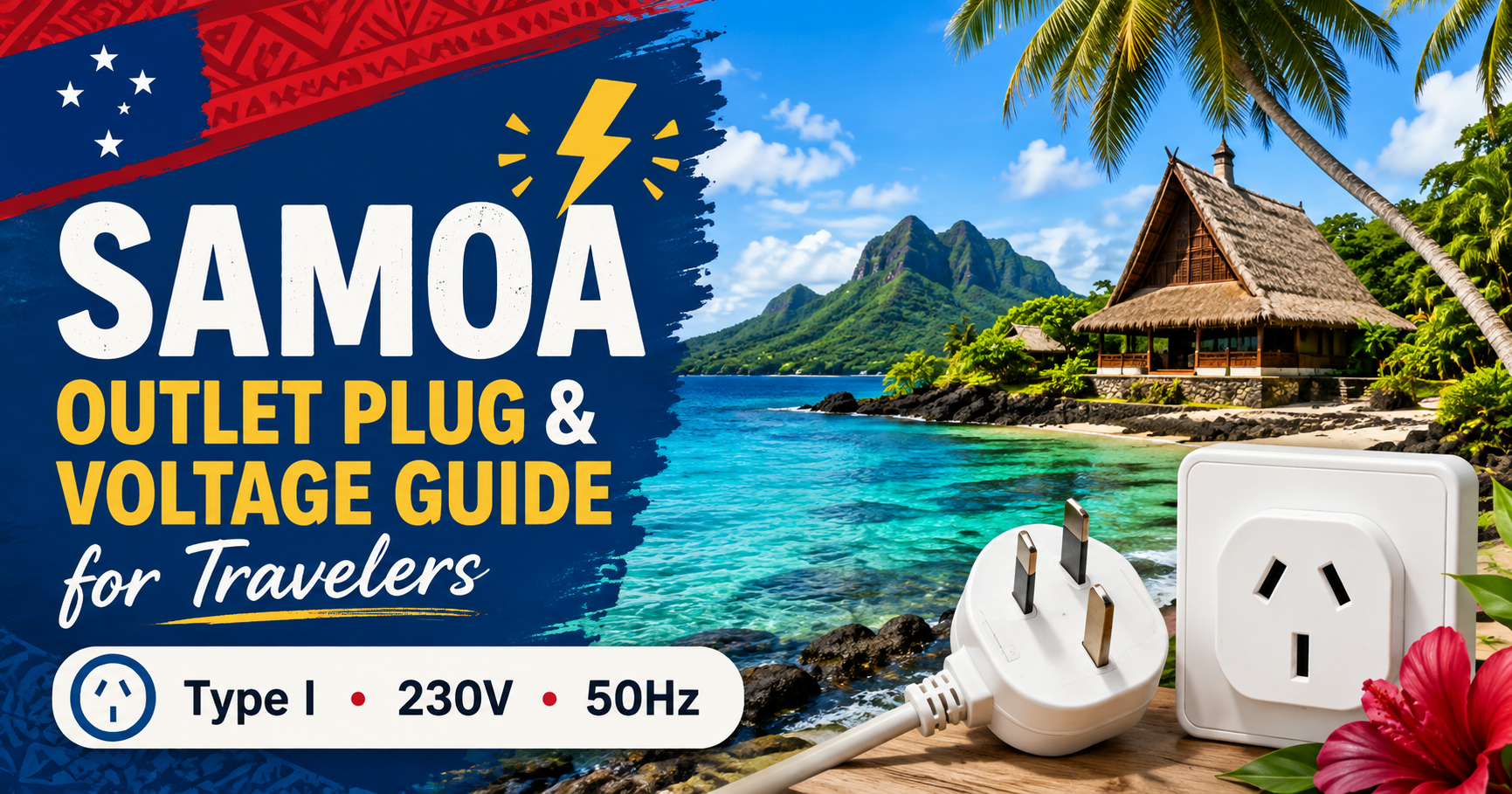
Planning a trip to Samoa 🇼🇸? You are headed for one of the South Pacific’s most beautiful island destinations — a place of lush volcanic landscapes, turquoise lagoons, waterfalls, tropical beaches, natural swimming holes, traditional villages, dramatic coastlines, and a deeply rooted Polynesian culture.
Samoa is the kind of destination where your days can look completely different from one another.
You might be exploring Apia, swimming beneath waterfalls on Upolu, visiting To Sua Ocean Trench, spending the day along Lalomanu Beach, swimming at Piula Cave Pool, driving around Savaiʻi, watching the Alofaaga Blowholes, visiting villages, hiking through tropical landscapes, relaxing at a beachfront resort, or simply spending an afternoon beside the water.
It is also the kind of trip where your phone, camera, power bank, tablet, Kindle, chargers, earbuds, and other travel tech will be working hard — for maps, hotel confirmations, rental car directions, attraction information, photos, videos, restaurant searches, weather checks, day trips, ferry travel between Upolu and Savaiʻi, and keeping everything organized while you explore the islands.
And because Samoa uses Type I outlets, your charging setup matters.
Samoa operates on 230V electricity with 50Hz frequency and uses Type I outlets. Type I is the plug style most travelers recognize from Australia and New Zealand, with two angled flat pins and, on grounded plugs, a third vertical grounding pin.
Travelers from the United States, Canada, Mexico, the United Kingdom, Ireland, most of Europe, and countries using plug types other than Type I need a Samoa-compatible plug adapter.
Travelers from countries that already use compatible Type I plugs, including Australia and New Zealand, generally do not need an adapter.
For travelers bringing single-voltage appliances, voltage matters too.
A plug adapter fixes the shape.
It does not make the power safe for the wrong device.
That is why this guide exists.
This is a complete, no-nonsense Samoa outlet, plug, and voltage guide with clear explanations and practical packing advice for travelers from around the world. Scroll to your country below for exactly what you need — no guessing, no surprises.
Important: Samoa and American Samoa are not electrically interchangeable. This guide is specifically for the Independent State of Samoa 🇼🇸. American Samoa 🇦🇸 uses a different electrical system, so travelers visiting both should check the requirements for each destination separately.

⚡ Quick Overview: What You Need for Samoa
✔ Plug Adapter
Samoa uses Type I outlets.
If your home country uses a different plug shape, you will need an adapter.
Type I plugs have two angled flat pins, with grounded versions adding a third vertical pin.
Samoa operates on 230V electricity with 50Hz frequency.
✔ Dual-Voltage Electronics
Phones, laptops, tablets, cameras, power banks, Kindles, earbuds, and modern chargers labeled 100–240V are safe to use in Samoa with the correct plug adapter.
These devices do not need a voltage converter.
The voltage label on the charger or device determines compatibility.
✔ Single-Voltage Small Appliances — Converter Needed
A converter is required if your device is not compatible with 230V.
Samoa uses 230V electricity. If your device is labeled for only 110V, 120V, or 125V, it is not safe to use in Samoa with only a plug adapter.
Hair dryers, curling irons, straighteners, steamers, heating pads, and other heat-producing appliances are some of the most common problem devices.
For these appliances, you will need a step-down voltage converter, but the easier travel solution is usually to bring a dual-voltage version or leave the appliance at home.
✔ Multi-Port USB Charger
A good charging setup can make island travel much easier.
If you are charging a phone, smartwatch, earbuds, power bank, camera batteries, tablet, Kindle, or laptop, a multi-port USB charger is worth packing.
✔ Travel Power Strip
A compact travel power strip can be especially useful in Samoa if you are staying in hotels, beach resorts, guesthouses, traditional accommodations, vacation rentals, or rooms where there are fewer conveniently placed outlets than you would like.
✔ Power Bank
A power bank is extremely useful for full sightseeing days, beach days, road trips around Upolu or Savaiʻi, waterfall trips, ferry travel, hiking, photography, navigation, and anywhere you may spend long stretches away from an outlet.
✔ Electronics Organizer
Keeps your adapters, charging cables, power bank, camera batteries, memory cards, earbuds, and other small tech pieces from becoming a tangled mess in your bag.
Travel Hack:
A Samoa-compatible Type I adapter + travel power strip + multi-port USB charger gives you an instant charging hub almost anywhere in Samoa.
Samoa’s Electrical Basics
Plug Type Used:
Type I – Two angled flat pins; grounded versions include a third vertical grounding pin
Samoa uses 230V electricity with 50Hz frequency.
✔ Safe With Only an Adapter
These devices are safe to use when the charger or device is labeled 100–240V:
Phones
Laptops
Tablets
Cameras
Power banks
E-readers / Kindles
Bluetooth headphones / earbuds
Modern USB chargers
Not Always Safe
Be careful with:
Hair dryers
Curling irons
Straighteners
Steamers
Heating pads
Electric kettles
Cheap or older chargers
Any device labeled for only one voltage
Because Samoa uses 230V power, single-voltage 110–120V appliances are the items most likely to cause problems for travelers from countries such as the United States, Canada, Japan, Mexico, and parts of the Caribbean.
A plug adapter only changes the plug shape. It does not convert electricity.
Check the Voltage Label Before You Pack
Look at the small print on each charger or device:
“110V” or “120V only” → Not safe in Samoa with only a plug adapter. You need a proper step-down voltage converter or a dual-voltage travel version of the appliance.
“220V,” “230V,” or “240V only” → Compatible with Samoa’s voltage, but you still need the correct plug adapter if the plug shape does not match.
“100–240V” → Safe to use in Samoa. You only need the correct plug adapter.
Frequency Note:
The 50Hz frequency does not create problems for phones, laptops, tablets, cameras, and similar modern electronics. It can affect motor-based, clock-based, or heat-based appliances that were designed for a different frequency.
Consistency:
Samoa uses 230V / 50Hz electricity and Type I outlets.
Travelers from countries using compatible Type I plugs, including Australia and New Zealand, generally do not need an adapter for Samoa.
Travelers from the United States, Canada, Mexico, the United Kingdom, Ireland, most of Europe, and countries using other plug types need a Samoa-compatible or universal plug adapter.
If you are staying in hotels, resorts, beach fales, guesthouses, vacation rentals, village accommodations, or moving between Apia, Upolu, Savaiʻi, Lalomanu, Manono, Salelologa, Falealupo, and other parts of Samoa, bring a flexible charging setup.
A Samoa-compatible plug adapter, a dual-voltage multi-port USB charger, and a power bank will cover normal traveler charging needs.
If Samoa is part of a larger Pacific trip, check every country on your itinerary before leaving. Type I outlets are used in several destinations across Oceania, but they are not used everywhere in the region, even when the voltage and frequency are similar.
Important: Samoa 🇼🇸 and American Samoa 🇦🇸 do not use the same electrical standard. This guide covers the Independent State of Samoa. If you are visiting American Samoa as well, check its plug and voltage requirements separately.
Quick Jump to Your Region
🌎 North America
🌎 Central America & Caribbean
🌎 South America
🌏 Oceania
🌍 Europe
🌏 Asia
🌍 Africa
✅ Universal Packing Checklist
🎒 Final Tips for Samoa
North America

Samoa uses Type I outlets and runs on 230V electricity with 50Hz frequency. Type I outlets are designed for plugs with two angled flat pins, with grounded plugs adding a third vertical grounding pin.
🇺🇸 United States
Home: 120V, 60 Hz, Type A/B.
Vs. Samoa: Samoa uses Type I outlets, so U.S. travelers will need a plug adapter. Standard U.S. Type A/B plugs will not fit Samoa’s angled Type I outlets.
Voltage is the bigger issue for U.S. travelers. Samoa’s 230V power is much higher than standard U.S. household voltage, so single-voltage 120V appliances are not safe to use with only a plug adapter.
Phones, laptops, cameras, tablets, Kindles, power banks, and USB chargers are safe if they say 100–240V. Heat tools and older appliances require a careful label check.
What to pack:
- Plug adapter
- Travel power strip
- Power bank
- Step-down voltage converter for blow dryers, curling irons, straighteners, steamers, or other single-voltage 120V appliances
- Multi-port USB charger
- Electronics organizer
🇨🇦 Canada
Home: 120V, 60 Hz, Type A/B.
Vs. Samoa: Samoa uses Type I outlets, so Canadian travelers will need a plug adapter. Standard Canadian Type A/B plugs will not fit Samoa’s angled Type I outlets.
Samoa also uses 230V electricity, while Canada uses 120V. Single-voltage 120V appliances from Canada are not safe to use in Samoa with only a plug adapter.
Phones, laptops, cameras, tablets, Kindles, power banks, and USB chargers are safe if they say 100–240V. Anything that heats up requires a careful voltage check before you pack it.
What to pack:
- Plug adapter
- Travel power strip
- Power bank
- Step-down voltage converter for blow dryers, curling irons, straighteners, steamers, or other single-voltage 120V appliances
- Multi-port USB charger
- Electronics organizer
🇲🇽 Mexico
Home: 127V, 60 Hz, Type A/B; Type C may appear in limited cases.
Vs. Samoa: Samoa uses Type I outlets. Standard Mexican Type A/B plugs will not fit Samoa’s angled Type I outlets without an adapter.
Voltage also requires attention. Mexico commonly uses 127V electricity, while Samoa uses 230V. Single-voltage appliances from Mexico are not safe to use in Samoa with only a plug adapter.
Phones, laptops, cameras, tablets, Kindles, power banks, and USB chargers are safe if they say 100–240V. Heat tools, travel steamers, and older appliances require a careful label check.
What to pack:
- Plug adapter
- Travel power strip
- Power bank
- Step-down voltage converter for blow dryers, curling irons, straighteners, steamers, or other single-voltage 120V appliances
- Multi-port USB charger
- Electronics organizer
🇬🇱 Greenland
Home: 230V, 50 Hz, Type C/E/F/K.
Vs. Samoa: Greenland and Samoa both use 230V electricity with 50Hz frequency, so devices made for Greenland’s electrical system do not need a voltage converter in Samoa.
The plug shape is different. Greenland commonly uses Type C, E, F, and K plugs, while Samoa uses Type I outlets. Travelers from Greenland should bring a plug adapter for Samoa.
Because Samoa is a destination where travelers may move between city hotels, beach resorts, guesthouses, traditional beach fales, vacation rentals, ferry stops, and accommodations across multiple islands, a flexible charging setup is still smart even though the voltage and frequency match.
What to pack:
🌎 Central America & Caribbean

110–127V / 50–60 Hz Countries
Voltage Check Required for Single-Voltage 110–120V Appliances
Travelers from these countries are used to lower voltage than Samoa.
Samoa uses 230V electricity and 50Hz frequency, with Type I outlets. Type I has two angled flat pins, with grounded versions adding a third vertical grounding pin.
Dual-voltage electronics are safe with the correct adapter
Single-voltage 110–120V hair tools require a step-down voltage converter
Travelers using Type A, Type B, Type C, Type G, or Type L plugs need a Samoa-compatible plug adapter
Type I plugs are compatible with Samoa’s outlets
🇧🇿 Belize
Home: 110V / 220V mix, 60 Hz, Type A/B/G.
Vs. Samoa: Samoa uses Type I outlets, with 230V electricity and 50Hz frequency.
Belize uses mixed voltage and several plug types. Belizean Type A, Type B, and Type G plugs do not fit Samoa’s Type I outlets, so travelers need a Samoa-compatible plug adapter.
If your appliance is designed only for 110V or 120V, it is not safe on Samoa’s 230V electricity with only a plug adapter. You need a step-down voltage converter or a dual-voltage travel version.
Appliances designed for 220–240V are compatible with Samoa’s voltage, but the change from 60Hz to 50Hz may affect frequency-sensitive motors, timers, and clocks.
What to pack:
- Plug adapter
- Travel power strip
- Power bank
- Step-down voltage converter for blow dryers, curling irons, straighteners, steamers, or other single-voltage 120V appliances
- Multi-port USB charger
- Electronics organizer
Dual-voltage devices labeled 100–240V need only the correct plug connection — no converter.
🇨🇷 Costa Rica
Home: 120V, 60 Hz, Type A/B.
Vs. Samoa: Samoa uses Type I outlets, so Costa Rican travelers need a plug adapter. Standard Type A/B plugs do not fit Samoa’s angled Type I outlets.
Voltage is the bigger issue. Costa Rica uses 120V power, while Samoa uses 230V. Single-voltage 120V appliances are not safe in Samoa with only a plug adapter.
Phones, laptops, tablets, cameras, and USB chargers are safe if they say 100–240V.
What to pack:
- Plug adapter
- Travel power strip
- Power bank
- Step-down voltage converter for blow dryers, curling irons, straighteners, steamers, or other single-voltage 120V appliances
- Multi-port USB charger
- Electronics organizer
Dual-voltage devices labeled 100–240V need an adapter only — no converter.
🇸🇻 El Salvador
Home: 115V, 60 Hz, Type A/B.
Vs. Samoa: Samoa uses Type I outlets. Travelers from El Salvador need a plug adapter because standard Type A/B plugs do not fit Samoa’s Type I outlets.
Samoa uses 230V electricity, so single-voltage 115V appliances are not safe with only a plug adapter. Modern electronics are safe when the charger label says 100–240V.
What to pack:
- Plug adapter
- Travel power strip
- Power bank
- Step-down voltage converter for blow dryers, curling irons, straighteners, steamers, or other single-voltage 120V appliances
- Multi-port USB charger
- Electronics organizer
Dual-voltage devices labeled 100–240V need an adapter only — no converter.
🇬🇹 Guatemala
Home: 120V, 60 Hz, Type A/B.
Vs. Samoa: Samoa uses Type I outlets, so Guatemalan travelers need a plug adapter. Standard Type A/B plugs do not fit Samoa’s angled Type I outlets.
Voltage requires extra attention because Guatemala uses 120V power and Samoa uses 230V. Single-voltage 120V appliances are not safe in Samoa with only an adapter. Check every hair tool and heat-producing appliance before packing it.
What to pack:
- Plug adapter
- Travel power strip
- Power bank
- Step-down voltage converter for blow dryers, curling irons, straighteners, steamers, or other single-voltage 120V appliances
- Multi-port USB charger
- Electronics organizer
Dual-voltage devices labeled 100–240V need an adapter only — no converter.
🇭🇳 Honduras
Home: 120V, 60 Hz, Type A/B.
Vs. Samoa: Samoa uses Type I outlets, so Honduran travelers need a plug adapter. Standard Type A/B plugs do not fit Samoa’s Type I outlets.
Because Samoa uses 230V power, single-voltage 120V appliances from Honduras are not safe with only a plug adapter. Phone, laptop, camera, and USB chargers are safe if they say 100–240V.
What to pack:
- Plug adapter
- Travel power strip
- Power bank
- Step-down voltage converter for blow dryers, curling irons, straighteners, steamers, or other single-voltage 120V appliances
- Multi-port USB charger
- Electronics organizer
Dual-voltage devices labeled 100–240V need an adapter only — no converter.
🇳🇮 Nicaragua
Home: 120V, 60 Hz, Type A/B.
Vs. Samoa: Samoa uses Type I outlets. Travelers from Nicaragua need a plug adapter because standard Type A/B plugs do not fit Samoa’s Type I outlets.
Nicaragua uses 120V power, while Samoa uses 230V. Single-voltage 120V appliances require a step-down voltage converter or a dual-voltage travel replacement.
The frequency difference does not affect modern electronics labeled 100–240V, but it can affect motorized, timed, or heat-based appliances.
What to pack:
- Plug adapter
- Travel power strip
- Power bank
- Step-down voltage converter for blow dryers, curling irons, straighteners, steamers, or other single-voltage 120V appliances
- Multi-port USB charger
- Electronics organizer
Dual-voltage devices labeled 100–240V need an adapter only — no converter.
🇵🇦 Panama
Home: 120V, 60 Hz, Type A/B.
Vs. Samoa: Samoa uses Type I outlets, so Panamanian travelers need a plug adapter. Standard Type A/B plugs do not fit Samoa’s Type I outlets.
Because Samoa uses 230V power, single-voltage 120V appliances are not safe with only an adapter. Devices labeled 100–240V are safe with the correct plug adapter.
What to pack:
- Plug adapter
- Travel power strip
- Power bank
- Step-down voltage converter for blow dryers, curling irons, straighteners, steamers, or other single-voltage 120V appliances
- Multi-port USB charger
- Electronics organizer
Dual-voltage devices labeled 100–240V need an adapter only — no converter.
🇧🇸 Bahamas
Home: 120V, 60 Hz, Type A/B.
Vs. Samoa: Samoa uses Type I outlets. Travelers from the Bahamas need a plug adapter because standard Type A/B plugs do not fit Samoa’s Type I outlets.
The Bahamas uses 120V power, while Samoa uses 230V. Single-voltage 120V appliances require a step-down voltage converter or a dual-voltage replacement.
Modern dual-voltage electronics are safe with an adapter only.
What to pack:
- Plug adapter
- Travel power strip
- Power bank
- Step-down voltage converter for blow dryers, curling irons, straighteners, steamers, or other single-voltage 120V appliances
- Multi-port USB charger
- Electronics organizer
Dual-voltage devices labeled 100–240V need an adapter only — no converter.
🇧🇧 Barbados
Home: 115V, 50 Hz, Type A/B.
Vs. Samoa: Samoa uses Type I outlets, so travelers from Barbados need a plug adapter.
Samoa uses 230V electricity, so single-voltage 115V appliances are not safe with only a plug adapter. Check hair tools and other heat-producing appliances before packing them.
Barbados and Samoa both use 50Hz frequency, but matching frequency does not make a single-voltage 115V appliance safe on Samoa’s 230V power.
What to pack:
- Plug adapter
- Travel power strip
- Power bank
- Step-down voltage converter for blow dryers, curling irons, straighteners, steamers, or other single-voltage 120V appliances
- Multi-port USB charger
- Electronics organizer
Dual-voltage devices labeled 100–240V need an adapter only — no converter.
🇨🇺 Cuba
Home: 110V / 220V mix, 60 Hz, Type A/B/C/L.
Vs. Samoa: Cuba uses mixed voltage, while Samoa uses 230V electricity and 50Hz frequency. Samoa uses Type I outlets.
Cuban Type A, Type B, Type C, and Type L plugs do not fit Samoa’s Type I outlets, so travelers need a Samoa-compatible plug adapter.
Appliances designed only for 110V or 120V are not safe in Samoa with only a plug adapter. Appliances designed for 220–240V are compatible with Samoa’s voltage but still need the correct adapter.
The change from 60Hz to 50Hz can also affect frequency-sensitive motors, timers, and clocks.
What to pack:
- Plug adapter
- Travel power strip
- Power bank
- Step-down voltage converter for blow dryers, curling irons, straighteners, steamers, or other single-voltage 120V appliances
- Multi-port USB charger
- Electronics organizer
Dual-voltage devices labeled 100–240V need only the correct plug connection — no converter.
🇩🇴 Dominican Republic
Home: 120V, 60 Hz, Type A/B/C.
Vs. Samoa: Samoa uses Type I outlets. Type A, Type B, and Type C plugs from the Dominican Republic do not fit Samoa’s Type I outlets, so travelers need a Samoa-compatible plug adapter.
Voltage is the bigger issue. The Dominican Republic uses 120V power, while Samoa uses 230V. Single-voltage 120V appliances are not safe in Samoa with only a plug adapter.
A plug adapter only changes the physical connection. It does not make a single-voltage 120V appliance safe on Samoa’s 230V electricity.
What to pack:
- Plug adapter
- Travel power strip
- Power bank
- Step-down voltage converter for blow dryers, curling irons, straighteners, steamers, or other single-voltage 120V appliances
- Multi-port USB charger
- Electronics organizer
Dual-voltage devices labeled 100–240V need only the correct plug connection — no converter.
🇭🇹 Haiti
Home: 110V, 60 Hz, Type A/B.
Vs. Samoa: Samoa uses Type I outlets, so travelers from Haiti need a plug adapter. Standard Type A/B plugs do not fit Samoa’s Type I outlets.
Because Samoa uses 230V electricity, single-voltage 110V appliances are not safe with only a plug adapter. Dual-voltage electronics are safe with the correct adapter.
What to pack:
- Plug adapter
- Travel power strip
- Power bank
- Step-down voltage converter for blow dryers, curling irons, straighteners, steamers, or other single-voltage 120V appliances
- Multi-port USB charger
- Electronics organizer
Dual-voltage devices labeled 100–240V need an adapter only — no converter.
🇯🇲 Jamaica
Home: 110V, 50 Hz, Type A/B.
Vs. Samoa: Samoa uses Type I outlets. Travelers from Jamaica need a plug adapter because standard Type A/B plugs do not fit Samoa’s Type I outlets.
Samoa uses 230V electricity, so single-voltage 110V appliances are not safe with only a plug adapter. Check every hair tool and heat-producing appliance before using it.
Jamaica and Samoa both use 50Hz frequency, but the matching frequency does not make a 110V appliance compatible with Samoa’s 230V electricity.
What to pack:
- Plug adapter
- Travel power strip
- Power bank
- Step-down voltage converter for blow dryers, curling irons, straighteners, steamers, or other single-voltage 120V appliances
- Multi-port USB charger
- Electronics organizer
Dual-voltage devices labeled 100–240V need an adapter only — no converter.
🇹🇹 Trinidad and Tobago
Home: 115V, 60 Hz, Type A/B.
Vs. Samoa: Samoa uses Type I outlets. Travelers from Trinidad and Tobago need a plug adapter because standard Type A/B plugs do not fit Samoa’s Type I outlets.
Because Samoa uses 230V power, single-voltage 115V appliances are not safe with only a plug adapter. Modern electronics are safe if the label says 100–240V.
What to pack:
- Plug adapter
- Travel power strip
- Power bank
- Step-down voltage converter for blow dryers, curling irons, straighteners, steamers, or other single-voltage 120V appliances
- Multi-port USB charger
- Electronics organizer
Dual-voltage devices labeled 100–240V need an adapter only — no converter.
220–240V / 50–60 Hz Countries
Plug Adapter Required — Voltage Is Compatible
Travelers from these countries are already used to higher-voltage power.
Samoa uses 230V / 50Hz, so voltage is compatible with appliances designed for 220V, 230V, or 240V.
Type I plugs fit Samoa’s outlets without an adapter
Type A, Type B, Type D, and Type G plugs require a Samoa-compatible adapter
A voltage converter is not needed for devices rated 220–240V or 100–240V
The device’s voltage label still determines whether it is safe
Frequency-sensitive motors, timers, and clocks designed only for 60Hz may not operate correctly on Samoa’s 50Hz system
🇦🇬 Antigua and Barbuda
Home: 230V, 60 Hz, Type A/B.
Vs. Samoa: Antigua and Barbuda uses 230V electricity, so the voltage matches Samoa’s 230V system.
The plug shape is different. Samoa uses Type I outlets, while Antigua and Barbuda uses Type A/B plugs. Travelers need a Samoa-compatible plug adapter.
The frequency changes from 60Hz to 50Hz. This does not affect modern electronics labeled 100–240V, but it can affect frequency-sensitive motors, timers, and clocks.
What to pack:
🇩🇲 Dominica
Home: 230V, 50 Hz, Type G.
Vs. Samoa: Dominica and Samoa both use 230V electricity with 50Hz frequency, so devices designed for Dominica’s electrical system do not need a voltage converter in Samoa.
The plug shape is different. Dominica uses Type G plugs, while Samoa uses Type I outlets. Travelers from Dominica need a Samoa-compatible plug adapter.
What to pack:
🇬🇩 Grenada
Home: 230V, 50 Hz, Type G.
Vs. Samoa: Grenada and Samoa use the same 230V electricity and 50Hz frequency.
The plug systems are different. Grenada uses Type G plugs, while Samoa uses Type I outlets. Travelers from Grenada need a Samoa-compatible plug adapter.
A voltage converter is not needed for devices and appliances designed for Grenada’s electrical system.
What to pack:
🇰🇳 Saint Kitts and Nevis
Home: 230V, 60 Hz, Type A/B/G/D.
Vs. Samoa: Saint Kitts and Nevis and Samoa both use 230V electricity.
Type A, Type B, Type G, and Type D plugs do not fit Samoa’s Type I outlets, so travelers need a Samoa-compatible plug adapter.
The frequency changes from 60Hz to 50Hz. Modern electronics labeled 100–240V are safe, but frequency-sensitive motors, clocks, and timed appliances require a label check.
What to pack:
🇱🇨 Saint Lucia
Home: 240V, 50 Hz, Type A/B/G.
Vs. Samoa: Saint Lucia uses 240V / 50Hz power, which is compatible with Samoa’s 230V / 50Hz system.
The plug shape is different. Type A, Type B, and Type G plugs do not fit Samoa’s Type I outlets, so travelers need a Samoa-compatible plug adapter.
A voltage converter is not needed for devices designed for Saint Lucia’s 240V electrical system.
What to pack:
🇻🇨 Saint Vincent and the Grenadines
Home: 230V, 50 Hz, Type A/B/G.
Vs. Samoa: Saint Vincent and the Grenadines and Samoa both use 230V electricity with 50Hz frequency.
Type A, Type B, and Type G plugs do not fit Samoa’s Type I outlets, so travelers need a Samoa-compatible plug adapter.
A voltage converter is not needed for devices designed for Saint Vincent and the Grenadines’ electrical system.
What to pack:
🌎 South America

220–240V / 50–60 Hz Countries
Adapter Depends on Plug Type — Voltage Is Compatible
Samoa uses 230V electricity and 50Hz frequency, so travelers from higher-voltage South American countries are already close to Samoa’s electrical setup.
The main issue is plug shape.
Samoa uses Type I outlets
Type I plugs fit Samoa’s outlets
Type A, Type B, Type C, Type F, Type L, and Type N plugs require a Samoa-compatible plug adapter
A voltage converter is not needed for modern electronics labeled 100–240V
Appliances rated for 220–240V are compatible with Samoa’s voltage
Appliances designed only for 60Hz require a frequency check before use on Samoa’s 50Hz system
🇦🇷 Argentina
Home: 220V, 50 Hz, Type C/I.
Vs. Samoa: Argentina’s 220V / 50Hz electrical system is compatible with Samoa’s 230V / 50Hz system, so Argentine travelers do not need a voltage converter for appliances designed for Argentina.
Plug compatibility depends on the plug attached to the device. Argentina uses Type C and Type I plugs, while Samoa uses Type I outlets.
Type I plugs fit Samoa’s outlets without an adapter. Type C plugs require a Samoa-compatible plug adapter.
What to pack:
🇧🇴 Bolivia
Home: 230V, 50 Hz, Type A/C.
Vs. Samoa: Bolivia and Samoa both use 230V electricity with 50Hz frequency, so the voltage and frequency are fully compatible.
The plug systems are different. Bolivia uses Type A and Type C plugs, while Samoa uses Type I outlets. Travelers from Bolivia need a Samoa-compatible plug adapter.
What to pack:
🇨🇱 Chile
Home: 220–230V, 50 Hz, Type C/L.
Vs. Samoa: Chile’s voltage and frequency are compatible with Samoa’s 230V / 50Hz system.
Chile uses Type C and Type L plugs, while Samoa uses Type I outlets. Travelers from Chile need a Samoa-compatible plug adapter.
What to pack:
🇵🇾 Paraguay
Home: 220V, 50 Hz, Type C.
Vs. Samoa: Paraguay’s 220V / 50Hz electrical system is compatible with Samoa’s 230V / 50Hz system.
The plug shape is different. Paraguay uses Type C plugs, while Samoa uses Type I outlets.
Travelers from Paraguay need a Samoa-compatible plug adapter but do not need a voltage converter for devices designed for Paraguay’s electrical system.
What to pack:
🇵🇪 Peru
Home: 220V, 60 Hz, Type A/B/C.
Vs. Samoa: Peru’s 220V electricity is compatible with Samoa’s 230V power.
Peru uses Type A, Type B, and Type C plugs, while Samoa uses Type I outlets. Travelers from Peru need a Samoa-compatible plug adapter.
The frequency changes from 60Hz in Peru to 50Hz in Samoa. This does not affect phones, laptops, tablets, cameras, power banks, or modern chargers labeled 100–240V. It can affect motor-based appliances, clocks, timers, and devices designed only for 60Hz.
What to pack:
🇺🇾 Uruguay
Home: 220–230V, 50 Hz, Type C/F/I/L.
Vs. Samoa: Uruguay’s voltage and frequency are compatible with Samoa’s 230V / 50Hz system.
Plug compatibility depends on the plug attached to the device. Type I plugs fit Samoa’s outlets without an adapter. Type C, Type F, and Type L plugs require a Samoa-compatible plug adapter.
Because Samoa trips can include city hotels, resorts, guesthouses, beach fales, vacation rentals, village accommodations, ferry travel, road trips, and stays across Upolu, Savaiʻi, Apia, Lalomanu, Salelologa, Falealupo, and other parts of the country, a flexible charging setup is still useful.
What to pack:
110–127V / 60 Hz or Mixed-Voltage Countries
Voltage Check Required for Single-Voltage Appliances
Samoa uses 230V electricity, so travelers from lower-voltage South American countries must check every single-voltage appliance before packing.
Dual-voltage electronics labeled 100–240V are safe with the correct plug connection.
Single-voltage 110–127V appliances are not safe on Samoa’s 230V electricity with only a plug adapter.
A plug adapter is required unless the device already has a compatible Type I plug
Step-down voltage converter required for single-voltage 110–127V appliances
Check every charger, hair tool, and heat-producing appliance before packing
A plug adapter changes the plug shape only — it does not change the voltage
🇧🇷 Brazil
Home: 127V / 220V mix, varies by region, 60 Hz, Type C/N.
Vs. Samoa: Brazil has mixed voltage, while Samoa uses 230V electricity.
If your appliance is designed only for 127V, it is not safe in Samoa with only a plug adapter. You need a step-down voltage converter or a dual-voltage travel version.
Appliances designed for 220V are compatible with Samoa’s 230V electricity, but the 60Hz-to-50Hz frequency difference requires attention for motors, clocks, timers, and frequency-sensitive appliances.
Brazil uses Type C and Type N plugs. Neither plug type fits Samoa’s Type I outlets, so travelers from Brazil need a Samoa-compatible plug adapter.
What to pack:
- Plug adapter
- Travel power strip
- Power bank
- Step-down voltage converter for blow dryers, curling irons, straighteners, steamers, or other single-voltage 120V appliances
- Multi-port USB charger
- Electronics organizer
🇨🇴 Colombia
Home: 110V, 60 Hz, Type A/B.
Vs. Samoa: Colombia uses lower-voltage power than Samoa. Samoa uses 230V electricity, so single-voltage 110V appliances are not safe with only a plug adapter.
Colombian Type A and Type B plugs do not fit Samoa’s Type I outlets. Travelers from Colombia need a Samoa-compatible plug adapter.
Phones, laptops, tablets, cameras, power banks, and USB chargers are safe when labeled 100–240V.
What to pack:
- Plug adapter
- Travel power strip
- Power bank
- Step-down voltage converter for blow dryers, curling irons, straighteners, steamers, or other single-voltage 120V appliances
- Multi-port USB charger
- Electronics organizer
🇪🇨 Ecuador
Home: 120–127V, 60 Hz, Type A/B.
Vs. Samoa: Ecuador uses lower-voltage power than Samoa. Samoa uses 230V electricity, so single-voltage 120–127V appliances are not safe with only a plug adapter.
Ecuadorian Type A and Type B plugs do not fit Samoa’s Type I outlets. Travelers from Ecuador need a Samoa-compatible plug adapter.
Dual-voltage electronics labeled 100–240V are safe with the correct adapter.
What to pack:
- Plug adapter
- Travel power strip
- Power bank
- Step-down voltage converter for blow dryers, curling irons, straighteners, steamers, or other single-voltage 120V appliances
- Multi-port USB charger
- Electronics organizer
🇬🇾 Guyana
Home: 120V / 240V mix, 60 Hz, Type A/B/D/G.
Vs. Samoa: Guyana has mixed voltage, while Samoa uses 230V electricity.
If your appliance is designed only for 120V, it is not safe in Samoa with only a plug adapter. You need a step-down voltage converter or a dual-voltage travel version.
Appliances designed for 240V are compatible with Samoa’s 230V electricity. The frequency changes from 60Hz to 50Hz, so frequency-sensitive motors, clocks, timers, and appliances require a label check.
Guyana uses Type A, Type B, Type D, and Type G plugs. None of these plug types fit Samoa’s Type I outlets, so travelers from Guyana need a Samoa-compatible plug adapter.
What to pack:
- Plug adapter
- Travel power strip
- Power bank
- Step-down voltage converter for blow dryers, curling irons, straighteners, steamers, or other single-voltage 120V appliances
- Multi-port USB charger
- Electronics organizer
🇸🇷 Suriname
Home: 127V, 60 Hz, Type A/B/C.
Vs. Samoa: Suriname uses 127V power, while Samoa uses 230V. Single-voltage 127V appliances are not safe in Samoa with only a plug adapter.
Suriname uses Type A, Type B, and Type C plugs. None of these plug types fit Samoa’s Type I outlets, so travelers from Suriname need a Samoa-compatible plug adapter.
A plug adapter does not make a single-voltage 127V appliance safe. The device must still support Samoa’s 230V electricity.
What to pack:
- Plug adapter
- Travel power strip
- Power bank
- Step-down voltage converter for blow dryers, curling irons, straighteners, steamers, or other single-voltage 120V appliances
- Multi-port USB charger
- Electronics organizer
🇻🇪 Venezuela
Home: 120V, 60 Hz, Type A/B.
Vs. Samoa: Venezuela uses lower-voltage power than Samoa. Samoa uses 230V electricity, so single-voltage 120V appliances are not safe with only a plug adapter.
Venezuelan Type A and Type B plugs do not fit Samoa’s Type I outlets. Travelers from Venezuela need a Samoa-compatible plug adapter.
Dual-voltage electronics labeled 100–240V are safe with the correct adapter.
What to pack:
- Plug adapter
- Travel power strip
- Power bank
- Step-down voltage converter for blow dryers, curling irons, straighteners, steamers, or other single-voltage 120V appliances
- Multi-port USB charger
- Electronics organizer
🌏 Oceania

220–240V / 50 Hz Countries
Type I Plugs Are Compatible With Samoa
Samoa uses 230V electricity and 50Hz frequency, so travelers from most Oceania countries already use compatible voltage.
Many countries in Oceania also use the same Type I plug system as Samoa.
Samoa uses Type I outlets
Type I plugs fit Samoa’s outlets without an adapter
Travelers using other plug types need a Samoa-compatible plug adapter
A voltage converter is not needed for devices rated 220–240V or 100–240V
The plug must still match Samoa’s Type I outlet
🇦🇺 Australia
Home: 230V, often 240V in practice, 50 Hz, Type I.
Vs. Samoa: Australia and Samoa both use 230V electricity with 50Hz frequency and Type I plugs and outlets.
Australian travelers do not need a plug adapter or voltage converter for devices designed for Australia’s electrical system.
What to pack:
🇫🇯 Fiji
Home: 240V, 50 Hz, Type I.
Vs. Samoa: Fiji’s 240V / 50Hz electrical system is compatible with Samoa’s 230V / 50Hz system.
Fiji and Samoa both use Type I plugs and outlets.
Travelers from Fiji do not need a plug adapter or voltage converter for devices designed for Fiji’s electrical system.
What to pack:
🇳🇿 New Zealand
Home: 230V, 50 Hz, Type I.
Vs. Samoa: New Zealand and Samoa both use 230V electricity with 50Hz frequency and Type I plugs and outlets.
New Zealand travelers do not need a plug adapter or voltage converter for devices designed for New Zealand’s electrical system.
What to pack:
🇵🇬 Papua New Guinea
Home: 240V, 50 Hz, Type I.
Vs. Samoa: Papua New Guinea’s 240V / 50Hz system is compatible with Samoa’s 230V / 50Hz electrical system.
Papua New Guinea and Samoa both use Type I plugs and outlets.
Travelers from Papua New Guinea do not need a plug adapter or voltage converter for devices designed for Papua New Guinea’s electrical system.
What to pack:
🇸🇧 Solomon Islands
Home: 220–230V, 50 Hz, Type I; some Type G.
Vs. Samoa: The Solomon Islands and Samoa use compatible voltage and the same 50Hz frequency.
Type I plugs fit Samoa’s Type I outlets without an adapter. Travelers using a Type G plug need a Samoa-compatible plug adapter.
A voltage converter is not needed for appliances designed for the Solomon Islands’ 220–230V electrical system.
What to pack:
🇹🇴 Tonga
Home: 240V, 50 Hz, Type I.
Vs. Samoa: Tonga’s 240V / 50Hz electrical system is compatible with Samoa’s 230V / 50Hz system.
Tonga and Samoa both use Type I plugs and outlets.
Travelers from Tonga do not need a plug adapter or voltage converter for devices designed for Tonga’s electrical system.
What to pack:
🇼🇸 Samoa
Home: 230V, 50 Hz, Type I.
Vs. Samoa: Samoa uses 230V electricity with 50Hz frequency and Type I outlets.
Travelers using devices designed for Samoa’s electrical system do not need a plug adapter or voltage converter when traveling within Samoa.
What to pack:
🇹🇻 Tuvalu
Home: 230V, 50 Hz, Type I.
Vs. Samoa: Tuvalu and Samoa use the same 230V electricity, 50Hz frequency, and Type I plug system.
Travelers from Tuvalu do not need a plug adapter or voltage converter for devices designed for Tuvalu’s electrical system.
What to pack:
🇻🇺 Vanuatu
Home: 220V, 50 Hz, Type I.
Vs. Samoa: Vanuatu’s 220V / 50Hz system is compatible with Samoa’s 230V / 50Hz electrical system.
Vanuatu and Samoa both use Type I plugs and outlets.
Travelers from Vanuatu do not need a plug adapter or voltage converter for devices designed for Vanuatu’s electrical system.
What to pack:
🇰🇮 Kiribati
Home: 240V, 50 Hz, Type I.
Vs. Samoa: Kiribati’s 240V / 50Hz electrical system is compatible with Samoa’s 230V / 50Hz system.
Kiribati and Samoa both use Type I plugs and outlets.
Travelers from Kiribati do not need a plug adapter or voltage converter for devices designed for Kiribati’s electrical system.
What to pack:
🇳🇷 Nauru
Home: 240V, 50 Hz, Type I.
Vs. Samoa: Nauru’s 240V / 50Hz electrical system is compatible with Samoa’s 230V / 50Hz system.
Nauru and Samoa both use Type I plugs and outlets.
Travelers from Nauru do not need a plug adapter or voltage converter for devices designed for Nauru’s electrical system.
What to pack:
🇵🇫 French Polynesia
Home: 110V / 220V mix, 60 / 50 Hz, Type A/B/E.
Vs. Samoa: French Polynesia has mixed voltage and frequency, while Samoa uses 230V electricity with 50Hz frequency.
French Polynesia uses Type A, Type B, and Type E plugs. These plug types do not fit Samoa’s Type I outlets, so travelers need a Samoa-compatible plug adapter.
If your appliance is designed only for 110V or 120V, it is not safe in Samoa with only a plug adapter. You need a step-down voltage converter or a dual-voltage replacement.
Devices designed for 220V, 230V, 240V, or 100–240V are compatible with Samoa’s voltage. Devices designed only for 60Hz require a frequency check before use on Samoa’s 50Hz system.
What to pack:
- Plug adapter
- Travel power strip
- Power bank
- Step-down voltage converter for blow dryers, curling irons, straighteners, steamers, or other single-voltage 120V appliances
- Multi-port USB charger
- Electronics organizer
120V / 60 Hz Countries
Voltage Check Required for Single-Voltage Appliances
Samoa uses 230V electricity, so travelers from 120V Oceania destinations must check every single-voltage appliance before packing.
Dual-voltage devices labeled 100–240V are safe with the correct plug connection.
Single-voltage 120V appliances are not safe on Samoa’s 230V power with only a plug adapter.
Samoa-compatible plug adapter required unless the device already uses a compatible Type I plug
Step-down voltage converter required for single-voltage 120V appliances
Check every charger, hair tool, and heat-producing appliance before packing
A plug adapter changes the plug shape only — it does not change the voltage
🇲🇭 Marshall Islands
Home: 120V, 60 Hz, Type A/B.
Vs. Samoa: Travelers from the Marshall Islands are used to lower-voltage power than Samoa. Samoa uses 230V electricity, so single-voltage 120V appliances are not safe with only a plug adapter.
Type A and Type B plugs do not fit Samoa’s Type I outlets.
Travelers from the Marshall Islands need a Samoa-compatible plug adapter.
What to pack:
- Plug adapter
- Travel power strip
- Power bank
- Step-down voltage converter for blow dryers, curling irons, straighteners, steamers, or other single-voltage 120V appliances
- Multi-port USB charger
- Electronics organizer
🇫🇲 Micronesia
Home: 120V, 60 Hz, Type A/B.
Vs. Samoa: Micronesia uses 120V electricity, while Samoa uses 230V. Single-voltage 120V appliances are not safe in Samoa with only a plug adapter.
Micronesia’s Type A and Type B plugs do not fit Samoa’s Type I outlets.
Travelers from Micronesia need a Samoa-compatible plug adapter.
What to pack:
- Plug adapter
- Travel power strip
- Power bank
- Step-down voltage converter for blow dryers, curling irons, straighteners, steamers, or other single-voltage 120V appliances
- Multi-port USB charger
- Electronics organizer
🇵🇼 Palau
Home: 120V, 60 Hz, Type A/B.
Vs. Samoa: Palau uses lower-voltage power than Samoa. Samoa uses 230V electricity, so single-voltage 120V appliances require a step-down voltage converter or a dual-voltage replacement.
Palau’s Type A and Type B plugs do not fit Samoa’s Type I outlets.
Travelers from Palau need a Samoa-compatible plug adapter.
What to pack:
- Plug adapter
- Travel power strip
- Power bank
- Step-down voltage converter for blow dryers, curling irons, straighteners, steamers, or other single-voltage 120V appliances
- Multi-port USB charger
- Electronics organizer
🇦🇸 American Samoa
Home: 120V, 60 Hz, Type A/B/F/I.
Vs. Samoa: American Samoa uses lower-voltage power than Samoa. Samoa uses 230V electricity, so single-voltage 120V appliances are not safe in Samoa with only a plug adapter.
American Samoa uses Type A, Type B, Type F, and Type I plugs. Type I plugs fit Samoa’s Type I outlets without an adapter. Type A, Type B, and Type F plugs require a Samoa-compatible plug adapter.
A physically compatible Type I plug does not make a single-voltage 120V appliance safe. The device must still support Samoa’s 230V electricity.
What to pack:
- Plug adapter
- Travel power strip
- Power bank
- Step-down voltage converter for blow dryers, curling irons, straighteners, steamers, or other single-voltage 120V appliances
- Multi-port USB charger
- Electronics organizer
🌍 Europe

220–240V / 50 Hz Countries
Plug Adapter Needed — Voltage Is Usually Compatible
Most European travelers are already used to higher-voltage electrical systems, so Samoa’s 230V, 50Hz power is usually familiar. The main issue is plug shape.
Dual-voltage electronics labeled 100–240V are fine with the correct plug setup
Many single-voltage 220–240V appliances are voltage-compatible with Samoa
Samoa uses Type I outlets
Type C, Type E, Type F, Type G, Type J, Type K, Type L, and other European plug types require a Samoa-compatible plug adapter
A voltage converter is generally not needed for appliances designed for 220–240V / 50Hz power
Always check the label on heat-based or motor-based appliances before packing
🇦🇱 Albania
Home: 230V, 50 Hz, Type C / F.
Vs. Samoa: Albania and Samoa both use 230V, 50Hz power, so the voltage and frequency are fully compatible.
The plug shapes are different. Albania uses Type C and Type F plugs, while Samoa uses Type I outlets.
Albanian travelers need a Samoa-compatible plug adapter. Dual-voltage electronics are fine, and many 220–240V appliances are voltage-compatible.
What to pack:
🇦🇩 Andorra
Home: 230V, 50 Hz, Type C / F.
Vs. Samoa: Andorra and Samoa both use 230V, 50Hz power.
Andorra uses Type C and Type F plugs, while Samoa uses Type I outlets. Andorran travelers need a Samoa-compatible plug adapter.
Dual-voltage electronics are fine, and many 220–240V appliances are voltage-compatible.
What to pack:
🇦🇹 Austria
Home: 230V, 50 Hz, Type C / F.
Vs. Samoa: Austria and Samoa both use 230V, 50Hz power.
Austria uses Type C and Type F plugs, while Samoa uses Type I outlets. Austrian travelers need a Samoa-compatible plug adapter.
Dual-voltage electronics are fine, and many 220–240V appliances are voltage-compatible.
What to pack:
🇧🇪 Belgium
Home: 230V, 50 Hz, Type C / E.
Vs. Samoa: Belgium and Samoa both use 230V, 50Hz power.
Belgium uses Type C and Type E plugs, while Samoa uses Type I outlets. Belgian travelers need a Samoa-compatible plug adapter.
Dual-voltage electronics are fine, and many 220–240V appliances are voltage-compatible.
What to pack:
🇧🇦 Bosnia and Herzegovina
Home: 230V, 50 Hz, Type C / F.
Vs. Samoa: Bosnia and Herzegovina and Samoa both use 230V, 50Hz power.
Type C and Type F plugs do not fit Samoa’s Type I outlets, so travelers from Bosnia and Herzegovina need a Samoa-compatible plug adapter.
Dual-voltage electronics are fine, and many 220–240V appliances are voltage-compatible.
What to pack:
🇧🇬 Bulgaria
Home: 230V, 50 Hz, Type C / F.
Vs. Samoa: Bulgaria and Samoa both use 230V, 50Hz power.
Bulgaria uses Type C and Type F plugs, while Samoa uses Type I outlets. Bulgarian travelers need a Samoa-compatible plug adapter.
Dual-voltage electronics are fine, and many 220–240V appliances are voltage-compatible.
What to pack:
🇭🇷 Croatia
Home: 230V, 50 Hz, Type C / F.
Vs. Samoa: Croatia and Samoa both use 230V, 50Hz power.
Croatian Type C and Type F plugs do not fit Samoa’s Type I outlets. Travelers from Croatia need a Samoa-compatible plug adapter.
Dual-voltage electronics are fine, and many 220–240V appliances are voltage-compatible.
What to pack:
🇨🇿 Czechia
Home: 230V, 50 Hz, Type C / E.
Vs. Samoa: Czechia and Samoa both use 230V, 50Hz power.
Czechia uses Type C and Type E plugs, while Samoa uses Type I outlets. Czech travelers need a Samoa-compatible plug adapter.
Dual-voltage electronics are fine, and many 220–240V appliances are voltage-compatible.
What to pack:
🇩🇰 Denmark
Home: 230V, 50 Hz, Type C / E / F / K.
Vs. Samoa: Denmark and Samoa both use 230V, 50Hz power.
Denmark uses several European plug types, while Samoa uses Type I outlets. Type C, Type E, Type F, and Type K plugs require a Samoa-compatible plug adapter.
Dual-voltage electronics are fine, and many 220–240V appliances are voltage-compatible.
What to pack:
🇪🇪 Estonia
Home: 230V, 50 Hz, Type C / F.
Vs. Samoa: Estonia and Samoa both use 230V electricity with 50Hz frequency.
Estonian Type C and Type F plugs do not fit Samoa’s Type I outlets. Estonian travelers need a Samoa-compatible plug adapter.
Dual-voltage electronics are fine, and many 220–240V appliances are voltage-compatible.
What to pack:
🇫🇮 Finland
Home: 230V, 50 Hz, Type C / F.
Vs. Samoa: Finland and Samoa both use 230V electricity with 50Hz frequency.
Finnish Type C and Type F plugs do not fit Samoa’s Type I outlets. Finnish travelers need a Samoa-compatible plug adapter.
Dual-voltage electronics are fine, and many 220–240V appliances are voltage-compatible.
What to pack:
🇫🇷 France
Home: 230V, 50 Hz, Type C / E.
Vs. Samoa: France and Samoa both use 230V, 50Hz power.
France uses Type C and Type E plugs, while Samoa uses Type I outlets. French travelers need a Samoa-compatible plug adapter.
Dual-voltage electronics are fine, and many 220–240V appliances are voltage-compatible.
What to pack:
🇩🇪 Germany
Home: 230V, 50 Hz, Type C / F.
Vs. Samoa: Germany and Samoa both use 230V, 50Hz power.
German Type C and Type F plugs do not fit Samoa’s Type I outlets. German travelers need a Samoa-compatible plug adapter.
Dual-voltage electronics are fine, and many 220–240V appliances are voltage-compatible.
What to pack:
🇬🇷 Greece
Home: 230V, 50 Hz, Type C / F.
Vs. Samoa: Greece and Samoa both use 230V, 50Hz power.
Greek Type C and Type F plugs do not fit Samoa’s Type I outlets. Greek travelers need a Samoa-compatible plug adapter.
Dual-voltage electronics are fine, and many 220–240V appliances are voltage-compatible.
What to pack:
🇭🇺 Hungary
Home: 230V, 50 Hz, Type C / F.
Vs. Samoa: Hungary and Samoa both use 230V, 50Hz power.
Hungarian Type C and Type F plugs do not fit Samoa’s Type I outlets. Hungarian travelers need a Samoa-compatible plug adapter.
Dual-voltage electronics are fine, and many 220–240V appliances are voltage-compatible.
What to pack:
🇮🇸 Iceland
Home: 230V, 50 Hz, Type C / F.
Vs. Samoa: Iceland and Samoa both use 230V, 50Hz power.
Icelandic Type C and Type F plugs do not fit Samoa’s Type I outlets. Icelandic travelers need a Samoa-compatible plug adapter.
Dual-voltage electronics are fine, and many 220–240V appliances are voltage-compatible.
What to pack:
🇮🇪 Ireland
Home: 230V, 50 Hz, Type G.
Vs. Samoa: Ireland and Samoa both use 230V, 50Hz power, but the plug shapes are different.
Ireland uses Type G plugs, while Samoa uses Type I outlets. Irish travelers need a Samoa-compatible plug adapter.
Dual-voltage electronics are fine, and many 220–240V appliances are voltage-compatible.
What to pack:
🇮🇹 Italy
Home: 230V, 50 Hz, Type C / F / L.
Vs. Samoa: Italy and Samoa both use 230V, 50Hz power.
Italy uses Type C, Type F, and Type L plugs, while Samoa uses Type I outlets. Italian travelers need a Samoa-compatible plug adapter.
Dual-voltage electronics are fine, and many 220–240V appliances are voltage-compatible.
What to pack:
🇱🇻 Latvia
Home: 230V, 50 Hz, Type C / F.
Vs. Samoa: Latvia and Samoa both use 230V electricity with 50Hz frequency.
Latvian Type C and Type F plugs do not fit Samoa’s Type I outlets. Latvian travelers need a Samoa-compatible plug adapter.
What to pack:
🇱🇹 Lithuania
Home: 230V, 50 Hz, Type C / F.
Vs. Samoa: Lithuania and Samoa both use 230V, 50Hz power.
Lithuanian Type C and Type F plugs do not fit Samoa’s Type I outlets. Lithuanian travelers need a Samoa-compatible plug adapter.
What to pack:
🇱🇺 Luxembourg
Home: 230V, 50 Hz, Type C / F.
Vs. Samoa: Luxembourg and Samoa both use 230V, 50Hz power.
Luxembourg’s Type C and Type F plugs do not fit Samoa’s Type I outlets. Travelers from Luxembourg need a Samoa-compatible plug adapter.
What to pack:
🇲🇹 Malta
Home: 230V, 50 Hz, Type G.
Vs. Samoa: Malta and Samoa both use 230V, 50Hz power, but the plug shapes are different.
Malta uses Type G plugs, while Samoa uses Type I outlets. Maltese travelers need a Samoa-compatible plug adapter.
Dual-voltage electronics are fine, and many 220–240V appliances are voltage-compatible.
What to pack:
🇲🇩 Moldova
Home: 230V, 50 Hz, Type C / F.
Vs. Samoa: Moldova and Samoa both use 230V, 50Hz power.
Moldovan Type C and Type F plugs do not fit Samoa’s Type I outlets. Moldovan travelers need a Samoa-compatible plug adapter.
What to pack:
🇲🇨 Monaco
Home: 230V, 50 Hz, Type C / E / F.
Vs. Samoa: Monaco and Samoa both use 230V, 50Hz power.
Monaco uses Type C, Type E, and Type F plugs, while Samoa uses Type I outlets. Travelers from Monaco need a Samoa-compatible plug adapter.
What to pack:
🇲🇪 Montenegro
Home: 230V, 50 Hz, Type C / F.
Vs. Samoa: Montenegro and Samoa both use 230V, 50Hz power.
Montenegrin Type C and Type F plugs do not fit Samoa’s Type I outlets. Montenegrin travelers need a Samoa-compatible plug adapter.
What to pack:
🇳🇱 Netherlands
Home: 230V, 50 Hz, Type C / F.
Vs. Samoa: The Netherlands and Samoa both use 230V, 50Hz power.
Dutch Type C and Type F plugs do not fit Samoa’s Type I outlets. Dutch travelers need a Samoa-compatible plug adapter.
What to pack:
🇲🇰 North Macedonia
Home: 230V, 50 Hz, Type C / F.
Vs. Samoa: North Macedonia and Samoa both use 230V, 50Hz power.
Type C and Type F plugs do not fit Samoa’s Type I outlets, so travelers from North Macedonia need a Samoa-compatible plug adapter.
What to pack:
🇳🇴 Norway
Home: 230V, 50 Hz, Type C / F.
Vs. Samoa: Norway and Samoa both use 230V, 50Hz power.
Norwegian Type C and Type F plugs do not fit Samoa’s Type I outlets. Norwegian travelers need a Samoa-compatible plug adapter.
What to pack:
🇵🇱 Poland
Home: 230V, 50 Hz, Type C / E.
Vs. Samoa: Poland and Samoa both use 230V, 50Hz power.
Poland uses Type C and Type E plugs, while Samoa uses Type I outlets. Polish travelers need a Samoa-compatible plug adapter.
What to pack:
🇵🇹 Portugal
Home: 230V, 50 Hz, Type C / F.
Vs. Samoa: Portugal and Samoa both use 230V, 50Hz power.
Portuguese Type C and Type F plugs do not fit Samoa’s Type I outlets. Portuguese travelers need a Samoa-compatible plug adapter.
What to pack:
🇷🇴 Romania
Home: 230V, 50 Hz, Type C / F.
Vs. Samoa: Romania and Samoa both use 230V, 50Hz power.
Romanian Type C and Type F plugs do not fit Samoa’s Type I outlets. Romanian travelers need a Samoa-compatible plug adapter.
Dual-voltage electronics are fine, and many 220–240V appliances are voltage-compatible.
What to pack:
🇷🇺 Russia
Home: 220–230V, 50 Hz, Type C / F.
Vs. Samoa: Russia and Samoa use compatible voltage and the same 50Hz frequency.
Russian Type C and Type F plugs do not fit Samoa’s Type I outlets. Russian travelers need a Samoa-compatible plug adapter.
Dual-voltage electronics are fine, and many 220–240V appliances are voltage-compatible.
What to pack:
🇷🇸 Serbia
Home: 230V, 50 Hz, Type C / F.
Vs. Samoa: Serbia and Samoa both use 230V, 50Hz power.
Serbian Type C and Type F plugs do not fit Samoa’s Type I outlets. Serbian travelers need a Samoa-compatible plug adapter.
Dual-voltage electronics are fine, and many 220–240V appliances are voltage-compatible.
What to pack:
🇸🇰 Slovakia
Home: 230V, 50 Hz, Type C / E.
Vs. Samoa: Slovakia and Samoa both use 230V, 50Hz power.
Slovakia uses Type C and Type E plugs, while Samoa uses Type I outlets. Slovak travelers need a Samoa-compatible plug adapter.
What to pack:
🇸🇮 Slovenia
Home: 230V, 50 Hz, Type C / F.
Vs. Samoa: Slovenia and Samoa both use 230V, 50Hz power.
Slovenian Type C and Type F plugs do not fit Samoa’s Type I outlets. Slovenian travelers need a Samoa-compatible plug adapter.
What to pack:
🇪🇸 Spain
Home: 230V, 50 Hz, Type C / F.
Vs. Samoa: Spain and Samoa both use 230V, 50Hz power.
Spanish Type C and Type F plugs do not fit Samoa’s Type I outlets. Spanish travelers need a Samoa-compatible plug adapter.
What to pack:
🇸🇪 Sweden
Home: 230V, 50 Hz, Type C / F.
Vs. Samoa: Sweden and Samoa both use 230V, 50Hz power.
Swedish Type C and Type F plugs do not fit Samoa’s Type I outlets. Swedish travelers need a Samoa-compatible plug adapter.
What to pack:
🇨🇭 Switzerland
Home: 230V, 50 Hz, Type C / J.
Vs. Samoa: Switzerland and Samoa both use 230V, 50Hz power.
Switzerland uses Type C and Type J plugs, while Samoa uses Type I outlets. Swiss travelers need a Samoa-compatible plug adapter.
Dual-voltage electronics are fine, and many 220–240V appliances are voltage-compatible.
What to pack:
🇺🇦 Ukraine
Home: 230V, 50 Hz, Type C / F.
Vs. Samoa: Ukraine and Samoa both use 230V, 50Hz power.
Ukrainian Type C and Type F plugs do not fit Samoa’s Type I outlets. Ukrainian travelers need a Samoa-compatible plug adapter.
Dual-voltage electronics are fine, and many 220–240V appliances are voltage-compatible.
What to pack:
🇬🇧 United Kingdom
Home: 230V, 50 Hz, Type G.
Vs. Samoa: The United Kingdom and Samoa both use 230V, 50Hz power, but the plug shapes are different.
The United Kingdom uses Type G plugs, while Samoa uses Type I outlets. UK travelers need a Samoa-compatible plug adapter.
Dual-voltage electronics are fine, and many 220–240V appliances are voltage-compatible.
What to pack:
🇻🇦 Vatican City
Home: 230V, 50 Hz, Type C / F / L.
Vs. Samoa: Vatican City and Samoa both use 230V, 50Hz power.
Vatican City uses Type C, Type F, and Type L plugs, while Samoa uses Type I outlets. Travelers from Vatican City need a Samoa-compatible plug adapter.
Dual-voltage electronics are fine, and many 220–240V appliances are voltage-compatible.
What to pack:
🌏 Asia

220–240V / 50–60 Hz Countries
Adapter Depends on Plug Type — Voltage Is Compatible
Samoa uses 230V electricity and 50Hz frequency, so travelers from these Asian countries use compatible or closely matched voltage.
The main issue is plug shape.
Devices rated 220–240V or 100–240V do not need a voltage converter
Samoa uses Type I outlets
Type I plugs fit Samoa’s outlets without an adapter
Type A, Type B, Type C, Type D, Type E, Type F, Type G, Type H, Type K, Type L, Type M, and Type O plugs require a Samoa-compatible adapter
Devices designed only for 60Hz require a frequency check before use on Samoa’s 50Hz system
🇦🇫 Afghanistan
Home: 220V, 50 Hz, Type C/F.
Vs. Samoa: Afghanistan’s 220V / 50Hz electrical system is compatible with Samoa’s 230V / 50Hz system.
Afghanistan uses Type C and Type F plugs, while Samoa uses Type I outlets. Afghan plugs do not fit Samoa’s outlets directly.
Travelers from Afghanistan need a Samoa-compatible plug adapter but do not need a voltage converter for devices designed for Afghanistan’s electrical system.
What to pack:
🇦🇲 Armenia
Home: 220V, 50 Hz, Type C/F.
Vs. Samoa: Armenia’s 220V / 50Hz electrical system is compatible with Samoa’s 230V / 50Hz system.
Armenia uses Type C and Type F plugs, while Samoa uses Type I outlets. Armenian travelers need a Samoa-compatible plug adapter.
What to pack:
🇦🇿 Azerbaijan
Home: 220V, 50 Hz, Type C/F.
Vs. Samoa: Azerbaijan’s 220V / 50Hz electrical system is compatible with Samoa’s 230V / 50Hz system.
Azerbaijan uses Type C and Type F plugs, while Samoa uses Type I outlets. Azerbaijani travelers need a Samoa-compatible plug adapter.
What to pack:
🇧🇭 Bahrain
Home: 230V, 50 Hz, Type G.
Vs. Samoa: Bahrain and Samoa use the same 230V electricity and 50Hz frequency, so Bahraini devices do not need a voltage converter.
The plug shape is different. Bahrain uses Type G plugs, while Samoa uses Type I outlets.
Travelers from Bahrain need a Samoa-compatible plug adapter.
What to pack:
🇧🇩 Bangladesh
Home: 220–230V, 50 Hz, Type C/D/G/K.
Vs. Samoa: Bangladesh’s voltage and frequency are compatible with Samoa’s 230V / 50Hz system.
Bangladesh uses Type C, Type D, Type G, and Type K plugs. None of these plug types fit Samoa’s Type I outlets.
Travelers from Bangladesh need a Samoa-compatible plug adapter.
What to pack:
🇧🇹 Bhutan
Home: 230V, 50 Hz, Type C/D/G/M.
Vs. Samoa: Bhutan and Samoa both use 230V electricity with 50Hz frequency.
Bhutan uses Type C, Type D, Type G, and Type M plugs. None fit Samoa’s Type I outlets.
Travelers from Bhutan need a Samoa-compatible plug adapter.
What to pack:
🇧🇳 Brunei
Home: 240V, 50 Hz, Type G.
Vs. Samoa: Brunei’s 240V / 50Hz electrical system is compatible with Samoa’s 230V / 50Hz system.
Brunei uses Type G plugs, while Samoa uses Type I outlets. Travelers from Brunei need a Samoa-compatible plug adapter.
What to pack:
🇰🇭 Cambodia
Home: 230V, 50 Hz, Type A/C/G.
Vs. Samoa: Cambodia and Samoa use the same 230V electricity and 50Hz frequency.
Cambodia uses Type A, Type C, and Type G plugs. None fit Samoa’s Type I outlets.
Travelers from Cambodia need a Samoa-compatible plug adapter.
What to pack:
🇨🇳 China
Home: 220V, 50 Hz, Type A/C/I.
Vs. Samoa: China’s 220V / 50Hz electrical system is compatible with Samoa’s 230V / 50Hz system.
China uses Type A, Type C, and Type I plugs. Type I plugs fit Samoa’s outlets directly. Type A and Type C plugs require a Samoa-compatible adapter.
What to pack:
🇨🇾 Cyprus
Home: 230V, 50 Hz, Type G.
Vs. Samoa: Cyprus and Samoa use the same 230V electricity and 50Hz frequency, so Cypriot devices do not need a voltage converter.
Cyprus uses Type G plugs, while Samoa uses Type I outlets. Travelers from Cyprus need a Samoa-compatible plug adapter.
What to pack:
🇬🇪 Georgia
Home: 220V, 50 Hz, Type C/F.
Vs. Samoa: Georgia’s 220V / 50Hz electrical system is compatible with Samoa’s 230V / 50Hz system.
Georgia uses Type C and Type F plugs, while Samoa uses Type I outlets. Georgian travelers need a Samoa-compatible plug adapter.
What to pack:
🇮🇳 India
Home: 230V, 50 Hz, Type C/D/M.
Vs. Samoa: India and Samoa both use 230V electricity with 50Hz frequency.
India uses Type C, Type D, and Type M plugs. None fit Samoa’s Type I outlets.
Travelers from India need a Samoa-compatible plug adapter.
What to pack:
🇮🇩 Indonesia
Home: 220V, 50 Hz, Type C/F.
Vs. Samoa: Indonesia’s 220V / 50Hz electrical system is compatible with Samoa’s 230V / 50Hz system.
Indonesia uses Type C and Type F plugs, while Samoa uses Type I outlets. Indonesian travelers need a Samoa-compatible plug adapter.
What to pack:
🇮🇷 Iran
Home: 220V, 50 Hz, Type C/F.
Vs. Samoa: Iran’s 220V / 50Hz electrical system is compatible with Samoa’s 230V / 50Hz system.
Iran uses Type C and Type F plugs, while Samoa uses Type I outlets. Iranian travelers need a Samoa-compatible plug adapter.
What to pack:
🇮🇶 Iraq
Home: 230V, 50 Hz, Type C/D/G.
Vs. Samoa: Iraq and Samoa use the same 230V electricity and 50Hz frequency.
Iraq uses Type C, Type D, and Type G plugs. None fit Samoa’s Type I outlets.
Travelers from Iraq need a Samoa-compatible plug adapter.
What to pack:
🇮🇱 Israel
Home: 230V, 50 Hz, Type C/H.
Vs. Samoa: Israel and Samoa use the same voltage and frequency.
Israel uses Type C and Type H plugs. Neither plug fits Samoa’s Type I outlets.
Travelers from Israel need a Samoa-compatible plug adapter.
What to pack:
🇯🇴 Jordan
Home: 230V, 50 Hz, Type C/F/G.
Vs. Samoa: Jordan and Samoa both use 230V electricity with 50Hz frequency.
Jordan uses Type C, Type F, and Type G plugs. None fit Samoa’s Type I outlets.
Travelers from Jordan need a Samoa-compatible plug adapter.
What to pack:
🇰🇿 Kazakhstan
Home: 220V, 50 Hz, Type C/F.
Vs. Samoa: Kazakhstan’s 220V / 50Hz electrical system is compatible with Samoa’s 230V / 50Hz system.
Kazakh Type C and Type F plugs do not fit Samoa’s Type I outlets. Travelers from Kazakhstan need a Samoa-compatible plug adapter.
What to pack:
🇰🇼 Kuwait
Home: 240V, 50 Hz, Type G.
Vs. Samoa: Kuwait’s 240V / 50Hz electrical system is compatible with Samoa’s 230V / 50Hz system.
Kuwait uses Type G plugs, while Samoa uses Type I outlets. Kuwaiti travelers need a Samoa-compatible plug adapter.
What to pack:
🇰🇬 Kyrgyzstan
Home: 220V, 50 Hz, Type C/F.
Vs. Samoa: Kyrgyzstan’s 220V / 50Hz electrical system is compatible with Samoa’s 230V / 50Hz system.
Kyrgyz Type C and Type F plugs do not fit Samoa’s Type I outlets. Travelers from Kyrgyzstan need a Samoa-compatible plug adapter.
What to pack:
🇱🇦 Laos
Home: 230V, 50 Hz, Type A/B/C/E/F.
Vs. Samoa: Laos and Samoa both use 230V electricity with 50Hz frequency.
Laos uses Type A, Type B, Type C, Type E, and Type F plugs. None fit Samoa’s Type I outlets.
Travelers from Laos need a Samoa-compatible plug adapter.
What to pack:
🇱🇧 Lebanon
Home: 230V, 50 Hz, Type C/F/G.
Vs. Samoa: Lebanon and Samoa use the same voltage and frequency.
Lebanon uses Type C, Type F, and Type G plugs. None fit Samoa’s Type I outlets.
Travelers from Lebanon need a Samoa-compatible plug adapter.
What to pack:
🇲🇾 Malaysia
Home: 240V, 50 Hz, Type G.
Vs. Samoa: Malaysia’s 240V / 50Hz electrical system is compatible with Samoa’s 230V / 50Hz system.
Malaysia uses Type G plugs, while Samoa uses Type I outlets. Malaysian travelers need a Samoa-compatible plug adapter.
What to pack:
🇲🇻 Maldives
Home: 230V, 50 Hz, Type G.
Vs. Samoa: Maldives and Samoa use the same 230V electricity and 50Hz frequency.
Maldives uses Type G plugs, while Samoa uses Type I outlets. Travelers from Maldives need a Samoa-compatible plug adapter.
What to pack:
🇲🇳 Mongolia
Home: 220V, 50 Hz, Type C/E.
Vs. Samoa: Mongolia’s voltage and frequency are compatible with Samoa’s 230V / 50Hz system.
Mongolia uses Type C and Type E plugs, while Samoa uses Type I outlets. Mongolian travelers need a Samoa-compatible plug adapter.
What to pack:
🇲🇲 Myanmar
Home: 230V, 50 Hz, Type A/B/C/D/G.
Vs. Samoa: Myanmar and Samoa use the same 230V electricity and 50Hz frequency.
Myanmar uses Type A, Type B, Type C, Type D, and Type G plugs. None fit Samoa’s Type I outlets.
Travelers from Myanmar need a Samoa-compatible plug adapter.
What to pack:
🇳🇵 Nepal
Home: 230V, 50 Hz, Type C/D/M.
Vs. Samoa: Nepal and Samoa use the same voltage and frequency.
Nepal uses Type C, Type D, and Type M plugs. None fit Samoa’s Type I outlets.
Travelers from Nepal need a Samoa-compatible plug adapter.
What to pack:
🇴🇲 Oman
Home: 240V, 50 Hz, Type G.
Vs. Samoa: Oman’s 240V / 50Hz electrical system is compatible with Samoa’s 230V / 50Hz system.
Oman uses Type G plugs, while Samoa uses Type I outlets. Omani travelers need a Samoa-compatible plug adapter.
What to pack:
🇵🇰 Pakistan
Home: 230V, 50 Hz, Type C/D/M.
Vs. Samoa: Pakistan and Samoa both use 230V electricity with 50Hz frequency.
Pakistan uses Type C, Type D, and Type M plugs. None fit Samoa’s Type I outlets.
Travelers from Pakistan need a Samoa-compatible plug adapter.
What to pack:
🇵🇭 Philippines
Home: 220V, 60 Hz, Type A/B/C.
Vs. Samoa: The Philippines’ 220V electricity is compatible with Samoa’s 230V power.
The Philippines uses Type A, Type B, and Type C plugs. None fit Samoa’s Type I outlets, so travelers need a Samoa-compatible plug adapter.
The frequency changes from 60Hz to 50Hz. This does not affect devices labeled 100–240V, 50/60Hz. It can affect motors, clocks, timers, and appliances labeled only for 60Hz.
What to pack:
🇶🇦 Qatar
Home: 240V, 50 Hz, Type G.
Vs. Samoa: Qatar’s 240V / 50Hz electrical system is compatible with Samoa’s 230V / 50Hz system.
Qatar uses Type G plugs, while Samoa uses Type I outlets. Qatari travelers need a Samoa-compatible plug adapter.
What to pack:
🇸🇦 Saudi Arabia
Home: 220–240V, 60 Hz, Type G.
Vs. Samoa: Saudi Arabia’s voltage is compatible with Samoa’s 230V electricity.
Saudi Arabia uses Type G plugs, while Samoa uses Type I outlets. Saudi travelers need a Samoa-compatible plug adapter.
The frequency changes from 60Hz to 50Hz. Devices labeled 50/60Hz work correctly. Motors, clocks, timers, and appliances labeled only for 60Hz require a frequency check.
What to pack:
🇸🇬 Singapore
Home: 230V, 50 Hz, Type G.
Vs. Samoa: Singapore and Samoa use the same 230V electricity and 50Hz frequency, so Singaporean devices do not need a voltage converter.
Singapore uses Type G plugs, while Samoa uses Type I outlets. Travelers from Singapore need a Samoa-compatible plug adapter.
What to pack:
🇰🇷 South Korea
Home: 220V, 60 Hz, Type C/F.
Vs. Samoa: South Korea’s 220V electricity is compatible with Samoa’s 230V power.
South Korean Type C and Type F plugs do not fit Samoa’s Type I outlets. Travelers from South Korea need a Samoa-compatible plug adapter.
The frequency changes from 60Hz to 50Hz. Devices labeled 50/60Hz work correctly. Frequency-sensitive motors, clocks, timers, and appliances labeled only for 60Hz require a frequency check.
What to pack:
🇱🇰 Sri Lanka
Home: 230V, 50 Hz, Type D/G/M.
Vs. Samoa: Sri Lanka and Samoa use the same voltage and frequency.
Sri Lanka uses Type D, Type G, and Type M plugs. None fit Samoa’s Type I outlets.
Travelers from Sri Lanka need a Samoa-compatible plug adapter.
What to pack:
🇸🇾 Syria
Home: 220V, 50 Hz, Type C/E/L.
Vs. Samoa: Syria’s voltage and frequency are compatible with Samoa’s electrical system.
Type C, Type E, and Type L plugs do not fit Samoa’s Type I outlets.
Travelers from Syria need a Samoa-compatible plug adapter.
What to pack:
🇹🇯 Tajikistan
Home: 220V, 50 Hz, Type C/F.
Vs. Samoa: Tajikistan’s voltage and frequency are compatible with Samoa’s electrical system.
Tajik Type C and Type F plugs do not fit Samoa’s Type I outlets. Travelers from Tajikistan need a Samoa-compatible plug adapter.
What to pack:
🇹🇭 Thailand
Home: 220–230V, 50 Hz, Type A/B/C/F/O.
Vs. Samoa: Thailand’s voltage and frequency are compatible with Samoa’s 230V / 50Hz system.
Thailand uses Type A, Type B, Type C, Type F, and Type O plugs. None fit Samoa’s Type I outlets.
Travelers from Thailand need a Samoa-compatible plug adapter.
What to pack:
🇹🇱 Timor-Leste
Home: 220V, 50 Hz, Type C/F/I.
Vs. Samoa: Timor-Leste’s voltage and frequency are compatible with Samoa’s electrical system.
Timor-Leste uses Type C, Type F, and Type I plugs. Type I plugs fit Samoa’s outlets directly. Type C and Type F plugs require a Samoa-compatible plug adapter.
What to pack:
🇹🇷 Turkey
Home: 230V, 50 Hz, Type C/F.
Vs. Samoa: Turkey and Samoa use the same voltage and frequency.
Turkish Type C and Type F plugs do not fit Samoa’s Type I outlets. Travelers from Turkey need a Samoa-compatible plug adapter.
What to pack:
🇹🇲 Turkmenistan
Home: 220V, 50 Hz, Type C/F.
Vs. Samoa: Turkmenistan’s voltage and frequency are compatible with Samoa’s electrical system.
Turkmen Type C and Type F plugs do not fit Samoa’s Type I outlets. Travelers from Turkmenistan need a Samoa-compatible plug adapter.
What to pack:
🇦🇪 United Arab Emirates
Home: 220–240V, 50 Hz, Type G.
Vs. Samoa: The United Arab Emirates and Samoa use compatible voltage and the same 50Hz frequency.
The UAE uses Type G plugs, while Samoa uses Type I outlets. Travelers from the UAE need a Samoa-compatible plug adapter.
What to pack:
🇺🇿 Uzbekistan
Home: 220V, 50 Hz, Type C/F.
Vs. Samoa: Uzbekistan’s voltage and frequency are compatible with Samoa’s electrical system.
Uzbek Type C and Type F plugs do not fit Samoa’s Type I outlets. Travelers from Uzbekistan need a Samoa-compatible plug adapter.
What to pack:
🇻🇳 Vietnam
Home: 220V, 50 Hz, Type A/C/F.
Vs. Samoa: Vietnam’s voltage and frequency are compatible with Samoa’s electrical system.
Vietnam uses Type A, Type C, and Type F plugs. None fit Samoa’s Type I outlets.
Travelers from Vietnam need a Samoa-compatible plug adapter.
What to pack:
🇾🇪 Yemen
Home: 230V, 50 Hz, Type A/C/D/G.
Vs. Samoa: Yemen and Samoa use the same 230V electricity and 50Hz frequency.
Yemen uses Type A, Type C, Type D, and Type G plugs. None fit Samoa’s Type I outlets.
Travelers from Yemen need a Samoa-compatible plug adapter.
What to pack:
100–120V Countries
Voltage Check Required for Single-Voltage Appliances
Samoa uses 230V electricity, so travelers from 100–120V countries must check every single-voltage appliance before packing.
Dual-voltage devices labeled 100–240V are safe with the correct plug adapter.
Single-voltage 100–120V appliances are not safe on Samoa’s 230V electricity with only a plug adapter.
Samoa-compatible plug adapter required
Step-down voltage converter required for single-voltage 100–120V appliances
Check every charger, hair tool, and heat-producing appliance before packing
A plug adapter changes the plug shape only — it does not change the voltage
🇯🇵 Japan
Home: 100V, 50/60 Hz, Type A/B.
Vs. Samoa: Japan uses much lower voltage than Samoa. Samoa uses 230V electricity, so single-voltage 100V appliances are not safe in Samoa with only a plug adapter.
Japanese Type A and Type B plugs do not fit Samoa’s Type I outlets. Travelers from Japan need a Samoa-compatible plug adapter.
Devices labeled 100–240V, 50/60Hz are safe with the correct adapter.
What to pack:
- Plug adapter
- Travel power strip
- Power bank
- Step-down voltage converter for blow dryers, curling irons, straighteners, steamers, or other single-voltage 120V appliances
- Multi-port USB charger
- Electronics organizer
🇹🇼 Taiwan
Home: 110V, 60 Hz, Type A/B.
Vs. Samoa: Taiwan uses lower-voltage power than Samoa. Samoa uses 230V electricity, so single-voltage 110V appliances are not safe with only a plug adapter.
Taiwanese Type A and Type B plugs do not fit Samoa’s Type I outlets. Travelers from Taiwan need a Samoa-compatible plug adapter.
Phones, laptops, tablets, cameras, power banks, and USB chargers labeled 100–240V are safe with the correct adapter.
What to pack:
- Plug adapter
- Travel power strip
- Power bank
- Step-down voltage converter for blow dryers, curling irons, straighteners, steamers, or other single-voltage 120V appliances
- Multi-port USB charger
- Electronics organizer
🌍 Africa

220–240V / 50 Hz Countries
Adapter Depends on Plug Type — Voltage Is Compatible
Samoa uses 230V electricity and 50Hz frequency, so travelers from these African countries use compatible voltage and frequency.
The main issue is plug shape.
Devices rated 220–240V or 100–240V do not need a voltage converter
Samoa uses Type I outlets
Type I plugs fit Samoa’s outlets without an adapter
Type C, Type D, Type E, Type F, Type G, Type J, Type L, and Type M plugs require a Samoa-compatible adapter
The plug must match Samoa’s Type I outlets
🇩🇿 Algeria
Home: 230V, 50 Hz, Type C/F.
Vs. Samoa: Algeria and Samoa both use 230V electricity with 50Hz frequency.
Algeria uses Type C and Type F plugs, while Samoa uses Type I outlets. Algerian plugs do not fit Samoa’s outlets directly.
Travelers from Algeria need a Samoa-compatible plug adapter but do not need a voltage converter.
What to pack:
🇦🇴 Angola
Home: 220V, 50 Hz, Type C.
Vs. Samoa: Angola’s 220V / 50Hz electrical system is compatible with Samoa’s 230V / 50Hz system.
Angola uses Type C plugs, while Samoa uses Type I outlets. Type C plugs do not fit Samoa’s outlets.
Travelers from Angola need a Samoa-compatible plug adapter.
What to pack:
🇧🇯 Benin
Home: 220V, 50 Hz, Type C/E.
Vs. Samoa: Benin’s voltage and frequency are compatible with Samoa’s electrical system.
Benin uses Type C and Type E plugs, while Samoa uses Type I outlets. Neither plug type fits Samoa’s outlets.
Travelers from Benin need a Samoa-compatible plug adapter.
What to pack:
🇧🇼 Botswana
Home: 230V, 50 Hz, Type D/G/M.
Vs. Samoa: Botswana and Samoa use the same 230V electricity and 50Hz frequency.
Botswana uses Type D, Type G, and Type M plugs. None of these plug types fit Samoa’s Type I outlets.
Travelers from Botswana need a Samoa-compatible plug adapter.
What to pack:
🇧🇫 Burkina Faso
Home: 220V, 50 Hz, Type C/E.
Vs. Samoa: Burkina Faso’s voltage and frequency are compatible with Samoa’s electrical system.
Burkina Faso uses Type C and Type E plugs, while Samoa uses Type I outlets. Travelers need a Samoa-compatible plug adapter.
What to pack:
🇧🇮 Burundi
Home: 220V, 50 Hz, Type C/E.
Vs. Samoa: Burundi’s voltage and frequency are compatible with Samoa’s electrical system.
Burundi uses Type C and Type E plugs, while Samoa uses Type I outlets. Travelers from Burundi need a Samoa-compatible plug adapter.
What to pack:
🇨🇲 Cameroon
Home: 220V, 50 Hz, Type C/E.
Vs. Samoa: Cameroon’s voltage and frequency are compatible with Samoa’s electrical system.
Cameroon uses Type C and Type E plugs, while Samoa uses Type I outlets. Travelers from Cameroon need a Samoa-compatible plug adapter.
What to pack:
🇨🇫 Central African Republic
Home: 220V, 50 Hz, Type C/E.
Vs. Samoa: The Central African Republic’s voltage and frequency are compatible with Samoa’s electrical system.
The Central African Republic uses Type C and Type E plugs, while Samoa uses Type I outlets.
Travelers need a Samoa-compatible plug adapter.
What to pack:
🇹🇩 Chad
Home: 220V, 50 Hz, Type C/E/F.
Vs. Samoa: Chad’s voltage and frequency are compatible with Samoa’s electrical system.
Chad uses Type C, Type E, and Type F plugs, while Samoa uses Type I outlets. Travelers from Chad need a Samoa-compatible plug adapter.
What to pack:
🇰🇲 Comoros
Home: 220V, 50 Hz, Type C/E.
Vs. Samoa: Comoros’ voltage and frequency are compatible with Samoa’s electrical system.
Comoros uses Type C and Type E plugs, while Samoa uses Type I outlets. Travelers from Comoros need a Samoa-compatible plug adapter.
What to pack:
🇨🇬 Congo / Republic of the Congo
Home: 230V, 50 Hz, Type C/E.
Vs. Samoa: The Republic of the Congo and Samoa use the same 230V electricity and 50Hz frequency.
The Republic of the Congo uses Type C and Type E plugs, while Samoa uses Type I outlets. Travelers need a Samoa-compatible plug adapter.
What to pack:
🇨🇩 Democratic Republic of the Congo
Home: 220V, 50 Hz, Type C.
Vs. Samoa: The Democratic Republic of the Congo’s voltage and frequency are compatible with Samoa’s electrical system.
The Democratic Republic of the Congo uses Type C plugs, while Samoa uses Type I outlets.
Travelers need a Samoa-compatible plug adapter.
What to pack:
🇩🇯 Djibouti
Home: 220V, 50 Hz, Type C/E.
Vs. Samoa: Djibouti’s voltage and frequency are compatible with Samoa’s electrical system.
Djibouti uses Type C and Type E plugs, while Samoa uses Type I outlets. Travelers from Djibouti need a Samoa-compatible plug adapter.
What to pack:
🇪🇬 Egypt
Home: 220V, 50 Hz, Type C/F.
Vs. Samoa: Egypt’s voltage and frequency are compatible with Samoa’s electrical system.
Egypt uses Type C and Type F plugs, while Samoa uses Type I outlets. Egyptian travelers need a Samoa-compatible plug adapter.
What to pack:
🇬🇶 Equatorial Guinea
Home: 220V, 50 Hz, Type C/E.
Vs. Samoa: Equatorial Guinea’s voltage and frequency are compatible with Samoa’s electrical system.
Equatorial Guinea uses Type C and Type E plugs, while Samoa uses Type I outlets. Travelers need a Samoa-compatible plug adapter.
What to pack:
🇪🇷 Eritrea
Home: 220V, 50 Hz, Type C.
Vs. Samoa: Eritrea’s voltage and frequency are compatible with Samoa’s electrical system.
Eritrea uses Type C plugs, while Samoa uses Type I outlets. Travelers from Eritrea need a Samoa-compatible plug adapter.
What to pack:
🇸🇿 Eswatini
Home: 230V, 50 Hz, Type M.
Vs. Samoa: Eswatini and Samoa use the same 230V electricity and 50Hz frequency.
Eswatini uses Type M plugs, while Samoa uses Type I outlets. Type M plugs do not fit Samoa’s outlets.
Travelers from Eswatini need a Samoa-compatible plug adapter.
What to pack:
🇪🇹 Ethiopia
Home: 220V, 50 Hz, Type C/F/L.
Vs. Samoa: Ethiopia’s voltage and frequency are compatible with Samoa’s electrical system.
Ethiopia uses Type C, Type F, and Type L plugs, while Samoa uses Type I outlets. Travelers from Ethiopia need a Samoa-compatible plug adapter.
What to pack:
🇬🇦 Gabon
Home: 220V, 50 Hz, Type C.
Vs. Samoa: Gabon’s voltage and frequency are compatible with Samoa’s electrical system.
Gabon uses Type C plugs, while Samoa uses Type I outlets. Travelers from Gabon need a Samoa-compatible plug adapter.
What to pack:
🇬🇲 Gambia
Home: 230V, 50 Hz, Type G.
Vs. Samoa: Gambia and Samoa use the same 230V electricity and 50Hz frequency.
Gambia uses Type G plugs, while Samoa uses Type I outlets. Gambian travelers need a Samoa-compatible plug adapter.
What to pack:
🇬🇭 Ghana
Home: 230V, 50 Hz, Type D/G.
Vs. Samoa: Ghana and Samoa use the same voltage and frequency.
Ghana uses Type D and Type G plugs, while Samoa uses Type I outlets. Travelers from Ghana need a Samoa-compatible plug adapter.
What to pack:
🇬🇳 Guinea
Home: 220V, 50 Hz, Type C/F.
Vs. Samoa: Guinea’s voltage and frequency are compatible with Samoa’s electrical system.
Guinea uses Type C and Type F plugs, while Samoa uses Type I outlets. Guinean travelers need a Samoa-compatible plug adapter.
What to pack:
🇬🇼 Guinea-Bissau
Home: 220V, 50 Hz, Type C.
Vs. Samoa: Guinea-Bissau’s voltage and frequency are compatible with Samoa’s electrical system.
Type C plugs from Guinea-Bissau do not fit Samoa’s Type I outlets.
Travelers need a Samoa-compatible plug adapter.
What to pack:
🇰🇪 Kenya
Home: 240V, 50 Hz, Type G.
Vs. Samoa: Kenya’s 240V / 50Hz electrical system is compatible with Samoa’s 230V / 50Hz system.
Kenya uses Type G plugs, while Samoa uses Type I outlets. Kenyan travelers need a Samoa-compatible plug adapter.
What to pack:
🇱🇸 Lesotho
Home: 220V, 50 Hz, Type M.
Vs. Samoa: Lesotho’s voltage and frequency are compatible with Samoa’s electrical system.
Lesotho uses Type M plugs, while Samoa uses Type I outlets. Travelers from Lesotho need a Samoa-compatible plug adapter.
What to pack:
🇱🇾 Libya
Home: 230V, 50 Hz, Type C/F/L.
Vs. Samoa: Libya and Samoa use the same 230V electricity and 50Hz frequency.
Libya uses Type C, Type F, and Type L plugs, while Samoa uses Type I outlets. Travelers from Libya need a Samoa-compatible plug adapter.
What to pack:
🇲🇼 Malawi
Home: 230V, 50 Hz, Type G.
Vs. Samoa: Malawi and Samoa use the same 230V electricity and 50Hz frequency.
Malawi uses Type G plugs, while Samoa uses Type I outlets. Malawian travelers need a Samoa-compatible plug adapter.
What to pack:
🇲🇱 Mali
Home: 220V, 50 Hz, Type C/E.
Vs. Samoa: Mali’s voltage and frequency are compatible with Samoa’s electrical system.
Mali uses Type C and Type E plugs, while Samoa uses Type I outlets. Travelers from Mali need a Samoa-compatible plug adapter.
What to pack:
🇲🇷 Mauritania
Home: 220V, 50 Hz, Type C.
Vs. Samoa: Mauritania’s voltage and frequency are compatible with Samoa’s electrical system.
Mauritania uses Type C plugs, while Samoa uses Type I outlets. Travelers from Mauritania need a Samoa-compatible plug adapter.
What to pack:
🇲🇺 Mauritius
Home: 230V, 50 Hz, Type C/E/G.
Vs. Samoa: Mauritius and Samoa use the same 230V electricity and 50Hz frequency.
Mauritius uses Type C, Type E, and Type G plugs, while Samoa uses Type I outlets. Travelers from Mauritius need a Samoa-compatible plug adapter.
What to pack:
🇲🇦 Morocco
Home: 220V, 50 Hz, Type C/E.
Vs. Samoa: Morocco’s voltage and frequency are compatible with Samoa’s electrical system.
Morocco uses Type C and Type E plugs, while Samoa uses Type I outlets. Travelers from Morocco need a Samoa-compatible plug adapter.
What to pack:
🇲🇿 Mozambique
Home: 220V, 50 Hz, Type C/F/M.
Vs. Samoa: Mozambique’s voltage and frequency are compatible with Samoa’s electrical system.
Mozambique uses Type C, Type F, and Type M plugs, while Samoa uses Type I outlets. Travelers from Mozambique need a Samoa-compatible plug adapter.
What to pack:
🇳🇦 Namibia
Home: 220V, 50 Hz, Type M.
Vs. Samoa: Namibia’s voltage and frequency are compatible with Samoa’s electrical system.
Namibia uses Type M plugs, while Samoa uses Type I outlets. Travelers from Namibia need a Samoa-compatible plug adapter.
What to pack:
🇳🇪 Niger
Home: 220V, 50 Hz, Type C/E.
Vs. Samoa: Niger’s voltage and frequency are compatible with Samoa’s electrical system.
Niger uses Type C and Type E plugs, while Samoa uses Type I outlets. Travelers from Niger need a Samoa-compatible plug adapter.
What to pack:
🇳🇬 Nigeria
Home: 230V, 50 Hz, Type D/G.
Vs. Samoa: Nigeria and Samoa use the same 230V electricity and 50Hz frequency.
Nigeria uses Type D and Type G plugs, while Samoa uses Type I outlets. Travelers from Nigeria need a Samoa-compatible plug adapter.
What to pack:
🇷🇼 Rwanda
Home: 230V, 50 Hz, Type C/J.
Vs. Samoa: Rwanda and Samoa use the same voltage and frequency.
Rwanda uses Type C and Type J plugs, while Samoa uses Type I outlets. Travelers from Rwanda need a Samoa-compatible plug adapter.
What to pack:
🇸🇹 São Tomé and Príncipe
Home: 220V, 50 Hz, Type C/F.
Vs. Samoa: São Tomé and Príncipe’s voltage and frequency are compatible with Samoa’s electrical system.
Type C and Type F plugs do not fit Samoa’s Type I outlets. Travelers need a Samoa-compatible plug adapter.
What to pack:
🇸🇳 Senegal
Home: 230V, 50 Hz, Type C/D/E.
Vs. Samoa: Senegal and Samoa use the same 230V electricity and 50Hz frequency.
Senegal uses Type C, Type D, and Type E plugs, while Samoa uses Type I outlets. Travelers from Senegal need a Samoa-compatible plug adapter.
What to pack:
🇸🇨 Seychelles
Home: 240V, 50 Hz, Type G.
Vs. Samoa: Seychelles’ 240V / 50Hz electrical system is compatible with Samoa’s 230V / 50Hz system.
Seychelles uses Type G plugs, while Samoa uses Type I outlets. Seychellois travelers need a Samoa-compatible plug adapter.
What to pack:
🇸🇱 Sierra Leone
Home: 230V, 50 Hz, Type D/G.
Vs. Samoa: Sierra Leone and Samoa use the same voltage and frequency.
Sierra Leone uses Type D and Type G plugs, while Samoa uses Type I outlets. Travelers from Sierra Leone need a Samoa-compatible plug adapter.
What to pack:
🇸🇴 Somalia
Home: 220V, 50 Hz, Type C/G.
Vs. Samoa: Somalia’s voltage and frequency are compatible with Samoa’s electrical system.
Somalia uses Type C and Type G plugs, while Samoa uses Type I outlets. Travelers from Somalia need a Samoa-compatible plug adapter.
What to pack:
🇸🇸 South Sudan
Home: 230V, 50 Hz, Type C.
Vs. Samoa: South Sudan and Samoa use the same voltage and frequency.
South Sudan uses Type C plugs, while Samoa uses Type I outlets. Travelers from South Sudan need a Samoa-compatible plug adapter.
What to pack:
🇸🇩 Sudan
Home: 230V, 50 Hz, Type C/D.
Vs. Samoa: Sudan and Samoa use the same voltage and frequency.
Sudan uses Type C and Type D plugs, while Samoa uses Type I outlets. Travelers from Sudan need a Samoa-compatible plug adapter.
What to pack:
🇹🇿 Tanzania
Home: 230V, 50 Hz, Type D/G.
Vs. Samoa: Tanzania and Samoa use the same voltage and frequency.
Tanzania uses Type D and Type G plugs, while Samoa uses Type I outlets. Travelers from Tanzania need a Samoa-compatible plug adapter.
What to pack:
🇹🇬 Togo
Home: 220V, 50 Hz, Type C.
Vs. Samoa: Togo’s voltage and frequency are compatible with Samoa’s electrical system.
Togo uses Type C plugs, while Samoa uses Type I outlets. Travelers from Togo need a Samoa-compatible plug adapter.
What to pack:
🇹🇳 Tunisia
Home: 230V, 50 Hz, Type C/E.
Vs. Samoa: Tunisia and Samoa use the same voltage and frequency.
Tunisia uses Type C and Type E plugs, while Samoa uses Type I outlets. Travelers from Tunisia need a Samoa-compatible plug adapter.
What to pack:
🇺🇬 Uganda
Home: 240V, 50 Hz, Type G.
Vs. Samoa: Uganda’s 240V / 50Hz electrical system is compatible with Samoa’s 230V / 50Hz system.
Uganda uses Type G plugs, while Samoa uses Type I outlets. Ugandan travelers need a Samoa-compatible plug adapter.
What to pack:
🇿🇲 Zambia
Home: 230V, 50 Hz, Type C/D/G.
Vs. Samoa: Zambia and Samoa use the same voltage and frequency.
Zambia uses Type C, Type D, and Type G plugs, while Samoa uses Type I outlets. Travelers from Zambia need a Samoa-compatible plug adapter.
What to pack:
🇿🇼 Zimbabwe
Home: 220V, 50 Hz, Type D/G.
Vs. Samoa: Zimbabwe’s voltage and frequency are compatible with Samoa’s electrical system.
Zimbabwe uses Type D and Type G plugs, while Samoa uses Type I outlets. Travelers from Zimbabwe need a Samoa-compatible plug adapter.
What to pack:
120V or Mixed-Voltage Countries
Voltage Check Required for Single-Voltage Appliances
Samoa uses 230V electricity, so travelers from 120V or mixed-voltage countries must check every single-voltage appliance before packing.
Dual-voltage devices labeled 100–240V are safe with the correct plug connection.
Single-voltage 120–127V appliances are not safe on Samoa’s 230V electricity with only a plug adapter.
Samoa-compatible plug adapter required
Step-down voltage converter required for single-voltage 120–127V appliances
Check every charger, hair tool, and heat-producing appliance before packing
A plug adapter changes the plug shape only — it does not change the voltage
🇱🇷 Liberia
Home: 120V, 60 Hz, Type A/B/C.
Vs. Samoa: Liberia uses lower-voltage power than Samoa. Samoa uses 230V electricity, so single-voltage 120V appliances are not safe with only a plug adapter.
Liberia uses Type A, Type B, and Type C plugs. None of these plug types fit Samoa’s Type I outlets.
Travelers from Liberia need a Samoa-compatible plug adapter.
The frequency also changes from 60Hz to 50Hz. Devices labeled 50/60Hz work correctly. Motors, clocks, timers, and appliances labeled only for 60Hz require a frequency check.
What to pack:
- Plug adapter
- Travel power strip
- Power bank
- Step-down voltage converter for blow dryers, curling irons, straighteners, steamers, or other single-voltage 120V appliances
- Multi-port USB charger
- Electronics organizer
Dual-voltage devices labeled 100–240V need only the correct plug connection — no converter.
🇲🇬 Madagascar
Home: 127V / 220V mix, 50 Hz, Type C/E.
Vs. Samoa: Madagascar has mixed voltage, while Samoa uses 230V electricity.
If your appliance is designed only for 127V, it is not safe in Samoa with only a plug adapter. You need a step-down voltage converter or a dual-voltage travel version.
Appliances designed for 220V are compatible with Samoa’s 230V electricity.
Madagascar uses Type C and Type E plugs. Neither plug type fits Samoa’s Type I outlets, so travelers need a Samoa-compatible plug adapter.
What to pack:
- Plug adapter
- Travel power strip
- Power bank
- Step-down voltage converter for blow dryers, curling irons, straighteners, steamers, or other single-voltage 120V appliances
- Multi-port USB charger
- Electronics organizer
Dual-voltage devices labeled 100–240V need only the correct plug connection — no converter.
✅ Universal Packing Checklist

Use this checklist no matter where you’re traveling from. Adjust only adapter vs. converter based on your home country, plug type, and the devices you plan to bring.
Essential Power Gear
Conditional — Only If Needed
- Step-down voltage converter for blow dryers, curling irons, straighteners, steamers, or other single-voltage 120V appliances
Required only if you bring a single-voltage 100–127V appliance that is not compatible with Samoa’s 230V electricity.
Organization & Protection
- Electronics organizer for cords, adapters, chargers, camera batteries, memory cards, earbuds, and small tech pieces
Quick Safety Check
Look for “100–240V” printed on chargers and devices.
✔ Adapter only if your plug does not already fit Type I
✖ No converter needed
If the label says 100–240V, your device is safe in Samoa with the correct plug connection.
If the label says 100V only, 110V only, 120V only, or 127V only, do not use it in Samoa with only a plug adapter. You need a step-down voltage converter or a dual-voltage replacement.
If the label says 220V only, 230V only, or 240V only, it is compatible with Samoa’s voltage, but you still need a plug adapter if the plug shape does not match Samoa’s Type I outlets.
🎒 Final Tips for Samoa
Most travelers only need a Samoa-compatible plug adapter for phones, laptops, cameras, tablets, Kindles, power banks, and USB chargers because these devices are commonly dual-voltage.
Adapters change plug shape, not voltage. Plugging a single-voltage device into Samoa’s 230V electricity without the correct converter can permanently damage it.
Samoa uses Type I outlets, 230V electricity, and 50Hz frequency. Type I plugs have two angled flat pins, with grounded versions adding a third vertical grounding pin.
Travelers from countries that already use Type I plugs generally do not need an adapter. This includes Australia, New Zealand, Fiji, Papua New Guinea, Tonga, Tuvalu, Vanuatu, Kiribati, and Nauru.
Some countries, including China and Timor-Leste, use Type I alongside other plug types. If your actual device already has a Type I plug, it can fit Samoa’s outlets directly. Devices using the other plug types still need an adapter.
Travelers using Type A, Type B, Type C, Type D, Type E, Type F, Type G, Type H, Type J, Type K, Type L, Type M, Type N, or Type O plugs need a Samoa-compatible plug adapter.
Travelers from countries that already use 220–240V electricity do not need a voltage converter for appliances designed for that voltage. Plug shape still matters.
Travelers from the United States, Canada, Mexico, Japan, Taiwan, Central America, parts of the Caribbean, and other lower-voltage regions must check appliance labels carefully.
Do not confuse Samoa with American Samoa. They have different electrical systems. Samoa uses 230V / 50Hz electricity with Type I outlets, while American Samoa uses lower-voltage electricity. Always check which Samoa is on your itinerary before packing electrical gear.
Outlets can be limited. In hotels, resorts, beach fales, guesthouses, vacation rentals, village accommodations, and smaller island properties, conveniently placed outlets may be in short supply. A travel power strip solves this immediately.
USB ports are not guaranteed. Do not assume your hotel room, resort, beach fale, guesthouse, airport lounge, café, vacation rental, or village accommodation will have built-in USB charging.
Hair tools are the biggest risk. If yours is not dual-voltage, do not use it in Samoa with only a plug adapter. Bring a step-down voltage converter, use accommodation-provided tools, leave the appliance at home, or switch to a dual-voltage travel version.
Power banks are useful for long travel days, Apia sightseeing, Upolu road trips, Savaiʻi exploring, Lalomanu beach days, To Sua Ocean Trench visits, waterfall stops, snorkeling excursions, ferry journeys, island drives, village visits, photo-heavy sightseeing, and anytime you rely on your phone for maps, bookings, messages, weather, translation apps, or tickets.
Samoa’s electrical setup is simple once you know the basics: Type I outlets, 230V electricity, and 50Hz frequency. The main requirements are making sure your plug fits and confirming that your device can handle 230V.
Once your adapter and voltage situation are handled, you are prepared for Apia, Upolu, Savaiʻi, Lalomanu, Manono, Salelologa, Falealupo, beaches, waterfalls, snorkeling trips, village stays, scenic drives, ferry crossings, and longer Samoa itineraries.
Power access can be more limited when you move beyond major hotels and resorts into smaller guesthouses, beach fales, village accommodations, ferry terminals, roadside stops, beaches, waterfalls, hiking areas, and more remote parts of the islands. Keep your devices charged whenever you can and bring a reliable power bank for full days away from your accommodation.