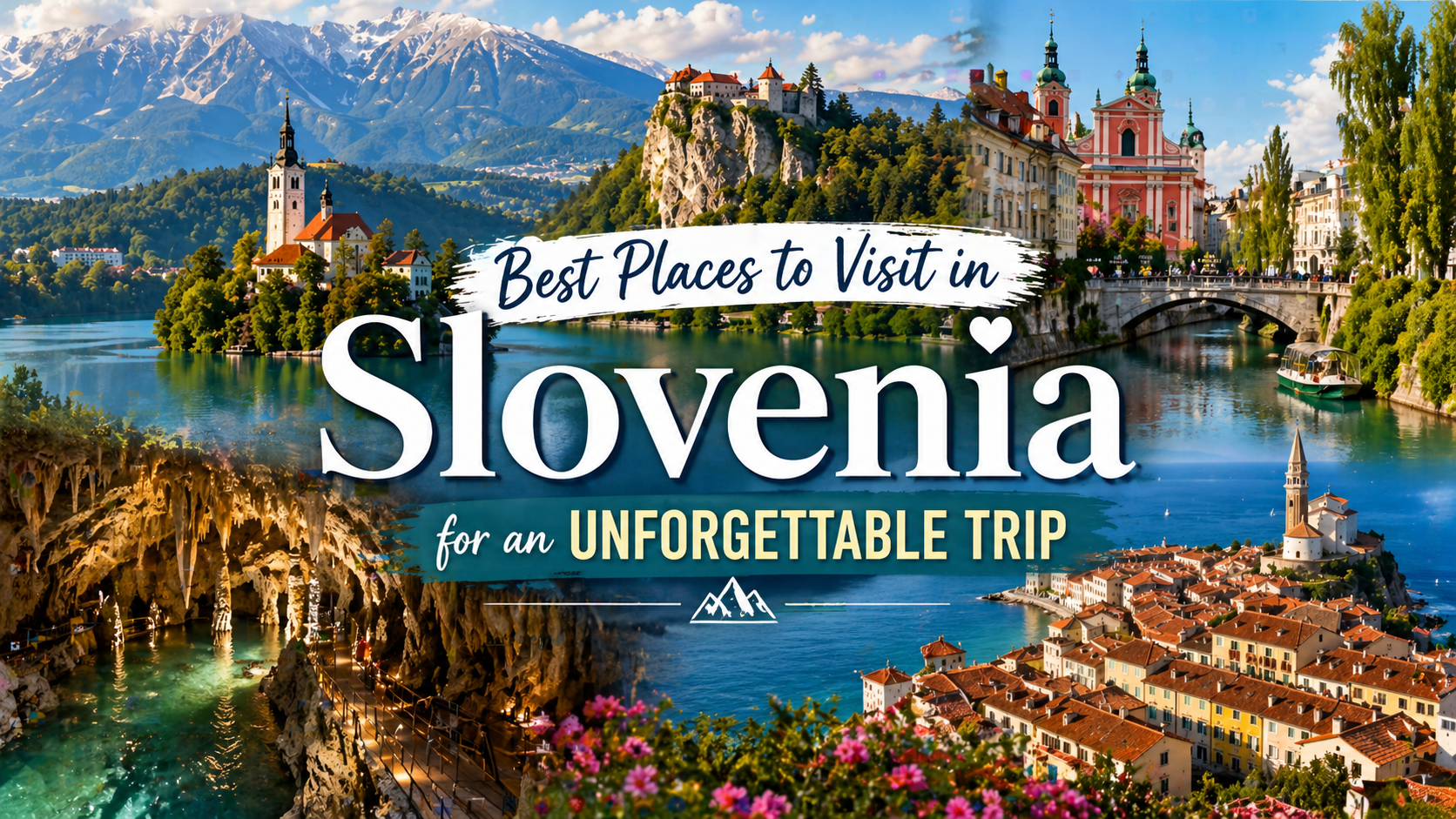
Slovenia is one of those countries that almost feels like a travel secret until you start looking at everything it manages to fit inside its borders. It is small enough to feel approachable, but it has the kind of variety that usually requires a much larger trip: alpine lakes, mountain passes, turquoise rivers, medieval towns, caves, castles, vineyards, forested valleys, and a tiny stretch of Adriatic coastline that feels completely different from the inland mountains.
That is what makes Slovenia such a satisfying destination. You can build a trip around fairytale scenery, outdoor adventure, slow food and wine, romantic lakeside views, or charming city wandering — and you do not have to choose only one version of the country. A Slovenia itinerary can feel alpine one day, Mediterranean the next, and deeply Central European by evening.
This is also a country where the distances are part of the magic. Ljubljana makes a lovely base, Lake Bled gives travelers the postcard moment, the Julian Alps bring drama, the Karst region adds caves and castles, and the coast gives you that sun-warmed Adriatic finish.
Here are the best places to visit in Slovenia for an unforgettable trip.
1. Ljubljana

Country / Slovenia region: Central Slovenia, in the heart of the country
What kind of place it is: A small, charming capital with a beautiful old town, riverside cafés, castle views, bridges, markets, and an easygoing European atmosphere.
Best for: First-time visitors, couples, solo travelers, food lovers, café wanderers, and travelers who want an easy base for day trips.
Why travelers should care
Ljubljana is one of the best introductions to Slovenia because it immediately tells you this country is not trying to overwhelm you. It is graceful, walkable, relaxed, and pretty without feeling like a museum city. The Ljubljanica River curves through the center, bridges connect the old town with lively pedestrian streets, and the castle sits above it all like a quiet reminder that this city has been here for a long time.
This is the kind of capital where you can wander without needing a rigid plan. You can start with coffee by the river, climb or ride up to Ljubljana Castle, browse the market, linger in old town squares, and still have energy left for dinner. For travelers who want atmosphere without the stress of a giant city, Ljubljana is a very easy place to love.
Main highlights
Ljubljana’s main appeal is its blend of human scale and character. The riverfront is the heart of the experience, with outdoor cafés, bridges, colorful buildings, and a gentle city rhythm that makes it easy to slow down. Ljubljana Castle gives you the big view, the old town gives you the charm, and the food scene gives you plenty of reasons not to rush away too quickly.
Historical points of interest
Ljubljana has Roman roots, medieval layers, Habsburg-era influence, and a strong modern Slovenian identity. The castle, old town streets, bridges, and central market all help tell the story of a city shaped by trade, empire, architecture, and everyday civic life.
Don’t miss
- Ljubljana Castle — Go for the city views, the history, and the best sense of how compact and green Ljubljana really is.
- The Ljubljanica River — This is the soul of the old town, especially for slow walks, café stops, and evening atmosphere.
- Triple Bridge — A classic Ljubljana landmark and one of the easiest places to feel the city’s personality.
- Central Market — Great for food, local energy, and seeing the city function beyond the postcard views.
- Dragon Bridge — A fun, symbolic stop, especially if you like cities with a bit of legend and personality.
Why I recommend it
Ljubljana is the easiest place to start a Slovenia trip because it gives you beauty, history, food, and logistics all in one place. It also works beautifully as a base if you want to day trip to Lake Bled, caves, castles, or nearby towns without packing and unpacking every night.
Side notes / good to know
- Ljubljana is very walkable, especially in the old town.
- It is a good first stop if you want to settle in before renting a car or heading into the mountains.
- It feels more relaxed than many European capitals, so do not over-schedule it.
- Ljubljana is sometimes called one of the most romantic cities in the world.
2. Lake Bled

Country / Slovenia region: Upper Carniola, in northwestern Slovenia near the Julian Alps
What kind of place it is: Slovenia’s fairytale lake, with a tiny island church, a cliffside castle, mountain views, and one of the country’s most iconic landscapes.
Best for: Couples, photographers, first-time visitors, romantic trips, lake lovers, easy nature walks, and classic Slovenia scenery.
Why travelers should care
Lake Bled is the place most people picture when they imagine Slovenia, and honestly, it earns the attention. The lake has that storybook composition travelers dream about: blue-green water, a little island with a church, a castle perched high on a cliff, and mountains rising in the distance. It is beautiful in a way that feels almost too perfectly arranged.
But Lake Bled is not only a photo stop. It is also a lovely place to slow down. You can walk around the lake, take a traditional boat to the island, visit the castle, eat Bled cream cake, and let the scenery do most of the work. It is popular, yes, but it is popular for a reason.
Main highlights
The main highlight is the lake itself, especially the way the island, castle, water, and mountains all layer together. The full lakeside walk gives you changing views from every angle, while the castle gives you the elevated perspective. If you want the classic Slovenia moment, this is it.
Historical points of interest
Bled Castle is one of the oldest and most recognizable castle sites in Slovenia, and the island church has long been part of the lake’s cultural and spiritual identity. The combination of natural beauty and historic setting is what gives Bled its lasting pull.
Don’t miss
- Bled Island — Take a boat out if you want the full classic experience.
- Bled Castle — The view from above is one of the best ways to appreciate the lake’s setting.
- The lakeside walking path — This is the simplest and most rewarding way to enjoy Bled.
- Ojstrica viewpoint — A short but steep hike gives one of the most famous views over the lake.
- Bled cream cake — Tourist-famous, yes, but still part of the experience.
Why I recommend it
Lake Bled is not the hidden version of Slovenia, but it is the iconic one. For a first Slovenia trip, I would not skip it. Just build in enough time to enjoy it beyond the quick photo stop, especially early in the morning or later in the day when the lake feels calmer.
Side notes / good to know
- Bled can get crowded, especially in high season.
- Staying overnight gives you a much better chance to enjoy quieter moments.
- The lake walk is easy, but viewpoint hikes can be steep and slippery in places.
3. Lake Bohinj and Triglav National Park

Country / Slovenia region: Julian Alps, northwestern Slovenia
What kind of place it is: A wilder, more natural alpine lake area inside Slovenia’s mountain heartland.
Best for: Nature lovers, hikers, families who like outdoor time, photographers, mountain travelers, and anyone who wants a less polished alternative to Lake Bled.
Why travelers should care
If Lake Bled is the fairytale postcard, Lake Bohinj is the deeper breath. It feels more natural, more spacious, and more rugged around the edges. The lake sits inside Triglav National Park, surrounded by mountains, forests, trails, and that peaceful alpine feeling that makes you want to stay outside all day.
Bohinj is especially good for travelers who want Slovenia’s lake beauty without feeling like every moment is built around one perfect photo. You can swim in season, walk along the water, ride up to mountain views, visit waterfalls, or simply sit by the lake and let the setting take over.
Main highlights
The biggest highlight is the combination of Lake Bohinj and the surrounding national park landscape. This is where Slovenia becomes more outdoorsy and less polished. The lake, mountains, waterfalls, cable car views, forest paths, and nearby villages all work together to create a slower, more grounded alpine experience.
Historical points of interest
Triglav National Park is central to Slovenia’s natural identity, and Mount Triglav itself has deep national significance. The Bohinj area also reflects traditional alpine life, with mountain villages, pastoral landscapes, and a strong connection between people and the high country.
Don’t miss
- Lake Bohinj — Bigger and more natural-feeling than Bled, with a quieter alpine mood.
- Vogel cable car — A great way to get big mountain views without a major hike.
- Savica Waterfall — One of the area’s classic nature stops.
- Ribčev Laz — A lovely lakefront village area with iconic views.
- Triglav National Park trails — Even a short walk can give you a strong sense of the landscape.
Why I recommend it
Bohinj is one of the best places in Slovenia for travelers who want scenery that feels less staged and more immersive. It is also a smart pairing with Bled because the two lakes show different sides of Slovenia’s alpine region.
Side notes / good to know
- Bohinj is better if you want nature time, not just a quick scenic stop.
- Weather can shift quickly in the mountains, so layers matter.
- Public transportation exists, but a car makes exploring the wider area much easier.
4. Soča Valley

Country / Slovenia region: Julian Alps / western Slovenia
What kind of place it is: A dramatic river valley known for turquoise water, mountain scenery, outdoor adventure, and World War I history.
Best for: Adventure travelers, road trippers, hikers, rafting lovers, photographers, history-minded travelers, and anyone chasing Slovenia’s wildest water color.
Why travelers should care
The Soča Valley is where Slovenia starts to feel cinematic. The river is famous for its unreal turquoise color, and the surrounding mountain scenery makes the whole valley feel sharp, fresh, and alive. This is not the gentle lake version of Slovenia — this is the version with rushing water, deep gorges, suspension bridges, mountain roads, and adventure energy.
It is also a place with emotional weight. The landscape is gorgeous, but it has history too, especially from World War I along the Isonzo Front. That mix of beauty and memory gives the valley more depth than a simple outdoor playground.
Main highlights
The Soča River is the star, but the whole valley is the experience. Travelers come for rafting, kayaking, hiking, scenic drives, waterfalls, gorges, and mountain viewpoints. Towns like Bovec, Kobarid, and Tolmin make good anchors depending on how active or slow you want the trip to be.
Historical points of interest
The Soča Valley was part of the Isonzo Front during World War I, and the area around Kobarid is especially connected to that history. The valley’s military past gives an added layer of meaning to a landscape that otherwise looks almost impossibly peaceful.
Don’t miss
- The Soča River — The color alone is worth the trip.
- Bovec — A strong base for rafting, adventure activities, and mountain scenery.
- Kobarid — Good for history, food, and access to nearby natural sights.
- Tolmin Gorges — A beautiful gorge area with water, rock, and forest scenery.
- Kozjak Waterfall — A memorable waterfall stop near Kobarid.
Why I recommend it
Soča Valley is one of Slovenia’s strongest “wow” regions because it feels so different from Ljubljana and Lake Bled. It brings adventure, color, history, and mountain drama into the itinerary, and it is especially rewarding if you like road trips.
Side notes / good to know
- This area is best with a car unless you are joining a tour.
- Adventure activities are seasonal and weather-dependent.
- The roads can be winding, so plan extra time and do not overload the day.
5. Piran

Country / Slovenia region: Slovenian Istria, Adriatic Coast
What kind of place it is: A compact seaside town with Venetian-style charm, narrow lanes, sunset views, seafood, and a completely different feel from the alpine north.
Best for: Couples, slow travelers, coast lovers, photographers, seafood lovers, and anyone who wants a Mediterranean contrast to the mountains.
Why travelers should care
Piran is Slovenia’s Adriatic surprise. After lakes, mountains, and caves, suddenly you are standing by the sea in a town that feels sun-warmed, salty, and Venetian around the edges. The old town is compact, atmospheric, and made for wandering, with narrow lanes that climb and twist between stone buildings before opening toward sea views.
This is not a long, beach-resort coastline kind of stop. It is more about atmosphere: harbor views, old stone, seafood, sunsets, and the feeling that Slovenia has somehow tucked a small Mediterranean escape into the same trip as alpine lakes and mountain valleys.
Main highlights
Piran’s main highlight is its old town setting on the Adriatic. Tartini Square gives you the elegant center, the waterfront gives you the sea, and the walk up toward the church and city walls gives you the views. It is a small place, but it leaves a strong impression.
Historical points of interest
Piran’s architecture and town layout reflect its long connection to the Adriatic world, especially Venetian influence. The town’s squares, churches, walls, and narrow lanes give it a different historical flavor from inland Slovenia.
Don’t miss
- Tartini Square — The heart of town and a beautiful place to start.
- St. George’s Parish Church — Go for the views over the red rooftops and sea.
- The old town lanes — Piran is best explored slowly and without over-planning.
- The waterfront — Perfect for sunset walks and seaside meals.
- The city walls viewpoint — One of the best ways to appreciate Piran’s shape and setting.
Why I recommend it
Piran gives a Slovenia itinerary a completely different texture. It keeps the trip from feeling only alpine and adds that Adriatic warmth that makes the country feel even more varied than expected.
Side notes / good to know
- Piran’s old town is compact, but parking can be tricky.
- It works well as a day trip, but staying overnight gives you a calmer evening experience.
- Do not expect wide sandy beaches; come for atmosphere, sea views, and old town charm.
6. Postojna Cave and Predjama Castle

Country / Slovenia region: Karst region, southwestern Slovenia
What kind of place it is: A dramatic cave-and-castle pairing that combines underground scenery with one of Slovenia’s most unusual castle settings.
Best for: Families, first-time visitors, rainy-day planning, castle lovers, geology fans, road trippers, and travelers who like easy big-impact sightseeing.
Why travelers should care
Postojna Cave and Predjama Castle make one of Slovenia’s easiest and most satisfying sightseeing combinations. The cave brings the underground drama — huge chambers, formations, and a completely different world below the surface — while Predjama Castle gives you the visual punch of a fortress built into a cliff.
This is the kind of stop that works for many different travelers. It is not only for hardcore cave people or castle people. It is accessible, memorable, and easy to understand at a glance: Slovenia does caves and castles extremely well, and this pairing proves it.
Main highlights
The main highlight is the contrast between the underground world of Postojna Cave and the cliff-built drama of Predjama Castle. Together, they create one of the most distinctive day-trip combinations in Slovenia, especially from Ljubljana.
Historical points of interest
Predjama Castle is famous for its cave-mouth setting and its association with medieval legends and defensive ingenuity. The Karst region itself is also deeply tied to cave landscapes, limestone formations, and underground systems that shape this part of Slovenia.
Don’t miss
- Postojna Cave — The underground scale is the reason to go.
- Predjama Castle — One of Slovenia’s most visually memorable castles.
- The cliffside castle view — Take time to see it from the outside, not just rush through.
- Karst landscape details — The surrounding region helps explain why caves are such a major part of Slovenia.
- Combined timing — Seeing both in one day makes the logistics much easier.
Why I recommend it
This is one of the best Slovenia stops for travelers who want something dramatic without needing a difficult hike or complicated planning. It is especially useful if you want a strong day trip from Ljubljana that feels totally different from the capital.
Side notes / good to know
- Caves are cool inside, even when it is warm outside. Bring a layer.
- This is a popular day-trip route, so book ahead in busy seasons when possible.
- It pairs well with Piran if you are moving from Ljubljana toward the coast.
7. Škocjan Caves

Country / Slovenia region: Karst region, southwestern Slovenia
What kind of place it is: A more dramatic, wild-feeling cave experience with huge underground spaces, river-carved scenery, and serious natural grandeur.
Best for: Nature lovers, geology fans, adventurous travelers, photographers, and travelers who want a cave experience that feels less theme-park and more awe-struck.
Why travelers should care
Škocjan Caves feel different from Postojna. They are not just about pretty formations underground. They feel bigger, moodier, and more elemental, with vast chambers and the sense that water and stone have been shaping the landscape for ages. If Postojna is the easier crowd-pleaser, Škocjan is the one that can feel more powerful.
This is the kind of place that reminds you Slovenia’s beauty is not only above ground. The Karst region is a major part of the country’s identity, and Škocjan shows that in a way that feels raw and memorable.
Main highlights
The main highlight is the scale of the underground canyon environment. The cave system feels grand and atmospheric, especially where the river has carved through the rock. It is one of the best places in Slovenia to experience the country’s Karst landscape in a more dramatic way.
Historical points of interest
The Karst region has shaped not only Slovenia’s geography but also the language travelers use for limestone landscapes around the world. Škocjan’s cave system is part of that larger story of water, stone, and settlement in southwestern Slovenia.
Don’t miss
- The underground canyon — This is the signature experience.
- The walking route through the caves — Give yourself time to absorb the scale.
- Karst surface scenery — The area above ground matters too.
- The river-carved formations — They help make Škocjan feel more dramatic than decorative.
- A slower pace afterward — This is not a place to rush mentally.
Why I recommend it
Škocjan Caves are ideal if you want Slovenia’s cave landscape to feel grand, serious, and unforgettable. If your itinerary has room for only one cave experience, this is the one I would consider for travelers who care most about natural drama.
Side notes / good to know
- Wear shoes with good grip.
- Bring a layer, even in summer.
- Some routes and access details can vary by season, so check practical timing before you go.
8. Maribor and Slovenia Wine Country

Country / Slovenia region: Northeastern Slovenia / Styria
What kind of place it is: A slower, wine-focused region with vineyard hills, a historic city, river scenery, and a more relaxed eastern Slovenia feel.
Best for: Wine lovers, slow travelers, repeat visitors, couples, food-focused travelers, and anyone who wants to see a less obvious side of Slovenia.
Why travelers should care
Maribor and the surrounding wine country are perfect for travelers who want Slovenia beyond the first-trip postcard stops. This part of the country feels softer and more spacious than the alpine northwest, with vineyard hills, old town corners, river views, and a slower rhythm.
It is also a good reminder that Slovenia is not only about lakes and mountains. The east brings wine, thermal traditions, historic towns, and a different cultural mood. If you like building a trip around food, wine, scenery, and a less rushed pace, this region deserves a look.
Main highlights
Maribor itself gives you a city base, while the surrounding wine roads and vineyard landscapes give the region its strongest appeal. This is a place to slow down, eat well, taste local wine, and let the itinerary breathe.
Historical points of interest
Maribor has long been an important city in northeastern Slovenia, with river trade, old town architecture, and deep wine traditions. The region’s vineyards and wine culture are a major part of its identity.
Don’t miss
- Maribor Old Town — A pleasant historic center with a different feel from Ljubljana.
- The Drava River area — Good for walks and a sense of the city’s layout.
- Wine roads near Maribor — The surrounding vineyard scenery is the real draw.
- Lent district — One of the atmospheric older parts of the city.
- Local wine tasting — This is the region where you should make time for it.
Why I recommend it
Maribor is not always the first place travelers choose in Slovenia, but that is part of why it works. It adds depth to the country and gives the trip a slower food-and-wine dimension, especially if you have already covered Ljubljana, Bled, and the coast.
Side notes / good to know
- This is better for a slower itinerary than a rushed first-time checklist.
- A car helps if you want to explore wine country properly.
- It pairs well with eastern Slovenia spa or countryside stops if you want to expand the trip.
9. Logar Valley

Country / Slovenia region: Kamnik-Savinja Alps, northern Slovenia
What kind of place it is: A peaceful alpine valley with mountain views, pastoral scenery, waterfalls, and a quieter nature-focused atmosphere.
Best for: Nature lovers, photographers, couples, hikers, slow travelers, and anyone who wants alpine beauty without the Lake Bled crowds.
Why travelers should care
Logar Valley is one of Slovenia’s most beautiful quiet escapes. It has the mountain scenery travelers want, but it feels less globally famous than Bled or Bohinj. The valley is wide, green, and framed by peaks, with a peaceful atmosphere that makes it feel like the kind of place you go when you want to hear the landscape instead of the crowd.
This is a very good choice for travelers who want Slovenia’s alpine beauty but prefer slower roads, valley views, farms, waterfalls, and a more tucked-away feeling. It is romantic in a soft, outdoorsy way rather than a polished resort way.
Main highlights
The valley itself is the main highlight. The scenery builds naturally: mountain walls, meadows, forests, traditional rural views, and waterfall walks. It is less about checking off attractions and more about spending time inside a beautiful alpine setting.
Historical points of interest
The area reflects Slovenia’s alpine rural heritage, with a long relationship between mountain landscapes, farming, forest life, and seasonal movement through the high country. It is a good place to feel the quieter, pastoral side of Slovenia.
Don’t miss
- The valley drive — The approach and scenery are part of the experience.
- Rinka Waterfall — A classic nature stop in the area.
- Mountain views — Give yourself time to stop and look around.
- Walking paths — Even gentle walks can be rewarding here.
- Nearby alpine farms and viewpoints — This is where the region’s slower character comes through.
Why I recommend it
Logar Valley is for travelers who want beauty without needing every stop to be famous. It adds a peaceful alpine layer to a Slovenia itinerary and works especially well for people who love scenic drives, nature, and quiet places.
Side notes / good to know
- A car is the easiest way to visit.
- This is a weather-sensitive mountain area, so flexibility helps.
- It is better as a slow scenic stop than a rushed detour.
10. Kranjska Gora and Vršič Pass

Country / Slovenia region: Julian Alps, northwestern Slovenia near the Austrian and Italian borders
What kind of place it is: A mountain resort area with alpine lakes, ski-town energy, scenic roads, and access to one of Slovenia’s most dramatic mountain passes.
Best for: Road trippers, hikers, skiers, mountain lovers, active families, photographers, and travelers who want a classic alpine base.
Why travelers should care
Kranjska Gora gives travelers that borderland alpine feeling, where Slovenia starts to feel connected to the wider mountain world of Austria and Italy. It is a strong base for outdoor travelers, with lakes, trails, winter sports, and scenic drives all nearby.
The Vršič Pass is one of the biggest reasons to come. The road is winding, dramatic, and memorable, with mountain views that make the journey feel like an experience in itself. If you like the idea of Slovenia as a road trip country, this area belongs on the list.
Main highlights
The area’s biggest highlights are its mountain setting, Lake Jasna, seasonal outdoor activities, and the drive over Vršič Pass. It is a place where scenery and movement go together — you are not just arriving somewhere, you are experiencing the road, the views, and the elevation changes along the way.
Historical points of interest
The Vršič Pass area has history tied to mountain travel, military movement, and the difficult realities of building roads through alpine terrain. The Russian Chapel near the pass is one of the most meaningful reminders of that past.
Don’t miss
- Lake Jasna — A beautiful and easy scenic stop near Kranjska Gora.
- Vršič Pass — One of Slovenia’s most memorable mountain drives.
- Russian Chapel — A quiet historical stop along the pass road.
- Zelenci Nature Reserve — A lovely nature stop with clear water and mountain views.
- Kranjska Gora village area — Good for a mountain-town base, especially if you want outdoor access.
Why I recommend it
Kranjska Gora and Vršič Pass are ideal for travelers who want Slovenia to feel alpine, active, and scenic. This area also works beautifully if you are connecting the Julian Alps with the Soča Valley.
Side notes / good to know
- The Vršič Pass road is winding and seasonal conditions matter.
- Driving requires patience, especially in busy periods.
- Bring layers even in warmer months because mountain weather can change quickly.
11. Ptuj

Country / Slovenia region: Northeastern Slovenia, near the Drava River
What kind of place it is: One of Slovenia’s oldest and most atmospheric towns, with a castle, historic streets, river views, and a quieter eastern Slovenia feel.
Best for: History lovers, slow travelers, road trippers, wine-region itineraries, and travelers who enjoy smaller towns with character.
Why travelers should care
Ptuj is a good reminder that Slovenia’s charm is not limited to its most famous places. It has an old-world feel, a hilltop castle, red-roof views, and a more local rhythm than the country’s big-name stops. It is the kind of place that rewards travelers who like historic towns where the atmosphere matters as much as the attraction list.
This is also a smart addition if you are already exploring Maribor or eastern Slovenia. Ptuj gives you history, scenery, and a very different pace from the alpine west.
Main highlights
The main highlight is the town’s historic setting, especially Ptuj Castle above the old town and the views over the rooftops and river. The streets are pleasant to wander, and the overall experience feels slower and less crowded than Slovenia’s most famous destinations.
Historical points of interest
Ptuj has deep historical roots and is often associated with some of Slovenia’s oldest urban history. Its castle, old town, and regional traditions make it one of the stronger cultural stops in eastern Slovenia.
Don’t miss
- Ptuj Castle — The best place to start for views and historical context.
- The old town streets — Wander slowly rather than treating Ptuj like a checklist.
- Drava River views — The river setting adds a lot to the town’s atmosphere.
- Historic squares and churches — Good for travelers who like layered small-town Europe.
- Regional traditions — Ptuj has a distinctive cultural identity, especially around seasonal festivals.
Why I recommend it
Ptuj is not the place I would choose instead of Ljubljana or Bled for a first Slovenia trip, but it is a beautiful add-on if you want the country to feel deeper and more lived-in. It is especially useful for travelers who enjoy historic towns without the pressure of major crowds.
Side notes / good to know
- Ptuj works best as part of an eastern Slovenia route.
- It pairs naturally with Maribor and wine country.
- It is a slower stop, not a high-adrenaline sightseeing day.
What to Pack for Slovenia Specifically
Slovenia is small, but the packing can be surprisingly varied because one trip might include city walking, lake paths, caves, mountain roads, rain, sun, and coastal evenings. You do not need to overpack, but you do want flexible pieces that work across several types of terrain.
- Compact rain jacket — Slovenia’s green scenery exists for a reason, and weather can shift quickly, especially near the mountains.
- Light cardigan or fleece — Useful for alpine mornings, caves, lake evenings, and cooler restaurant terraces.
- Small daypack — Ideal for lake days, cave stops, waterfalls, and mountain drives.
- Reusable water bottle — Helpful for city wandering, hiking days, and long sightseeing routes.
- Compact umbrella — Especially useful in Ljubljana and other town stops where you still want to wander in light rain.
- Sunglasses — Lakes, mountains, river valleys, and the coast can all get bright.
- Power bank — You will use your phone constantly for maps, photos, tickets, and road trip planning.
- Light scarf or wrap — Easy warmth layer for churches, evenings, planes, mountain weather, and breezy coastal walks.
Final Thoughts: Why Slovenia Is Worth Visiting

Slovenia is the kind of country that proves a trip does not have to be huge to feel full. It gives you alpine lakes, mountain valleys, caves, castles, vineyards, old towns, and a slice of the Adriatic without requiring weeks of complicated planning.
For first-time visitors, Ljubljana, Lake Bled, Lake Bohinj, the Soča Valley, Piran, and one major cave or castle stop create a beautiful introduction. For travelers with more time, Maribor, Ptuj, Logar Valley, Kranjska Gora, and the deeper mountain regions help Slovenia feel less like a highlight reel and more like a real country with layers.
The best Slovenia trips balance the famous views with slower moments. See Lake Bled, yes — but also give yourself time for Bohinj. Walk Ljubljana’s riverfront, but do not rush straight out of the capital. Visit a cave, drive into the mountains, eat by the sea, and let the country surprise you with how much variety it holds.
Slovenia may look small on the map, but it does not feel small when you are actually there.