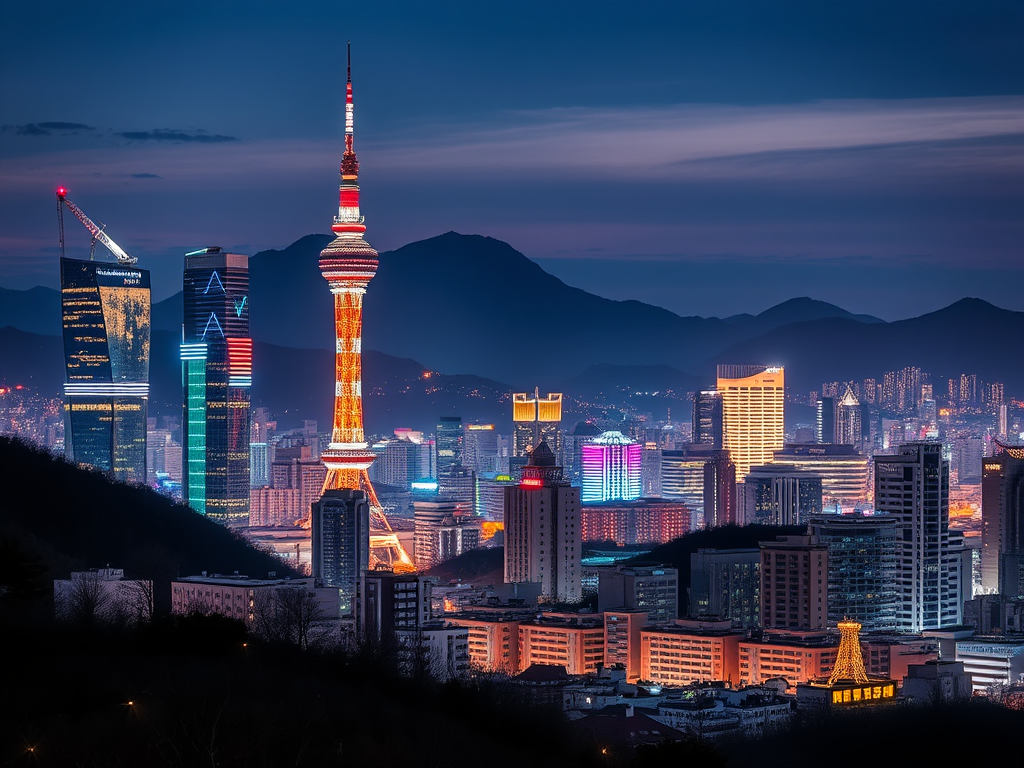
South Korea is one of those countries that gives you a lot of variety without forcing you into some giant, exhausting, cross-country travel marathon. You can do major city energy, beaches, mountains, historic sites, traditional villages, island scenery, and beautiful food-focused stops all in one country without the whole trip feeling logistically ridiculous. South Korea’s transportation network is one of the reasons this works so well, with high-speed rail linking key cities and other destinations tied together by rail, bus, domestic flights, and ferries.
What makes South Korea especially appealing is that it does not only do one thing well. Seoul gives you that giant-capital intensity and nonstop stimulation. Busan gives you the coast and a breezier city feel. Jeju gives you a completely different island mood. Gyeongju and Andong pull you into older, more historical and traditional layers of the country. Jeonju brings the food-and-hanok charm. Sokcho gives you sea-and-mountain contrast. It is a small enough country to combine destinations intelligently, but varied enough that the trip can still feel rich and multidimensional.
Seoul

Country / Korea region: South Korea / northwest, Seoul Capital Area
What kind of place it is: the capital city and the country’s biggest first-time essential
Best for: palace history, shopping, iconic city sights, trendy neighborhoods, museums, cafés, and classic first-trip Korea energy
Why travelers should care
Seoul is the place that gives many travelers their first real hit of South Korea. It has the major-palace layer, the skyline layer, the shopping layer, the food layer, the luxury layer, the hyper-modern layer, and the deep-history layer all at once. It is one of those capitals where old and new sit right on top of each other in a way that actually feels dramatic rather than theoretical. You can be looking at a Joseon-era palace in one part of the day and be in a polished shopping district or neon-heavy neighborhood not long after. Seoul is also one of the best places to feel how fast, stylish, and visually distinct South Korea can be.
Main highlights
Seoul gives you royal history, major museums, statement architecture, shopping districts, beauty and fashion neighborhoods, mountain-backed city views, and a huge range of food experiences. It can feel ceremonial and historic one moment and then sleek, youthful, and trend-driven the next.
Historical points of interest
The palace layer matters here. Gyeongbokgung is the obvious giant, but the historical texture of Seoul goes beyond one headline site. This is where royal history, Confucian structures, old city identity, modern national identity, and global-city ambition all overlap. If part of the appeal for you is seeing where Korean history still visibly anchors the present, Seoul absolutely delivers.
Don’t miss
- Gyeongbokgung if you want one of the city’s strongest palace-and-history experiences
- Bukchon Hanok Village for that traditional-roofline layer many travelers want to see in person
- Insadong for a more traditional, culture-shopping, slower-wandering side of Seoul
- Myeongdong if beauty shopping and big commercial energy are part of the fun for you
- N Seoul Tower or another high viewpoint if you want to really take in how massive the city is
- The Han River area if you want to feel Seoul’s modern open-air city rhythm
- A major museum stop if you want more depth beyond the visual icons
Why I recommend it
Because Seoul is one of those cities that earns its place on people’s first-trip wish lists. It is famous for a reason, but it is not one-note. You can shape a Seoul visit around history, food, design, shopping, beauty, or just soaking in the pace and atmosphere of the city.
Side notes / good to know
- Seoul is a big, intense city. Give yourself some flexibility rather than trying to sprint through every district.
- If you love K-dramas, this is one of the easiest places in the country to stumble into streetscapes, river views, cafés, and neighborhoods that feel instantly familiar.
- This is one of the easiest places to build a South Korea trip around, then layer other stops onto it.
Busan

Country / Korea region: South Korea / southeast coast
What kind of place it is: the country’s biggest coastal city and the best big-city alternative to Seoul
Best for: beaches, seafood, harbor views, colorful neighborhoods, city-meets-ocean energy, and a more relaxed urban Korea experience
Why travelers should care
Busan gives you a very different version of South Korea from Seoul. It still feels urban and lively, but it breathes more. The sea changes everything. The city feels more open, more coastal, and in many areas more visually relaxed, even though it is still a major city. If you like the idea of combining city comforts with waterfront scenery, beaches, markets, and seafood, Busan is one of the strongest destinations in the country. It is also one of the easiest ways to make a Korea trip feel more varied without going fully off-grid.
Main highlights
Busan gives you beaches, urban coastline, seafood markets, harbor views, colorful hillside neighborhoods, and a city atmosphere that feels less boxed in than Seoul. It can be energetic without feeling quite so relentless.
Historical points of interest
Busan’s draw is more about atmosphere, setting, and urban-coastal identity than giant royal or ancient-history landmarks, but it still has places where older Korea, wartime history, and local culture come through. The city’s port role and geography are part of what shaped its identity.
Don’t miss
- Haeundae if you want one of Busan’s best-known beach-and-city combinations
- Gamcheon Culture Village for color, hillsides, and one of the city’s most visually distinctive areas
- Jagalchi Market if seafood culture is part of the appeal for you
- Gwangalli Beach for skyline views and a more photogenic urban waterfront feel
- Haedong Yonggungsa if you want one of the country’s most striking coastal temple settings
- A harbor or seaside walk if you want to feel Busan properly instead of only checking off attractions
Why I recommend it
Because Busan makes a South Korea itinerary feel bigger and more textured. It gives you a coast-and-city contrast that keeps the trip from becoming too Seoul-dominant, and it is one of the best places in the country for travelers who want movement, scenery, and food without giving up city comfort.
Side notes / good to know
- Busan is best treated as a real stop, not just a rushed side errand.
- It pairs beautifully with Gyeongju if you want to combine coast and history in the same broader part of the country.
- If Seoul feels too intense, Busan may end up being your favorite city in Korea.
Jeju Island

Country / Korea region: South Korea / far south, island province
What kind of place it is: Korea’s signature island escape and one of its most famous scenic destinations
Best for: coastlines, volcanic landscapes, scenic drives, romantic trips, nature, and a slower side of South Korea
Why travelers should care
Jeju is where South Korea shifts gears. This is the place for travelers who want scenery, breathing room, open landscapes, and a trip that leans more toward coastlines and natural beauty than giant-city intensity. Jeju is famous for good reason. It is not just a beach destination and not just an island add-on. It has a more distinct identity than that. Volcanic terrain, lava tubes, dramatic coastal scenery, and Hallasan all help give Jeju a visual character that feels different from the mainland. UNESCO recognizes Jeju Volcanic Island and Lava Tubes for exactly that natural significance.
Main highlights
Jeju gives you volcanic landscapes, cliffs, scenic drives, waterfalls, beaches, lava tubes, and a calmer, more spacious mood than the big mainland cities. It is one of the best places in South Korea to slow down a little and let the landscape do more of the work.
Historical points of interest
Jeju’s historical pull is less about royal-city grandeur and more about landscape, geology, island identity, and traditional local culture. Its significance is tied strongly to its natural formation and distinctive regional character.
Don’t miss
- Hallasan if dramatic natural scenery is part of why you want to go
- Seongsan Ilchulbong if you want one of Jeju’s most iconic coastal-landscape sights
- A lava tube stop if you want to experience the island’s volcanic identity more directly
- A coastal drive or slower scenic day rather than only point-to-point rushing
- One or two classic coastline viewpoints so the island actually has time to work on you
Why I recommend it
Because Jeju keeps a South Korea trip from feeling too city-weighted. It adds beauty, air, and a more romantic or reflective mood. If your version of a great trip includes scenic drives, ocean views, and space to decompress, Jeju is one of the easiest yeses in the country.
Side notes / good to know
- This is not a day-trip kind of place. Treat it as its own proper island leg.
- Jeju makes a lot of sense for couples, scenery lovers, and travelers who do not want every day to feel urban.
- If you love K-dramas, Jeju has the kind of moody, beautiful scenery that feels naturally cinematic.
Gyeongju

Country / Korea region: South Korea / southeast inland, North Gyeongsang
What kind of place it is: Korea’s great historic city and one of the best places to feel the country’s ancient past
Best for: tombs, temples, historic atmosphere, cultural depth, and travelers who want more than just modern city Korea
Why travelers should care
Gyeongju is one of the places that helps a South Korea trip feel deeper. If Seoul gives you the capital and Busan gives you the coast, Gyeongju gives you historical weight. This is one of the country’s most important heritage destinations and one of the strongest places to feel the older civilizational layer of Korea. UNESCO recognizes the Gyeongju Historic Areas, and that alone tells you this is not a filler stop.
Main highlights
Gyeongju gives you temple-and-tomb Korea, old-capital atmosphere, historic sites scattered through the landscape, traditional roofs, and a calmer, more reflective rhythm than the giant cities. It is one of the best places in the country for travelers who want visible history instead of just reading about it later.
Historical points of interest
This is where Gyeongju shines. The city is deeply associated with the Silla Kingdom, and its historical layer is not tucked away into one neat block. It is spread across tombs, temple sites, ponds, ruins, and major cultural landmarks. If you care about seeing a more ancient Korea in a way that feels physically present, Gyeongju matters.
Don’t miss
- Bulguksa if you want one of Korea’s major temple experiences
- Seokguram-linked heritage planning if sacred and historic sites are a priority for you
- Tumuli Park / royal tomb areas if you want to feel the old-capital atmosphere properly
- Donggung Palace and Wolji Pond for one of the city’s most atmospheric historic sights
- A slower evening stroll if you want Gyeongju to feel evocative rather than just educational
Why I recommend it
Because it brings a completely different emotional tone to a South Korea itinerary. Gyeongju is for travelers who want their trip to have cultural depth, not just visual stimulation. It is one of the places that helps the country feel layered rather than merely modern.
Side notes / good to know
- This is easy to pair with Busan geographically, but it deserves to feel like a real stop rather than a frantic checkbox.
- Gyeongju is one of the best picks in Korea if history is one of the main reasons you travel.
- If your trip needs one place with a more reflective, heritage-heavy mood, this is a very strong choice.
Jeonju

Country / Korea region: South Korea / southwest inland, Jeolla region
What kind of place it is: a culture-and-food city known for hanok atmosphere and traditional charm
Best for: Korean food, traditional architecture, slower wandering, and travelers who want a softer, more atmospheric city experience
Why travelers should care
Jeonju is one of those places that adds charm to a South Korea itinerary. It is not trying to compete with Seoul on scale or with Busan on coastline. Its appeal is different. Jeonju is about atmosphere, food, and a more traditional-looking urban experience. If part of what you want from South Korea is the pleasure of wandering, eating well, and enjoying a place that feels culturally rich without being overwhelming, Jeonju is a very good fit. It is also one of the names that keeps surfacing when people want a more food-and-culture-focused stop.
Main highlights
Jeonju gives you hanok-lined scenery, slower streets, strong food appeal, and a more intimate version of cultural travel than the country’s giant metropolitan stops. It has a softer, more tactile kind of charm.
Historical points of interest
The traditional architecture and preserved cultural feel are a big part of the draw here. Jeonju works well for travelers who like places where heritage is built into the atmosphere of the city rather than isolated into one fortress or palace zone.
Don’t miss
- Jeonju Hanok Village if you want the classic visual and atmospheric heart of the destination
- A food-focused wandering day rather than only chasing landmarks
- A slower café-and-street stretch so the city can feel enjoyable rather than over-optimized
- Traditional architecture zones that make the stop feel distinct from Seoul
Why I recommend it
Because not every great destination has to overwhelm you. Jeonju is a good reminder that some of the best travel days come from places with strong atmosphere, very good food, and a rhythm that lets you enjoy yourself without constantly sprinting.
Side notes / good to know
- This is one of the easier places to pair with Seoul in a broader itinerary.
- Jeonju makes a lot of sense for travelers who care more about food, mood, and character than giant marquee attractions.
- If your South Korea trip feels too city-heavy, this is one of the easiest ways to soften it.
Sokcho / Seoraksan

Country / Korea region: South Korea / northeast coast, Gangwon region
What kind of place it is: a coastal gateway to some of Korea’s best mountain scenery
Best for: nature, hiking, sea-and-mountain contrast, scenic views, and a less urban side of South Korea
Why travelers should care
Sokcho and the Seoraksan area are what you add when you want your South Korea trip to breathe. This is not the layer of the country people picture first if they only know Seoul and Busan, which is exactly why it is worth paying attention to. The mix of coast and mountains gives this part of Korea a very different personality. If you want scenery, trails, viewpoints, and a trip that does not feel locked into city mode the whole time, this region is a smart choice. The broader Gangwon area is also one of the regions specifically highlighted in Korea’s own destination materials.
Main highlights
Sokcho / Seoraksan gives you a strong sea-and-mountain contrast, outdoor beauty, fresh-air energy, and a Korea experience that feels more scenic and spacious than the country’s biggest urban stops.
Historical points of interest
The historical pull here is lighter than in Gyeongju or Andong. This is more about landscape, natural beauty, and the pleasure of seeing another side of Korea.
Don’t miss
- Seoraksan scenery if nature is the point of coming here in the first place
- A viewpoint or cable-car style perspective if available to you and aligned with your trip style
- Sokcho’s coastal side so you get both halves of the region’s appeal
- At least one slower scenic stretch where you are not just rushing between transport nodes
Why I recommend it
Because this is one of the easiest ways to make South Korea feel bigger than its famous cities. If your ideal trip needs nature, contrast, and visual breathing room, Sokcho / Seoraksan adds that beautifully.
Side notes / good to know
- This can be approached from Seoul, but it feels better as a real scenic stop than as a hyper-rushed out-and-back.
- This is one of the strongest picks in Korea for travelers who want mountain scenery without committing to a very remote trip.
- If cherry blossom timing or seasonal scenery matters to you, this broader region can be especially beautiful at the right time of year.
Andong

Country / Korea region: South Korea / southeast inland, North Gyeongsang
What kind of place it is: a traditional heritage city best known for old village Korea, Confucian history, and one of the country’s most important cultural landscapes
Best for: folk-village atmosphere, traditional architecture, Korean heritage, and travelers who want a more old-world side of South Korea
Why travelers should care
Andong is the place to consider when you want your South Korea trip to show a more traditional, rooted, heritage-heavy side of the country. It brings a different mood from Seoul, Busan, and even Gyeongju. There is something more village-centered and culturally specific about it. UNESCO recognizes Historic Villages of Korea: Hahoe and Yangdong, and Hahoe Village is one of the major reasons Andong matters so much to travelers who want to understand more than the glossy urban face of the country.
Main highlights
Andong gives you traditional village atmosphere, Confucian heritage, preserved architecture, a quieter cultural mood, and one of the strongest opportunities in South Korea to feel like you have stepped more directly into an older social and historical landscape.
Historical points of interest
This is where the destination really earns its place. Hahoe Village is the headline draw, but the deeper appeal is the way Andong connects architecture, culture, lineage, and historical identity in a way that feels unusually coherent. If that is your kind of travel, Andong is very much worth your attention.
Don’t miss
- Hahoe Village if you want the clearest reason Andong belongs on a South Korea itinerary
- Heritage-focused wandering rather than trying to reduce the stop to one photo op
- Traditional architecture and village texture that make the destination feel meaningfully different from the rest of your route
- Cultural sights that help the stop feel immersive rather than rushed
Why I recommend it
Because Andong makes a South Korea trip feel more complete. It gives South Korea an old-world, tradition-rooted, culturally specific layer that the bigger-name cities cannot replicate. If you want a trip that feels more textured and less obvious, Andong is a smart addition.
Side notes / good to know
- This makes more sense as part of a broader inland or southeast Korea route than as a speed-run mission.
- Andong is especially appealing if you are drawn to heritage travel and places that feel more culturally anchored than flashy.
- If your trip already includes Busan or Gyeongju, this is the kind of stop that can deepen the whole route.
A few South Korea-specific things worth packing

South Korea is modern, efficient, and generally easy to travel, but a few items can make your trip much smoother:
A portable charger is one of the most useful things you can throw in your bag. Between navigation, translation, transit apps, photos, restaurant searching, and long sightseeing days, your phone is going to do a lot of work.
Comfortable walking shoes matter more than people sometimes realize. Even in city-heavy itineraries, South Korea can involve a lot of walking, stairs, station transfers, hills, palace grounds, and neighborhood exploring.
A good anti-theft bag is smart in any busy destination. You do not need to be paranoid, but crowded city zones, transit hubs, and shopping districts are never where I want to be casual with valuables.
A phone grip is a small but genuinely useful thing to have if you use your phone constantly in public for maps, photos, restaurant lookups, or translation.
A compact umbrella or light rain layer is a very good idea. Weather can shift, and it is one of those simple things that makes a long sightseeing day much less annoying.
Layers are also worth thinking about. Spring and fall in particular can give you temperature swings over the course of a day, and even in warmer weather, air-conditioning or evening breezes can make a light extra layer nice to have.
A power adapter that fits South Korea is an obvious one, but still worth packing intentionally rather than assuming your hotel or airport shop will sort it out for you. South Korea uses Type C and Type F plugs with 220V electricity.
Final thoughts
South Korea is one of the easiest countries to build into a varied, satisfying trip without the route becoming a mess. You can do the giant-capital energy of Seoul, the coastal pull of Busan, the scenic reset of Jeju, the historical weight of Gyeongju, the food-and-atmosphere charm of Jeonju, the nature contrast of Sokcho / Seoraksan, and the deep traditional heritage of Andong all within one country that still feels manageable.
If you are planning a first trip, Seoul is the obvious anchor, but I would not stop there. One of the best things about South Korea is how much more interesting the trip becomes once you add a second or third layer to it. That could mean pairing Seoul with Busan, balancing city time with Jeju, adding Gyeongju for historical depth, or weaving in Jeonju, Sokcho, or Andong depending on what kind of atmosphere you want. South Korea may not be enormous, but it has more range than a lot of people expect, and that is exactly what makes it such a rewarding place to plan.