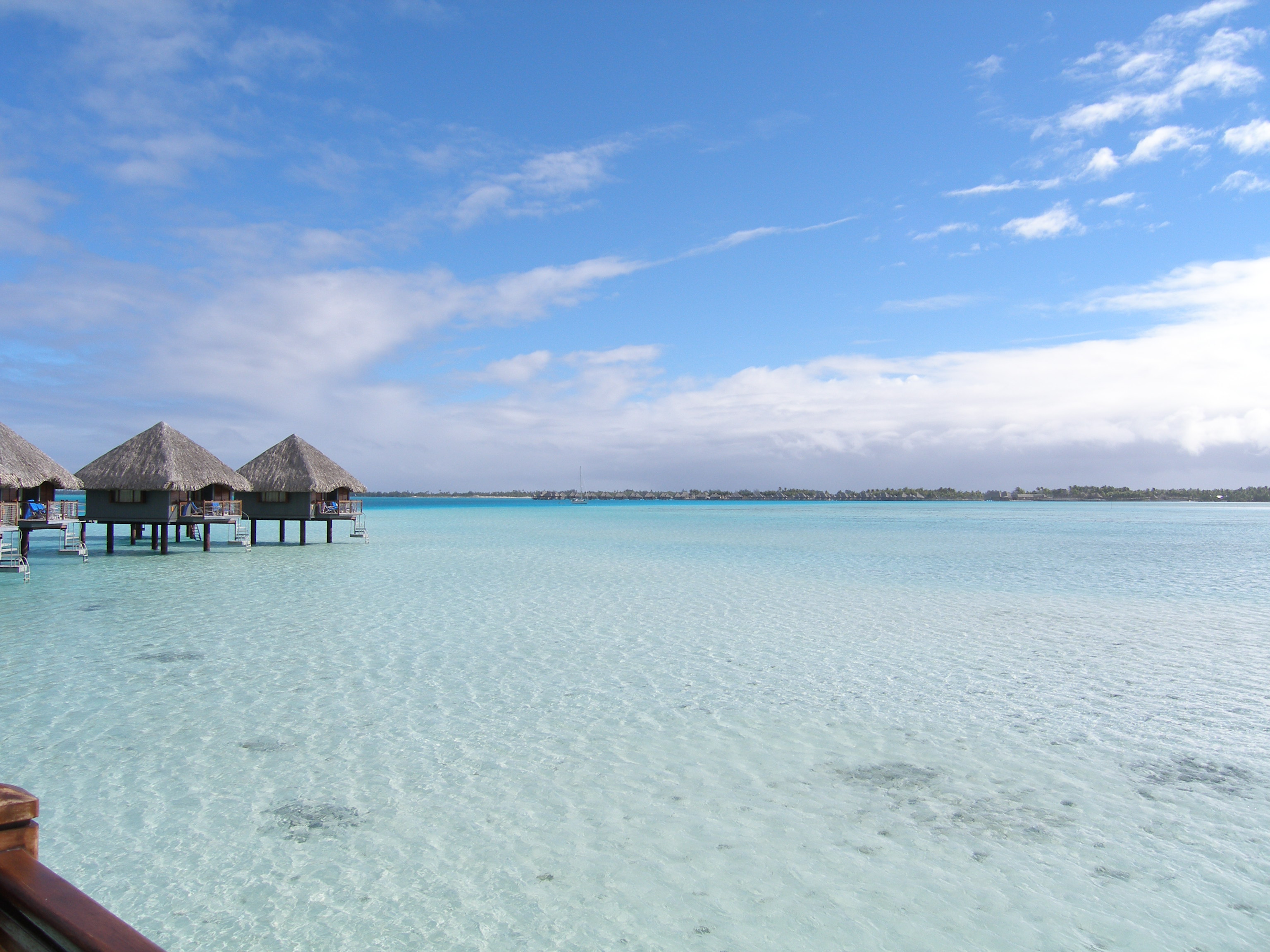
Most people think of Bora Bora first when they dream about Tahiti, and I understand why. Bora Bora is one of the most visually beautiful places I have ever seen in my life. The lagoon is incredible. Mount Otemanu is dramatic in a way that barely looks real. And the clouds that always seem to circle around it only add to its mystic, otherworldly feel.
But if you stop at Bora Bora, you are only seeing one version of Tahiti.
And yes, I am saying Tahiti on purpose.
Officially, the destination is French Polynesia, but most people say Tahiti the way people say “Hawaii” to mean the broader island area, not just one specific island. If you are flying in from outside French Polynesia, you arrive at Papeete (PPT) airport on Tahiti island. From there, the islands open up by domestic flight or by boat. Moorea is the easiest ferry connection by far, but other islands can also be reached by boat on less frequent schedules if you plan very carefully.
What many travelers do not realize is that Tahiti is not one single island experience. It is a whole collection of island personalities spread across different archipelagos, and they do not all feel the same.
For me, the island that truly stole my heart was not Bora Bora.
It was Manihi.
I spent a week there in an overwater bungalow. It is where I got my PADI certification. That is where I felt the remoteness of the South Pacific in a way I have never felt anywhere else. Looking out from Manihi, all I saw was water in every direction. No mountains. No neighboring island silhouette. No visual anchor at all. It felt like the end of the earth in the most beautiful possible way. I literally pinched myself daily, because it was so beautiful I felt like every day I was living inside a dream world.
So if you are planning a dream trip to Tahiti, I would not just ask which island is the most famous.
I would ask: what kind of Tahiti do you want?
Pick Your Tahiti Vibe
If you want a simple way to start narrowing it down, this is how I would think about it:
- Bucket-list beauty: Bora Bora
- Luxury with Bora Bora views but without Bora Bora crowds: Taha’a
- More nightlife and more going on after dark: Moorea
- Main island convenience, most resources, and best budget potential: Tahiti
- Quieter authenticity: Huahine
- Culture, history, and a more grounded island experience: Raiatea
- Fantasy-island remoteness, pearl history, and unforgettable diving: Manihi
- Big-name Tuamotu diving: Rangiroa and Fakarava
- Soft, dreamy atoll beauty: Tikehau
- Humpback whale magic in season: Rurutu
- Wild, rugged, mountain-heavy, culturally deep adventure: the Marquesas
- Far-flung mystery, pearl culture, and deep remoteness: the Gambier Islands
Tahiti is not just one fantasy. It is many different fantasies, and choosing the right one matters.

The 5 Archipelagos of Tahiti
When people casually say Tahiti, they are usually talking about the wider island world officially known as French Polynesia. It helps to understand that this is not one island chain with one mood. It is made up of five archipelagos, and they do not all feel alike.
Society Islands
This is the Tahiti most people picture first. These are the lush, volcanic, dramatic islands wrapped around beautiful lagoons. This is where you find the famous names like Tahiti, Moorea, Bora Bora, Taha’a, Huahine, and Raiatea.
Tuamotus
The Tuamotus are different. They are almost all atolls which are flatter, more remote, more ocean-bound, and emotionally wilder. This is where you find atolls like Manihi, Rangiroa, Fakarava, Tikehau, and Ahe. If the Society Islands are the lush postcard version of Tahiti, the Tuamotus are the dreamier, stranger, more elemental side of it.
Marquesas
The Marquesas are the rugged, dramatic, mountain-heavy side of Tahiti. They are known for steep volcanic landscapes, deep valleys, high waterfalls, ancient tiki sites, petroglyphs, tattoo culture, and a more adventurous, less polished kind of beauty. They feel wilder, more tribal in spirit, and more intense.
Austral Islands
The Australs are quieter and farther off most tourists’ radar. They have a slightly cooler, more off-the-beaten-track feel, and Rurutu especially stands out because of the humpback whales that come seasonally every year. If swimming with humpbacks is part of your dream, the Australs deserve a real look.
Gambier Islands
The Gambiers are one of the most remote and least mainstream corners of Tahiti. They are deeply tied to pearl culture, old missionary-era churches, quiet village life, and the kind of remoteness that feels very far from the standard honeymoon circuit. They feel like the mysterious deep cut of the whole destination.
Tahiti Island: The Main Island and the Most Practical Base

Tahiti island is the main entry point for almost everyone and the island with the most resources. It is where you land. It is where everything begins. And it is the practical backbone of the destination.
If Bora Bora is fantasy, Tahiti is function.
That is not an insult. That is actually part of its value.
Tahiti is where you get the most infrastructure, the most services, the easiest logistics, and the easiest jumping-off point for the rest of the islands. It is probably also the most realistic option for travelers trying to keep at least some part of the trip from becoming financially unhinged. If you are more budget-conscious, or simply want a little more practicality and flexibility, Tahiti matters.
It is not the island I would personally put at the top of the list for romance. But it absolutely deserves respect for what it is: the anchor.
And if you are doing a multi-island trip, which is honestly the dream, Tahiti is the place where your whole journey starts unfolding.
Bora Bora: Bucket-List Beauty, Not the Whole Story
Bora Bora is breathtaking. Truly. It is one of the most visually beautiful places I have ever seen in my life.
But I think people confuse beauty with romance, and they are not always the same thing.
The romantic part of Bora Bora, to me, was the island and lagoon themselves. Mount Otemanu has an almost mythic presence, especially with the clouds that seem to gather around it and make it feel even more mysterious and otherworldly. That part is unforgettable.
What Bora Bora is not, at least in my experience, is the only place in Tahiti with beautiful lagoon water. Gorgeous turquoise water is everywhere in Tahiti. Bora Bora does not own that. In fact, the part of Bora Bora where I stayed had a beautiful periwinkle tone in the lagoon, and that was what felt unique to me.
Bora Bora is the island for bucket-list beauty. But it is also more crowded, more commercialized, and more visibly built around tourism than most of the other islands. There were stray dogs everywhere. There was more of that “this is a major tourism machine” feeling. So yes, go for the beauty if that is what you want. It is real. Just do not assume it is automatically the quietest, the most romantic, or the one that will stay with you the deepest simply because it is the most famous.
Also, overwater bungalows are not limited to Bora Bora. Most of Tahiti’s lagoon islands have them. Bora Bora may be the most famous for them, but it certainly does not have a monopoly on that fantasy either.
Moorea: The More Social Island
Moorea is the island I would point to for travelers who want more going on.
Among the islands, it leans more social, more active after dark, and more nightlife-friendly than the quieter outer islands. That does not mean it is some giant wild party destination, but if you want more restaurants, more bars, more evening energy, and more of a sense that things are happening around you, Moorea is a strong fit.
If your dream trip includes beauty but also a little more movement, more dinner-and-drinks energy, and more life after sunset, Moorea makes sense.
It is not the island I would personally define as the most romantic, but it definitely has its place.
And if you want something easier to combine with Tahiti without immediately disappearing into deep remoteness, Moorea is one of the easiest islands to work into a trip because of both the flight and ferry options.
Taha’a: Luxury, Vanilla, and Space to Breathe

Taha’a is one of the islands people should talk about more.
If Bora Bora is the famous beauty queen, Taha’a is the quieter luxury island that lets you keep the beauty while escaping some of the crowds. It also has those incredible views toward Bora Bora, which is a special kind of flex when you think about it. You get the scenery without having to be right in the thick of Bora Bora’s more commercialized energy.
And then there is the vanilla.
Taha’a is legendary for it, and yes, it is that good. If you love sensory travel, if scents and flavors stay with you, Taha’a has a whole extra layer of appeal beyond just pretty views and expensive resorts. The scent of vanilla really does drift through the air on Taha’a.
To me, Taha’a leans more towards “most romantic island ever” it is more luxurious, beautiful, refined, and away from the crowds. If what you want is a more exclusive, polished, special-feeling version of Tahiti without the busier Bora Bora feel, Taha’a is a very compelling answer.
Huahine: Quiet and More Authentic
Huahine is for people who usually end up loving the quieter place more than the flashy one.
It does not have the giant-name energy of Bora Bora, and that is part of its appeal. It feels more authentic, more low-key, and less overworked by tourism. If your dream island trip is not about checking the most famous box, but about finding a place that still feels like itself, Huahine deserves a look.
Huahine is not trying to overpower you. It is not trying to seduce you with giant-name glamour. It is the kind of island that often becomes a favorite precisely because it feels quieter and more honest.
Raiatea: More Grounded, More Cultural, More Historical
Raiatea feels like a more grounded kind of island experience.
If you want your trip to have more history, more depth, and more cultural weight, Raiatea is the kind of island that starts to shift the conversation away from postcard fantasy and toward something a little richer. It may not be the first island that dominates people’s honeymoon fantasies, but it absolutely matters.
This is the kind of island that adds another dimension to a Tahiti trip. It is not just “look how pretty.” It is more layered than that.
What an Atoll Actually Is

If you are used to thinking of tropical islands as volcanic peaks rising out of the sea, the Tuamotus can be hard to picture until you understand what an atoll is.
An atoll is basically a thin strip of land in an somewhat oval or circular shape with a lagoon in the middle. There are breaks and/or channels in the ring where the lagoon and the sea transfer water in and out of the lagoon.
That shape creates a completely different kind of island experience from what you get in the Society Islands.
An atoll does not usually give you a big dramatic mountain silhouette. Instead, it gives you horizon, water, reef, light, sky, and that feeling of being suspended between sea and sky with very little else to anchor you.
That is why the Tuamotus feel so different.
And that is also why they can feel so magical.
The Tahitians describe them as strands of pearls tossed into the ocean, and frankly, that is a perfect description.
The Tuamotus: The Side of Tahiti You Should Not Overlook
The Tuamotus are magical and should not be overlooked if you’re searching for a romantic dream destination.
If the Society Islands are the lush, famous, volcanic postcard version of Tahiti, the Tuamotus are the more dreamlike, remote, and quietly unforgettable side of it. They feel less like a polished fantasy and more like something almost primal and otherworldly.
They also feel more disconnected from the outside world.
That is part of their charm.
A lot of the Society Islands feel more plugged into normal life. Bora Bora certainly did compared with Manihi. The Tuamotus, especially the more remote ones, feel like places where the world falls away. Even now, that remains part of their identity. Internet and connectivity exist, but you should not think of the more remote Tuamotus as hyper-connected modern destinations where everything behaves like a normal resort town.
They are places where disconnection can still be part of the experience.
If the Society Islands are the glossy cover image of Tahiti, the Tuamotus are the part that gets into your bones.
Manihi: Pearl History, Remote Beauty, and the End of the Earth Feeling

Manihi was my favorite island in Tahiti.
Looking out from Manihi, all I saw was water in every direction. No mountain silhouette. No neighboring island in the distance. No visual anchor at all. It felt like the end of the earth in a way that is hard to put into words.
Even getting there deepened that feeling. My island-hopper flight stopped first at Ahe before continuing on to Manihi, and the farther out I went, the more it felt like I was leaving the normal world behind. It very much has that “fantasy island” feel where you are so far away from the rest of the world you may as well be on another planet. The airport there is literally a small grass hut. There is one flight in and out a day.
Manihi also matters because of its black pearl history. It is deeply tied to the beginnings of pearl farming in the Tuamotus, and that alone makes it special. But even beyond the history, it is a place with a soul. It felt more intimate than Bora Bora, the staff felt like your family, it was more remote, more emotionally textured, and frankly more unforgettable.
And Manihi was not just remote in a poetic sense. It was remote in a practical one too. When I was there, access to the outside world was minimal. They had dial-up internet that they did not really use much, phones, and televisions in the rooms, but the TVs did not have normal tv. They just looped some of the activities you could do on the island. Manihi felt like a place you went not just to relax, but to disappear a little.
There was also basket weaving there, which only added to the feeling that it was somewhere more intimate, handmade, and rooted in island life.
If Bora Bora is the island for saying “I went somewhere famous,” Manihi is the island for saying “I went somewhere that changed how I think beauty feels.”
Rangiroa, Fakarava, and Tikehau
Even though Manihi was my personal favorite, it should not be the only Tuamotu travelers consider.
Rangiroa
Rangiroa is one of the major names if diving is a serious priority. It has that big-name Tuamotu reputation for a reason. It the largest atoll in Tahiti and the second largest in the world.
Fakarava
Fakarava also has a huge reputation among divers and people chasing that more remote, marine-life-driven version of Tahiti. It is classified as a UNESCO Biosphere Reserve for many rare species of birds, plants and crustaceans.
Tikehau
Tikehau feels softer and dreamier in the imagination, the kind of atoll that helps people understand the emotional appeal of the Tuamotus even if they are not hardcore divers.
Together with Manihi, these islands help show that the Tuamotus are not just an afterthought. They are one of the most special parts of Tahiti.
Rurutu, the Marquesas, and the Gambiers
Even if most first-time travelers focus on the Society Islands and the Tuamotus, the other archipelagos each have a strong identity of their own.
Rurutu and the Austral Islands

If your dream is humpback whales, this is where the Australs start becoming very relevant. Rurutu is one of those places that sits outside the standard glamorous Tahiti fantasy but offers something incredibly special in season. The Australs overall feel quieter, more off-the-beaten-track, and more removed from mainstream tourism. If you want to swim with the humpbacks you’ll want to plan to go from July to November, with August through October being the peak months for sightings and swimming.
The Marquesas
The Marquesas feel rugged, steep, volcanic, culturally deep, adventurous, and dramatically beautiful. This is not the soft lagoon fantasy version of Tahiti. This is the wild, mountain-heavy, tattoo-and-tiki, deep-valleys-and-waterfalls side of Polynesia. If you want something more intense, more remote, and more culturally powerful-feeling, the Marquesas are incredibly compelling.
The Gambier Islands
The Gambiers feel remote, pearl-centered, quiet, historic, and frankly mysterious. They are one of the least mainstream parts of French Polynesia and seem to exist in their own pocket of time and distance. If your idea of paradise includes a little mystery and almost no tourist noise, they are fascinating.
Tahitian “Black Pearls” Are Not Actually Black

One of the most misleading names in travel shopping is black pearls.
Tahitian black pearls are literally not black. In fact, many are not even especially dark. They often lean toward glowing greens, silvers, blues, and beautiful pastel tones. That is part of why I love them so much.
Frankly, I prefer Tahitian black pearls to classic white pearls. The shimmery peacock greens, luminous silvers, and soft pastel tones are so beautiful they can take your breath away.
When I was there, I bought four green pearls, three silver ones, and two baby blues, and that still feels like the true palette of Tahitian pearls to me far more than the phrase “black pearls” ever did.
And I do not think people should feel pressured to turn pearl shopping into some luxury competition.
Yes, there are gorgeous high-grade pearls set in gold and platinum, and if that is your thing and your budget, wonderful. But if all you can afford are the more irregular, oddly shaped, lower-grade pearls on simple corded strings, those can still be beautiful and meaningful. You do not need perfect pearls to bring home a little piece of Tahiti.
That matters.
Pearl Shopping Is Not the Same Everywhere
I do not want to overstate this as if I visited every pearl shop on every island, because I did not.
But in my own experience, pearl shopping was not exactly the same everywhere. In Manihi, I mostly saw more preset jewelry. In Bora Bora, I was able to choose individual pearls and have them made into what I wanted, which made the experience feel more custom.
That said, full disclosure: the best prices I personally saw were actually at the airport in Papeete.
So if pearls are on your mind, keep your eyes open everywhere and do not assume the fanciest island automatically has the best deal.
Also, if pearls call to you while you are there, I really do think they are worth bringing home in whatever form works for your budget. You do not need grade A pearls set in precious metals to have something beautiful and meaningful.
Diving in Tahiti: Romance With a Strong Side of Scuba

Tahiti is absolutely romance-coded. Honeymoon, anniversary, wedding-trip energy is everywhere.
But it also has a very strong scuba-diving side, and I think that is part of what makes it so compelling.
I dove in both Manihi and Bora Bora, and both were beautiful. But Manihi spoiled me.
In Manihi, diving felt woven right into the experience of being there. It was part of the rhythm of the island and part of the rhythm of my hotel stay. In Bora Bora, it was still wonderful, but it involved more logistics for me: crossing the lagoon by boat, then getting on land transport, then heading out again. It just did not feel as seamless or as intimate.
I also spent much more time in Manihi, which matters. I had a full week there, while Bora Bora was only three nights. That extra time let me settle into the island and really feel it.
I stayed in overwater bungalows on both islands, and the one in Manihi felt much more genuinely island-like and personal to me. Bora Bora was beautiful, but Manihi had a more real island vibe.
If you want romance plus diving plus true remoteness, I would tell you very seriously to look beyond Bora Bora and into the Tuamotus.
Why Tahiti Feels So Foreign to American Travelers
If you are from the United States, it is important to understand that Tahiti does not feel like Hawaii.
Tahiti is part of France. You hear French and Tahitian, and even though people widely spoke English everywhere I went, the destination still felt distinctly foreign in a way that Hawaii does not.
The everyday greetings were bonjour and bonsoir.
The mix of travelers also felt more international than I expected. I encountered a lot of Europeans, especially French, but also Italians, Japanese, Australians, and local island-hopper travelers.
That is part of what makes Tahiti special. It really does feel like you are in another country, not just on an American-style tropical island vacation.
Why Tahiti Feels Cosmically Far Away

If you grew up in the Northern Hemisphere, Tahiti can feel not just far away, but cosmically far away.
The sky in the Southern Hemisphere is different. Seasons change what is visible wherever you are, but within the Northern Hemisphere those changes still happen inside a sky that remains broadly familiar over time. In the Southern Hemisphere, you are looking into a different part of space. The familiar Northern Hemisphere sky is gone. In its place is a different sky filled with stars and constellations you have never seen before.
For me, that was one of the strangest and most magical parts of being in Tahiti. It did not just feel far away. It felt like another world.
And that matters, because Tahiti is already a deeply romantic destination. Pair tropical beaches, overwater bungalows, dark ocean nights, and a completely unfamiliar sky, and the whole place starts to feel less like a normal trip and more like stepping outside ordinary life.
If you ever get the chance to go, look up a night. You do not know when you will have the chance to see that sky again.
Best Time to Visit Tahiti
One of the fun little mind-bending things about Tahiti is that it is in the Southern Hemisphere, so the seasons are reversed from the Northern Hemisphere. Our summer is their winter and their summer is our winter.
The summer travel season for Northern Hemisphere travelers (June-September) lines up with their winter which is the cooler, drier, and more pleasant time to be there. Their hotter season (December-March) during the Northern Hemisphere’s winter-time will feel much more intense. I heard stories of tourists sleeping in the pools to try to escape the Tahitian summer heat. Make sure you plan accordingly.
That seasonal flip only adds to the sense that you are very far from home.
And yes, that upside-down feeling is part of the charm.
Things to Pack for a Trip to Tahiti

Tahiti is dreamy, but it is still real travel, and there are a few things I would absolutely want people to think about before they go.
Insect Repellent
Don’t wait until you’re eaten alive, just bring it.
Lots of sunscreen and sunglasses
No matter the season, Tahiti is hot and very tropical. Do not underestimate the sun.
After sun care
Aloe or something soothing in case you overdo it. My personal favorite has always been Nivea cream (not the lotion, the cream.)
Personal cooling devices
Portable fans, cooling towels, or anything else that helps if you run hot.
Electrolytes
Heat, sun, humidity, salt, travel days, and swimming can wipe you out faster than you expect.
Extra swimsuits and coverups
You will use them. Daily. Often more than once a day. 2 swimsuits is the bare minimum as you want to have something dry to put on while a wet swimsuit is still drying out from last time you were in water.
Good flip-flops and sandals
On some islands, what people casually call “sand” can actually include broken-down coral. Tiny coral bits can get stuck in the bottoms of your shoes, so make sure your footwear can handle that without turning into something that pokes through and hurts your foot.
Mini first aid kit
These are worth having. I banged my knees on SPS coral more than once as a newer diver. Better to have basic first-aid supplies with you than wish you had packed them.
Waterproof pouch
Great for boat days, ferries, beach transfers, and protecting phone/passport basics.
Dive gear, if you like using your own
You can bring your own gear if that makes you more comfortable. I brought things like my BCD, regulator, dive computer/watch, dive knife (checked bags only), underwater camera, mask, fins, snorkel, and flashlight. I did not bring my own wetsuit, and they provided me with a short wetsuit each day. If you are a diver with favorite equipment, there is definitely an argument for bringing what you know and trust.
So Which Tahiti Is Right for You?

If you want the simplest possible version:
- Go to Bora Bora for bucket-list beauty.
- Go to Taha’a for luxury and breathing room.
- Go to Moorea for more nightlife and social energy.
- Use Tahiti as your practical anchor.
- Look at Huahine for something quieter.
- Look at Raiatea for culture and depth.
- Consider Rurutu for humpback whale magic.
- Think of the Marquesas for rugged mountain drama.
- Think of the Gambiers for deep remoteness.
- And if you want the part of Tahiti that may stay in your bones forever, go to a Tuamotu atoll.
For me, that island was Manihi.
Bora Bora may have been the big visual icon and I’m happy I went and saw it.
But Manihi was the island one that felt like magic and fantasy.
And in the end, that is the difference.