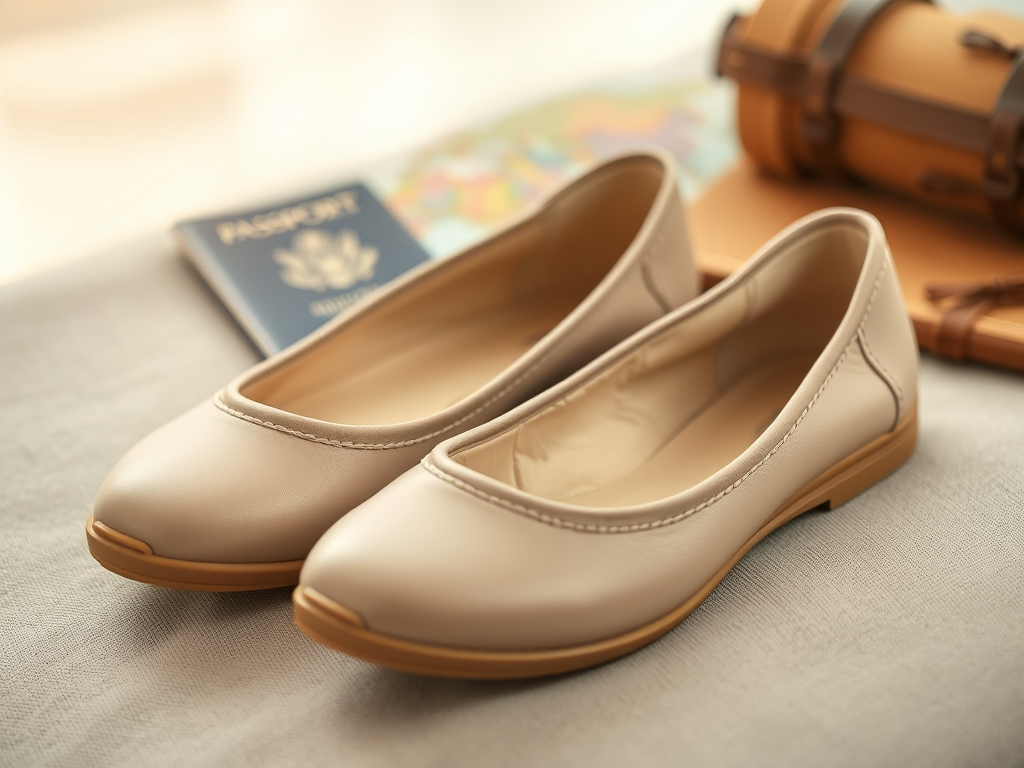
A Real-World Guide for People Who Can’t “Just Wear Sneakers”
If you’ve ever had shoes hurt so badly you had to bite your lip to avoid reacting in public, this is for you.
If you’ve ever gotten blisters even with socks, this is for you.
If you’ve ever felt like your feet are so sensitive you must be “the only one”… you are not. And I’m going to tell you what actually helped me after years of trial, error, and too much money spent on shoes.
This is a practical guide for travelers with:
- tender, delicate feet
- easy blisters
- narrow feet
- high arches
- sensitivity to pressure points, straps, footbeds, and friction
- flight-related swelling
I’m not writing this as a podiatrist. I’m writing it as someone who has had to build a shoe system just to travel comfortably.
The 3 Problems Most Travel Shoe Advice Mix Up (and why that matters)
Most shoe advice fails because it assumes all foot problems are the same. They’re not.
1) Blisters
Blisters are primarily:
- friction + heat + moisture
- plus the shoe moving against your skin (even slightly)
Blisters aren’t just about “softness.” A soft shoe that allows movement can still destroy your feet.
I almost always get blisters even if I use socks and/or moleskin. My feet are just that tender.

2) Deep Foot Pain (not blisters)
This is pressure-related and can feel like:
- soreness in the soles
- aching that builds with every step
- “I can’t take one more minute of this” pain
This can happen even without any rubbing.
3) Flight-related swelling
This is caused by flying (not walking, not shoes). I’m not going to re-explain it here because I already wrote the full guide. If you deal with this, here is my full in depth system for Surviving Swollen Feet from Long Flights
In this shoe article, swelling matters because:
- walking on swollen feet hurts more no matter what you’re wearing
- swelling can change shoe fit mid-trip
- swelling can permanently stretch out shoes and ruin them
My Foot Profile (so you can tell if we’re similar)
These details matter because the “why” behind each shoe is everything.
I have:
- small feet (true 5.5)
- narrow feet
- high arches
- skin that blisters extremely easily
- soles that can get painfully tender from footbeds
- an overall delicateness that can give me toe pain, arch pain, top of my foot pain, sides of my foot pain, etc. 😑
For years blisters were so common for me that my personal rule was:
Sandals or open-back shoes like clogs or mules only.
Closed shoes gave me god-awful blisters.
Then I started experimenting again and slowly found what works.
The Core Principles That Actually Changed Everything
Principle #1: “Soft” doesn’t mean “safe”
For blister-prone feet, the #1 risk is micro-movement.
If your foot slides even a little, you get:
- friction
- heat
- blister spots
A shoe can be soft and still be a blister machine if it doesn’t hold your foot securely.
Principle #2: Rotation is not optional
Even the best shoes will eventually irritate tender feet if you wear them too many days in a row.
My rule:
Don’t wear the same pair more than 2 days in a row (3 max if you’re desperate).
Why:
- moisture builds up in the shoe
- your skin gets softer and more vulnerable
- friction points increase
- irritation turns into blisters
This is true with socks or without socks.
And yes — I still sometimes get irritation even in my best shoes. That’s not failure. That’s reality with tender feet. Rotation is how you keep small irritation from becoming a full blister.

Principle #3: Shoes need to breathe
Shoes need recovery time just like feet do.
Let them:
- air out
- dry fully
- “reset” shape
This matters even more if you’re barefoot in shoes (which I often am, because socks often increase friction for me).
Principle #4: Leather can be amazing… but only if it’s broken in
Leather shoes can become the best thing you own after they mold to you.
But new leather = danger.
My break-in method (this matters):
- thick socks (sometimes double)
- the shoe should feel unbearably tight over socks at first
- golf balls stuffed into toe box for days to stretch
- wear around the house until the toe box relaxes
If you pack brand-new leather shoes and “break them in on the trip,” you’re basically volunteering for blisters and pain.
What Worked (and why)
1) Tieks: my most reliable fully enclosed travel shoe
Tieks are not just “cute flats.” For my feet they’re a system.
Why Tieks work for blister-prone tender feet
- The footbed is smooth and consistent (that matters if your feet react to texture)
- They hug the foot in a stable way (less sliding = fewer blisters)
- Shock-absorbing sole does more than people think
- They’re foldable and packable, so you can rotate without bulk
- Even without traditional arch support, the overall design reduces fatigue for me
- I’m able to walk full days in them without pain
Tieks are not perfect (and that’s important)
After wearing 3 pairs heavily for a couple weeks, I still got some irritation on the top of my foot from the tightness of the toe box fit. That’s exactly why rotation matters and why “best shoe” doesn’t mean “invincible shoe.”
Tieks rules (the stuff people get wrong)
- If you’re a half size, do NOT size down (even though the brand says to).
- I’m a true 5.5 and wear a 6 in Tieks.
- The 6 are still tight and need breaking in.
- A 5 would have destroyed me.
- Leather Tieks must be broken in. Especially the toe box.
- Cloth Tieks: much easier out of the box, but:
- not good in rain and/or mud
- fabric can hold moisture and start to irritate in odd places like the tips of your toes
- Patent leather Tieks: great for wet/muddy and/or messy travel because they wipe clean
- Patent leather doesn’t stretch like normal leather, so you probably need to size up
Where Tieks shine
- planes (I wear them with compression socks to prevent swelling)
- city walking days
- evenings out (I have a snazzy silver pair = perfect)
- “I need closed-toe and/or warmer shoes but I refuse to be in pain” days
- They fold and take up minimal space in your luggage

2) Taos sandals: my best “supportive + adjustable” sandal
Taos are my current sandals winner because they solve multiple problems at once.
Why Taos work
- Supportive footbed that feels good to me
- Multiple adjustment points = you can dial fit tighter/looser (important if you deal with foot swelling)
- Great for rotation away from closed-toe pressure
- They let your feet breathe
Why adjustment matters (even if you’re not swollen)
This is key:
- If your feet change even slightly (heat, long days, general travel stress), adjustable straps prevent rubbing
- You can loosen/tighten without the shoe “fighting you”

3) Naot sandals: excellent second choice travel sandal
I love Naots and absolutely recommend them.
Why Naots work
- Supportive footbed
- Comfortable straps
- They’re a solid “walk around all day” sandal
The Naot nuance
Some Naot styles are heeled — I avoid those for long walking because heels change pressure patterns. My Naots are flat and great.
Naots are a perfect “second sandal” for rotation, especially in warm destinations.
4) ECCO sandals: the heroes, with one big warning
ECCO sandals were the stars of Japan when my feet were miserable.
Why ECCO worked for me
- Forgiving fit
- Comfortable with stressed feet
- Very wearable for long travel days
The warning: swelling/stretching can ruin them
If your feet swell and you rely on one pair day after day, you can permanently stretch the straps/fit.
That happened to me with my favorite ECCOs:
- they were amazing on the trip
- afterward, with normal feet, they were too loose to wear properly
Also: buying “the same exact model again” didn’t guarantee success. I bought a replacement pair and the straps/feel rubbed me wrong in every way. Same brand, same model, totally different reality on my feet.
Lesson: with sensitive feet, small differences in materials or construction can matter.
💡When you find a pair of shoes that work for you getting more than one pair is not a bad idea so that when one pair runs out you have replacement pair ready to go. Waiting between different productions has never worked out well for me.
ECCO in Europe vs the concert reality
I wore my ECCO T-strap sandals all over Europe with no problems. Then my feet were destroyed a year later when I wore them to The Taylor Swift Eras concert.
- dancing/jumping 3.5 hours
- walking all over the stadium
- then walking miles after to get picked up
That wasn’t “normal walking day testing.” That was an extreme endurance event. Unfortunately, the bottoms of my feet were so sore and tender the next day I could barely walk.
5) Ancient Greek Sandals: stylish, sensitive-foot friendly, and ultra-packable

These deserve a spot because they solve a different problem: style without pain.
Why they work for sensitive feet
- leather footbed molds beautifully over time
- smooth leather contact is often gentler than fabric straps
- once broken in, they become “my foot but better”
- I’m able to wear these for even middle amounts of walking without issues
They’re ultra-packable
Their extreme flatness matters because they’re easy to pack.
- take up almost no space
- perfect to add a stylish option without sacrificing suitcase real estate
How I’d use them in travel
Not my “Rome all day” shoe.
But absolutely a:
- cruise / beach vacation not too much walking sandal
- nice dinner sandal
- ship wandering / port shopping sandal
- “I want to look good and not suffer” sandal
They’re the perfect example of:
not every travel shoe needs to be a marathon shoe.
6) Birkenstock Franca: posture comfort, not my all-day travel pick
I like my Francas more the longer I own them. Break-in matters a lot.
Why they can be great
- supportive feel
- posture alignment
- excellent for short distances / house wear / beach
Why they’re not ideal for my narrow feet
- they feel a bit loose
- straps push into my feet while walking
- tightening didn’t fully fix it
So I love them for:
- around the house
- short errands
- “slippers but better”
But I don’t rely on them for heavy travel walking.
7) Vionic & Jambu clogs: the “reset shoes”
Clogs and/or mules are underrated for sensitive feet because they change pressure patterns, have wide toe boxes, and they have open backs if your heels easily blister.
Why clogs can help
- they give your toes/top of foot a break (depending on style)
- they can reduce the “constant tight hug” pressure from fitted flats
- they’re perfect for days when even your best shoes start irritating you
What Didn’t Work (and why)
Rothy’s: the most brutal travel pain (and not from blisters)
This is important because people recommend Rothy’s constantly.

What happened
I got 3 pairs of Rothy’s for my first big Euro trip. I wore them on a travel day with a lot of airport walking and with compression socks on for the flight. The fit was very comfortable even with my socks. Unfortunately, by the time I sat down to eat after about an hour of walking, the pain was so intense I had to bite my lip to keep from screaming in public.
The key detail
It was NOT blisters.
It was deep internal foot pain. Both of my feet had horrible pain in every single part of my foot.
Why I think they failed my feet
- too little shock absorption
- structure doesn’t distribute pressure well (especially for high arches)
- knit allows movement in ways that can fatigue feet
I own multiple pairs. I found them to be incredibly comfortable out of the box. I almost never wear them now. I simply don’t trust them if I need to walk a lot.
Sock-style flats as a category (Ja-Vie + Clarks + Rothy’s)
This matters: Rothy’s weren’t the only “soft sock” attempt.
I also tried:
- Ja-Vie foldable ballet flats
- Clarks Cloudsteppers sock-style flats
For the Ja-Vie it was the same pattern: soft doesn’t equal supportive, and for my feet that often turns into deep pain or fatigue. For the Clarks I just couldn’t manage to get the right fit for my small narrow feet. I tried 2 or 3 sizes and they just never quite worked for me.
Why sock-style flats often fail tender feet
- too much flexibility with not enough stabilization
- not enough shock absorption
- pressure concentrates in the wrong areas
They can be great for some people, but for high arches + tender soles, they can be a gamble.
Jellies: blister-safe but support-free

Jellies were one of the only things I could wear without blistering for years.
But:
- support is awful
- long walking days become painful
- not a real travel solution if you’ll be on your feet
Even Melissa jellies (I have 3 pairs) gave me blisters. The cheap ones didn’t, but they still weren’t supportive enough for real travel.
Cheap strappy flats / thin Chinese flats
These didn’t blister me either, but:
- no support
- straps break
- not travel-worthy for long days
The “first closed-toe that didn’t blister me”: elastic ballet flats
This was a turning point.
I found Jessica Simpson ballet flats with elastic across the top and realized:
- it wasn’t just “closed-toe = blisters”
- it was “movement + friction = blisters”
- elastic helped hold the foot in place
This is the same principle that later made Tieks work so well.
Toms moccasin style
Mostly okay, didn’t blister much, but:
- toe box too tight
- not good for long walking
SoftWalk + Crocs inconsistency (the tender-foot reality)
This is one of the weirdest and most important things I’ve learned:
Sometimes you buy the same model again and it’s totally different.
- SoftWalk Jupiter: first pair felt like walking on clouds. Next pair hurt like hell.
- Crocs: one pair was amazing, other pairs caused blisters or footbed pain.
If you have tender feet, you’re not imagining it. Tiny differences can matter. Make sure to fully vet every new pair of shoes even if you’ve had great experiences with them in the past.
The Carry-On Game Changer: pack slippers (always)

This is one of my strongest “do this forever” tips.
Why slippers matter
Long flights create foot fatigue even if you’re not walking. Being trapped in shoes for 8–12 hours is pressure and stress.
So now I always pack:
- soft, sock-style slippers in my carry-on
- no rigid sole, fully soft = takes almost no space
- perfect on the plane (still covered, still safe to walk to restroom)
- perfect in hotel rooms or cruise cabins
The best part: washable
Because they’re basically thick socks, they’re:
- super easy to wash
- which matters when they’ve touched plane floors, hotel floors, foreign bathrooms, etc.
I started doing this after buying them in the Atlanta airport when the Rothy’s wrecked my feet. They come on every trip now.
Shoe Packing Examples (real-life, not fantasy)
If I were going on a Caribbean cruise tomorrow

I would pack:
- Taos (primary supportive walking sandal)
- Naots (rotation sandal)
- Ancient Greek Sandals (stylish evening shoe, packable)
- I would wear Tieks on the plane (closed toe backup “just in case”)
- Sock slippers
Ancient Greek sandals would likely be my “night out” choice because they’re stylish and easy on sensitive feet.
For Europe and any non-tropical and/or non-snow destination
I would:
- wear my black leather Tieks on the plane with compression socks
- pack silver Tieks for evenings (polished and reliable)
- pack Taos for warm days / foot breathing / rotation
- Sock slippers
If I wanted one more pair:
- gray cloth Tieks for most seasons except summer
- if it’s summer, I’d pack Naots instead (more airflow and sandal rotation)
The Real Bottom Line (for people with tender feet)
If your feet are delicate:
- you’re not trying to find a “perfect shoe”
- you’re building a rotation system
- with backup plans
- and you intervene early at the first sign of irritation
Because even the best shoes can irritate tender feet sometimes. That’s normal.
What matters is:
- you know what works most of the time
- you know what fails you
- you rotate before irritation becomes injury
- and you pack smart so your feet don’t ruin your trip
Quick Checklist: Travel Shoe Rules for Blister-Prone Feet

Before you go:
- Break in leather shoes aggressively (socks + stretching)
- Test shoes on a long errand day (Costco or Sam’s Club is a great test)
- Never take “new shoes” as your main walking shoe
During the trip:
- Rotate shoes every 1–2 days
- Let shoes air out fully
- Keep a “reset shoe” option (clog or sandal depending on season)
- Pack soft slippers in your carry-on and change into them on the flight
And if you deal with flight swelling:
- Don’t guess. Use a real system.
- You don’t have to suffer (My full guide is here)