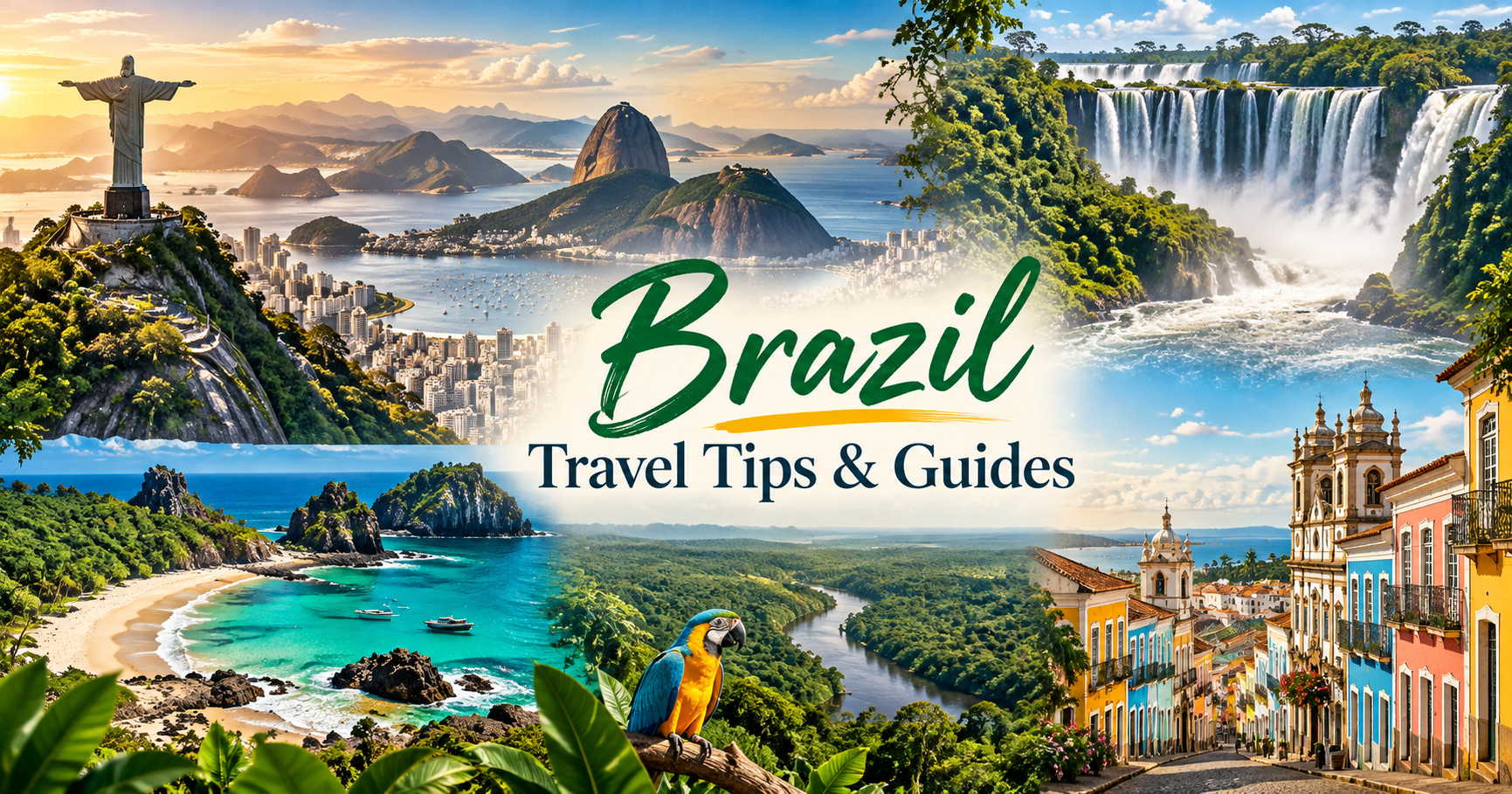
Brazil easy travel tips and planning guides, with love
Easy One-Stop Planning Guides for Brazil
Planning a trip to Brazil can get overwhelming surprisingly fast. Rio de Janeiro or São Paulo? Salvador or Recife? Iguaçu Falls, the Amazon or the Pantanal? Beaches, rainforest, colonial towns, wildlife, waterfalls, huge cities — or somehow all of them?
Brazil is enormous, and that is the first thing to understand before planning.
A beach trip through Rio and the surrounding coast feels completely different from an Amazon adventure. Salvador and northeastern Brazil bring Afro-Brazilian culture, colorful historic neighborhoods and warm tropical beaches. The Pantanal is one of the great wildlife destinations in the world, while southern Brazil can feel surprisingly cool depending on the season.
This is not a country where I would try to see everything in one trip.
Choose a few regions that work well together, give them enough time and let Brazil feel enormous instead of turning the entire vacation into airports and transfers.
This page brings all of our Brazil travel planning resources together in one place so you can find what you need without digging through the entire site.
Last updated: October 20, 2026
🇧🇷 Brazil at a Glance
⚠️ Current Travel Considerations
🌦️ Weather & Best Time to Visit
🗺️ Brazil Travel Map
📍 Where to Go in Brazil
✈️ Brazil Airport Guides
🚢 Cruises Around Brazil
🏨 Where to Stay
🧳 What to Pack
🔌 Plugs & Voltage
🎟️ Things to Do
🇧🇷 Brazil at a Glance
| Basics | Details |
|---|---|
| Capital | Brasília |
| Official Language | Portuguese |
| Currency | Brazilian Real (R$ / BRL) |
| Time Zones | Brazil spans four time zones; Brasília Time (UTC−3) covers most major visitor destinations |
| Driving Side | Right |
| Police | 190 |
| Ambulance | 192 |
| Fire | 193 |
| Plug Types | Type N is standard; some outlets may also accept Type C plugs |
| Electricity | 127V or 220V depending on location, 60Hz |
| Peak Travel Periods | Vary by region; December–February is especially popular for beaches and Carnival season |
| Entry Requirements | Depend on your nationality, passport and travel dates. Always check the requirements that apply to you shortly before traveling. |
Brazil is the largest country in South America, so national averages are not particularly useful when planning weather, transportation or even electricity.
Rio de Janeiro, Manaus, Salvador, Brasília, Florianópolis and Foz do Iguaçu can feel like entirely different destinations.
⚠️ Current Travel Considerations
Last reviewed: October 20, 2026
Brazil remains a destination I am comfortable recommending with increased caution and smart planning around where you go, how you move around and what you carry with you.
Millions of visitors travel through Brazil’s major tourism destinations without serious problems, but this is not a country where I would recommend switching off your normal city awareness.
Crime & Personal Safety
Robbery, phone theft, pickpocketing and other crime can occur in major cities and tourist areas.
Keep phones and expensive electronics discreet when you are not actively using them.
Do not casually carry large amounts of cash, expensive jewelry or obviously valuable items.
For nighttime transportation, I would generally favor reputable rides or arranged transportation over wandering unfamiliar streets trying to figure things out after dark.
Favelas & Informal Communities
I would not recommend casually entering favelas or other informal communities simply because they are close to a popular tourist district or appear on a sightseeing tour.
Conditions can change quickly, and the security situation inside one community can be completely different from another.
Brazil has more than enough extraordinary places to experience without treating residential communities with serious local security issues as another attraction to collect.
Beaches After Dark
Brazil’s beaches can feel incredibly relaxed during the day, but I would not treat a quiet beachfront after dark the same way.
Once beach crowds disappear, stick to busier promenades, restaurants and populated areas rather than walking alone along empty stretches of sand.
Drinks, Dating & Nightlife
Keep control of your drink and be cautious about accepting food or drinks from strangers.
Drugging and robbery connected with nightlife and dating encounters do occur.
That does not mean avoiding Brazil’s nightlife. It means using the same judgment you would want someone you care about using in any unfamiliar major city.
ATMs & Money
Cards and electronic payments are widely useful, but carrying some Brazilian reais is still convenient.
Use ATMs inside banks, major hotels or shopping centers rather than isolated street machines.
Do not stand outside counting money or reorganizing a wallet after withdrawing cash.
International Land Borders
Brazil shares enormous land borders with almost every country in South America.
Some remote border regions have substantially greater crime and security concerns than the main visitor destinations.
That should not be confused with major tourism areas such as Iguaçu Falls or the Pantanal, but travelers planning remote overland journeys should research the exact crossing rather than assuming every border route is equally straightforward.
Mosquito-Borne Illness & Yellow Fever
Mosquito protection matters in many parts of Brazil.
Dengue occurs in Brazil, and yellow fever vaccination is recommended for travelers visiting many parts of the country, including numerous inland, forested and major tourism regions.
The Amazon also requires a different health conversation from an ordinary Rio or São Paulo city trip.
If your itinerary includes rainforest, wildlife regions, rural areas or several different Brazilian states, check the health recommendations for your exact route rather than treating Brazil as one uniform destination.
🌦️ Brazil Weather by Month
Brazil is far too large for one national climate.
It stretches from equatorial rainforest through tropical beaches, inland savanna and wetlands all the way to southern regions with four much more recognizable seasons.
Remember that Brazil is in the Southern Hemisphere, so spring is September through November, summer is December through February, fall is March through May and winter is June through August.
| Month | What to Generally Expect |
|---|---|
| January | Summer. Hot and humid across much of the country, with busy beaches, tropical rain and peak holiday travel. |
| February | Hot, humid and lively. Carnival often falls around February or early March, dramatically increasing crowds and prices in major celebration destinations. |
| March | Early fall. Many regions remain hot and tropical while peak-summer crowds begin easing. |
| April | Often an excellent transition month, with warm weather, decreasing humidity in some destinations and generally easier sightseeing conditions. |
| May | Cooler and drier in many regions. The Pantanal moves toward prime wildlife season while southern Brazil becomes noticeably cooler. |
| June | Winter begins. Rio can be pleasantly warm, São Paulo cooler, the Pantanal increasingly dry and southern Brazil capable of genuinely chilly weather. |
| July | Dry-season conditions dominate many inland destinations. Excellent wildlife travel, cooler southern weather and pleasant days in many major cities. |
| August | Dry in many interior regions, particularly good for wildlife and outdoor travel, while parts of southern Brazil remain cool. |
| September | Spring begins. Southern areas start warming while some inland regions remain very dry and hot. |
| October | Warmer spring conditions spread through much of the country, with increasing humidity and rainfall in several regions. |
| November | Hotter and increasingly summery. Tropical rain becomes more common in many destinations while beach season builds. |
| December | Summer returns with hot weather, humidity, beach travel, holiday crowds and frequent tropical showers in many regions. |
⭐ Best Time to Visit Brazil
There is no single best month for all of Brazil.
The best time depends completely on what you want the trip to be.
🏖️ Rio de Janeiro & Southeast Coast
April through June and August through October can be especially appealing if you want warm weather without the peak summer holiday crush.
December through February brings classic hot beach weather but also greater humidity, rain, crowds and holiday demand.
🐆 Pantanal
The dry season — particularly June through September — is one of the strongest periods for wildlife viewing.
Animals concentrate around shrinking water sources and road access generally becomes easier.
🌿 Amazon
The Amazon remains hot and humid throughout the year.
Higher-water and lower-water seasons create different experiences rather than a simple good-season/bad-season divide.
Higher water can make flooded-forest boat exploration possible, while lower water exposes beaches and can concentrate wildlife differently.
Choose dates based on the experience you actually want.
💦 Iguaçu Falls
Iguaçu Falls can be visited year-round.
Higher-water periods create a more thunderous waterfall experience, while lower water levels may reveal more of the rock formations.
Rain protection is useful regardless because waterfall spray alone can soak you surprisingly quickly.
🎨 Salvador & Northeast Brazil
Northeastern Brazil remains warm for most of the year.
Rainfall patterns differ between destinations, so Salvador, Recife and Fortaleza should not automatically be treated as having identical weather.
🌺 Southern Brazil
Florianópolis, Curitiba, Porto Alegre and other southern destinations have much more obvious seasonal changes.
Winter evenings can be genuinely cool, while summer brings the region’s main beach season.
🗺️ Get Oriented: Brazil’s Main Travel Areas

These are the broad areas travelers are most likely to encounter while planning:
Rio de Janeiro & Southeast Coast: Rio de Janeiro, Copacabana, Ipanema, Búzios, Paraty, Ilha Grande and some of Brazil’s most iconic coastlines
São Paulo: Brazil’s enormous business and cultural center, with exceptional food, museums, nightlife, neighborhoods and international flight connections
Bahia & Salvador: Afro-Brazilian culture, colonial architecture, music, food, historic neighborhoods and warm northeastern beaches
Northeast Coast: Recife, Olinda, Fortaleza, Natal, Maceió, Jericoacoara and long stretches of tropical coastline
Iguaçu Falls: One of the world’s great waterfall destinations on Brazil’s border with Argentina
Amazon Region: Manaus, rainforest lodges, river journeys, wildlife, flooded forests and the meeting of enormous rivers
Pantanal: Wetlands, wildlife lodges, boat trips, jaguars, birds, caimans and some of South America’s strongest wildlife viewing
Brasília & Central Brazil: Modernist architecture, government institutions and access toward the cerrado landscapes of central Brazil
Minas Gerais: Ouro Preto, Tiradentes, colonial towns, historic churches, mountains and some of Brazil’s strongest regional food traditions
Southern Brazil: Florianópolis, Curitiba, Porto Alegre, beaches, cooler climates and landscapes that feel dramatically different from tropical northern Brazil
Lençóis Maranhenses: Vast white dunes filled seasonally with rainwater lagoons — one of Brazil’s most surreal landscapes
Brazil is simply too large to treat like one ordinary road trip.
Domestic flights are often the most realistic way to combine distant regions.
For a first visit, I would much rather build two or three strong bases than try to collect Rio, Salvador, Iguaçu, Manaus and the Pantanal in a single rushed week.
📍 Start Here: Where Should You Go in Brazil?
If you haven’t decided exactly where you’re going yet, start with our complete Brazil destination guide.
Best Places to Visit in Brazil for an Unforgettable Trip
Brazil can give you iconic beaches, rainforest, huge cities, colonial streets, wildlife-heavy wetlands, roaring waterfalls, river journeys, crystal-clear water and landscapes that barely look real.
This guide covers the destinations worth seriously considering when deciding what kind of Brazil trip you actually want — from Rio de Janeiro and São Paulo to Salvador, Iguaçu Falls, the Amazon, Pantanal, colonial towns, beaches and some of the country’s more unusual natural landscapes.
→ Read: Best Places to Visit in Brazil
✈️ Brazil Airport Guides
Brazil’s size makes flying an important part of many itineraries.
A trip combining several regions will often involve domestic flights even if you normally prefer traveling overland.
São Paulo
São Paulo/Guarulhos International Airport (GRU) is Brazil’s largest international gateway and one of South America’s biggest aviation hubs.
It is particularly useful for long-haul international arrivals and connections elsewhere in Brazil.
São Paulo/Congonhas Airport (CGH) primarily handles domestic traffic and can be convenient for travelers already staying in São Paulo.
Rio de Janeiro
Rio de Janeiro/Galeão International Airport (GIG) handles international and domestic flights and is the main long-haul gateway for Rio.
Santos Dumont Airport (SDU) is dramatically closer to central Rio and particularly convenient for selected domestic routes.
Do not assume GIG and SDU are interchangeable when arranging transfers.
Brasília
Brasília International Airport (BSB) is a major domestic connecting hub and can be useful even if Brasília itself is not part of your itinerary.
Salvador
Salvador International Airport (SSA) is one of the main gateways for Bahia and northeastern Brazil.
Recife
Recife/Guararapes International Airport (REC) serves Recife and is useful for Pernambuco and surrounding coastal destinations.
Manaus
Manaus International Airport (MAO) is the main aviation gateway for many Amazon itineraries.
Travelers continuing to rainforest lodges commonly connect from the airport to additional road and boat transfers.
Foz do Iguaçu
Foz do Iguaçu International Airport (IGU) is the main Brazilian airport for visiting Iguaçu Falls.
Individual Brazil airport guides will be added here as we build them.
→ Explore All Flights & Airport Guides
🚢 Cruises Around Brazil
Brazil has thousands of miles of Atlantic coastline plus one of the world’s greatest river systems, which creates several completely different cruise experiences.
Rio de Janeiro
Rio appears on South American and repositioning cruise itineraries and makes an extraordinary pre- or post-cruise stay.
The cruise terminal gives travelers access to Rio’s beaches, mountains, historic areas and major attractions.
Santos / São Paulo
Santos is one of Brazil’s most important cruise ports and the main cruise gateway for São Paulo.
Remember that Santos is not actually in São Paulo city, so allow realistic transfer time between the city, airport and ship.
Salvador
Salvador appears on Brazilian coastal itineraries and gives cruise travelers access to one of the country’s most historically and culturally distinctive cities.
Amazon River Cruises
The Amazon creates an entirely different kind of cruise experience.
Manaus is the primary starting point for many river journeys, ranging from smaller expedition-style boats to multi-day lodge-and-river combinations.
These trips focus much more on rainforest, waterways, wildlife and remote communities than conventional resort-style cruising.
Brazilian Coast Cruises
Domestic cruise seasons can include ports such as Rio, Santos, Salvador and other coastal destinations.
Brazil also appears on longer itineraries connecting South America with Argentina, Uruguay, the Caribbean, Europe or transatlantic routes.
A dedicated Brazil cruise guide will be added here as we build our coverage.
🏨 Where to Stay in Brazil
Brazil is far too large for one national hotel guide.
Our accommodation guides focus on the cities travelers actually use as bases.
Rio de Janeiro
Rio is a city where hotel choice matters enormously.
Copacabana, Ipanema, Arpoador, Barra da Tijuca and Rio’s other major hotel areas can create very different trips.
Some travelers want to walk directly onto an iconic beach. Others want resort-style amenities, quieter surroundings, easier ride pickups or a true bucket-list luxury stay.
Our guide breaks down the best options by traveler type rather than pretending one Rio hotel works for everyone.
More Brazil hotel guides will be added here as we build them.
🧳 What to Pack for Brazil
Brazil is one of the clearest examples of why packing by season alone is not enough.
September in Rio is not the same as September in Florianópolis.
A July Pantanal safari does not require the same setup as a July city trip to São Paulo.
And the Amazon barely cares what season name appears on the calendar.
The goal is to match your packing list to both season and region.
🌸 Spring
→ Exactly What to Pack for Brazil in Spring: September, October & November — Carry-On Only
Brazilian spring can mean sunny beach afternoons, tropical humidity, sudden rainstorms, cool southern mornings, waterfall spray and incredibly hot wildlife excursions — all within one country.
This carry-on-only guide builds a flexible setup for September, October and November without trying to pack a completely different wardrobe for every Brazilian region.
🍂 Fall
→ Exactly What to Pack for Brazil in Fall: March, April & May
Fall can be a beautiful time for Brazil.
Many destinations remain warm and tropical while peak summer heat and crowds begin easing.
This guide covers warm weather, rain surprises, changing regional conditions, long sightseeing days and the occasional cooler evening.
❄️ Winter
→ Exactly What to Pack for Brazil in Winter: June, July & August — Carry-On Only
Brazilian winter does not automatically mean cold.
Rio may still feel warm, the Amazon remains tropical, the Pantanal moves into prime dry-season travel and southern Brazil can become surprisingly chilly.
This guide helps you pack for those differences without overloading your suitcase.
Brazil summer packing guide coming soon.
🔌 Brazil Plugs, Outlets & Voltage
Brazil primarily uses Type N outlets, although some sockets may also accommodate Type C plugs.
The most important electrical issue is not actually the plug shape.
Brazil has a mixed-voltage electrical system.
Depending on the city, building or accommodation, electricity may be approximately 127V or 220V, at 60Hz.
That means travelers using single-voltage appliances should never assume that because something worked at the previous hotel, the next outlet will use the same voltage.
Modern phones, tablets, cameras, laptops and USB chargers labeled 100–240V, 50/60Hz are generally straightforward with the correct plug adapter.
Hair tools, heating devices, travel kettles and other single-voltage appliances require much more attention.
→ Read: What Plug Do I Need in Brazil? Complete Adapter & Voltage Guide
The full guide explains plug adapters, Brazil’s unusual mixed-voltage system, converters and what travelers from different electrical systems need to pack.
🎟️ Things to Do in Brazil
Already know where you’re going — or already there?
Brazil is one of those countries where the experiences change completely depending on which part of the map you choose.
In Rio de Janeiro, that can mean Christ the Redeemer, Sugarloaf Mountain, beaches, samba, food tours, viewpoints and boat trips.
São Paulo is about food, museums, neighborhoods, nightlife, markets and one of Latin America’s great urban cultural scenes.
Salvador brings Afro-Brazilian history, music, food, colonial architecture and coastline.
At Iguaçu Falls, the waterfall itself becomes the center of the trip.
The Amazon shifts everything toward river travel, rainforest, wildlife and lodge experiences.
The Pantanal is one of the best places in the country to build the trip almost entirely around wildlife.
And destinations such as Lençóis Maranhenses, Minas Gerais, Paraty, Ilha Grande and Brazil’s enormous northeastern coastline can each create a completely different vacation.
Dedicated Brazil Things to Do guides will be added here as we build them.
❤️ Helpful Travel Guides for Any Trip
Some travel questions aren’t specific to Brazil. These Travel Tips With Love guides can help wherever you’re going.
🧳 Choosing & Packing Your Luggage
✈️ Surviving a Long Flight
🎒 Check Your Airline’s Carry-On Limits
Brazil trips often involve domestic flights, and cabin-baggage rules can differ from your international airline.
→ Global Carry-On & Personal Item Size Limits by Airline A–Z
🤒 What If You Get Sick While Traveling?
→ What to Do If You Get Sick While Traveling
🎟️ Should You Book Activities Ahead?
Some experiences sell out weeks ahead. Others are perfectly fine to book after you arrive.
For Brazil, advance booking can be particularly useful for major Rio attractions, Carnival-period experiences, Amazon lodges, Pantanal wildlife trips, internal flights and limited-capacity excursions tied to a specific date.
→ Should I Book Tours & Activities Ahead of Time?
💆♀️ Make Any Vacation Feel More Relaxing
You do not need to turn the entire trip into a resort stay to build in a slower afternoon, massage, spa treatment or relaxing hotel day.
→ How to Make Any Vacation a Spa Vacation
🌍 Explore More Countries
Not sure Brazil is the trip this time?
Explore our All Countries Travel Tips & Guides to find destination planning hubs around the world.
Each country hub brings together practical planning information, current travel considerations, weather basics and all of our available destination guides in one easy place.
→ Explore All Countries & Destinations
This Brazil hub is a living travel-planning resource. I update it as new Travel Tips With Love Brazil guides are published and as important planning or safety information changes.
From Tracy, With Love ♥