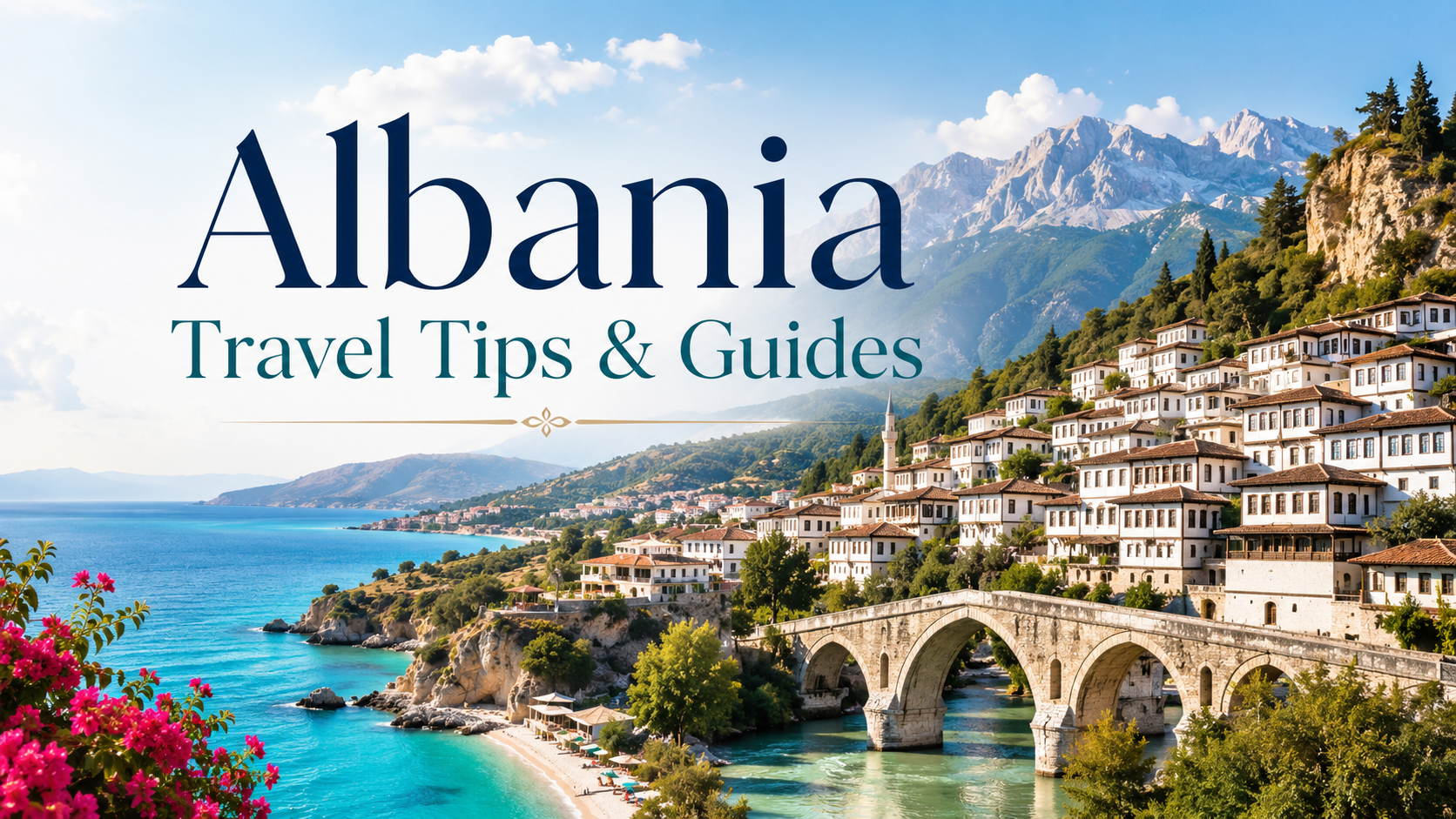
Easy One-Stop Planning Guides for Albania
Planning a trip to Albania can get confusing surprisingly quickly. Tirana or the coast? Berat or Gjirokastër? Ksamil or Himarë? Should you head north into the Albanian Alps? When is the best time for beaches? What should you pack? Do you need a plug adapter?
This page brings all of our Albania travel planning resources together in one place so you can find what you need without digging through the entire site.
Last updated: October 21, 2026
🇦🇱 Albania at a Glance
⚠️ Current Travel Considerations
🌦️ Weather & Best Time to Visit
🗺️ Albania Travel Map
📍 Where to Go in Albania
🚢 Cruises Around Albania
🏨 Where to Stay
🧳 What to Pack
🔌 Plugs & Voltage
🎟️ Things to Do
🇦🇱 Albania at a Glance
| Basics | Details |
|---|---|
| Capital | Tirana |
| Language | Albanian |
| Currency | Albanian lek (ALL) |
| Time Zone | Central European Time (CET); Central European Summer Time (CEST) during daylight saving time |
| Driving Side | Right |
| Emergency Number | 112 |
| Plug Types | Type C and F |
| Electricity | 230V, 50Hz |
| Peak Travel Months | June through August, especially along the Albanian Riviera |
| Popular Shoulder Seasons | April–May and September–October |
| Entry Requirements | Depend on your nationality, passport and length/purpose of stay. Always check the requirements that apply to you before traveling. |
Albania is small enough to combine cities, historic towns, mountains and the coast in one trip, but travel times can be longer than the map suggests because of mountainous terrain and winding roads.
⚠️ Current Travel Considerations
Last reviewed: October 21, 2026
Current Civil Unrest & Demonstrations
Albania is experiencing significant civil unrest, with student-led demonstrations and broader anti-government protests escalating into violent confrontations, particularly in the capital, Tirana.
Beginning October 13, 2026, students took to the streets over rising education costs, poor university conditions, limited employment opportunities, and concerns about corruption. The demonstrations have since grown into a broader political movement, with protesters also demanding the resignation of Prime Minister Edi Rama.
In Tirana, demonstrations have repeatedly escalated into clashes between protesters and police. Government buildings, banks, and businesses have been damaged, fires have been set, and police have responded with tear gas, water cannons, and other crowd-control measures.
Protests have continued for more than a week, with particularly serious confrontations around central Tirana, including the Ministry of Education and surrounding government districts.
The unrest has also spread beyond the capital. Student demonstrations, school boycotts, and marches have been reported in Shkodër, Durrës, Elbasan, Vlorë, Korçë, and other communities.
Although the most serious violence has been concentrated in Tirana, travelers should not assume that demonstrations are limited to the capital.
The situation remains unsettled, and additional protests, road closures, transportation disruptions, and confrontations are possible.
Should You Travel to Albania Right Now?
My recommendation is simple: If you’re planning a leisure trip to Tirana, postpone it until the violent unrest settles down.
Tirana is a fascinating city, but this isn’t the ideal time to wander through its central squares, government districts, and busy streets as a visitor.
You don’t have to participate in a demonstration to find yourself caught in a dangerous situation. A peaceful gathering can escalate unexpectedly, streets can become blocked, and visitors unfamiliar with the city may not immediately recognize when an area is becoming unsafe.
These situations are difficult enough to navigate in your own country. In a foreign country where you may not understand the language, know the surrounding streets, or recognize local warning signs, the risks become even more complicated.
If a city is experiencing violent demonstrations, stay away from it until conditions improve.
That doesn’t necessarily mean every trip to Albania needs to be canceled.
The country offers beautiful mountain landscapes, historic towns, archaeological sites, and coastal destinations far beyond Tirana. However, demonstrations have spread to multiple communities, so it’s especially important to check conditions in the specific places you intend to visit rather than assuming that somewhere outside the capital is automatically unaffected.
If your itinerary is flexible, consider postponing the city portions of your trip or changing your plans to destinations where local conditions are calmer.
A visit planned several weeks or months from now may be a different matter entirely. Conditions can improve quickly, so keep watching developments before making a final decision.
Consider Alternatives to Tirana
If your trip was centered around Tirana, you may be able to preserve part of your Albanian vacation by changing your itinerary rather than canceling everything.
However, because demonstrations have spread beyond the capital, I recommend choosing alternatives carefully and checking local conditions before making new reservations.
Consider Berat for history and traditional architecture.
Known for its beautiful Ottoman-era houses, hillside neighborhoods, historic castle, and scenic setting, Berat is a wonderful destination for travelers interested in Albania’s history and culture.
Its traditional streets, viewpoints, and historic neighborhoods offer a very different experience from the busy capital.
Consider Gjirokastër for a historic southern getaway.
Gjirokastër is famous for its stone-roofed Ottoman houses, impressive hilltop castle, cobblestone streets, and beautiful mountain surroundings.
It’s particularly appealing for travelers who enjoy historic architecture, local culture, traditional food, and atmospheric old towns.
Consider Himarë or the smaller communities along the Albanian Riviera for a coastal escape.
Albania’s southern coastline offers beautiful Ionian Sea scenery, beaches, waterfront restaurants, and opportunities to explore smaller coastal communities.
Himarë and nearby villages may be appealing alternatives for travelers who had planned a city-focused itinerary but would prefer a more relaxing coastal experience.
Keep in mind that the Albanian Riviera is highly seasonal, and some accommodation, restaurants, and tourist services operate on reduced schedules outside the summer season.
These destinations offer genuinely different travel experiences rather than simply providing alternative places to sleep.
Before relocating, check local conditions and the transportation routes you would need to use. Some journeys may still involve traveling through or around Tirana, particularly when arriving at Tirana International Airport.
My recommendation is to enjoy alternative destinations in their own right, rather than using them as bases for sightseeing trips into cities experiencing violent unrest.
Albania has much more to offer than its capital, and changing your itinerary may allow you to enjoy a completely different side of the country.
If You’re Already Committed to Traveling
If you have non-refundable flights, hotels, or other reservations and postponing isn’t practical, begin by checking whether your travel providers will allow you to change dates or destinations.
Even reservations described as non-refundable may sometimes offer flexibility during significant local disruptions.
If you’re continuing with your trip, I strongly recommend investing in experienced local or private guides when sightseeing in areas where additional caution is warranted.
A knowledgeable local guide offers an important advantage during periods of unrest: familiarity with the language, neighborhoods, local transportation, and changing conditions on the ground.
Experienced local professionals may recognize developing problems sooner than unfamiliar visitors, know which routes to avoid, and help you adjust plans when unexpected situations arise.
That local knowledge can make a meaningful difference when you’re navigating a foreign country during a period of heightened tension.
Additional precautions include:
- Avoid demonstrations, political rallies, and large gatherings, even when they initially appear peaceful.
- Stay away from government buildings, universities, and public squares where protests are taking place or expected.
- Ask your accommodation staff or local guide about conditions before setting out.
- Keep your phone charged and maintain reliable mobile data for communication and navigation.
- Allow additional time for airport transfers and longer journeys.
- Consider arranging private transportation when public services are disrupted, provided roads remain accessible.
- Keep your itinerary flexible and be prepared to change or cancel sightseeing plans.
- Choose refundable reservations for any new accommodation, transportation, or tours whenever possible.
If you unexpectedly encounter a demonstration or police confrontation, leave the area promptly rather than stopping to watch or photograph events.
And if the destination you planned to explore is experiencing active violence, don’t try to make sightseeing work simply because you’ve already paid for it.
Your safety is more important than any reservation or itinerary.
Transportation & Travel Disruptions
The current unrest has created additional transportation concerns, particularly in and around Tirana.
Demonstrations may result in road closures, traffic diversions, police checkpoints, restricted access to central streets, and delays around government buildings or major public squares.
Even when buses and other transportation services are operating, surrounding roads may become difficult to access during demonstrations.
Travelers arriving at Tirana International Airport should consider arranging reliable transportation directly to their accommodation or onward destination, particularly when traveling with luggage or unfamiliar with local routes.
If you plan to travel between cities, allow additional time for unexpected delays and check conditions along your intended route before departure.
Albania’s transportation network also differs from that of many Western European destinations. Intercity buses and minibuses are important options, but schedules, departure locations, and available services can vary.
Travelers visiting rural or mountainous regions should also consider road quality, weather conditions, and the availability of assistance when planning longer journeys.
During the current unrest, confirm transportation arrangements shortly before departure, even if the route appeared unaffected the previous day.
Crime & Personal Security
Outside the current demonstrations, travelers should remain aware of ordinary crime and personal security concerns.
Pickpocketing, bag theft, and opportunistic theft can occur in crowded areas, transportation hubs, and popular tourist destinations.
Albania has also experienced incidents of violence associated with organized crime and disputes between individuals or groups. These incidents do not generally target tourists, but visitors should remain aware of their surroundings.
Law enforcement and emergency assistance may be less readily available in some remote parts of the country.
Keep valuables secured, use reputable transportation providers, avoid unnecessary confrontations, and take additional care when traveling late at night or through unfamiliar areas.
Weather, Roads & Natural Hazards
Albania’s landscape ranges from Mediterranean coastline to rugged mountains, creating considerable differences in seasonal travel conditions.
Summer brings hot weather and increased wildfire risks in some regions, while heavy rainfall can cause flooding, landslides, and road disruptions.
Mountain areas may experience snow, ice, and difficult driving conditions during colder months.
Earthquakes are also a natural hazard in Albania.
Travelers planning mountain excursions, road trips, or visits to remote villages should account for seasonal weather, road conditions, and the availability of local services.
Some coastal resorts and mountain tourism businesses operate seasonally, so check accommodation and transportation availability when traveling outside peak periods.
Final Thoughts
Albania is a beautiful country with extraordinary history, dramatic landscapes, welcoming communities, and destinations that deserve far more international attention.
The current unrest doesn’t change what makes Albania special, but it does change how I recommend planning a visit.
If you’re considering a leisure trip to Tirana right now, my recommendation is to wait until the violent demonstrations have ended and conditions have stabilized.
For travelers planning to visit other parts of Albania, assess local conditions carefully. Demonstrations have spread beyond the capital, and it’s important not to assume that every smaller city or coastal community is unaffected.
If your plans are flexible, consider adjusting your itinerary toward calmer destinations or postponing the affected portion of your trip.
If you’re already committed to traveling, experienced local guides, reliable transportation, and flexible reservations can make a meaningful difference.
Above all, don’t let non-refundable bookings or a carefully planned itinerary pressure you into visiting somewhere experiencing active violence.
Conditions may change considerably in just a few days, so keep a close eye on developments before departure and throughout your trip.
Albania will still be there when the unrest settles. If waiting means enjoying its incredible scenery, historic towns, and beautiful coastline with fewer worries, it’s worth waiting.
🌦️ Albania Weather by Month
Albania has a Mediterranean climate along much of the coast, while inland and mountainous areas can be considerably cooler.
That means Ksamil, Tirana and Theth can have very different conditions on the same day.
Use this as a quick planning overview rather than a forecast for your specific trip.
| Month | What to Generally Expect |
|---|---|
| January | Winter. Coastal areas are relatively mild but can be rainy, while inland and mountain regions are much colder with snow possible or common at elevation. |
| February | Still wintery and often wet. Coastal temperatures remain milder than the mountains, where winter conditions continue. |
| March | Transitional and changeable. Temperatures begin rising, but rain and cool days are still common and mountain weather can remain winter-like. |
| April | Mild spring conditions across much of the country, greener landscapes and increasingly pleasant sightseeing weather. Rain is still possible. |
| May | Warm, increasingly sunny and one of the best months for sightseeing, road trips and combining cities with the coast before peak summer crowds. |
| June | Warm to hot with long days and increasingly reliable beach weather. Coastal destinations become noticeably busier. |
| July | Hot, sunny and dry across much of Albania. Prime beach season and one of the busiest months on the Riviera. |
| August | Very hot and extremely busy in Albania’s most popular beach destinations. Inland sightseeing can become tiring during the hottest part of the day. |
| September | Often still warm and summery, particularly along the coast. Sea temperatures remain inviting while peak-season crowds gradually ease. |
| October | Mild to warm early in the month with cooler evenings and increasing rain. Excellent for cities, historic towns and road trips. |
| November | Cooler and wetter, with much quieter tourist areas. Mountain regions can begin experiencing winter conditions. |
| December | Winter conditions return. Coastal areas remain comparatively mild but wetter, while inland and mountain destinations can be cold with snow at elevation. |
⭐ Best Time to Visit Albania
For the best overall combination of comfortable weather, manageable crowds and the ability to combine cities, historic towns and coastal destinations, May, June and September are especially good choices.
May is excellent for sightseeing and road trips before peak summer heat arrives.
June gives you warmer beach weather while generally avoiding the absolute height of July and August crowds.
September may be the best all-around option for travelers who want both sightseeing and the coast. The sea is still warm, many beach businesses remain open and the busiest part of summer is beginning to wind down.
July and August make the most sense if a classic hot-weather beach vacation is the priority.
🥵 Most Challenging Time to Visit Albania
For many sightseeing-focused travelers, July and August are the most challenging months.
Temperatures can become very hot, especially away from the mountains, and popular coastal destinations such as Ksamil can be packed.
Accommodation prices rise, beaches become crowded and road traffic increases considerably in popular vacation areas.
That does not make midsummer a bad time to visit Albania. It is exactly when many travelers want to be swimming in the Ionian Sea.
But if you want a trip that combines beaches with long sightseeing days, road trips and historic towns, June or September will usually be easier.
Winter can also be challenging if your itinerary depends on mountain access, hiking or seasonal coastal businesses.
Important: Always check the actual forecast for the specific places you are visiting shortly before departure. The Albanian Riviera and the Albanian Alps can require completely different clothing and planning on the same dates.
🗺️ Get Oriented: Albania’s Main Travel Areas

Albania may look compact, but the mountains running through the country make regional planning important.
These are the areas travelers are most likely to encounter:
Central Albania: Tirana, Krujë and the surrounding region
Historic Inland Albania: Berat and Gjirokastër
Southern Coast: Sarandë, Ksamil and Butrint
Albanian Riviera: Himarë, Dhërmi, Borsh, Qeparo, Jalë and the Ionian coastline
Northern Albania: Shkodër and Lake Shkodër
Albanian Alps: Theth, Valbona and Lake Koman
Southeastern Albania: Korçë and the surrounding countryside
You do not need to fit all of these into one trip.
Albania rewards a slower itinerary, especially because mountain roads and coastal routes can make short distances take considerably longer than expected.
🗺️ Start Here: Where Should You Go in Albania?
If you have not decided exactly where you are going yet, start with our complete Albania destination guide.
Best Places to Visit in Albania: Tirana, Berat, Gjirokastër, Ksamil, the Albanian Riviera, Theth & More
From the Ottoman-era streets of Berat and Gjirokastër to Tirana, turquoise beaches around Ksamil, the Albanian Riviera and the dramatic mountains surrounding Theth, this is the best starting point for deciding which parts of Albania belong on your trip.
→ Read: Best Places to Visit in Albania
🎉 Festivals & Seasonal Experiences
Your travel dates can completely change the Albania you experience.
Summer brings beach season, festivals and lively coastal towns, while fall brings harvest traditions, food events and much quieter sightseeing conditions. Winter changes the mountain regions completely, and spring brings greener landscapes and comfortable temperatures for exploring.
More Albania festival and seasonal guides will be added here as we build them.
🚢 Cruises Around Albania
Albania appears on some Adriatic and Ionian cruise itineraries, particularly routes visiting Sarandë, which provides access to southern Albania and the archaeological site of Butrint.
Albania can also appear on regional itineraries combined with destinations in Greece, Croatia, Montenegro and Italy.
More Albania cruise planning guides will be added here as we build them.
🏨 Where to Stay in Albania
Where you stay in Albania depends heavily on the type of trip you are planning.
Tirana works well for city sightseeing, restaurants, nightlife and transportation connections.
Berat and Gjirokastër are excellent choices for atmospheric historic stays.
Himarë, Dhërmi, Sarandë and Ksamil serve very different kinds of coastal vacations, while Shkodër is one of the most useful bases for exploring northern Albania.
Where to Stay in Tirana, Albania: Best Hotels for Couples, Families, Solo Travelers & More
Planning a stay in Albania’s capital? This Tirana hotel guide compares practical options for couples, solo travelers, friends, families, older or lower-mobility travelers, luxury trips, budget stays, honeymoons and business travel.
From affordable central hotels with breakfast included to five-star properties with pools, gardens and spas, the guide helps you choose a hotel based on the kind of trip you are actually taking.
→ Read: Where to Stay in Tirana, Albania: Best Hotels for Couples, Families, Solo Travelers & More
🧳 What to Pack for Albania
🧳 What to Pack for Albania
What you need for Albania changes substantially with both the season and your itinerary.
A July beach trip to Ksamil requires very different preparation from an October trip through Tirana, Berat and Gjirokastër or a fall trip into the Albanian Alps.
🍂 Exactly What to Pack for Albania in Fall: September, October & November — Carry-On Only
Planning a September, October or November trip? This carry-on-only packing guide covers women, men and kids, with practical advice for Albania’s warm early-fall coast, cooler inland destinations, rain, uneven historic streets and changing mountain conditions.
→ Read: What to Pack for Albania in Fall
More seasonal Albania packing guides will be added here as we build them.
🔌 Albania Plugs, Outlets & Voltage
Albania uses 230V electricity at 50Hz, with Type C and Type F outlets.
Travelers from countries that already use compatible European-style plugs and similar voltage may not need an adapter, while travelers from countries such as the United States, Canada, the United Kingdom, Australia, Japan and others using different plug types will need an Albania-compatible plug adapter.
Voltage matters too. Most modern phones, laptops, tablets, cameras, Kindles, power banks and USB chargers are dual-voltage, but single-voltage appliances — especially hair dryers, curling irons, straighteners and other heat tools — need to be checked carefully before plugging them into Albania’s 230V electricity.
⚡ What Plug Do I Need in Albania? Adapter & Voltage Guide
Our complete Albania plug guide explains Type C and Type F outlets, 230V voltage, adapters, converters and exactly what travelers from countries around the world need to pack.
→ Read: Albania Outlet, Plug & Voltage Guide
🎟️ Things to Do in Albania
Once you know where you are going, Albania offers far more than beach days.
You can explore Ottoman-era cities, visit castles and archaeological sites, take boat trips along the Riviera, hike through the Albanian Alps, explore traditional villages, visit food and wine producers, discover Cold War history in Tirana or build day trips around lakes, mountains and ancient ruins.
Some of Albania’s most popular experiences include:
- Exploring Berat Castle and the historic Mangalem and Gorica neighborhoods
- Walking through Gjirokastër’s Old Bazaar and castle
- Visiting the ancient archaeological site of Butrint
- Swimming and taking boat trips around Ksamil
- Exploring beaches and coves along the Albanian Riviera
- Visiting Tirana’s museums and communist-era historical sites
- Hiking around Theth and the Albanian Alps
- Traveling through Lake Koman and Valbona
- Exploring Krujë Castle and its historic bazaar
- Discovering Shkodër and Lake Shkodër
More Albania activity and Things to Do guides will be added here as we build them.
❤️ Helpful Travel Guides for Any Trip
Some travel questions are not specific to Albania. These Travel Tips With Love guides can help wherever you are going.
🧳 Choosing & Packing Your Luggage
✈️ Surviving a Long Flight
🎒 Check Your Airline’s Carry-On Limits
Airline rules vary enormously, especially when you’re connecting between different carriers.
→ Global Carry-On & Personal Item Size Limits by Airline A–Z
🤒 What If You Get Sick While Traveling?
→ What to Do If You Get Sick While Traveling
🎟️ Should You Book Activities Ahead?
Some experiences sell out weeks ahead. Others are perfectly fine to book after you arrive.
→ Should You Book Tours in Advance or Wait Until You Arrive?
💆♀️ Make Any Vacation Feel More Relaxing
You don’t have to book an expensive wellness resort to work a little spa time into your trip.
→ Spacation Magic: How to Create Your Own Spa Day in Any Hotel or Cruise Cabin
🌍 Explore More Countries
Not sure Albania is the trip this time?
Explore our All Countries Travel Tips & Guides to find destination planning hubs around the world.
Each country hub brings together practical planning information, current travel considerations, weather basics and all of our available destination guides in one easy place.
→ Explore All Countries & Destinations
This Albania hub is a living travel-planning resource. I update it as new Travel Tips With Love Albania guides are published and as important planning or safety information changes.
From Tracy, With Love ♥